

When you invest in mutual funds, you are trusting a group of professionals to grow and safeguard your money. But who exactly are these people? What do they do with your funds, and can you rely on them?
There are two most important roles behind the scenes: the fund manager, who makes the investment decisions and oversees the fund management and investing strategy, and the custodian, who ensures your money is protected and properly handled.
The fund manager
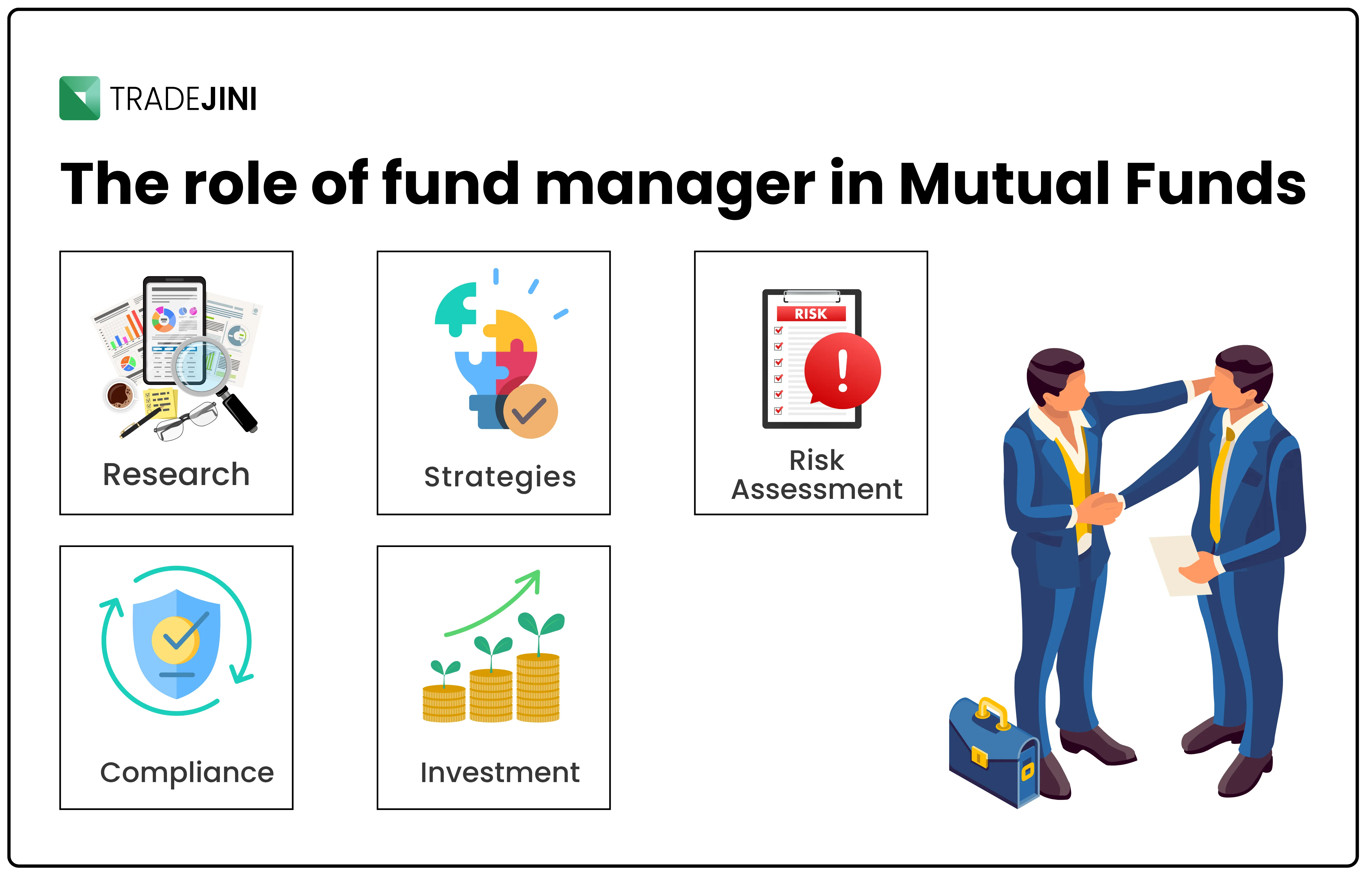
A mutual fund manager is a financial expert who makes all the key decisions about where your money goes. From choosing the right stocks and bonds to adjusting the portfolio in response to market movements, the fund manager is responsible for delivering returns in line with the fund’s goals. Their responsibilities include developing an effective investment strategy and managing the fund management process to optimize returns.
They don’t just randomly pick stocks. Their decisions are backed by research, analysis, and a deep understanding of market trends and economic indicators. Whether the fund aims for aggressive growth or conservative returns, the manager ensures the investments stay aligned with that strategy and the appropriate risk profiles for the mutual fund schemes offered.
They also monitor performance closely, react to market changes, manage risk through diversification and asset allocation, and ensure compliance with SEBI’s regulations. In short, they do the heavy lifting so you don’t have to track markets daily.
Introduction to mutual funds
If you are looking for a way to grow your savings without having to pick individual stocks or bonds, mutual funds might be the perfect solution. Mutual funds are a popular investment option that lets you pool your money with other investors to access a wide range of investments, like stocks, bonds, and money market instruments, all managed by professionals.
One of the biggest advantages of mutual fund investments is diversification. Instead of putting all your eggs in one basket, your money is spread across different asset classes, which can help reduce risk. Whether you are interested in equity funds for long-term growth, debt mutual funds for steady income, or low-risk mutual funds for stability, there’s a mutual fund scheme to match almost any investment strategy or risk appetite.
When you invest in mutual funds, a fund manager or a team of fund managers takes care of the day-to-day decisions, choosing where to invest, monitoring the fund’s performance, and adjusting the investment portfolio as needed. The value of your investment is tracked by the net asset value (NAV), which is updated daily. Most mutual funds have a minimum investment amount, and you can choose to invest a lump sum or start with smaller, regular contributions through a Systematic Investment Plan (SIP).
It’s important to pay attention to the expense ratio, which covers management fees, administrative costs, and other charges. These costs can make a significant difference to your returns over time. While actively managed funds aim to outperform the market (and may charge higher fees), index funds simply track a benchmark index and usually have lower expenses.
Of course, no investment is completely risk-free. Mutual funds can be affected by interest rate risk, credit risk, and liquidity risk, depending on the types of securities they hold. Debt funds and money market funds are generally considered lower risk, while equity funds and international funds may offer higher returns but come with more market risk. Your investment horizon, risk tolerance, and financial objectives should guide your choices.
Getting started with mutual funds is easier than ever. You can invest directly with an asset management company or fund house, through a financial advisor, or even online with just a few clicks. Before you invest, take time to review the fund’s past performance, expense ratio, and whether its investment strategy aligns with your goals and risk profile.
By understanding the basics of mutual fund investments and exploring the various funds available, you can build a diversified investment portfolio that helps you work toward your financial goals, without having to manage all your money on your own.
Active vs passive
Not all fund managers follow the same approach. Some actively pick and choose investments to beat the market. Active funds invest in a range of securities and sectors, making decisions about where and when to allocate assets based on research and market outlook. Others passively track an index like the Nifty 50, aiming to match its returns with minimal changes. A passive fund invests in the same securities as the index, mirroring its composition to achieve similar performance.
Active managers rely on their skill and experience to deliver higher returns, though this comes with higher fees and risks. Passive managers keep costs lower and reduce risk by sticking closely to the index, a simpler, more stable strategy. The fund's performance in each case is influenced by the chosen management style and the assets in which the funds invest.
Your choice between the two depends on your comfort with risk, fees, and how involved you want your investment strategy to be.
How to judge a fund manager's ability?
Most investors choose a fund, not a person. But it still helps to know who’s behind the scenes.
You can look at a manager’s past performance, years of experience, and how long they’ve been managing the same fund. Evaluating the track record of top mutual funds managed by them can give you insight into their ability to deliver strong results. Most funds provide detailed information about their managers and performance, making it easier to assess if a fund that consistently performs well under the same manager is a positive sign. You may also want to check if their investment style, aggressive or conservative, suits your goals.
The custodian
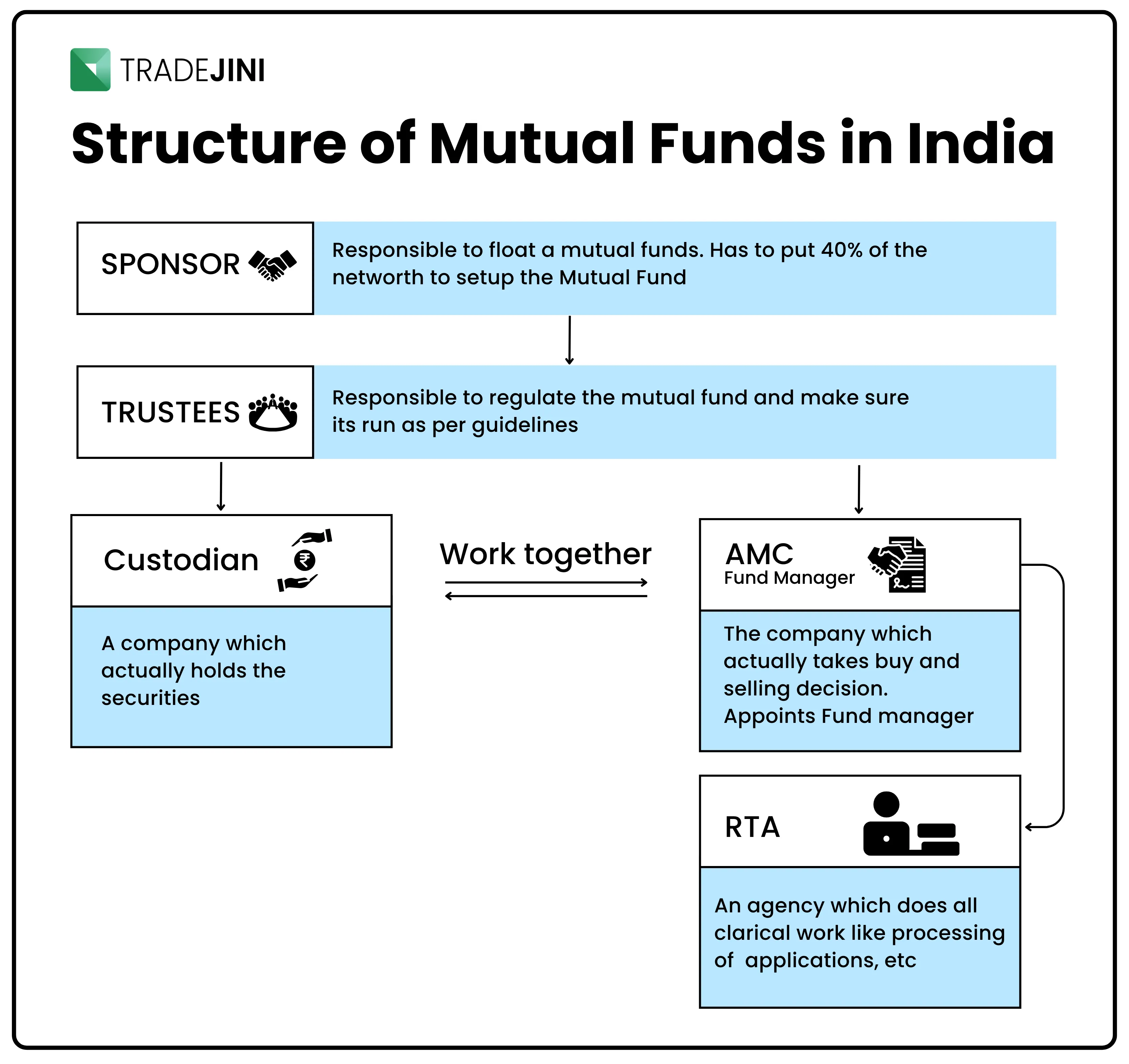
While the fund manager handles strategy and execution, there’s another key figure working in the background, the custodian. You may not hear much about them, but their role is crucial to the safety and transparency of your investments.
A custodian is usually a bank or financial institution that holds the actual assets of the mutual fund. They are legally required to keep your money separate from the fund manager’s operations, acting as an independent watchdog to ensure everything stays above board. Additionally, custodians oversee the process of purchasing securities for the fund, ensuring that transactions involving stocks, bonds, and other investments are properly settled and recorded.
What does a custodian do?
The custodian keeps detailed records of all fund assets, handles the settlement of trades, maintains investor data, and ensures that money and securities move only when they are supposed to. Custodians serve both individual and institutional investors, such as pension funds and asset management companies, providing secure management of their investments. They also help with regulatory reporting and monitor transactions to flag any irregularities.
In many cases, custodians also assist with fund accounting, legal compliance, and tax-related services, especially for larger fund houses. This helps streamline operations while keeping costs under control.
The balanced force
The separation of roles between fund managers and custodians is not accidental. It exists to create checks and balances. Fund managers focus on performance, while custodians focus on protection.
Together, they ensure that your money is not just invested wisely but also kept safe and managed transparently. However, it is important to remember that mutual funds are subject to market fluctuations, market conditions, and market risks, which can affect the market value of your investments. Factors such as inflation risk, changes in interest rates, and fluctuations in bond prices can impact the returns of funds holding fixed income securities, debt instruments, and government bonds. Some mutual funds may invest in riskier investments for higher potential returns, while others focus on safety and stability. Additionally, expense ratios are another factor that can influence your overall returns. With SEBI’s regulations adding another layer of oversight, the mutual fund structure in India is designed to protect investor interest at every level.
So, who’s handling your money in mutual funds?
Qualified professionals who are monitored, regulated, and supported by a strong system of accountability. The fund manager grows your money, and the custodian protects it, both working quietly yet efficiently behind the scenes.
As an investor, that should give you confidence to trust the process and stay focused on your financial goals.
Disclaimer: The information provided in our blogs is for informational purposes only and should not be construed as financial, investment, or trading advice. Trading and investing in the securities market carries risk. Always conduct your own research and consult with a qualified financial advisor before making any investment decisions. Past performance is not indicative of future results. Copyrighted and original content for your trading and investing needs.
©️ 2025 — Tradejini. All Rights Reserved.