

Remember the Old Saying – “Don’t Put All Your Eggs in One Basket”?
We Bet You Do.
If you put all your eggs in one basket, you risk losing all of them if that basket falls or gets lost during transportation. Distributing your eggs across many baskets ensures that even if one or two baskets are lost, most of your eggs remain safe.
This is the Basis of Diversification
Diversification is a strategy that requires spreading your money across various investments. The goal is not necessarily to increase your portfolio’s performance but to protect your money against significant losses due to over-concentration in one asset.
Example of Diversification:
Suppose you had ₹10 lakh at the start of 2008 and two options for investing:
- Portfolio 1: Allocate 100% to stocks.
- Portfolio 2: Allocate 60% to stocks, 30% to debt, and 10% to cash.
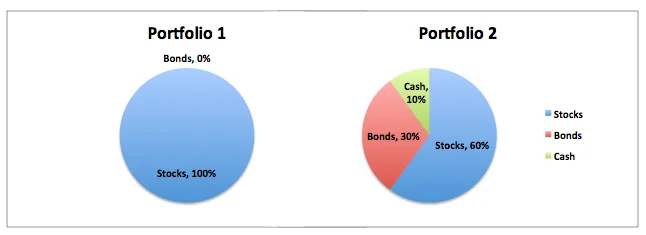
By early 2009, Indian markets fell 50% from their 2008 highs. Here’s how the two portfolios fared:
- Portfolio 1: The value dropped from ₹10 lakh to ₹5 lakh due to a 50% fall in stock prices.
- Portfolio 2: The diversified portfolio showed the following returns:
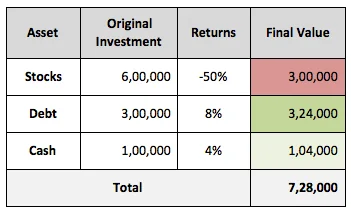
In this case:
- The all-stock portfolio ended with ₹5 lakh.
- The diversified portfolio retained ₹7.28 lakh, as the fixed returns from debt (8%) and cash (4%) compensated for stock losses.
Why Diversification Matters:
Diversification protects portfolios from significant drops. Stocks, debt, gold, and cash don’t move in tandem; economic factors that cause one asset to fall often lead another to rise. A diversified portfolio spreads the risk, ensuring losses in one asset class are offset by gains in others.
Levels of Diversification:
Diversification occurs on two levels:
Across Asset Classes:
- Invest in a mix of stocks, bonds, cash, gold, etc.
Within Asset Classes:
- Spread investments within each asset class. For example:
- A stock portfolio should include companies from different sectors and industries.
- A debt portfolio should include instruments with varying returns, tenures, and risk ratings.
- Spread investments within each asset class. For example:
Mutual funds, such as diversified equity funds, offer an easy way to achieve diversification by investing in 30–50 stocks or a mix of debt instruments.
Periodic Rebalancing:
Diversification isn’t a one-time activity. As markets change, some assets may grow faster, altering the allocation in your portfolio. Regular rebalancing ensures your portfolio remains well-diversified and aligned with your financial goals.
Key Takeaway:
A well-diversified portfolio, both across and within asset classes, is essential for achieving better risk-adjusted returns over the long term. Spend time determining the level of diversification that suits your return requirements and risk appetite, and don’t forget to rebalance periodically.
.webp%3Falt%3Dmedia%26token%3D0ead9799-20bc-4d1e-ae8f-d75ab18921b5&w=3840&q=75)