In many Indian households, gold comes before mutual funds. It is often bought as jewellery for weddings or passed down through generations, long before anyone in the family opens a demat account. Yet, when the family plans its investments, this gold is rarely considered part of the overall portfolio, even though its value may be greater than the money invested in stocks.
Today, there are four main ways to invest in gold: physical gold, digital gold, gold exchange traded funds (ETFs) and gold mutual funds. Each comes with different costs, benefits and practical considerations. Rather than asking which option is best, the more useful question is which one suits the household's needs and investment goals.
Physical gold
Physical gold is still the first choice for many Indians. It is usually bought as jewellery, coins or bars from a local jeweller or bank. Its biggest advantage is that it can be worn, gifted, pledged for a loan or sold to a local jeweller without needing an app or investment account.

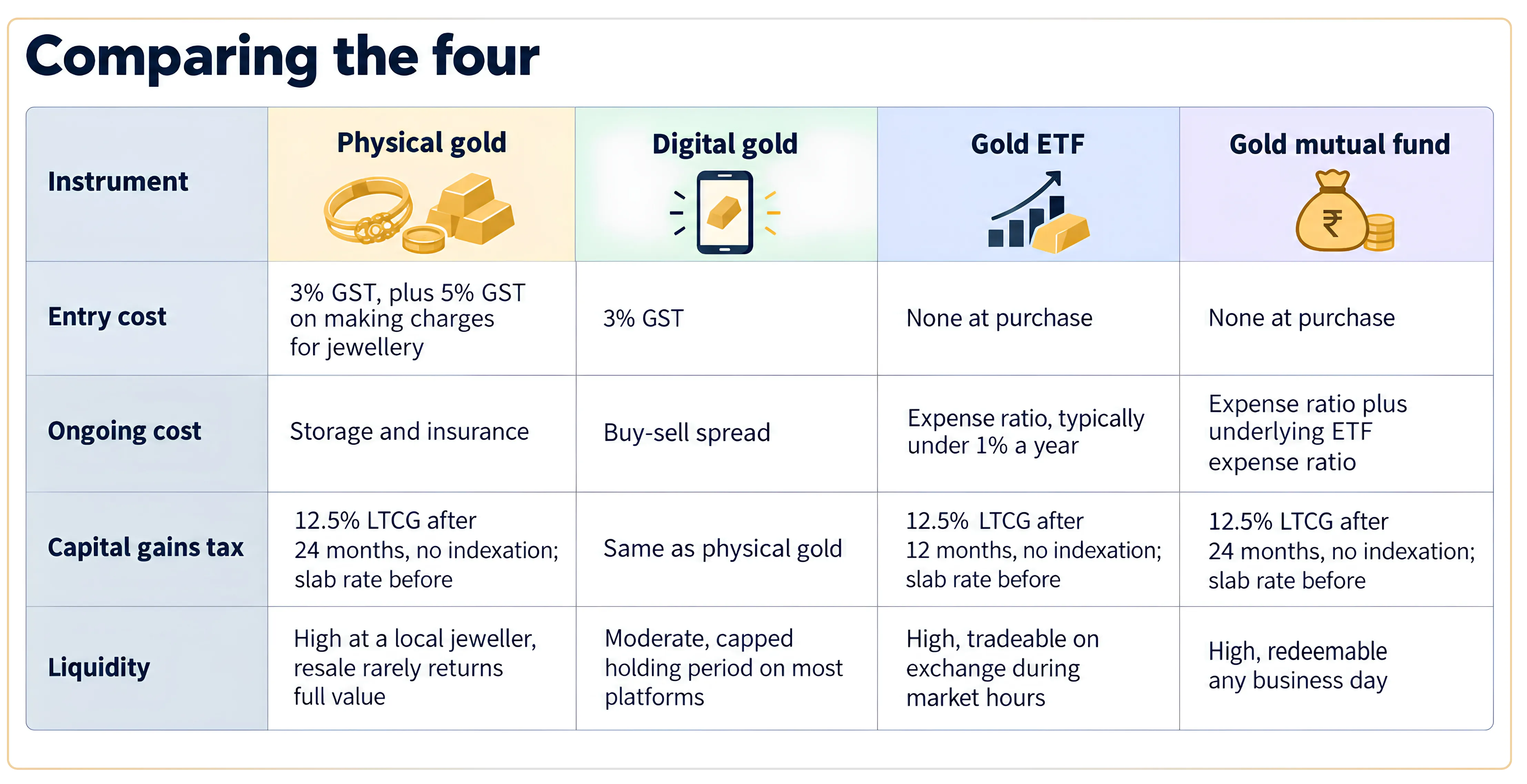
However, buying physical gold comes with costs that are easy to overlook. Gold attracts 3% GST on the value of the metal, while jewellery attracts an additional 5% GST on making charges, which cover the design and craftsmanship. For example, if a piece of jewellery contains ₹60,000 worth of gold and has making charges of ₹6,000, the buyer pays ₹1,800 as GST on the gold and ₹300 on the making charges. These costs add up even before storage and insurance are considered.
Physical gold also generates no regular income. Gold stored in a locker does not earn interest or compound over time. Its value increases only if the market price of gold rises. Selling it can involve additional costs. Jewellers may deduct charges for purity testing and generally do not refund the making charges paid at the time of purchase. As a result, jewellery bought today may sell for considerably less than its original purchase price, even after a relatively short period. Gold coins and bars purchased from banks or bullion dealers avoid making charges in the same way as jewellery, but buyers still pay 3% GST and may incur storage costs.
Taxation is another factor to consider. Physical gold held for more than 24 months is generally subject to a 12.5% long-term capital gains tax without indexation. If sold within 24 months, the gains are added to the investor's income and taxed at the applicable income tax slab rate.
These costs do not make physical gold a bad choice. It offers something other forms of gold investment cannot: the ability to hold, wear and use the asset without depending on a financial intermediary. For weddings, festivals and gifting, these benefits can be more important than investment returns.
The key is to understand what physical gold offers. It serves both a cultural purpose and a store of value, but its costs and resale limitations make it different from a conventional investment product. Buyers should consider these factors before deciding how much of their wealth to hold in physical gold.
Digital gold
Digital gold offers a way to invest in gold without buying or storing it yourself. Mobile wallets and broking apps allow investors to buy gold in fractions of a gram, with the gold held in a vault by a custodian on their behalf. These purchases are intended to be backed by an equivalent quantity of physical gold. The biggest advantage is accessibility. Investors can start with just a few rupees, without a demat account or a minimum purchase requirement. This makes digital gold convenient for those who want to save small amounts regularly for a future wedding, festival or jewellery purchase.
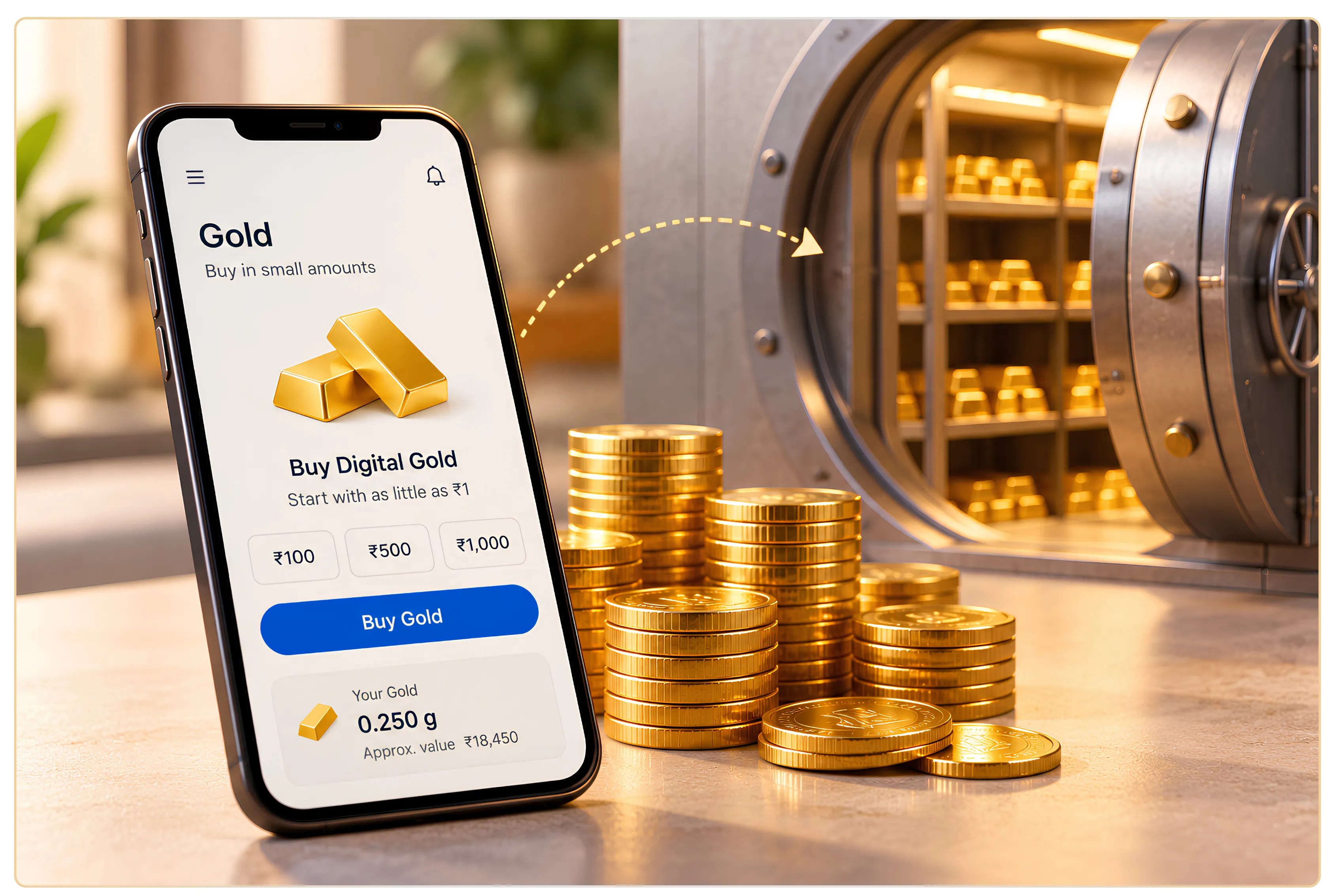
However, digital gold has an important limitation. Unlike gold ETFs and mutual funds, it does not fall under the same SEBI regulatory framework. The arrangement between the platform and its bullion partner is based on a commercial agreement rather than a SEBI-regulated investment structure. Some platforms also impose holding-period limits, after which investors may need to sell their holdings or take physical delivery of the gold. Another cost to watch is the difference between the buying and selling prices. This spread can reduce returns and may be higher than the annual expense ratio charged by a gold ETF. Digital gold also attracts 3% GST on the purchase value, although there are no jewellery-making charges.
For most households, digital gold is better suited to accumulating small amounts towards a specific purchase than to building a long-term investment portfolio. Its convenience is useful, but investors should understand the costs, holding conditions and regulatory limitations before putting in larger sums.
Gold ETFs
A gold exchange traded fund (ETF) allows investors to invest in gold through the stock exchange, just as they would buy shares. Each ETF holds physical gold as its underlying asset, and investors buy units through a demat and trading account. Each unit typically represents a small quantity of gold. Its price closely follows the domestic gold price, minus the fund's expenses. Most gold ETFs in India charge an annual expense ratio of less than 1%.
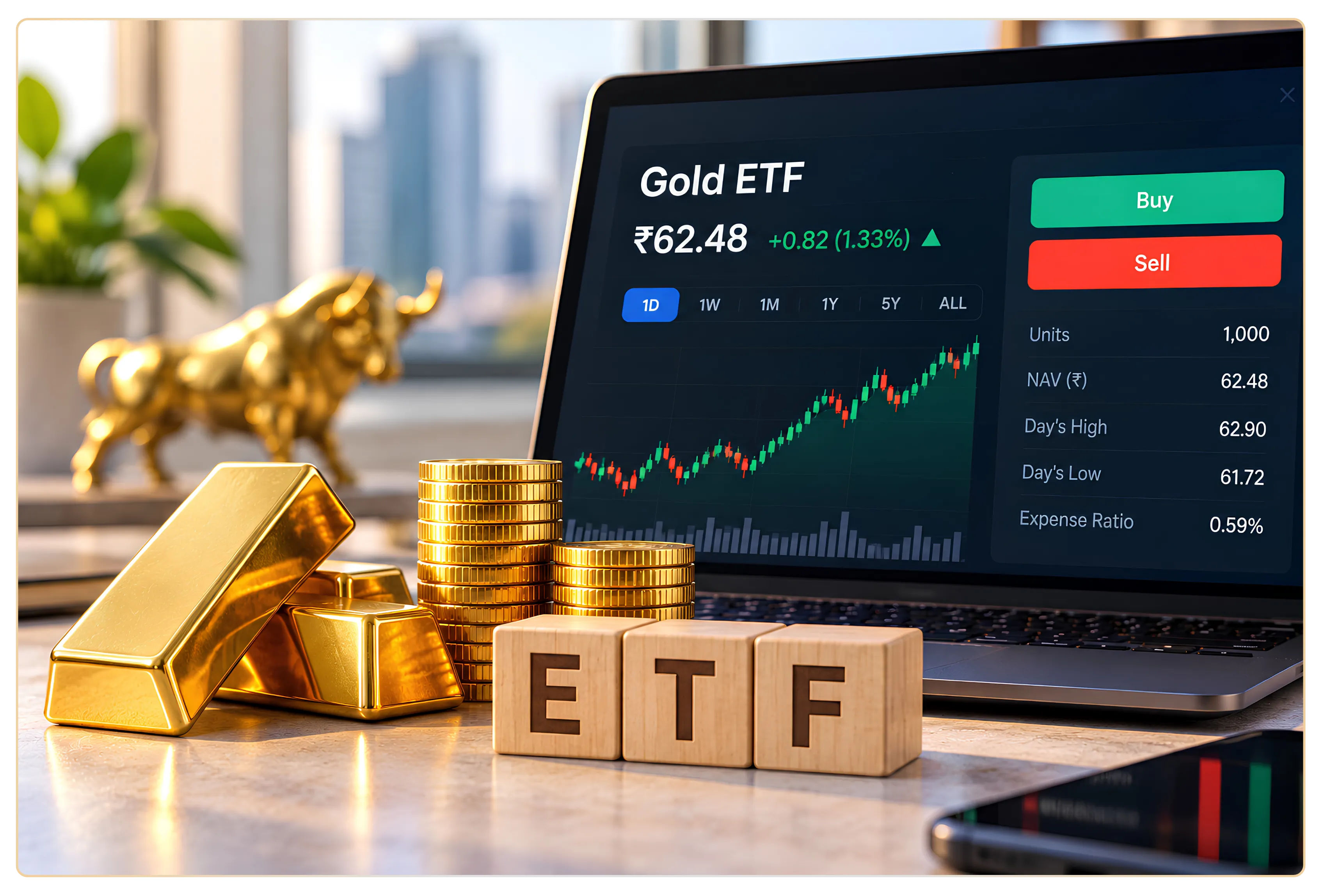
Taxation depends on how long the investment is held and when the units were purchased. Under the current rules, gains from gold ETF units held for more than 12 months are generally taxed at 12.5%, without indexation. If the units are sold within 12 months, the gains are added to the investor's income and taxed at the applicable income tax slab rate.
Gold mutual funds follow a different holding-period rule. Gains are generally taxed at 12.5% if the investment is held for more than 24 months. If sold earlier, the gains are taxed at the applicable slab rate.
Gold mutual funds
Gold mutual funds are usually structured as fund of funds, meaning they invest in an underlying gold ETF rather than buying gold directly. They are designed for investors who want to invest in gold through a systematic investment plan (SIP) without opening a demat account.
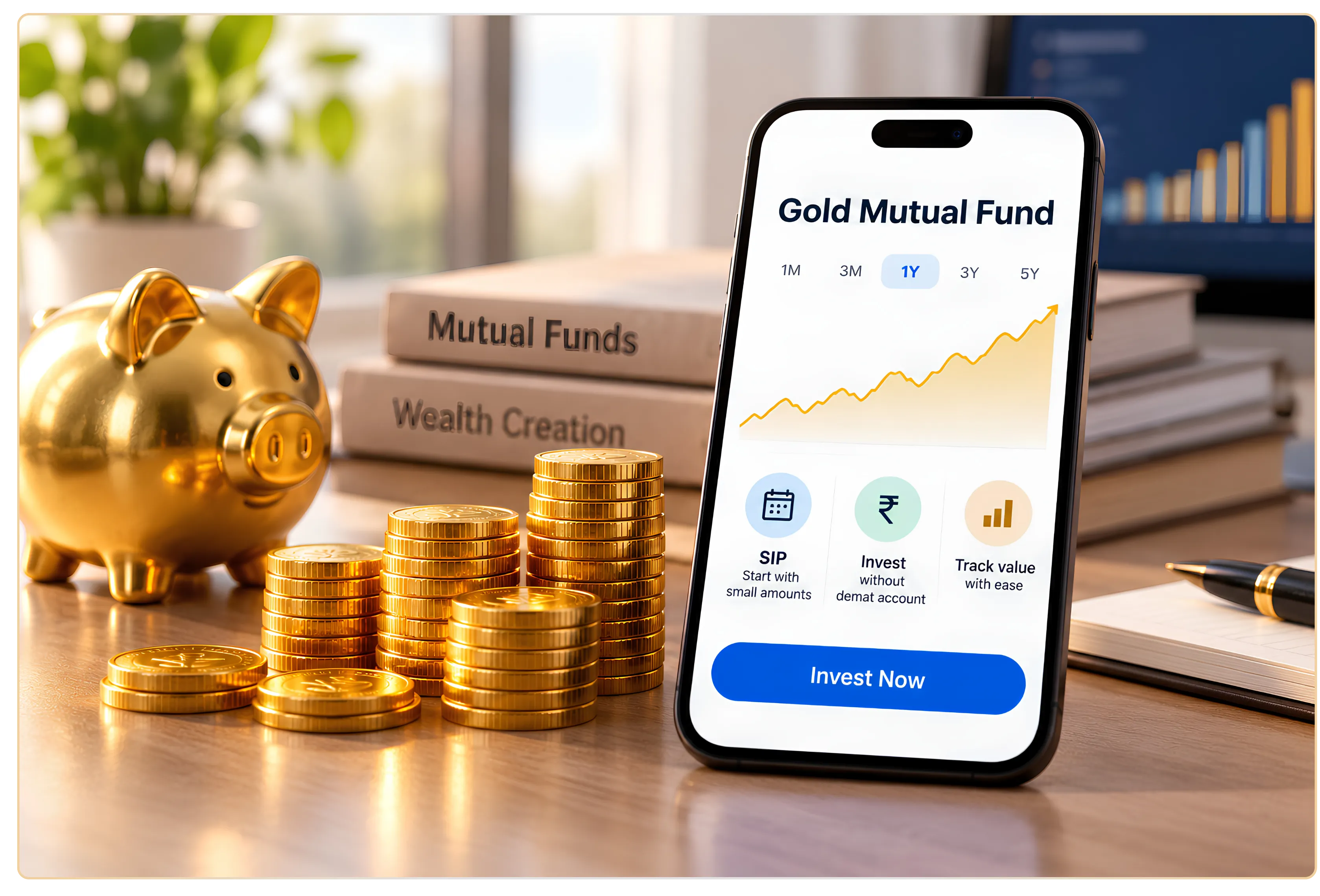
However, these funds come with an additional cost. Investors pay the expense ratio of the gold mutual fund as well as the expenses of the underlying ETF. This makes the total cost higher than investing directly in a gold ETF.
For investors who already have a demat and trading account, a gold mutual fund may offer little additional benefit over a direct ETF investment. Its main advantage is convenience for those who want to invest a fixed amount in gold regularly through an SIP without needing a trading account.
How much gold, and in what form
Before investing more in gold, households should account for what they already own. Jewellery accumulated over the years is part of their gold holdings, even if it is not treated as an investment. Ignoring it can lead to an inaccurate picture of their overall exposure to gold.
Gold is generally used to diversify a portfolio and act as a hedge during periods of market stress. Rather than expecting it to outperform equities, investors should consider a modest allocation that complements their stock and debt investments.
The right form of gold depends on its purpose. Physical gold suits weddings, festivals and gifting, while digital gold can help accumulate small amounts towards a future purchase. For portfolio diversification, Gold ETFs offer a convenient option, while gold mutual funds suit investors who prefer SIPs without a demat account.
Ultimately, the choice depends on how much gold a household already owns and what it wants the additional investment to achieve.
Disclaimer: The information provided in our blogs is for informational purposes only and should not be construed as financial, investment, or trading advice. Trading and investing in the securities market carries risk. Always conduct your own research and consult with a qualified financial advisor before making any investment decisions. Past performance is not indicative of future results. Copyrighted and original content for your trading and investing needs.
© 2026 — Tradejini. All Rights Reserved.