Call Ladders
At its core , a Call Ladder is a three-legged options strategy that expands on a standard vertical spread. By adding a third leg, a trader can fundamentally change the risk and reward profile of a trade. This adjustment allows them either to collect a premium upfront or create a position with unlimited profit potential.
Understanding how call ladders work requires grasping the fundamental difference between this advanced approach and simpler call ladder vs vertical spread mechanics.
The strategy involves three call options with the same expiry date but at different, equally spaced strike prices. How you structure these legs-whether you are a net buyer or seller of options determines the strategy’s objective and its Greek profile.
Types of Call Ladders
The two primary variations of call option ladder strategy serve opposite market conditions, making the analysis of greeks an essential part of consideration for a proper implementation.
A Bull Call Ladder: This strategy is deployed with the view that it is cautiously optimistic. It is built for traders who expect a stock to rise, but only up to a certain point.
The structure of the Bull Call Ladder is as follows:
Buy one at-the-money (ATM) call, sell one out-of-the-money (OTM) call, and sell a second, further OTM call. Here, the goal is to structure the trade in a way that a net premium is received and not paid. You profit if the stock rises moderately, stays flat, or even falls, but the trade-off is accepting unlimited risk if the stock rallies aggressively past your highest short strike.
A Bear Call Ladder: Traders often get confused by the name- This is a more complex strategy, often used to bet on momentum and risk volatility. The name is counterintuitive, as its biggest potential payoff comes from a massive upward move in the stock.
The structure of the bear call spread is as follows:
Sell one at-the-money (ATM) call, buy one out-of-the-money (OTM) call, and buy a second, further OTM call. This is typically entered as a net debit position. The trader pays a premium to create a position with a defined, limited loss if the stock stays flat or falls. However, if the stock rallies powerfully past the highest long strike, the profit potential becomes unlimited.
When to deploy Call Ladders
Choosing the right moment to deploy a call ladder is just as important as building it correctly. The ideal market conditions for a Bull Call Ladder are the exact opposite of those for a Bear Call Ladder.
| Condition | Bull Call Ladder | Bear Call Ladder |
|---|---|---|
| Market View | The stock is expected to rise slowly but will likely hit a ceiling or resistance level. Best for range-bound or mild uptrends |
The stock is trading in a tight, consolidated range and is coiled for a significant breakout move. |
| Implied Volatility | Best deployed when IV is High. The goal is to sell expensive premiums for a large credit and profit from a subsequent volatility crush. |
Best deployed when IV is Low. The goal is to pay a smaller debit for the position and profit from an expected spike in volatility. |
| Use Case | A “post-catalyst” strategy. Effective after a major event (like earnings) when uncertainty has peaked and IV is expected to decline. |
A “pre-catalyst” strategy. Ideal before a binary event (like earnings or a policy decision) to position for a large price swing. |
Practical examples
These real world examples demonstrate how call ladders work in practice, highlighting the naked option risk management considerations inherent in each approach.
Bull Call Ladder
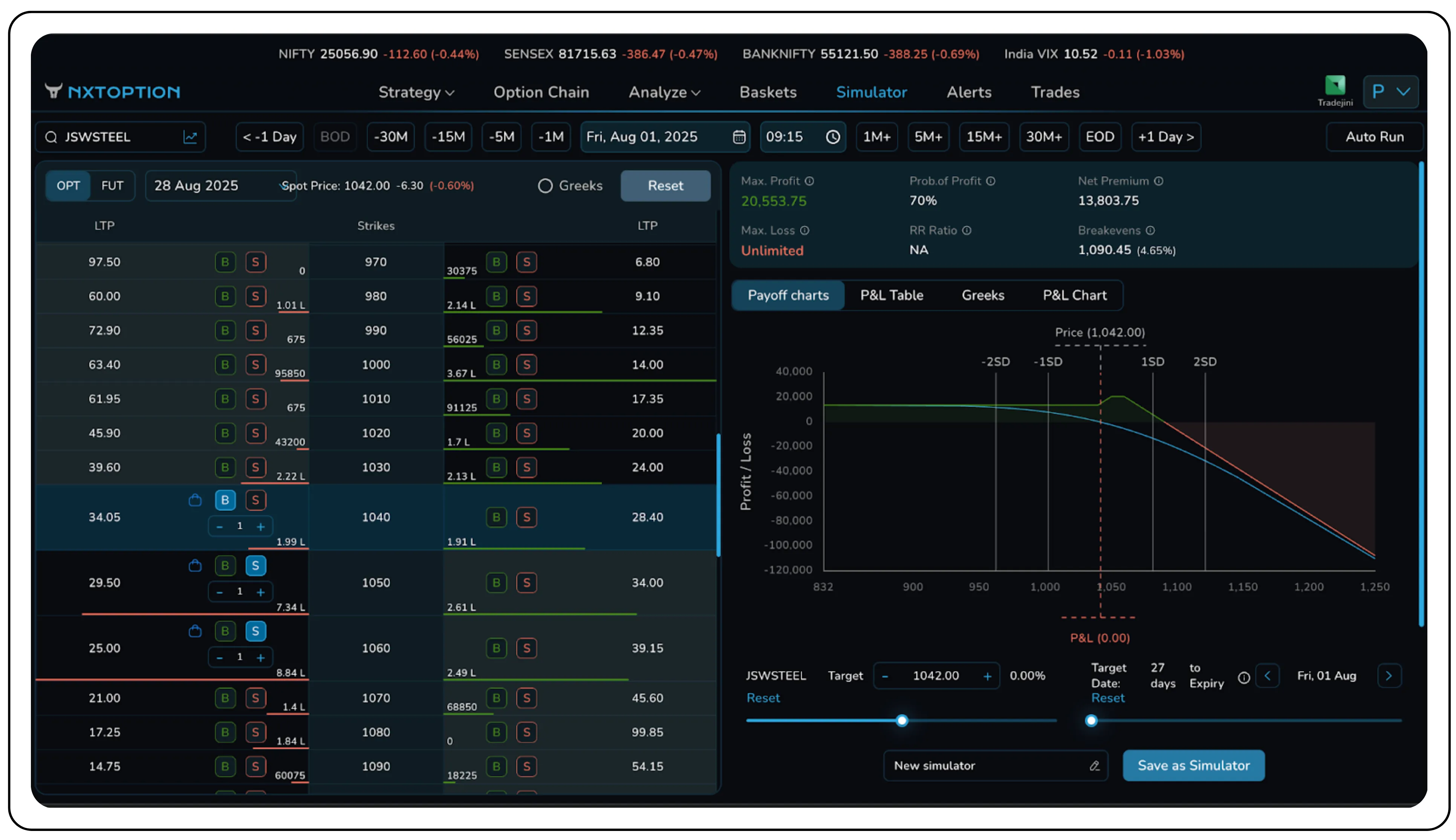
On 1st August 2025, a Bull Call Ladder was deployed on JSWSTEEL, which was trading at ₹1042.
Legs of the strategy:
- Buy 1040 call at ₹34
- Sell 1050 call at ₹ 29.5
- Sell 1060 call at ₹ 25
The net premium received was a credit of ₹13,803. This amount was credited to your account upon execution of the trade and represents the minimum profit if JSWTEEL closes below ₹ 1040. The Maximum profit potential is ₹20,553, which occurs if JWSTEEL closes exactly at ₹1060 on expiry day. The primary risk of the trade is a rally beyond the breakeven point, which is ₹1090. Since you have sold an extra call, the potential loss is unlimited if JSWSTEEL experiences a massive, unexpected breakout to the upside.
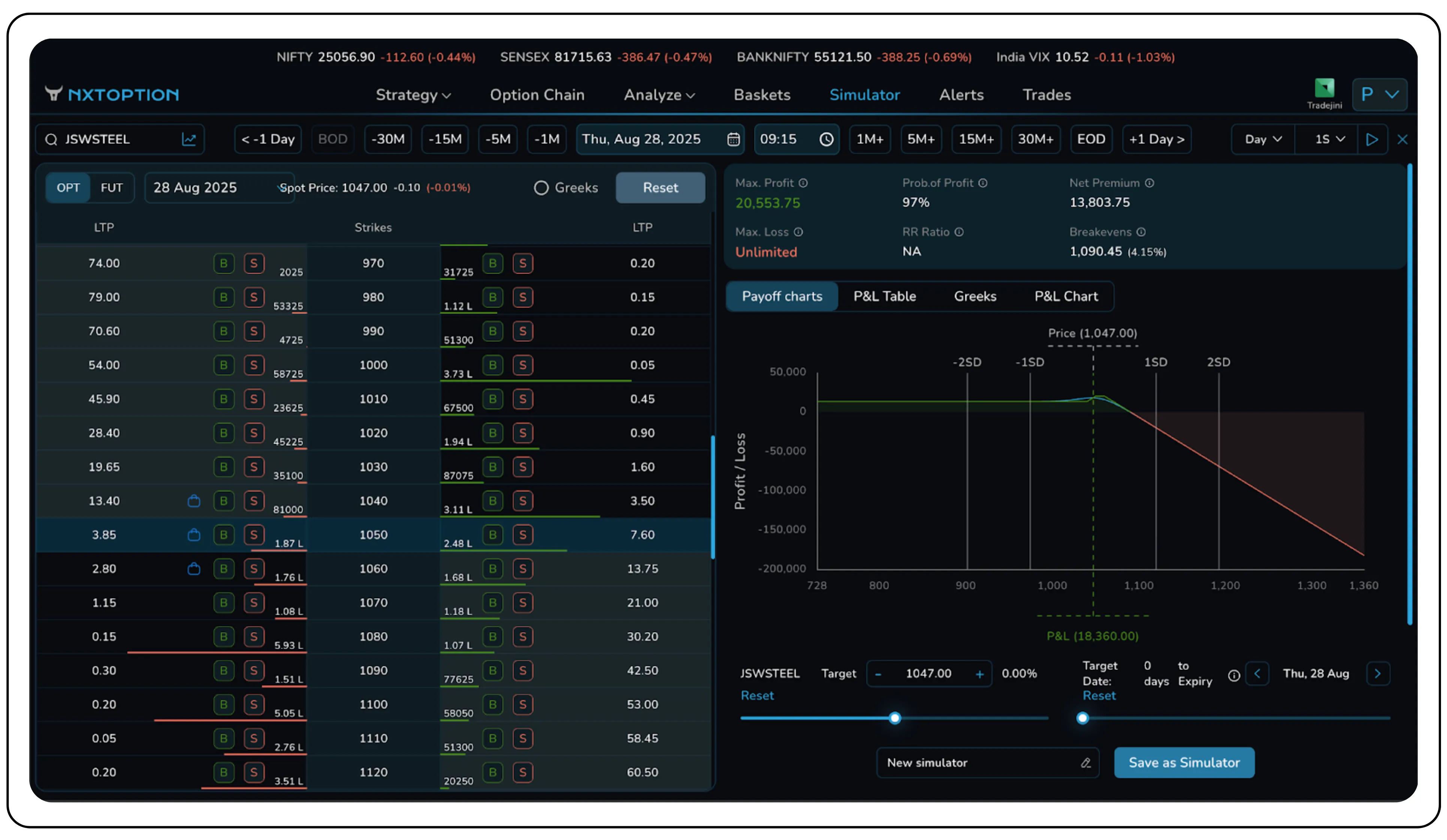
On the day of the expiry, JSWSTEEL closes at 1047. Resulting in a profit of ₹18,360. The strategy performed exactly as designed. The initial credit provided a substantial profit buffer, and the marginal rise in the stock price added to the gains through the long call. Crucially, the stock did not rally aggressively past the short strikes, preventing any losses and turning the trade into a win for us.
Bear Call Ladder
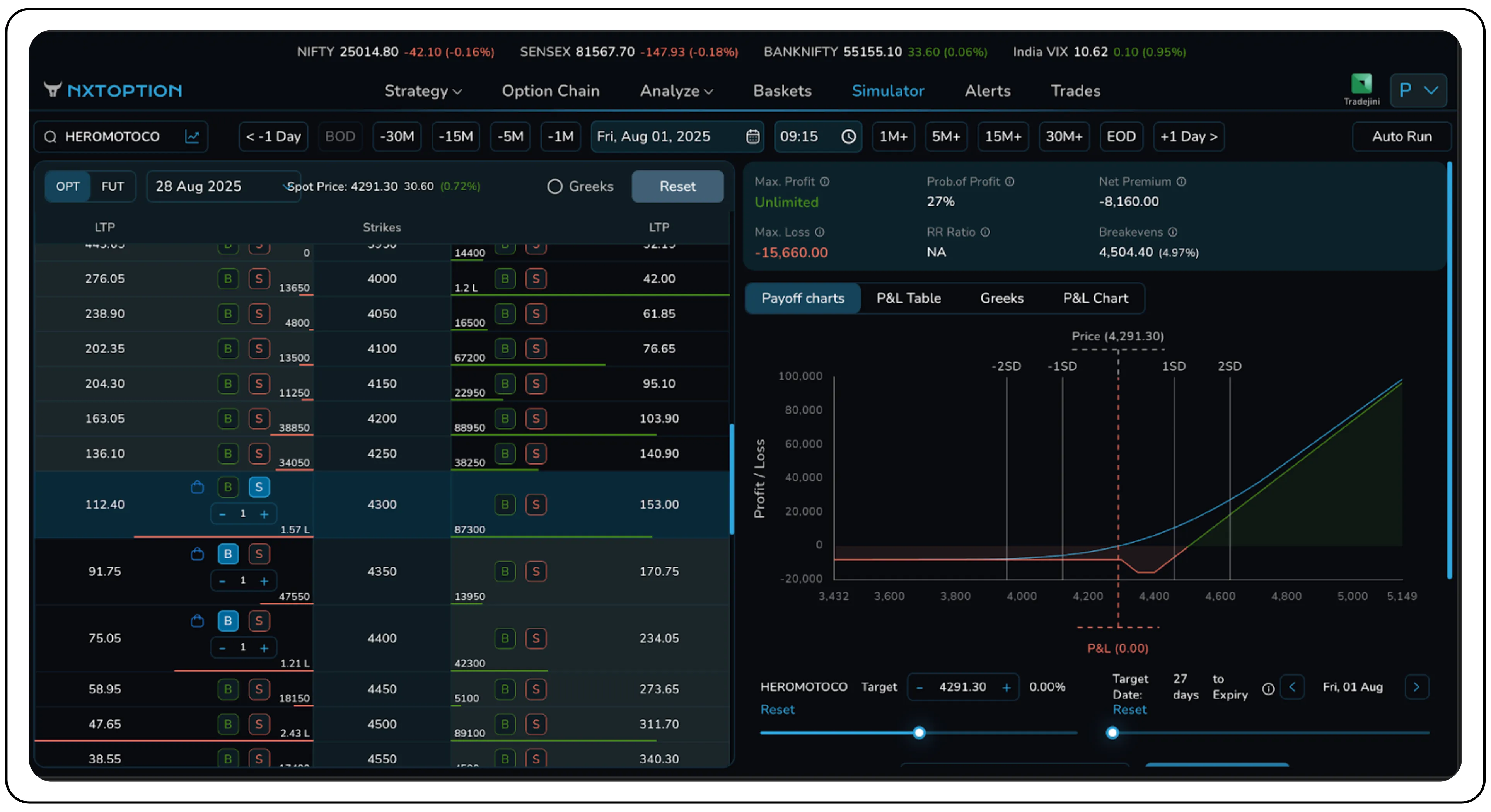
On 1st August 2025, a Bear Call Ladder was deployed on HEROMOTOCO, which was trading at ₹4291. Our view was bullish.
Legs of the strategy:
- Sell 4300 call at ₹112.4
- Buy 4350 call at ₹ 91.75
- Buy 4400 call at ₹ 75.05
This structure resulted in a net premium debit of ₹8160, which was the cost to enter the position. The maximum potential loss was capped at ₹15,660, which would occur if the stock price finished between the two higher strikes at expiry. The primary profit driver for the trade is a significant rally beyond the breakeven point of ₹4504. Above this level, the potential profit is unlimited because the second call generates uncapped gains.
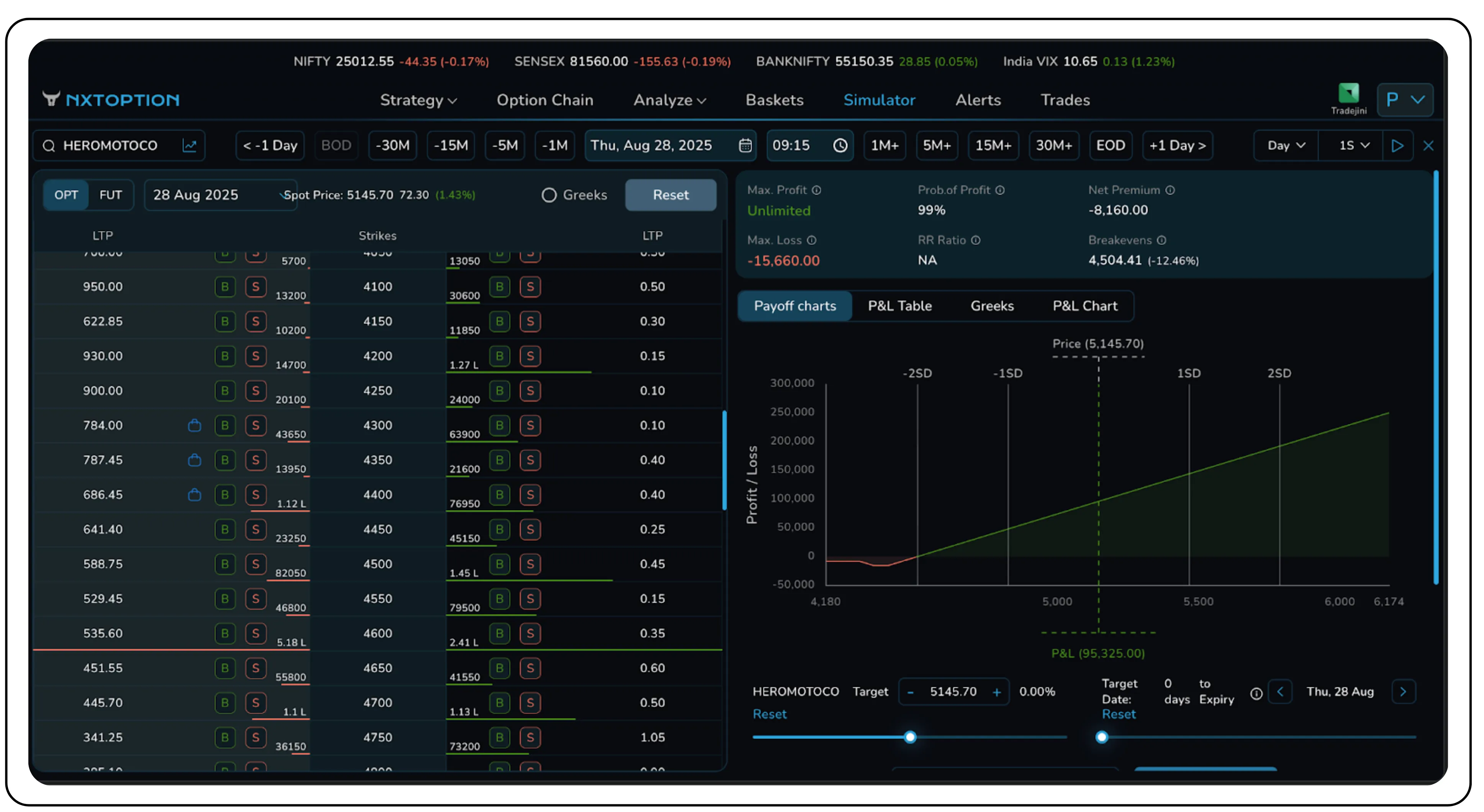
On the day of the expiry, 28th August, HEROMOTOCO closed strongly at ₹5145, resulting in a substantial profit of ₹99,525.
The strategy performed exceptionally well because our view of a strong upward rally was correct. The massive rally pushed the price far beyond the breakeven point, activating the unlimited profit potential of the structure. The gains from the second long call completely overwhelmed the initial debit and the defined loss zone, turning the trade into a win.
Risk management
Bull Call Ladder
The main danger in a Bull Call Ladder is a sharp upside move. While the strategy profits from a moderate rise in the underlying, once it crosses the higher OTM short call, losses accelerate without limit. So keep OTM shorts close enough to reduce debit, but not so close that upside risk kicks in too early. Always define a price or delta-based stop for the underlying and exit if momentum threatens to break far beyond your OTM calls.
You can also convert to a ratio spread hedge by adding a long further OTM call if the rally is stronger than expected. This caps runaway losses.
Therefore, the ladder should only be used when you have a high conviction that the underlying will stay range-bound or move mildly bullish, not in trending markets.
Bear Call Ladder
The main danger in a bear call ladder is if the underlying stays flat or rises only slightly. The short call loses while the profit-generating long calls don’t fully kick in. The short ATM call loses, while long OTM calls don’t yet compensate. Pick the ATM shorts and OTM longs with enough distance to allow the upside breakout to pay off. Enter when you expect a sharp move up soon, because if the move †doesn’t happen quickly, theta decay eats the position. If the price stalls near the short ATM strike, roll the short call higher to reduce losses.
A bear call ladder is a bullish momentum play. Risk is defined, but time decay is the silent enemy if the underlying fails to rally.
Advanced risk management techniques are required to successfully deploy call option ladders, especially managing the naked option risk. For bull call ladder strategy, consider implementing dynamic delta hedging when the underlying approaches your short strikes. Deploying and option ratio spread hedge techniques can convert unlimited risk into defined risk scenarios. Bear call ladder strategy positions benefit from Implied volatility monitoring.
Greeks interpretation
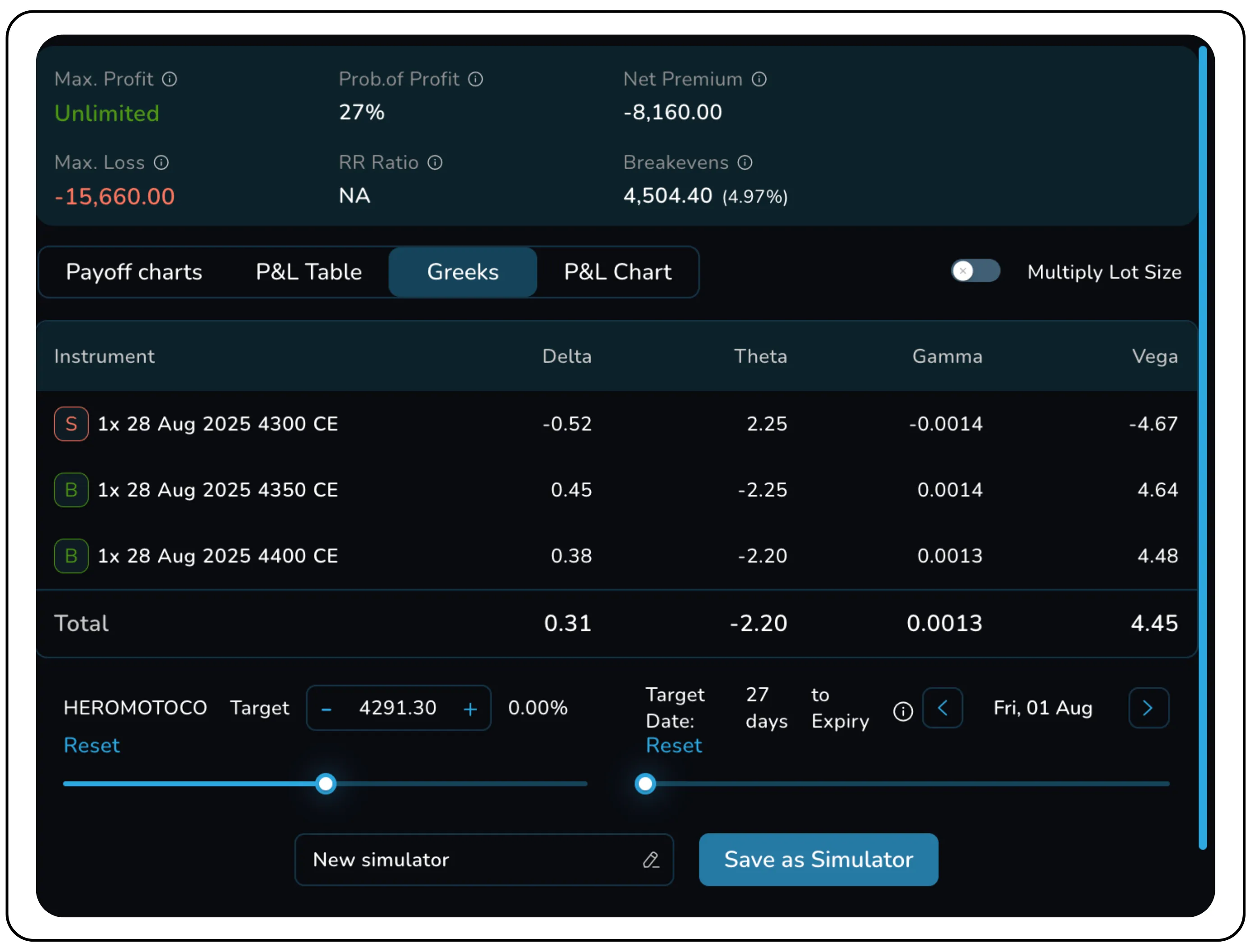
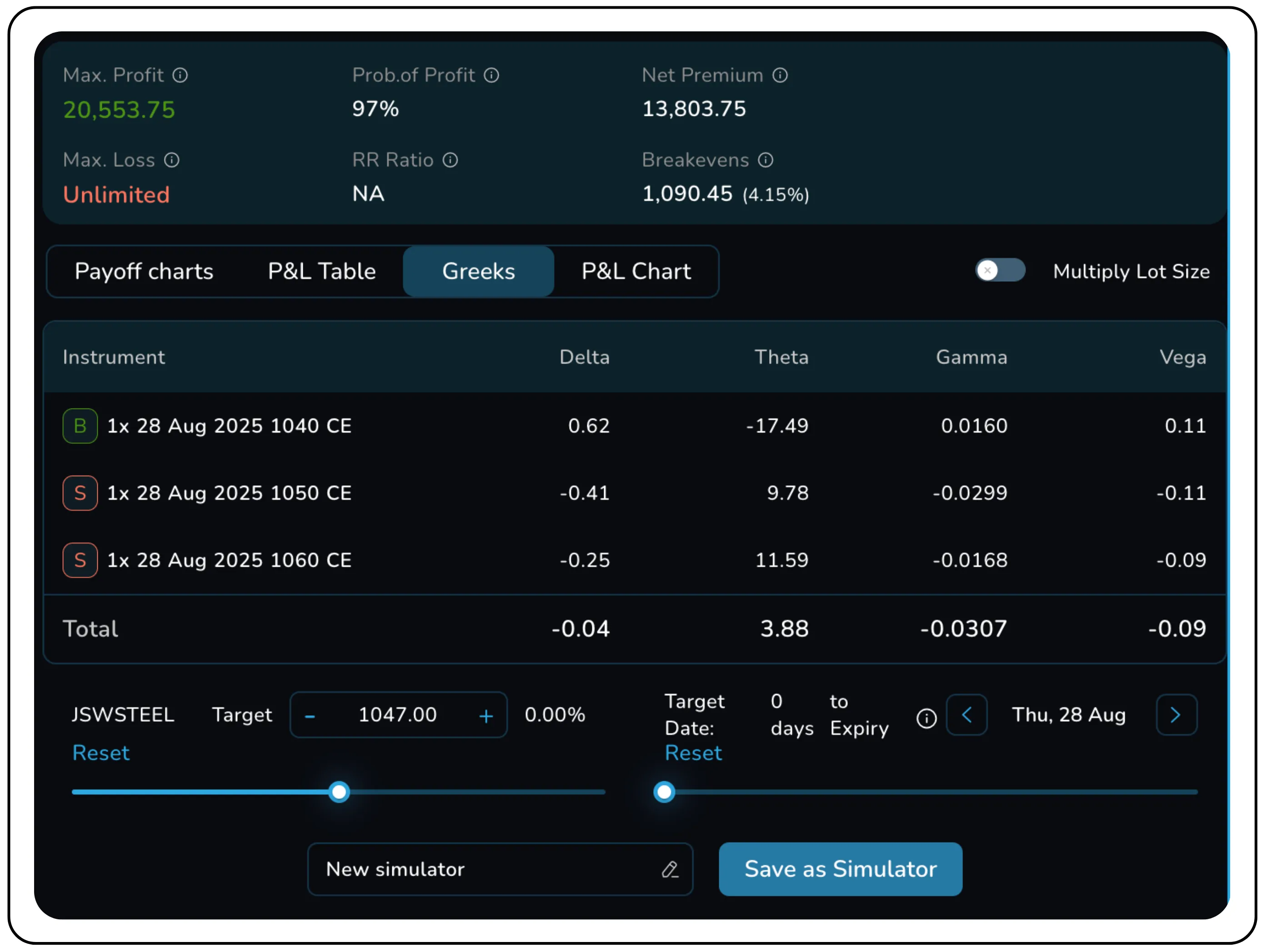
Delta: A Bull Call Ladder is a delta-neutral strategy as it is a pure non-directional bet, whereas a Bear Call Ladder is a positive delta strategy as it generates profit from the underlying stock price going up.
Theta: A Bull Call Ladder is a theta-positive strategy, which is its main advantage. Since the trader sells more premium than they buy, the position profits from time decay. Whereas the bear call spread is a theta-negative strategy, which is its main pain point. Since the trader buys more premium than they sell, the position loses money from time decay.
Gamma: This is the main risk in a Bull Call Ladder. Being net short an option means the position is vulnerable to large, fast price moves. At the same time, gamma is the main advantage in a Bear Call Ladder. Being net long an option means the position’s profits accelerate during large, fast price moves.
Vega: The position is short volatility in a Bull Call Ladder and hence it profits when implied volatility goes down, i.e., when vega is negative. The position has long volatility in a Bear Call Ladder and hence it profits when implied volatility goes up, i.e., when vega is positive.
Conclusion
Call Ladders, in both their bullish and bearish forms, are sophisticated option strategies that offer a nuanced way to express a market view beyond simple directional bets. As we have seen, they are not one-size-fits-all as they are two distinct tools designed for opposite market conditions.
The Bull Call Ladder is the strategist’s choice for a cautiously optimistic outlook. It is a game of patience, typically structured in a way that it profits from a steady decay of time and a calm, low-volatility environment. It rewards the trader for predicting a modest rise, turning market stability into an asset.
In stark contrast, the Bear Call Ladder is built for momentum and volatility. This net debit strategy has the counterintuitive feature of a positive delta, offering unlimited profit potential in a powerful bull run. It thrives on rising volatility and accelerates its gains during sharp price swings, making it a tool for traders who anticipate a major market move.
Ultimately, the choice between these strategies hinges on your answers to two questions: Are you betting on stability or momentum? And do you want time decay and volatility to be on your side, or are you willing to pay to bet against them?
Understanding the Greek profile of your chosen ladder is non-negotiable. These are not passive strategies; the presence of a naked option leg demands active risk management and a clear exit plan. When used correctly, however, call ladders provide a powerful and versatile method for generating returns in a wide range of market scenarios.
Ready to put theory into practice? Explore, analyze, and deploy call ladders with precision using the advanced tools on Nxtoption. Take your options trading to the next level today.
Disclaimer: The information provided in our blogs is for informational purposes only and should not be construed as financial, investment, or trading advice. Trading and investing in the securities market carries risk. Always conduct your own research and consult with a qualified financial advisor before making any investment decisions. Past performance is not indicative of future results. Copyrighted and original content for your trading and investing needs.
© 2025 — Tradejini. All Rights Reserved.