When market conditions turned volatile in recent years, investors with well-diversified mutual fund portfolios weathered the storm significantly better than those concentrated in single asset classes. The difference often came down to one fundamental principle: effective portfolio diversification across various asset classes, sectors, and investment styles.
Portfolio diversification isn’t just about owning multiple mutual funds—it’s about strategically spreading investments across uncorrelated assets to mitigate risk while maintaining growth potential. A truly diversified approach can reduce portfolio volatility by up to 50% compared to concentrated holdings, while still delivering competitive returns over the long term.
In this comprehensive guide, you’ll discover proven strategies for building a well diversified portfolio that aligns with your financial goals and risk tolerance. From understanding correlation patterns to implementing systematic investment plans, we’ll cover everything you need to know about mutual fund diversification.
What is Mutual Fund Portfolio Diversification?
Portfolio diversification represents the strategic practice of spreading investments across different asset classes, market sectors, and fund types to reduce overall investment risk. Rather than putting all your money in a single mutual fund or asset class, diversification follows the time-tested principle of not putting all your eggs in one basket.
The core mechanism behind diversification lies in combining assets that respond differently to various market conditions. While equity mutual funds may provide substantial growth during bull markets, they also bring higher volatility. Debt investments offer stability and regular income, while alternative assets like gold often provide protection against inflation and market downturns.
Key Benefits of Diversification
A diversified portfolio delivers several crucial advantages for mutual fund investors:
Risk Reduction: By spreading investments across assets with low or negative correlation, losses in one area can be offset by gains or stability in another. This systematic and unsystematic risk management approach protects your investment portfolio from sector-specific downturns.
Smoother Returns: Diversified portfolios typically experience less volatility than concentrated holdings, leading to more consistent wealth creation over your investment horizon. This stability becomes particularly valuable during market fluctuations and economic uncertainty.
Alignment with Investment Objectives: Effective diversification allows you to calibrate your fund portfolio according to your risk tolerance and financial objectives, whether you’re a conservative investor seeking stability or an aggressive investor pursuing higher returns.
Why Diversification Matters for Mutual Fund Investors
Understanding why diversification is essential begins with recognizing how different mutual fund investments behave under varying market dynamics. When technology stocks crashed during the dot-com bubble, investors with exposure only to tech-focused funds suffered devastating losses. Meanwhile, those with diversified holdings across multiple sectors and asset classes maintained portfolio stability.
Protection Against Market Risks
Diversification serves as your primary defense against both systematic and unsystematic risk. While systematic risk affects the entire market, unsystematic risk impacts specific companies or sectors. By investing across various market sectors and fund categories, you reduce exposure to any single economic event or industry downturn.
For example, during the 2020 pandemic, while travel and hospitality sectors plummeted, technology and healthcare funds often performed well. Investors with balanced exposure across these sectors experienced significantly less portfolio damage than those concentrated in affected industries.
Consistency in Long-term Performance
Studies consistently show that diversified mutual fund portfolios deliver more predictable returns over extended investment horizons. This consistency stems from the mathematical principle that combining assets with different correlation patterns reduces overall portfolio volatility without necessarily sacrificing returns.
The power of this approach becomes evident when comparing risk adjusted returns. A well-diversified fund portfolio often achieves similar or better returns than concentrated investments while experiencing substantially lower volatility—a combination that significantly enhances the investment journey for most investors.
Understanding Correlation in Mutual Fund Diversification
Correlation forms the foundation of effective mutual fund diversification strategy. This statistical measure indicates how closely two investments move in the same direction, ranging from +1 (perfect positive correlation) to -1 (perfect negative correlation).
Types of Correlation
Positive Correlation: When assets move in the same direction, they exhibit positive correlation. Large-cap and mid-cap equity funds often show high positive correlation, as they respond similarly to market conditions. While this isn’t necessarily problematic, relying exclusively on positively correlated assets limits diversification benefits.
Negative Correlation: Assets displaying negative correlation move in opposite directions. Government bonds and equity markets often exhibit this relationship, particularly during market stress. When stock markets decline, investors frequently flee to the safety of government bonds, causing bond prices to rise.
Low Correlation: Assets with correlation near zero move independently of each other. International funds from different regions often display low correlation with domestic markets due to varying economic cycles and currency effects.
Identifying Low-Correlation Assets
To build an effective diversified approach, focus on combining assets with low or negative correlation. Here are proven combinations:
Equity vs. Debt Funds: Historically demonstrate low to negative correlation, especially during equity market downturns
Gold vs. Equity Investments: Gold often moves inversely to stock markets during inflationary periods or economic crises
Domestic vs. International Funds: Different economic cycles and currency movements create natural diversification
Growth vs. Value Investment Styles: These approaches often perform differently across market cycles
Strategic Ways to Diversify Your Mutual Fund Portfolio
Diversify Across Asset Classes
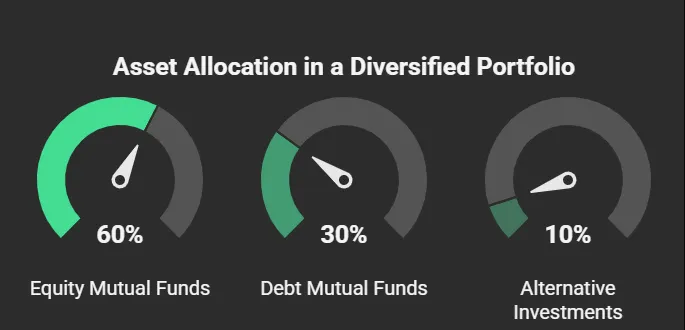
The foundation of mutual fund portfolio diversification begins with strategic asset allocation across major asset classes. A classic diversified portfolio might allocate:
60% Equity Mutual Funds: Providing growth potential and long-term wealth creation
30% Debt Mutual Funds: Offering stability, regular income, and capital preservation
10% Alternative Investments: Including gold ETFs or other assets for inflation protection
This allocation represents a moderate risk profile suitable for investors with medium risk tolerance. Conservative investors might reduce equity exposure to 30-40%, while aggressive investors could increase it to 70-80%.
Hybrid Funds as Diversification Tools
Hybrid funds, particularly aggressive hybrid funds and balanced funds, provide built-in diversification by investing across multiple asset classes within a single fund. These funds automatically rebalance between equity and debt based on market conditions, making them excellent choices for investors seeking simplified diversification.
Geographic Diversification Through International Funds
International funds add another layer of diversification by providing exposure to global markets. Consider allocating 10-20% of your equity portion to international funds, split between developed markets (US, Europe, Japan) and emerging markets for optimal geographic spread.
Spread Investments Across Market Capitalizations
Market capitalization diversification ensures your portfolio captures opportunities across the entire market spectrum:
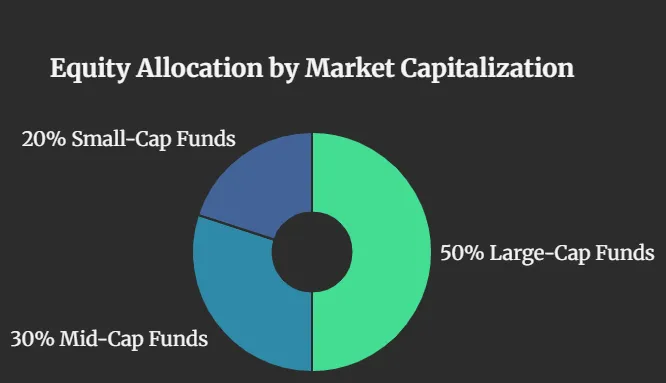
Large-Cap Funds (50% of equity allocation): These funds invest in established companies with proven track records. They provide stability and consistent dividends but typically offer lower growth potential than smaller companies.
Mid-Cap Funds (30% of equity allocation): Representing companies in transition from small to large-cap status, these funds offer balanced growth potential with moderate volatility. They often outperform during economic recovery phases.
Small-Cap Funds (20% of equity allocation): While carrying the highest risk, small-cap funds provide maximum growth potential. These companies can deliver exceptional returns during favorable market conditions but may experience significant volatility.
This allocation strategy ensures you benefit from the stability of large companies while capturing the growth potential of smaller, emerging businesses.
Diversify by Investment Styles and Strategies
Investment style diversification adds another dimension to your portfolio by combining different approaches to stock selection:
Growth vs. Value Funds: Growth funds focus on companies with above-average earnings growth, while value funds target undervalued stocks. These styles often perform differently across market cycles, with growth typically outperforming during expansions and value excelling during recoveries.
Active vs. Passive Management: Index funds offer diversification through broad market exposure at low costs, while actively managed funds attempt to outperform through professional fund manager selection. Combining both approaches provides cost efficiency with the potential for alpha generation.
Sectoral and Thematic Funds: While maintaining broad-based funds as your core holdings, selective exposure to specific sectors or themes can enhance returns. However, limit sectoral funds to 10-15% of your total portfolio to avoid concentration risk.
Geographic and Currency Diversification
International diversification reduces dependence on any single country’s economic performance. Global markets often move independently due to different economic cycles, political events, and currency fluctuations.
Developed Market Exposure: Funds investing in developed markets provide access to mature economies with stable institutions. These markets typically offer lower volatility but also modest growth prospects.
Emerging Market Allocation: Emerging market funds offer higher growth potential but come with increased volatility and political risk. A 5-10% allocation to emerging markets within your international exposure provides balanced global diversification.
Currency Considerations: International investments introduce currency risk, which can either enhance or detract from returns. Some international funds offer currency hedging, while others remain unhedged. Consider your comfort level with currency fluctuations when making selections.
Implementation Strategies for Portfolio Diversification
Use Systematic Investment Plans (SIPs)
Systematic investment plans represent the most effective method for implementing diversification gradually while managing market volatility through rupee cost averaging. This approach offers several advantages:
Gradual Diversification: Start SIPs across different fund categories simultaneously, ensuring balanced exposure from the beginning. For example, if your target allocation is 60% equity and 30% debt, set up SIPs with a 2:1 ratio between equity and debt funds.
Rupee Cost Averaging: Regular investments through SIPs help smooth out market fluctuations by purchasing more units when prices are low and fewer when prices are high. This systematic approach reduces the impact of market timing on your returns.
Disciplined Approach: SIPs enforce investment discipline by automating the process, preventing emotional decisions during market volatility that could disrupt your diversification strategy.
Practical SIP Setup: Consider setting up monthly SIPs across 4-6 carefully selected funds representing different asset classes, market capitalizations, and investment styles. This approach provides comprehensive diversification without overwhelming complexity.
Avoid Lump Sum Concentrated Investments
Large, concentrated investments in single funds or asset classes expose your portfolio to timing risk and concentration risk. Instead, deploy lump sum amounts strategically:
Systematic Transfer Plans (STPs): Place lump sum amounts in liquid or ultra-short-term debt funds, then systematically transfer portions to equity funds over 6-12 months. This approach provides downside protection while gradually building equity exposure.
Staggered Investment Approach: Divide large amounts into smaller portions and invest them over several months across your target diversification mix. This method reduces the risk of investing at market peaks.
Regular Portfolio Review and Rebalancing
Market movements inevitably skew your original asset allocation, potentially increasing risk or reducing return prospects. Effective portfolio management requires periodic rebalancing:
Annual Review Process: Compare your current allocation to target percentages at least annually. If any asset class deviates by more than 5% from its target, consider rebalancing.
Rebalancing Methods: Use new SIP investments to rebalance toward underweight categories, or partially redeem overweight funds to purchase underweight assets. This approach minimizes transaction costs and tax implications.
Trigger-Based Rebalancing: Major market events, such as significant rallies or downturns exceeding 20%, may warrant immediate portfolio review regardless of your annual schedule.
Common Diversification Mistakes to Avoid
Over-Diversification
While diversification provides protection, excessive diversification can dilute returns and complicate portfolio management. Research suggests that 8-12 well-chosen mutual funds provide optimal diversification benefits. Beyond this number, additional funds often duplicate existing exposures without meaningful risk reduction.
Signs of Over-Diversification:
Owning more than 15 mutual funds
Multiple funds with similar investment mandates
Portfolio performance closely matching broad market indices despite active management fees
False Diversification
Investing in multiple funds that follow similar strategies or have overlapping holdings creates an illusion of diversification while maintaining concentration risk. This commonly occurs when investors select multiple large-cap funds from different fund houses without considering their underlying similarities.
Avoiding False Diversification:
Review fund portfolios to identify overlap in holdings
Choose funds with distinctly different investment approaches
Focus on asset class and style diversification rather than simply counting funds
Ignoring Correlation Analysis
Many investors focus solely on asset allocation without considering how their chosen investments correlate during market stress. Two equity funds might appear diversified but could both decline simultaneously during market downturns if they share similar risk factors.
Correlation Considerations:
Research historical performance during market downturns
Choose funds that have demonstrated independent performance patterns
Regularly review correlation patterns as they can change over time
Neglecting Debt Fund Diversification
Many investors treat debt investments as a single category without recognizing the importance of diversification within fixed income. Different types of debt funds respond differently to interest rate changes, credit events, and economic conditions.
Debt Fund Diversification Strategies:
Combine short-duration and medium-duration funds
Include both government and corporate debt exposure
Consider inflation-indexed bonds for inflation protection
Monitoring and Maintaining Your Diversified Portfolio
Tracking Portfolio Performance
Effective portfolio monitoring goes beyond simple return tracking. Focus on these key metrics:
Risk-Adjusted Performance: Use measures like Sharpe ratio to evaluate whether your portfolio is generating appropriate returns for the risk taken. A well-diversified portfolio should demonstrate superior risk-adjusted returns compared to concentrated alternatives.
Volatility Analysis: Monitor portfolio volatility to ensure it remains within your risk tolerance. Diversification should result in lower volatility than individual fund components.
Correlation Tracking: Periodically review correlation patterns between your holdings to ensure diversification benefits remain intact. Correlations can increase during market stress, temporarily reducing diversification effectiveness.
Portfolio Adjustment Triggers
Several factors may necessitate portfolio adjustments:
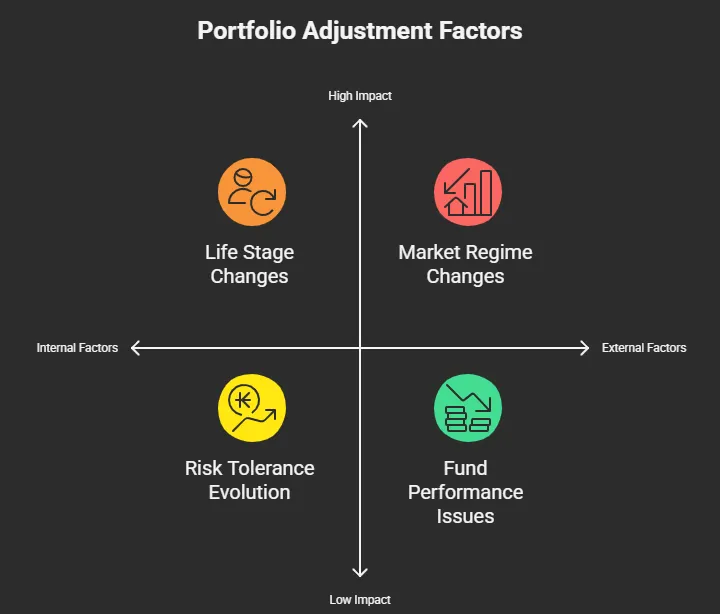
Life Stage Changes: As you approach retirement, gradually shift toward more conservative allocations with higher debt fund weightings and lower equity exposure.
Risk Tolerance Evolution: Changes in financial circumstances or comfort with market volatility may require allocation adjustments to maintain alignment with your risk profile.
Fund Performance Issues: Consistently underperforming funds or those experiencing management changes may require replacement to maintain portfolio effectiveness.
Market Regime Changes: Significant shifts in economic conditions, such as prolonged periods of high inflation or changing interest rate environments, may favor certain asset classes and require tactical adjustments.
Technology and Tools for Portfolio Management
Modern technology offers sophisticated tools for portfolio monitoring and maintenance:
Portfolio Analytics Platforms: Many brokerages now provide comprehensive analytics showing asset allocation, diversification effectiveness, and performance attribution across your holdings.
Automated Rebalancing: Some platforms offer automated rebalancing services that maintain target allocations by making small, regular adjustments to your portfolio.
Goal-Based Planning Tools: Advanced platforms can track progress toward specific financial goals and suggest allocation adjustments to maintain on-target performance.
Building Your Diversification Strategy
Creating an effective diversification strategy requires careful consideration of your unique circumstances and systematic implementation. Start by honestly assessing your risk tolerance, investment horizon, and financial objectives. A 25-year-old beginning their investment journey can afford higher equity exposure and longer-term volatility than someone approaching retirement.
Consider starting with a simple three-fund portfolio comprising a large-cap equity fund, a debt fund, and an international fund, then gradually add complexity as your knowledge and portfolio size grow. This approach ensures you capture the primary benefits of diversification while avoiding overwhelming complexity.
Remember that diversification is not a one-time decision but an ongoing process requiring regular attention and adjustment. Market conditions, personal circumstances, and investment goals evolve over time, necessitating corresponding changes to your diversification strategy.
The path to successful mutual fund portfolio diversification combines theoretical understanding with disciplined implementation. By spreading investments across various asset classes, maintaining systematic investment habits, and regularly monitoring your portfolio’s performance, you position yourself for more consistent, long-term wealth creation while managing downside risk.
Your financial future depends not on finding the perfect mutual fund, but on building a well-balanced portfolio that can weather various market conditions while steadily working toward your financial goals. Start implementing these diversification strategies today, and give your investment portfolio the resilience it needs to thrive across different market cycles.
Disclaimer: The information provided in our blogs is for informational purposes only and should not be construed as financial, investment, or trading advice. Trading and investing in the securities market carries risk. Always conduct your own research and consult with a qualified financial advisor before making any investment decisions. Past performance is not indicative of future results. Copyrighted and original content for your trading and investing needs.
© 2025 — Tradejini. All Rights Reserved.