

This module introduces key single-candlestick patterns that serve as early indicators of potential market reversals an essential skill for traders aiming to spot trend shifts before they fully develop. You will learn how to identify both bullish and bearish formations, such as the Hammer, Inverted Hammer, Bullish Marubozu, Shooting Star, Hanging Man, and Bearish Marubozu. Understanding these patterns will help you recognize signs of buying or selling pressure at crucial support and resistance levels, enabling you to make more informed trading decisions and manage risk effectively.
Imagine being able to read the market’s mood just by looking at a single candle. That’s the power of candlestick patterns! Whether you are a seasoned trader or just starting out, understanding these patterns can give you an edge in spotting trend reversals and momentum shifts. Candlesticks tell a story of buying and selling pressure, helping you make smarter trading decisions. In this article, we will break down some of the most important candlestick patterns, how they work, and how you can use them to time your trades better.
Bullish Single Candlestick Patterns
What is the Hammer
A hammer is a single-candle bullish reversal pattern that appears after a prolonged downtrend. The structure is simple but significant:
It has small real body near the upper end of the candle.
It has long lower shadow that is at least twice the size of the real body.
Little or no upper shadow.
This pattern signals that buyers stepped in after a sharp decline, rejecting lower prices and paving the way for a potential reversal.
What it signifies
The Hammer reflects a critical battle between buyers and sellers. Although sellers drive prices lower initially, buyers regain control and push prices back up, leaving a long lower wick. This shift in momentum often indicates that the downtrend is losing strength.
How to trade it:
Confirmation: Once the hammer is spotted on chart wait for the next candle to close above the Hammer’s high to confirm the reversal and trade
Entry Point: Enter a long position once confirmation occurs.
Stop-Loss: Place a stop-loss below the low of the Hammer to manage risk.
Target: Aim for the nearest resistance level or use a risk-reward ratio of 1:2 or higher.
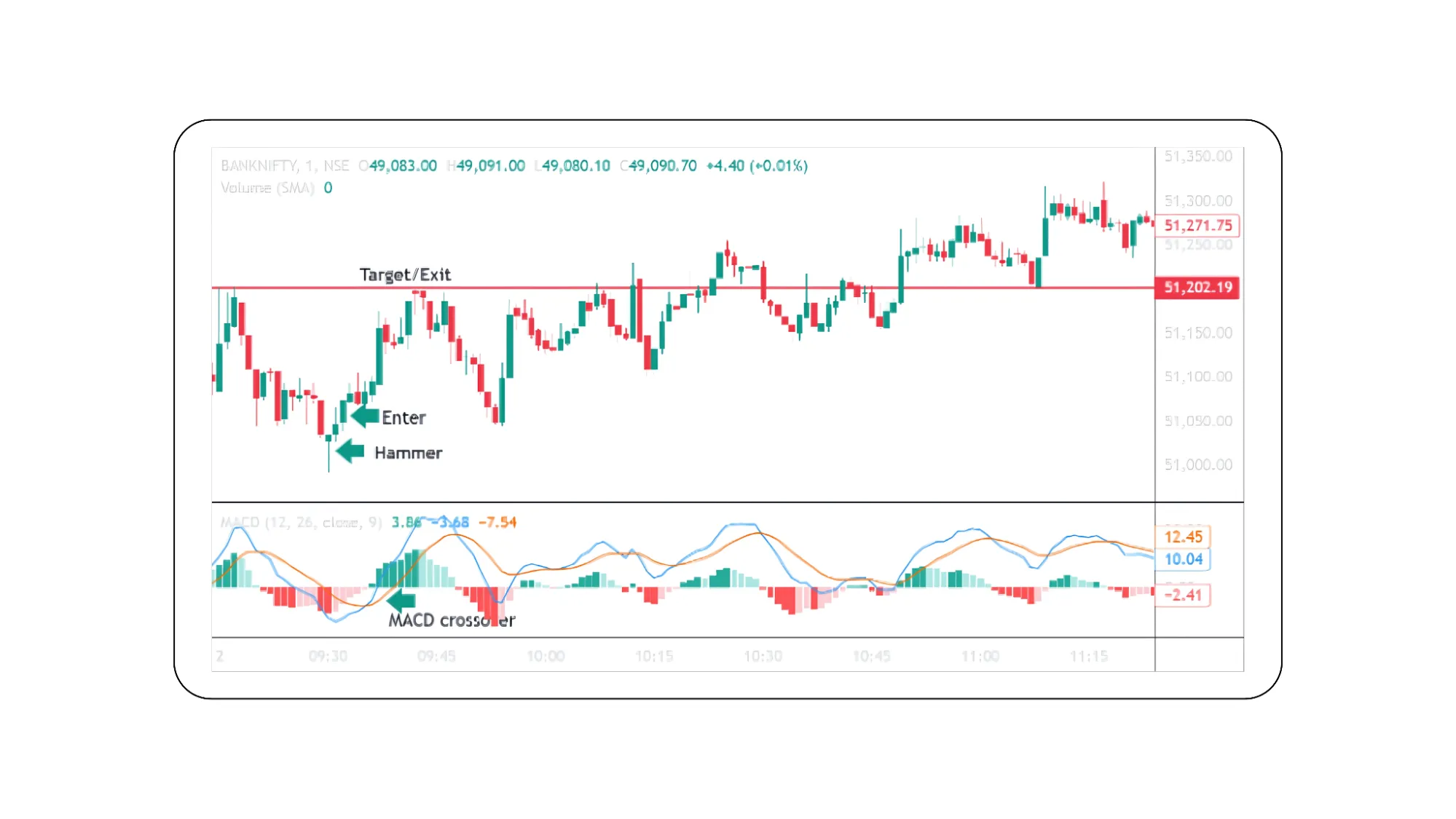
Hammer with MACD combination
Combining the Hammer with additional indicators, such as RSI or MACD,can enhance its reliability and helps identify high-probability setups.
Inverted Hammer
What it Signifies-
The Inverted Hammer appears at the bottom of a downtrend, suggesting that selling pressure is subsiding and buyers may soon take over.
Structure
A small real body near the bottom of the candle.
A long upper shadow that is at least twice the length of the body.
Little to no lower shadow.
How to trade-
Confirmation:After identifying an Inverted Hammer during a downtrend, wait for a subsequent bullish candle that closes above the high of the Inverted Hammer. This confirmation indicates that buyers are gaining control.
Entry: Initiate a long position once confirmation is received.
Stop-Loss: Place it below the low of the Inverted Hammer.
Target: Use nearby resistance levels levels as exit points.
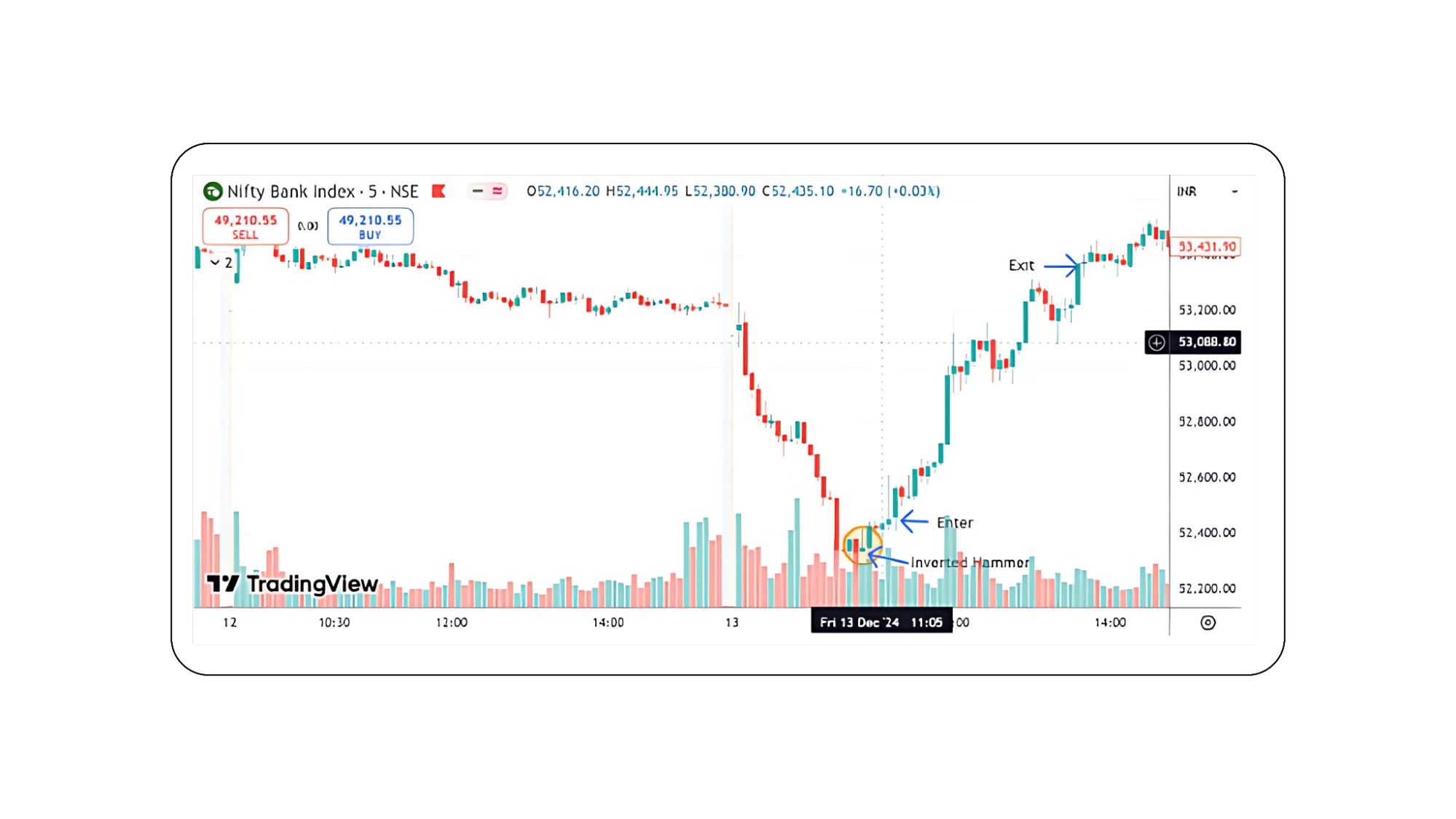
What is the Bullish Marubozu
A Bullish Marubozu is a powerful single-candle bullish continuation or reversal pattern that signals strong buying pressure. It suggests that buyers controlled the entire trading session, pushing prices higher without resistance from sellers.
Structure
Full-bodied bullish candle with little to no wicks.
Opens at the low and closes at the high, showing complete dominance of buyers.
Appears in both uptrends (continuation signal) and downtrends (potential reversal signal).
This pattern reflects market confidence, as prices rise steadily from open to close without hesitation, suggesting that bullish momentum may continue.
Bullish Marubozu
What it signifies
The Bullish Marubozu represents aggressive buying interest, where demand outweighs supply. Since there are no wicks (or very small ones), it indicates that sellers had little to no influence during the session. When seen in an existing uptrend, it reinforces bullish continuation. In a downtrend, it suggests that buyers are stepping in, hinting at a possible reversal.
How to Trade
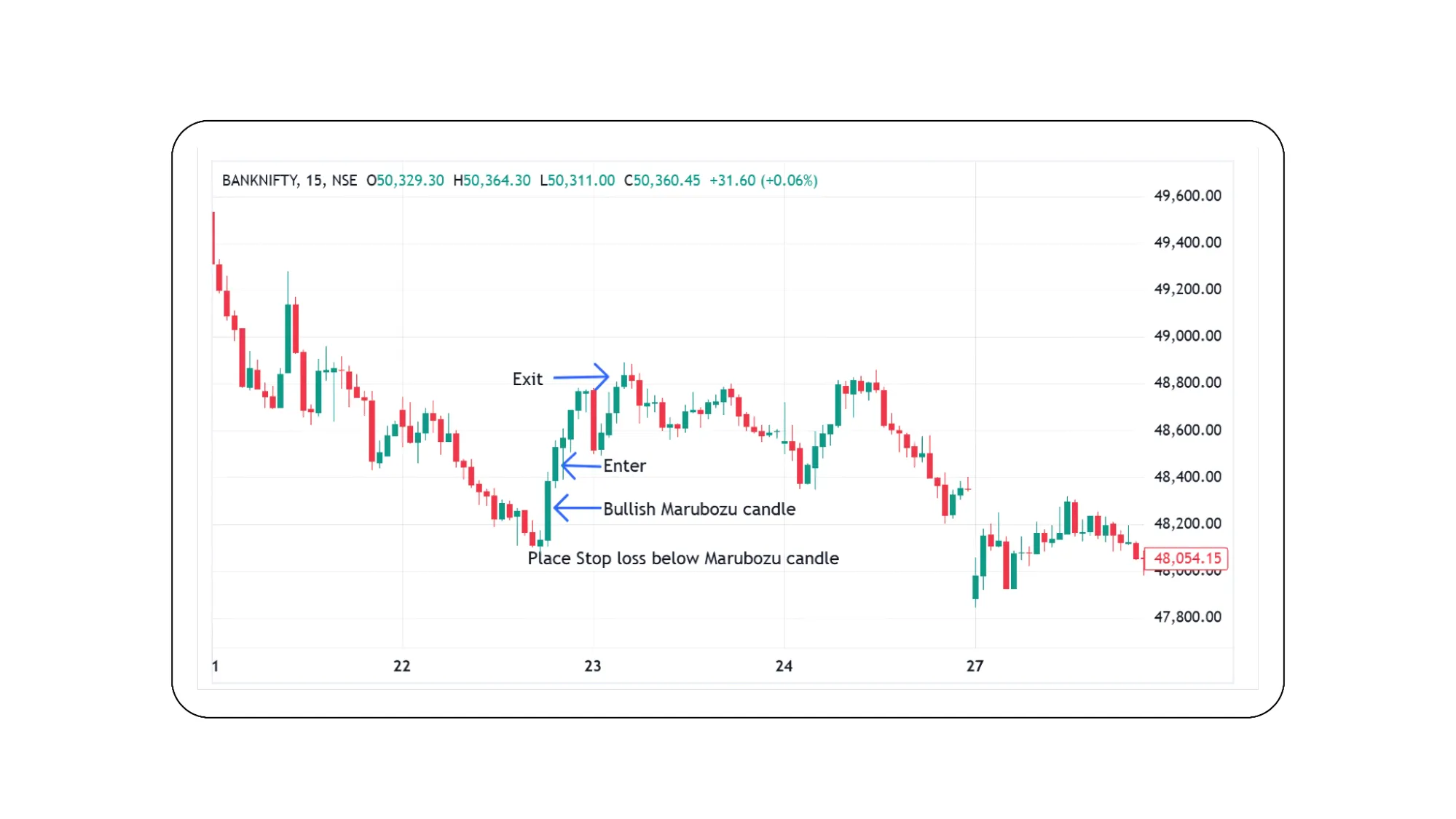
Confirmation:After identifying a Bullish Marubozu, wait for the next candle to close above its high to validate the strength of the bullish momentum. This confirmation helps ensure that buyers are still in control and that the trend is likely to continue or reverse, reducing the chances of a false signal
Entry Point: Enter a long position once confirmation occurs.
Stop-Loss: Place a stop-loss below the low of the Bullish Marubozu to manage risk.
Target: Set a target at the nearest resistance level or use a risk-reward ratio of 1:2 or higher for optimal trade management.
Bearish Single Candlestick Patterns
What is the Shooting Star
A Shooting Star is a single-candle bearish reversal pattern that appears after an uptrend, signaling a potential shift in momentum. It indicates that buyers initially pushed the price higher, but sellers regained control and drove prices back down, weakening the bullish trend.
Structure:
Small real body near the lower end of the candle.
Long upper wick that is at least twice the size of the real body.
Little to no lower shadow, showing weak buying pressure.
This pattern reflects uncertainty and a possible trend reversal, as buyers attempt to push prices higher but fail to maintain control.
Shooting Star
What It Signifies
The Shooting Star suggests that buyers lost momentum and sellers took over, creating a potential bearish reversal. The long upper wick indicates an attempt to continue the uptrend, but the strong rejection of higher prices signals increasing selling pressure. If confirmed, this pattern may indicate the start of a downtrend or at least a temporary pullback.
How to Trade
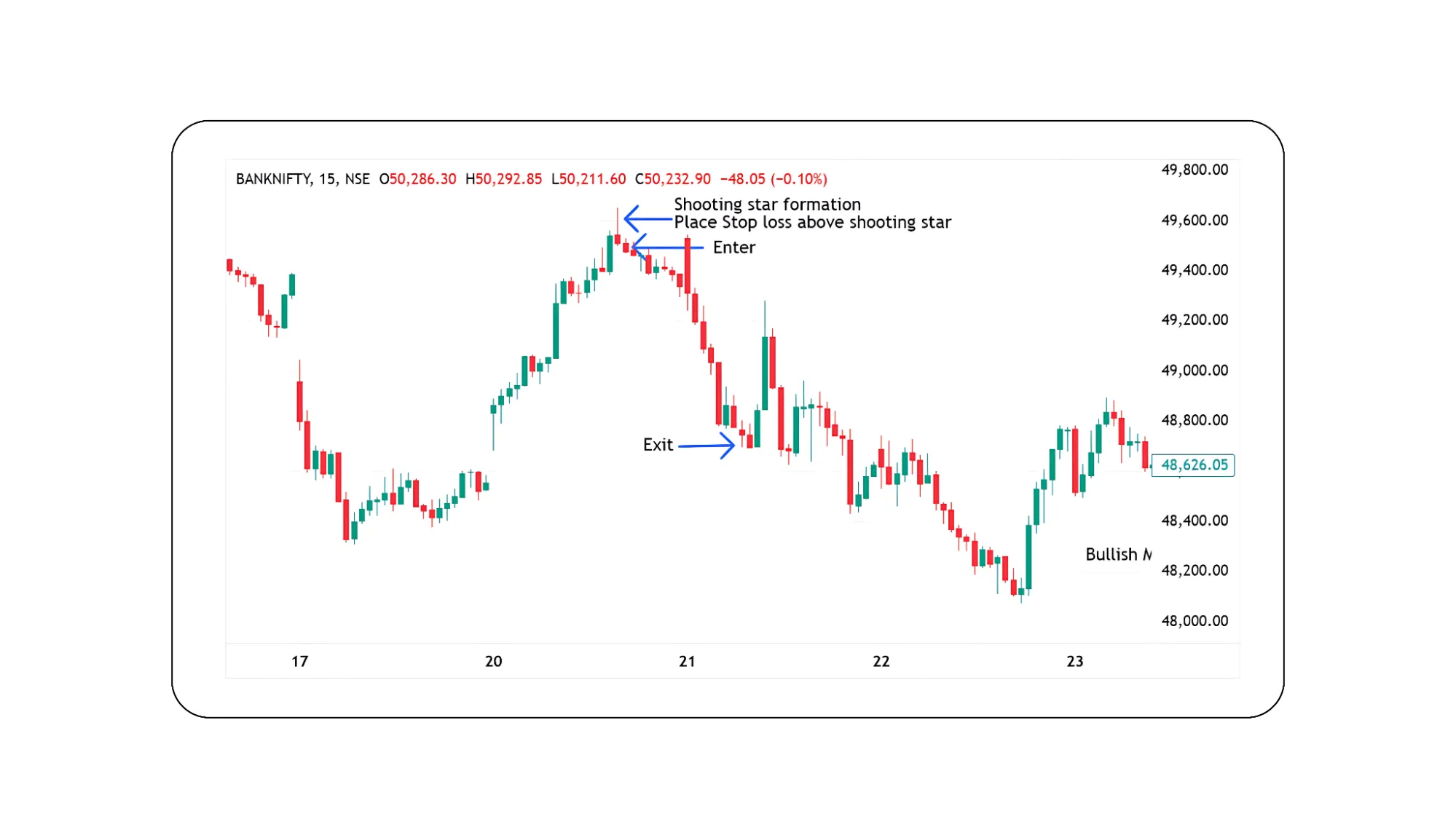
Confirmation: After spotting a Shooting Star, wait for the next candle to close below its low to confirm the bearish reversal. This ensures that sellers have gained control and increases the reliability of the pattern.
Entry Point: Enter a short position once confirmation occurs.
Stop-Loss: Place a stop-loss above the high of the Shooting Star to manage risk and protect against false breakouts.
Target: Set a target at the nearest support level or use a risk-reward ratio of 1:2 or higher for effective trade management.
Hanging Man
The Hanging Man is a bearish reversal candlestick pattern that appears at the top of an uptrend, indicating potential exhaustion of buying momentum and a possible shift toward selling pressure.
Structure:
Real Body: A small body located near the candle's high, which can be either bullish (green or white) or bearish (red or black).
Lower Shadow: A long lower shadow that is at least twice the length of the real body, indicating that sellers pushed prices significantly lower during the session before buyers attempted a recovery.
Upper Shadow: Little to no upper shadow, emphasizing the dominance of the downward movement within the session.
How to Trade:
Confirmation: After identifying a Hanging Man pattern during an uptrend, wait for the next candle to close below the Hanging Man's real body. This bearish confirmation suggests that sellers are gaining control.
Entry: Once confirmation is established, consider entering a short position, anticipating a downward price movement.
Stop-Loss: To manage risk, place a stop-loss order above the high of the Hanging Man candle. This precaution limits potential losses if the anticipated reversal does not materialize.
Target: Identify nearby support levels or previous swing lows as potential exit points to secure profits. These levels often act as barriers where the price may stabilize or reverse again.
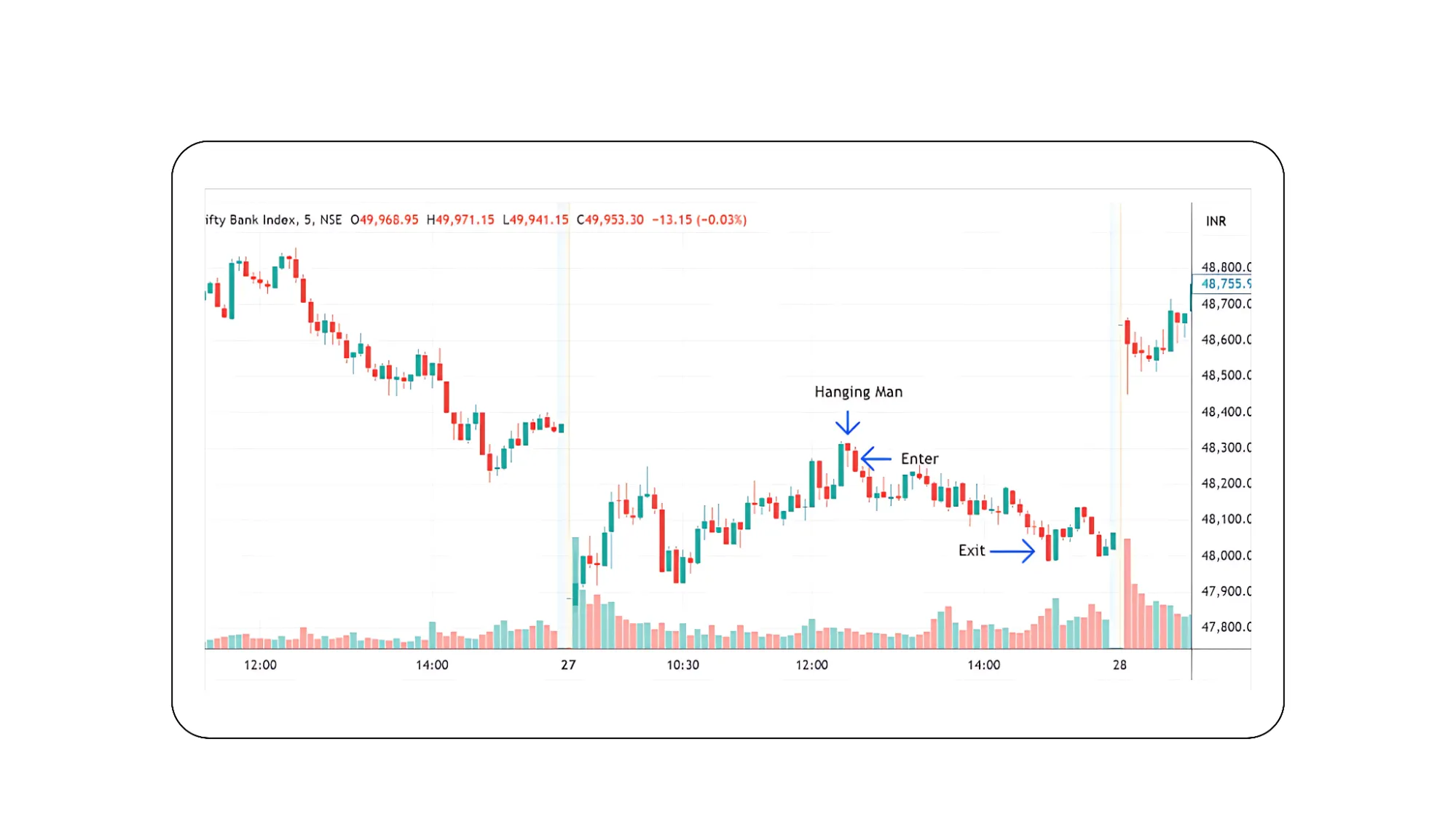
By recognizing the Hanging Man pattern and adhering to a disciplined trading approach, traders can effectively anticipate potential bearish reversals and manage their positions accordingly.
What is the Bearish Marubozu?
A Bearish Marubozu is a powerful single-candle bearish continuation or reversal pattern that signals strong selling pressure. It indicates that sellers controlled the entire trading session, pushing prices lower without resistance from buyers.
Structure:
Full-bodied bearish candle with little to no wicks.
Opens at the high and closes at the low, showing complete dominance of sellers.
Appears in both downtrends (continuation signal) and uptrends (potential reversal signal).
This pattern reflects market weakness, as prices fall steadily from open to close without hesitation, suggesting that bearish momentum may continue.
Bearish Marubozu: What It Signifies
The Bearish Marubozu represents aggressive selling interest, where supply outweighs demand. Since there are no wicks (or very small ones), it indicates that buyers had little to no influence during the session. When seen in an existing downtrend, it reinforces bearish continuation. In an uptrend, it suggests that sellers are stepping in, hinting at a possible reversal.
How to Trade the Bearish Marubozu:
Confirmation: After spotting a Bearish Marubozu, wait for the next candle to close below its low to confirm the bearish momentum. This ensures that sellers are still in control and increases the reliability of the pattern.
Entry Point: Enter a short position once confirmation occurs.
Stop-Loss: Place a stop-loss above the high of the Bearish Marubozu to manage risk and protect against false breakouts.
Target: Set a target at the nearest support level or use a risk-reward ratio of 1:2 or higher for optimal trade management.
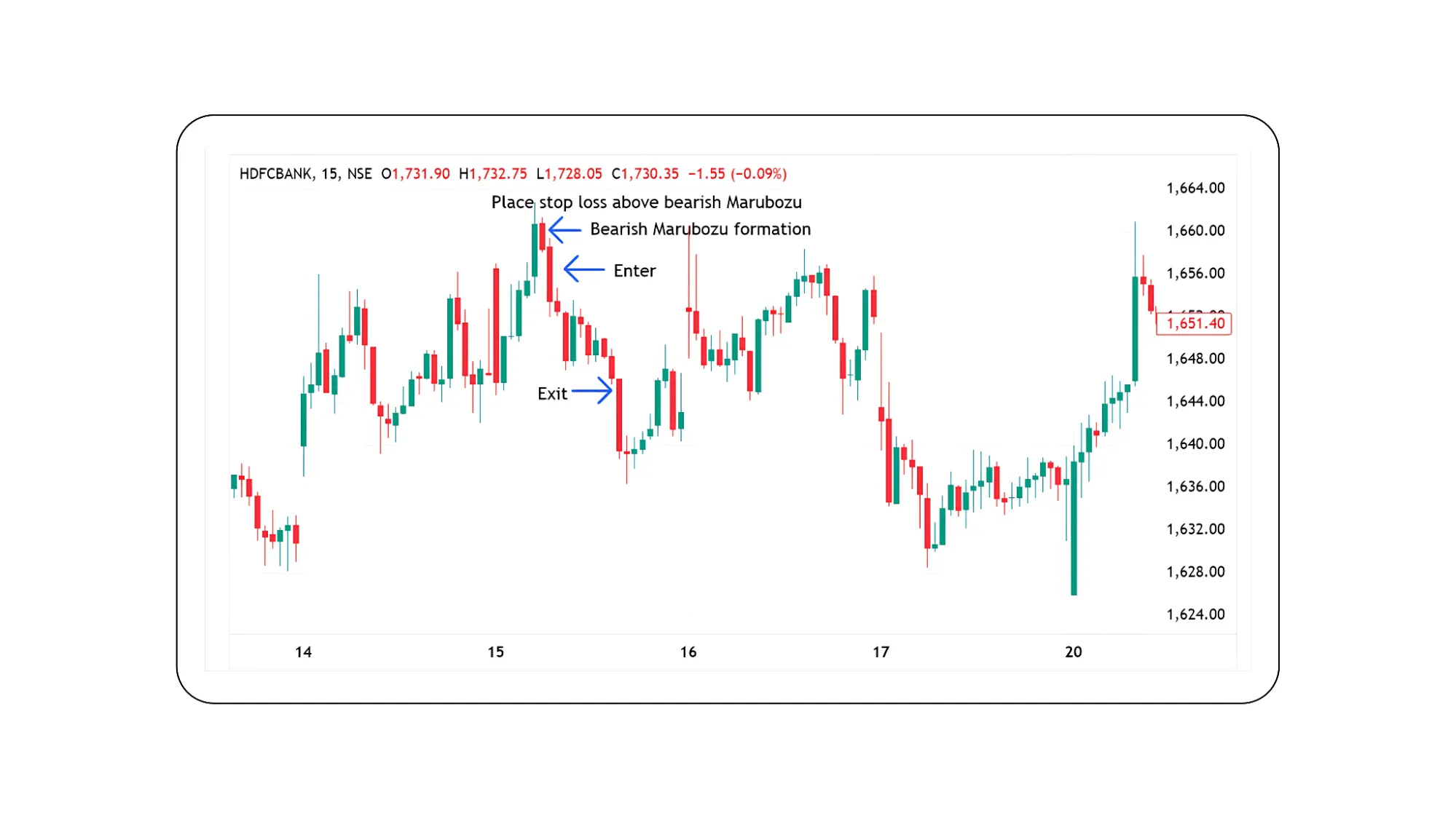
Always check the risk-to-reward ratio before entering any trade; a ratio of at least 1:2 is generally a good setup. If a trade doesn't meet these criteria, it is best to aviod. This disciplined approach is key to managing risk and protecting your trading capital over time.
Candlestick patterns can be applied across different time frames, whether you are looking at short-term intraday charts or longer-term positional trades. On shorter time frames, such as 5-minute or 15-minute charts, candlestick patterns can help identify quick market reversals or trends, ideal for intraday traders. On longer time frames, such as daily or weekly charts, these patterns provide a broader view of market sentiment and potential trend shifts, suitable for positional trading. When combined with supporting indicators like moving averages, RSI, volume or MACD, candlestick patterns can provide additional confirmation, boosting confidence in trade decisions and reducing the risk of false signals.
When one candle tells the whole story
Mastering these single-candlestick patterns can give you a crucial edge in the market, helping you spot potential reversals before they fully play out. By recognizing these signals at key support and resistance levels, you will be better equipped to time your trades, manage risk, and stay ahead of market moves. Keep practicing, stay patient, and let the candles guide your decisions!
Also Read Two Essential Candlestick Patterns for Market Timing
Disclaimer: The information provided in our blogs is for informational purposes only and should not be construed as financial, investment, or trading advice. Trading and investing in the securities market carries risk. Always conduct your own research and consult with a qualified financial advisor before making any investment decisions. Past performance is not indicative of future results. Copyrighted and original content for your trading and investing needs.
©️ 2025 — Tradejini. All Rights Reserved.


