Have you ever analyzed a stock chart and wondered whether a trend will persist or reverse? Understanding candlestick continuation patterns can help traders make informed decisions by providing insights into market sentiment.
In this article, we explore key continuation patterns that indicate an ongoing trend is likely to continue. Whether you're trading in an uptrend or downtrend, recognizing these formations can help you capitalize on market momentum. We’ll cover both bullish and bearish continuation patterns, including:
- Bullish continuation patterns: Rising Three Methods, Rising Window, and Upside Tasuki Gap.
- Bearish continuation patterns: Falling Three Methods, Falling Window, and Downside Tasuki Gap.
Candlestick analysis, multi-candle formations provide deeper insights into market sentiment and momentum shifts. Such formations are indications of sustained buying and selling pressure, which means trend reversals or continuations are possible. Traders that understand their structures, their significance, and their best approach can help traders to make more informed decisions and capitalize on emerging bullish trends. Let us discuss these patterns that very important and powerful; along with that will be the possibility of trading with them.
Rising Three Methods
What It Signifies
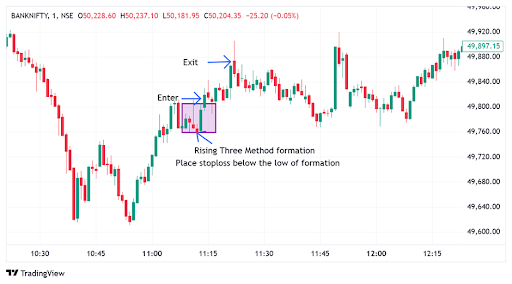
The Rising Three Methods is a bullish continuation pattern that signals temporary consolidation before the uptrend resumes. It indicates that while sellers attempt to push prices down, buyers remain in control, absorbing the selling pressure and eventually driving the price higher.
Structure
- The pattern starts with a strong bullish candle, confirming an existing uptrend.
- This is followed by three small bearish candles that move slightly lower but remain within the range of the first bullish candle, showing a controlled pullback rather than a reversal.
- A final strong bullish candle emerges, closing above the high of the first candle, confirming the continuation of the uptrend.
How to Trade
- Confirmation: Wait for the final bullish candle to close above the first candle’s high. This confirms the pattern and signals that buyers are regaining control.
- Entry: Enter a long trade once the strong bullish candle confirms a breakout above the consolidation zone.
- Stop-Loss: Place a stop-loss below the low of the three small bearish candles to manage risk.
- Target: Set profit targets using previous swing highs or a 1:2 risk-reward ratio.
Rising Window
What It Signifies
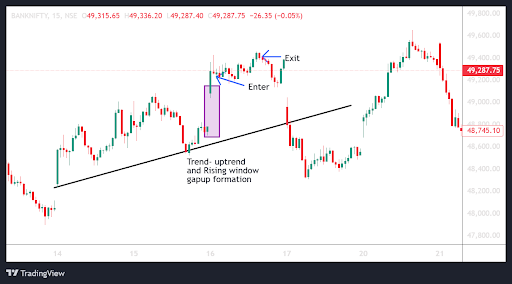
The Rising Window pattern represents a bullish gap in price, indicating strong buyer interest. This pattern often appears during uptrends, signaling a continuation of the bullish momentum.
Structure
- First bullish candle forms, leaving a gap above the previous candle’s high.
- Second candle keeps the gap unfilled, acting as a support zone.
How to Trade
- Confirmation: Once the Rising Window pattern forms, observe if the gap remains unfilled in the following candles. If the price holds above the gap, it confirms strong bullish momentum and signals continuation.
- Entry: Enter a long trade near the gap’s support level or any bearish candle which suggest buyers taking it up and the price pulls back.
- Stop-Loss: Place your stop-loss below the gap.
- Target: Use previous swings or risk to reward 1:2 as targets.
Upside Tasuki Gap:
What It Signifies
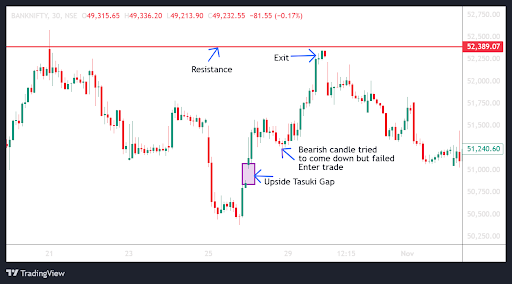
The Upside Tasuki Gap is a continuation pattern that shows buyers are holding their ground and are likely to push prices higher. It forms in strong uptrends, reinforcing the bullish sentiment.
Structure
- First bullish candle forms.
- Second one bullish candle gaps up.
- A bearish candle follows but fails to close the gap, confirming support.
How to Trade
- Confirmation: Once the Upside Tasuki Gap pattern is spotted, wait to see if the gap remains unfilled in the following candles. If the price holds above the gap, it confirms bullish strength and signals a continuation of the uptrend.
- Entry: Enter a long position after the bearish candle forms and fails to fill the gap.
- Stop-Loss: Place your stop-loss below the gap.
- Target: Aim for the next resistance level or risk to reward ratio 1:2
Falling Three Methods
What It Signifies
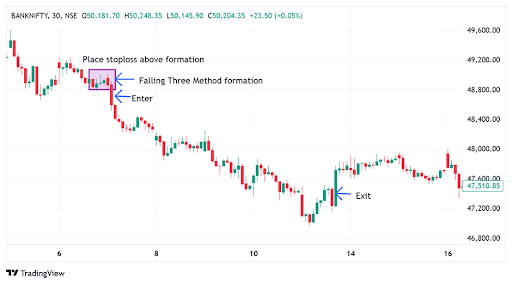
The Falling Three Methods is a bearish continuation pattern that indicates a brief pause before the downtrend resumes. It shows that while buyers attempt to push prices up, they lack the strength to reverse the trend, allowing sellers to regain control and drive prices lower.
Structure
- The pattern begins with a strong bearish candle, confirming an ongoing downtrend.
- This is followed by three small bullish candles that move slightly higher but remain within the range of the first bearish candle, signaling a weak retracement rather than a reversal.
- A final strong bearish candle emerges, closing below the low of the first candle, confirming the continuation of the downtrend.
How to Trade
- Confirmation: Wait for the final bearish candle to close below the first candle’s low. This confirms that sellers have regained control and the downtrend is continuing.
- Entry: Enter a short trade once the strong bearish candle confirms a breakdown below the consolidation zone.
- Stop-Loss: Place a stop-loss above the high of the three small bullish candles to manage risk.
- Target: Set profit targets using previous swing lows or a 1:2 risk-reward ratio.
Falling Window
What It Signifies
The Falling Window is a bearish continuation pattern that signals strong selling pressure. It forms when a price gap occurs during a downtrend, showing that sellers remain in control. This pattern suggests further downside movement as buyers fail to close the gap, reinforcing bearish sentiment.
Structure
- A bearish candle forms, followed by a gap-down opening in the next session.
- The second candle also closes lower, keeping the gap unfilled.
- The gap acts as a new resistance level, preventing prices from moving higher.
How to Trade
- Confirmation: If the price fails to close the gap and continues to decline, it confirms bearish momentum.
- Entry: Enter a short position after the gap-down candle forms and sellers hold control.
- Stop-Loss: Place a stop-loss above the gap to protect against false breakouts.
- Target: Use previous swing lows or a 1:2 risk-reward ratio as targets.
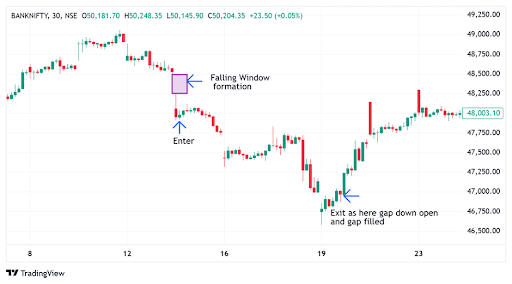
The Falling Window pattern is a clear sign of persistent bearish sentiment and is commonly seen during strong downtrends.
Downside Tasuki Gap
What It Signifies
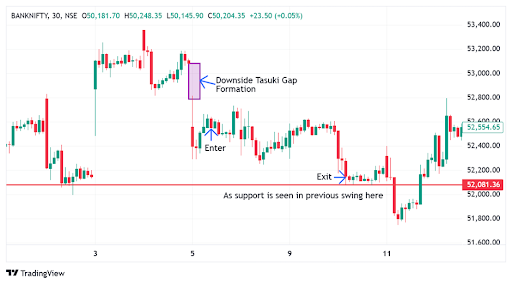
The Downside Tasuki Gap is a bearish continuation pattern that reinforces a downtrend. It suggests that after a gap-down move, buyers attempt to regain control but fail to close the gap, confirming ongoing selling pressure.
Structure
- A strong bearish candle forms, reinforcing the downtrend.
- The next candle opens with a gap down, continuing the selling pressure.
- A small bullish candle forms afterward, attempting to close the gap but failing to do so.
How to Trade
- Confirmation: If the small bullish candle fails to close the gap and sellers step in again, it confirms bearish strength.
- Entry: Enter a short position once price resumes its downward move after the failed gap closure.
- Stop-Loss: Place a stop-loss just above the gap or the high of the bullish candle.
- Target: Use previous support levels or a 1:2 risk-reward ratio for profit-taking.
Key Takeaways
These continuation patterns can be used for both intraday and positional trading.
Risk-reward ratio is crucial—only take trades where the potential reward justifies the risk.
Support and resistance levels play a key role—always analyze where the pattern is forming before entering a trade.
A well-planned entry and exit strategy enhances the effectiveness of these patterns in trading.
Conclusion
Continuation candlestick patterns help traders identify and confirm ongoing trends, allowing them to make informed trading decisions on Tradejini. Bullish patterns like the Rising Three Methods, Rising Window, and Upside Tasuki Gap signal strong buying momentum, while bearish patterns like the Falling Three Methods, Falling Window, and Downside Tasuki Gap indicate sustained selling pressure. By understanding these patterns, traders can anticipate market movements and position themselves effectively to ride trends with confidence.