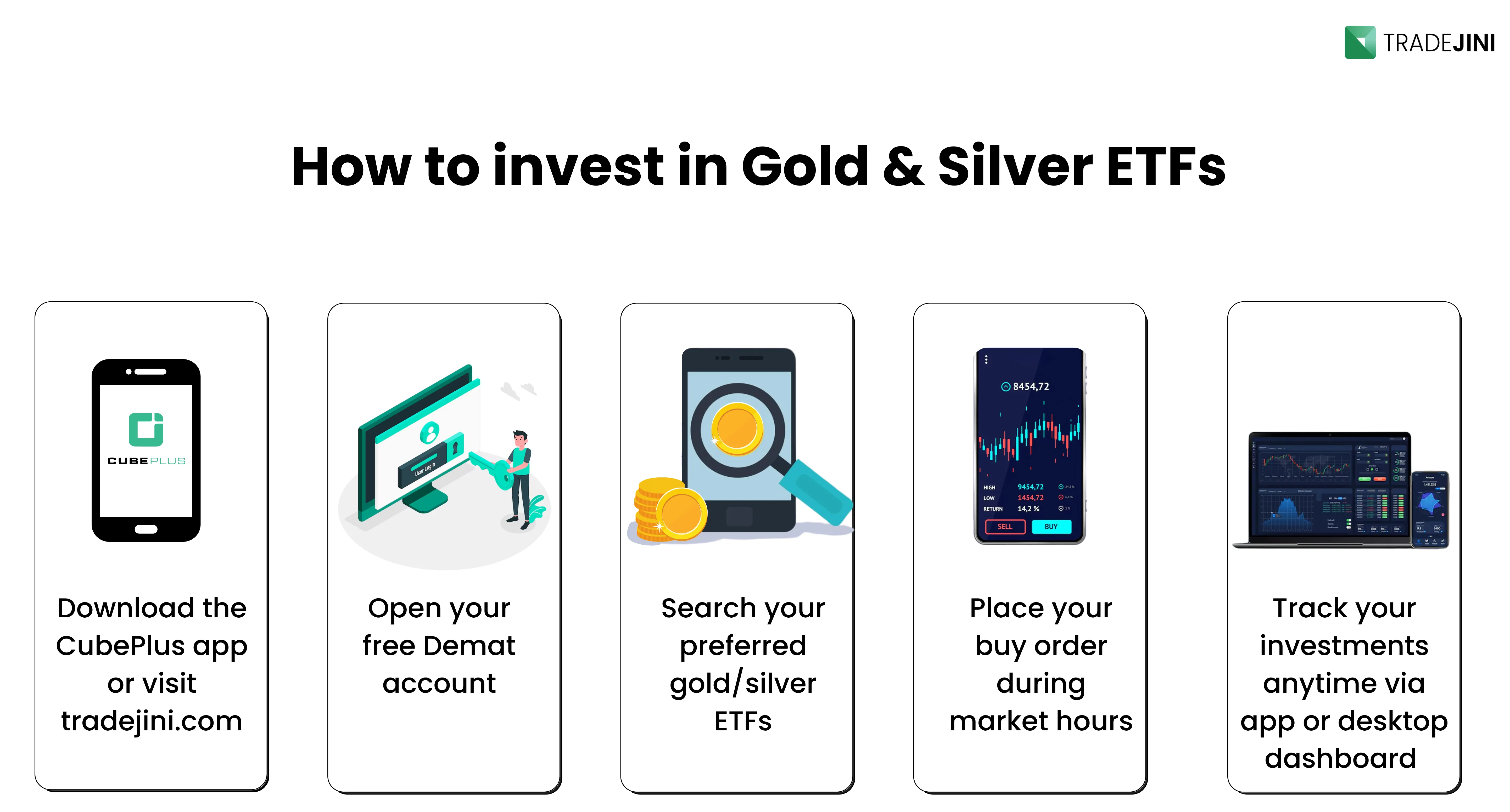
With Indian investors seeking ways to diversify their investments, gold and silver ETFs have gained significant popularity in recent years. These investment products offer a simple, cost-effective, and transparent way to gain exposure to precious metals, with investments starting as low as ₹92. Compared to physical gold, ETFs eliminate the need for storage, insurance, and purity concerns. They can also be easily traded on major stock exchanges like NSE and BSE.
How ETFs are created
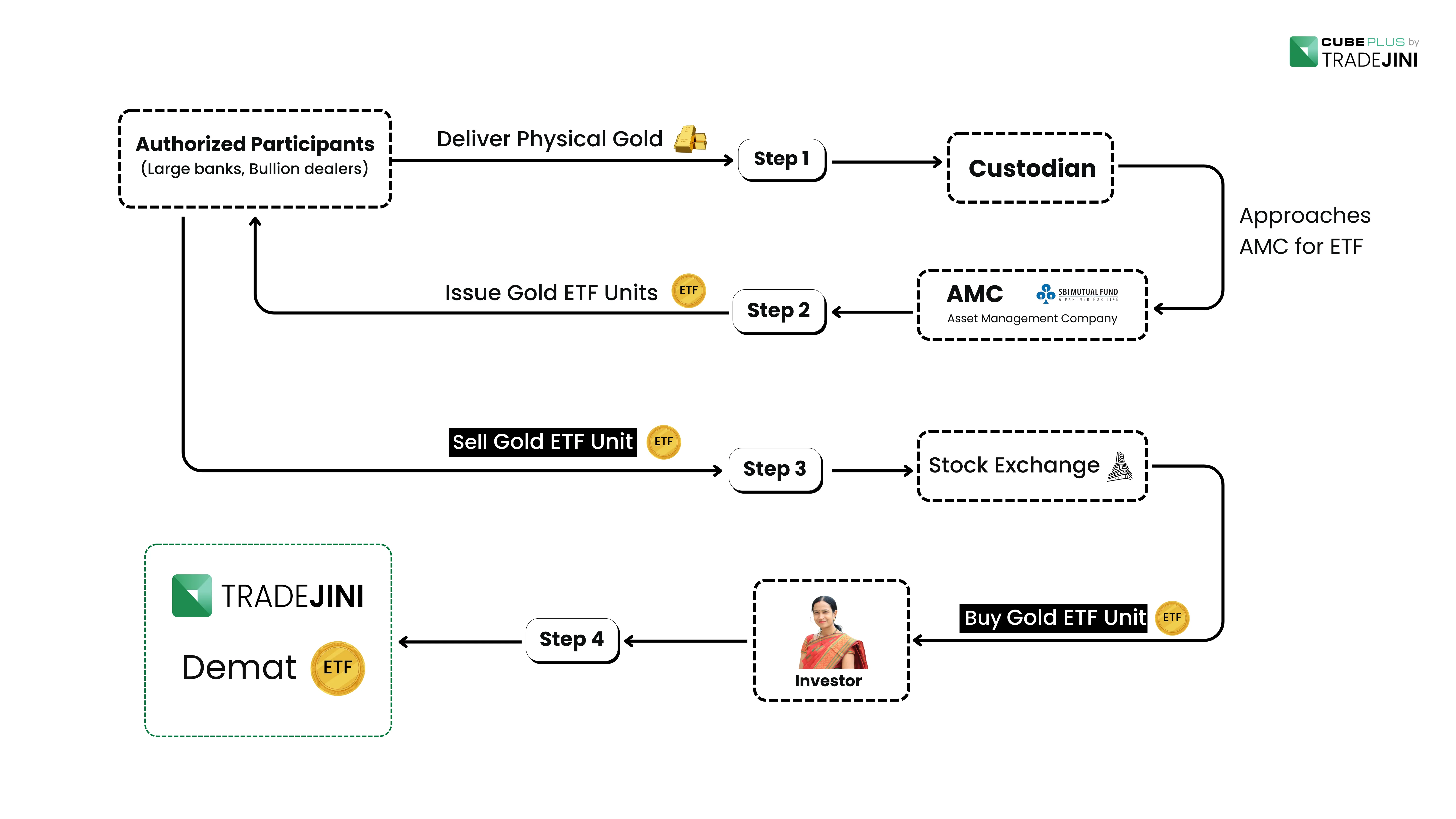
1. AMC (Asset Management Company)
AMCs (Asset Management Companies) are the driving force behind ETFs. They come up with the idea, design the product, and decide key details like purity, unit size for the ETF shares. For instance, Nippon India launched Gold BeES; each unit of Gold BeES represents 0.01 gram of 24 karat gold. These units are initially created and sold to authorised participants, who then help provide liquidity in the market. The AMC also handles issuing ETF units, tracking the value of the underlying assets, and publishing the daily iNAV (indicative Net Asset Value) so investors can easily know the current worth of the ETF.
2. Authorised Participants (APs)
Authorised Participants, or APs, are typically large institutional players like banks and brokers. They act as a bridge between the AMC and the market. To get ETF units, APs deliver 24 karat physical gold to the AMC. In return, the AMC issues an equivalent number of ETF units. These APs then help provide liquidity by making the ETF units available for trading on stock exchanges.
3. Custodian
A custodian is a secure vault. It holds the physical gold or silver on behalf of AMC In India, custodians could be SBI-SG Global, HDFC Bank, etc.
They ensure: The ETF is backed by real assets like gold or silver. In case of heavy selling of ETF units in secondary markets, Authorised Participants will take ETF units and give them to the AMC, who in turn will pull the underlying assets from the custodian and give them to the Authorised Participants.
Gold ETFs
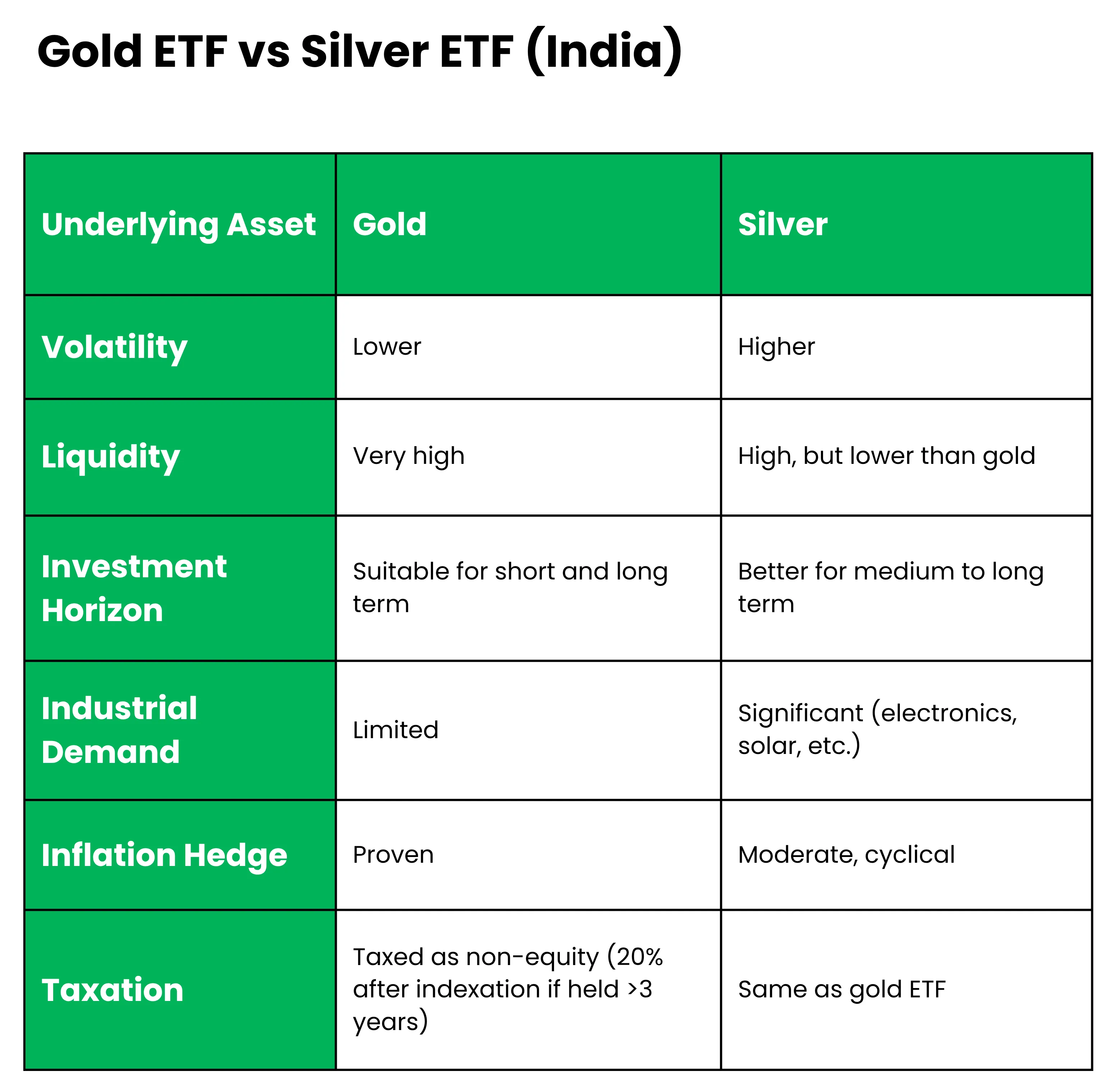
The primary objective of these funds is to closely track the domestic price of gold. So, when gold prices in India rise or fall, the value of your Gold ETF investment moves in the same direction. This offers a hassle-free way to invest in gold without worrying about storage, purity, or security.
Each unit of a Gold ETF typically represents a fixed quantity of gold. For example,
- ICICI Prudential Gold ETF = 0.01 gram of gold
- Kotak Gold ETF = 0.01 gram of gold
- SBI Gold ETF = 0.01 gram of gold
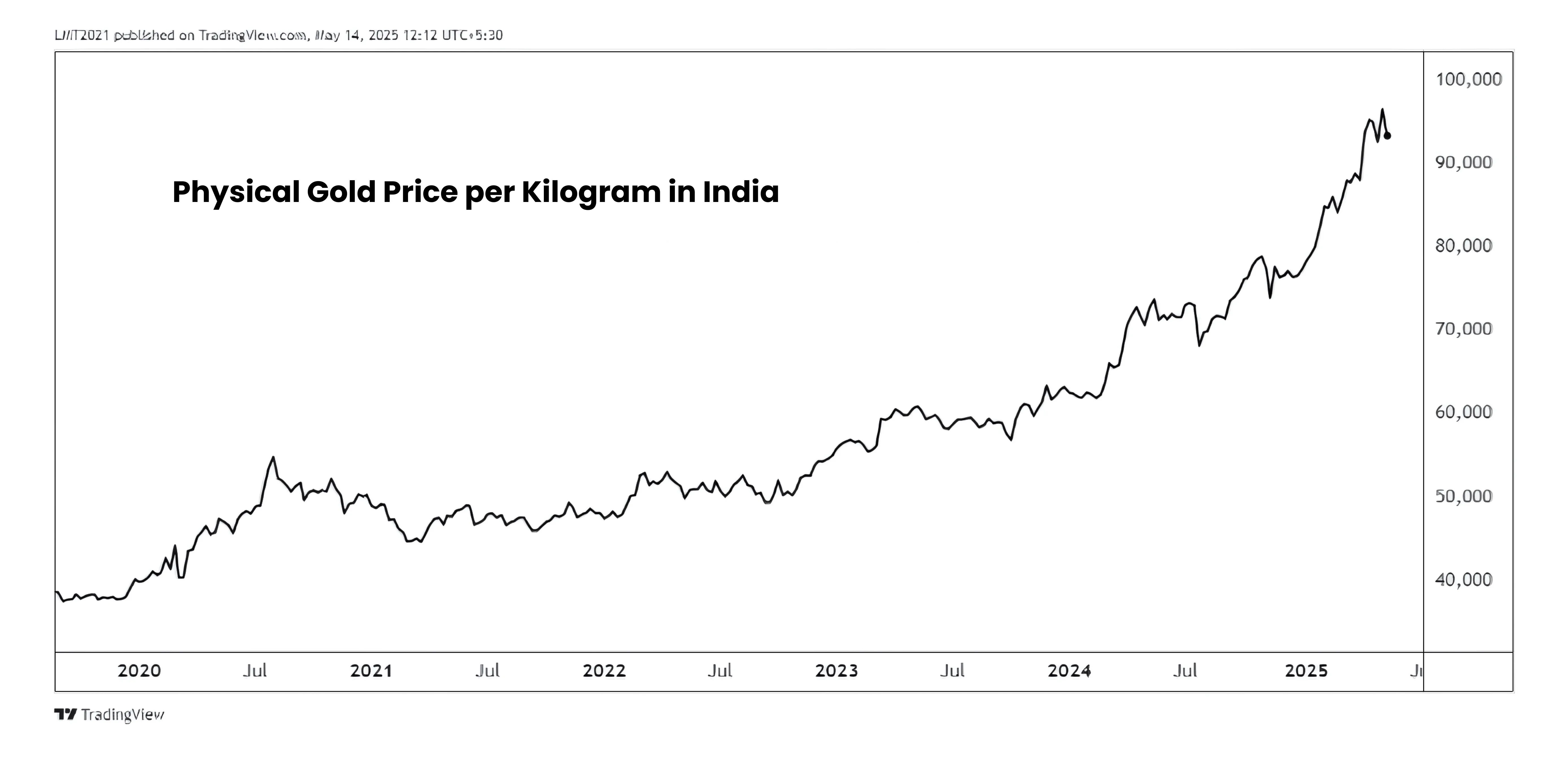
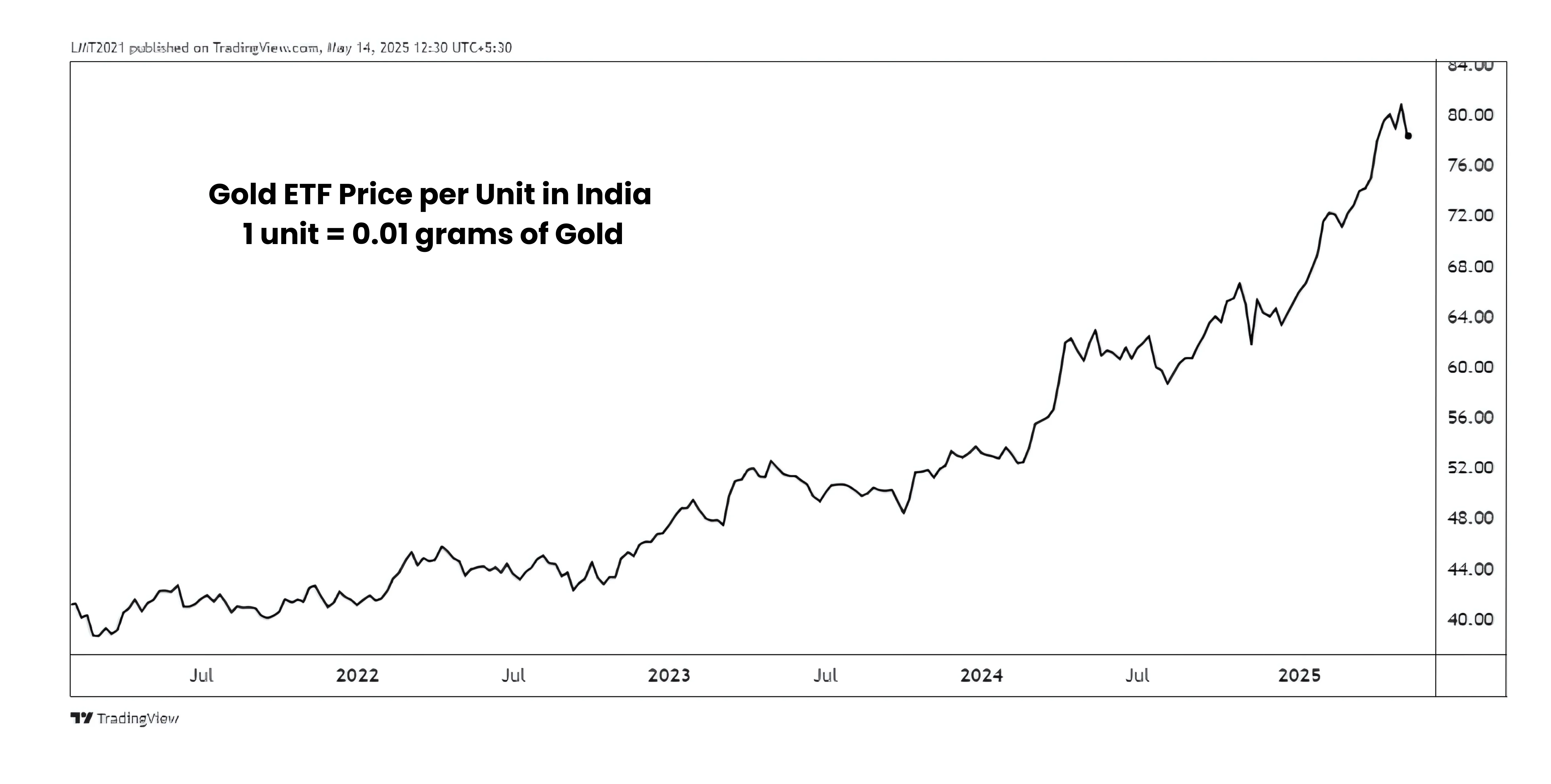
Some of the best gold ETFs in India 2025 include the Nippon India ETF Gold Bees, HDFC Gold ETF, and SBI Gold ETF, all of which are traded on stock exchanges like NSE and BSE and regulated by SEBI.
2. Silver ETFs
Silver ETFs function in much the same way as gold ETFs. These funds invest in physical silver or silver-backed financial instruments, aiming to mirror the prevailing silver prices in the Indian market.
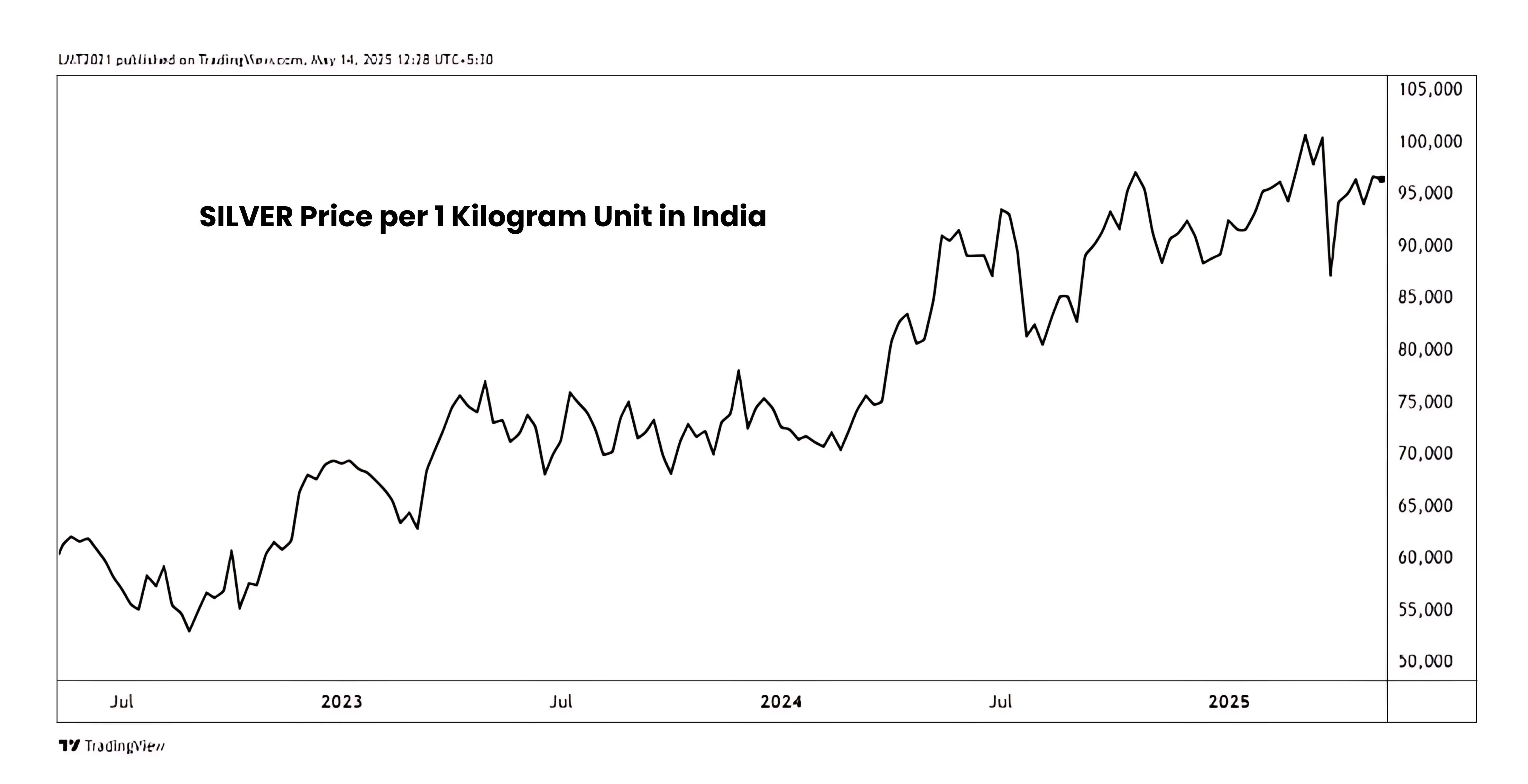
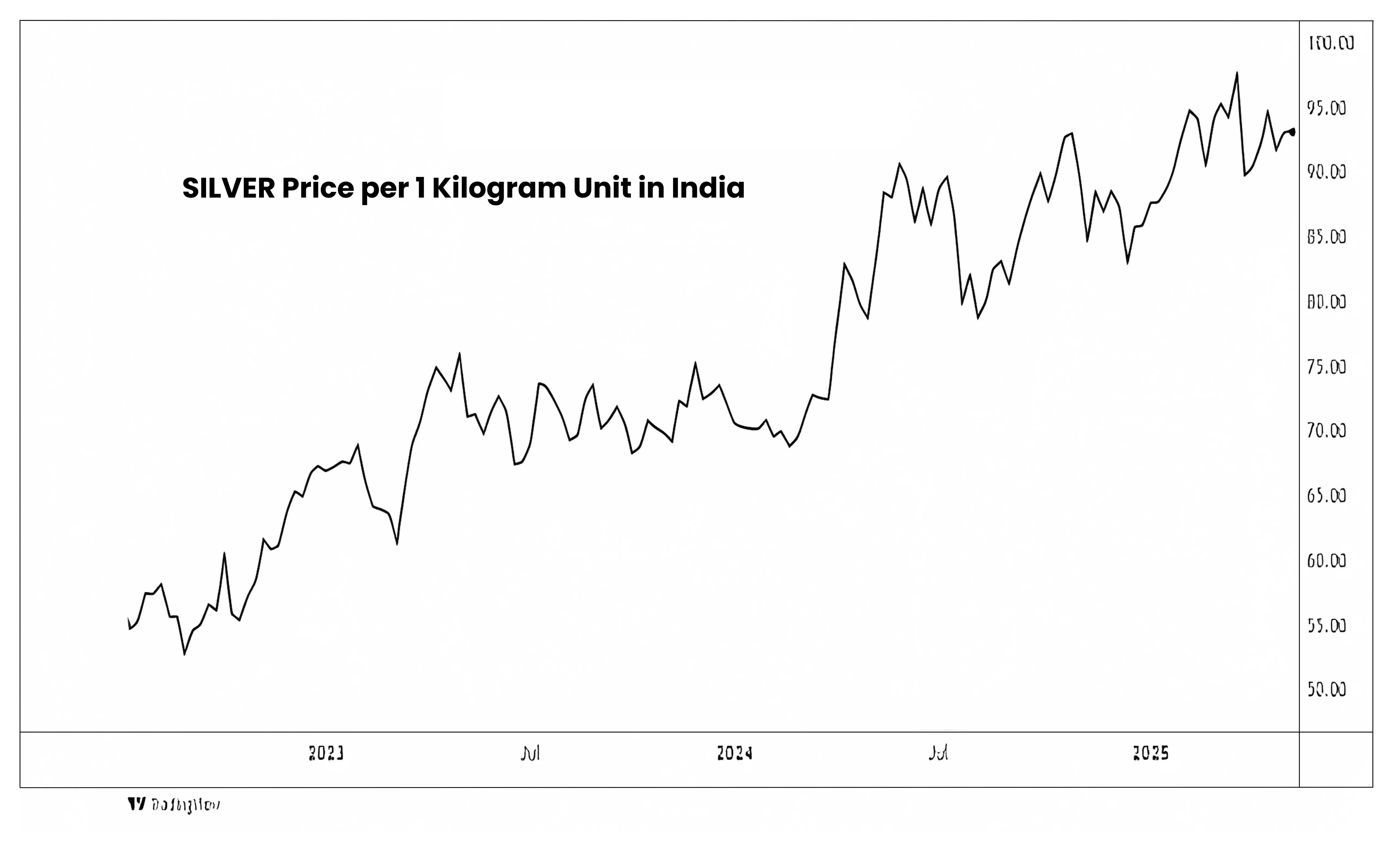
By purchasing units of a silver ETF, investors learn how to invest in silver ETF products and gain exposure to silver without having to deal with the logistics and risks of storing the metal physically.
Silver ETF investment for Indians is made easier with options like the Nippon India Silver ETF and the ICICI Prudential Silver ETF, both of which are easily accessible on stock exchanges and provide a convenient route to participate in the potential growth of silver as both a precious and industrial metal.
Annualised returns snapshot (as of May 6, 2025)
The table below shows gold ETF returns in India along with silver ETF performance over different time frames.
| Period | Nippon India ETF Gold BeES (%) | Nippon India Silver ETF (%) |
|---|---|---|
| 1 Year | 33.26% | 32.96% |
| 2 Year | 21.77% | 18.13% |
| 3 Year | 17.65% | 11.60% |
| 5 Years | 15.53% | — |
| Since Inception | 11.72% | 15.04% |
Note: Silver ETFs in India have a shorter track record, with most launched post-2022.
How to redeen Gold ETFs for physical gold?
Gold ETFs can be purchased or sold on exchanges or subscribed or redeemed directly with an AMC in creation unit sizes. Creation unit size is the minimum units of Gold ETF which an investor can transact with a fund house. Generally, it is equivalent to 1 kg of gold.
One unit of Gold ETF may be equivalent to 0.01, 0.1 or 1 gram of gold and so on, which may vary from AMC to AMC. For instance, if one unit of a Gold ETF is equivalent to 1 gram of gold, the creation unit size is 1,000 units. So, if the creation unit size of your fund is 1,000 units, you can buy or sell in multiples of 1,000. Every fund house has a different creation unit size.
Once you have asserted the minimum Gold ETF units (in creation unit size) to be redeemed, you will have to request the fund house for the redemption process and simultaneously inform your depository participant (DP) to transfer the required number of units to the DP account of the fund house. After confirming your details, the DP will transfer the Gold ETF units to the fund house’s custodian. You would need to pay the differential of the gold value and units of Gold ETF to the fund house. The fund house then issues a delivery order to the investor and the custodian. You must carry your original documents and show them to the custodian during the physical delivery of gold.
Who should invest?
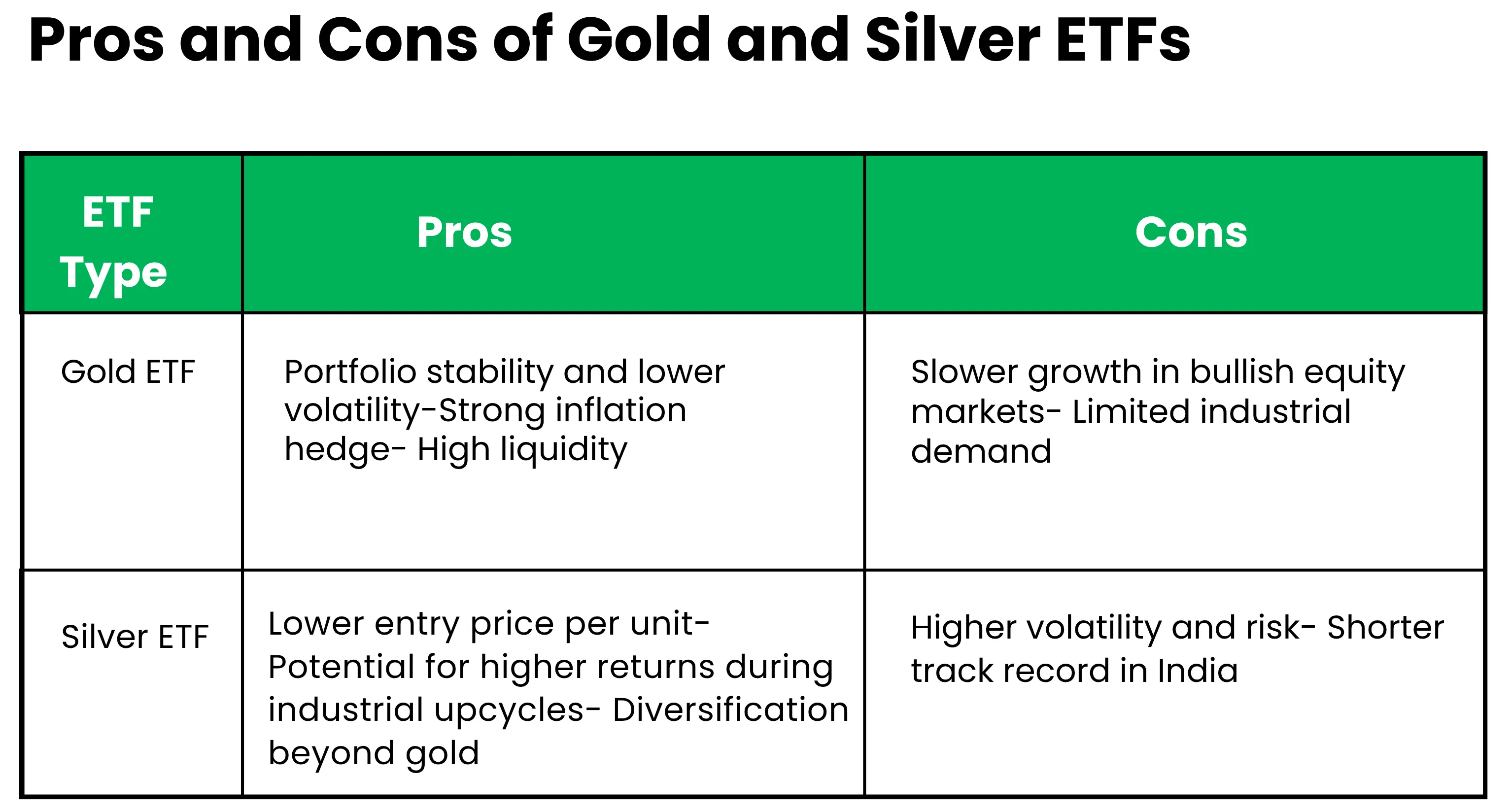
Gold ETFs are best suited for conservative investors looking for stability, protection against inflation, and a hedge during market crises, while silver ETFs are ideal for more aggressive investors who are comfortable with volatility and seek higher growth potential; for a balanced approach, combining both can help capture gold’s stability along with silver’s growth opportunities.
Making the smart choice
Gold and silver ETFs offer a convenient, regulated, and accessible way to invest in precious metals without the complexities of physical ownership. Whether you're aiming for portfolio stability or growth potential, these ETFs can complement a diversified investment strategy. As with any financial product, it's important to align your investment with your goals and risk profile.
Disclaimer: The information provided in our blogs is for informational purposes only and should not be construed as financial, investment, or trading advice. Trading and investing in the securities market carries risk. Always conduct your own research and consult with a qualified financial advisor before making any investment decisions. Past performance is not indicative of future results. Copyrighted and original content for your trading and investing needs.
©️ 2025 — Tradejini. All Rights Reserved.