
_15_11zon.webp%3Falt%3Dmedia%26token%3D6e728422-56ca-4a66-8564-3bcd050f7b6d&w=3840&q=85)
Ravi had been tracking his portfolio for weeks. Stock A had given him a tidy profit, but Stock B was bleeding loss. Frustrated, he decided to sell the winning stock to book his gains. But before hitting the sell button on the losing one, he remembered something his friend Meera had once mentioned: tax loss harvesting.
Curious, Ravi decided to give her a call.
‘Hey Meera, I’m thinking of selling off a stock that’s losing money. But it feels like locking in a bad decision.’
‘Not necessarily,’ Meera said. ‘You can actually use that loss to cut down your tax bill. It’s called tax loss harvesting.’
What is Tax Loss Harvesting?
Tax loss harvesting is a strategy where you sell underperforming assets to create capital losses that can be used to offset gains from profitable investments. This reduces your overall taxable income, lowering the taxes you owe.
In simple terms, instead of just swallowing the loss, you turn it into a tax-saving tool. By offsetting your gains with losses, you reduce the amount of capital gains tax you need to pay.
Offset Short-Term Losses Against Long-Term Gains
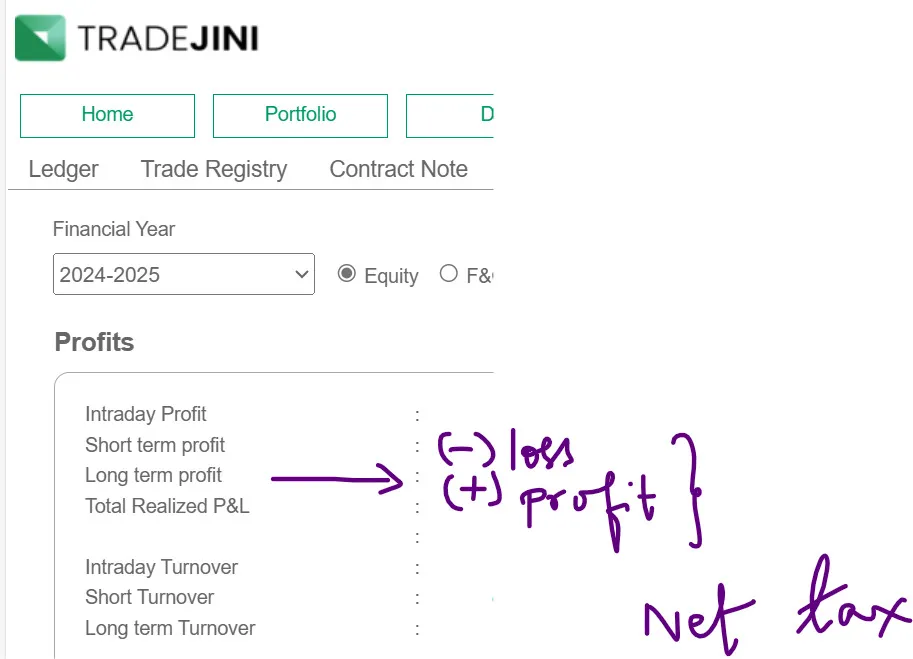
You can reduce your tax liability by offsetting short-term losses (STCL) against both short-term (STCG) and long-term gains (LTCG). However, long-term losses can only be offset against Long Term Gains For instance, here's how Ravi's situation would play out:
Example:
If Ravi has a ₹2,00,000 LTCG and a ₹50,000 STCL, he can offset the loss:
₹2,00,000−₹50,000=₹1,50,000(net taxable gain)
He will only pay 12.5% tax on ₹1,50,000, lowering his tax outgo.
Tip: You can track your Realized P&L under Portfolio → Ledger → P&L Summary on Tradejini to plan your tax-saving moves effectively.How It Works
Here’s how Ravi’s situation would play out:
He sells Stock A with a ₹1,00,000 short-term gain, which is taxed at 20% (₹20,000 tax liability).
He also sells Stock B, which is at a ₹60,000 short-term loss.
By using tax loss harvesting, he offsets the loss against the gain:
₹1,00,000−₹60,000=₹40,000 (net taxable gain) ₹1,00,000 - ₹60,000 = ₹40,000 (net taxable gain)
- His revised tax liability:
₹40,000×20%=₹8,000
Tax saved: ₹20,000 − ₹8,000 = ₹12,000.
Offsetting Capital Gains with Losses
When applying tax loss harvesting, it’s important to know which types of losses can be offset against which gains:
Short-term capital losses (STCL): These can be offset against both short-term and long-term gains.
Long-term capital losses (LTCL): These can only be offset against long-term gains.
If your losses exceed your gains, you can carry them forward for up to 8 assessment years and use them to offset future capital gains.
For example:
If you have ₹2,00,000 in short-term losses but only ₹1,50,000 in gains, the remaining ₹50,000 loss can be carried forward to reduce future tax liabilities.
Benefits of Tax Loss Harvesting
Tax Savings: The primary benefit is reducing your tax liability by offsetting gains with losses.
Carry Forward Losses: If you have more losses than gains, you can carry them forward for up to 8 years to offset future gains.
Portfolio Cleanup: Tax loss harvesting rules lets you exit underperforming investments while making room for better opportunities.
Maintaining Asset Allocation: You can reinvest the proceeds into similar but non-identical assets, keeping your portfolio balanced without triggering wash-sale rules.
Risks and Considerations
While tax-loss harvesting offers clear benefits, it’s not without risks:
Wash-Sale Rule: If you sell an asset at a loss and repurchase the same or a substantially identical asset shortly after, the tax authorities may disallow the loss. It’s best to wait before buying it back to avoid this.
Short-Term Decisions: Don’t sell investments solely for tax benefits if they still have long-term potential. Prioritize your overall portfolio health.
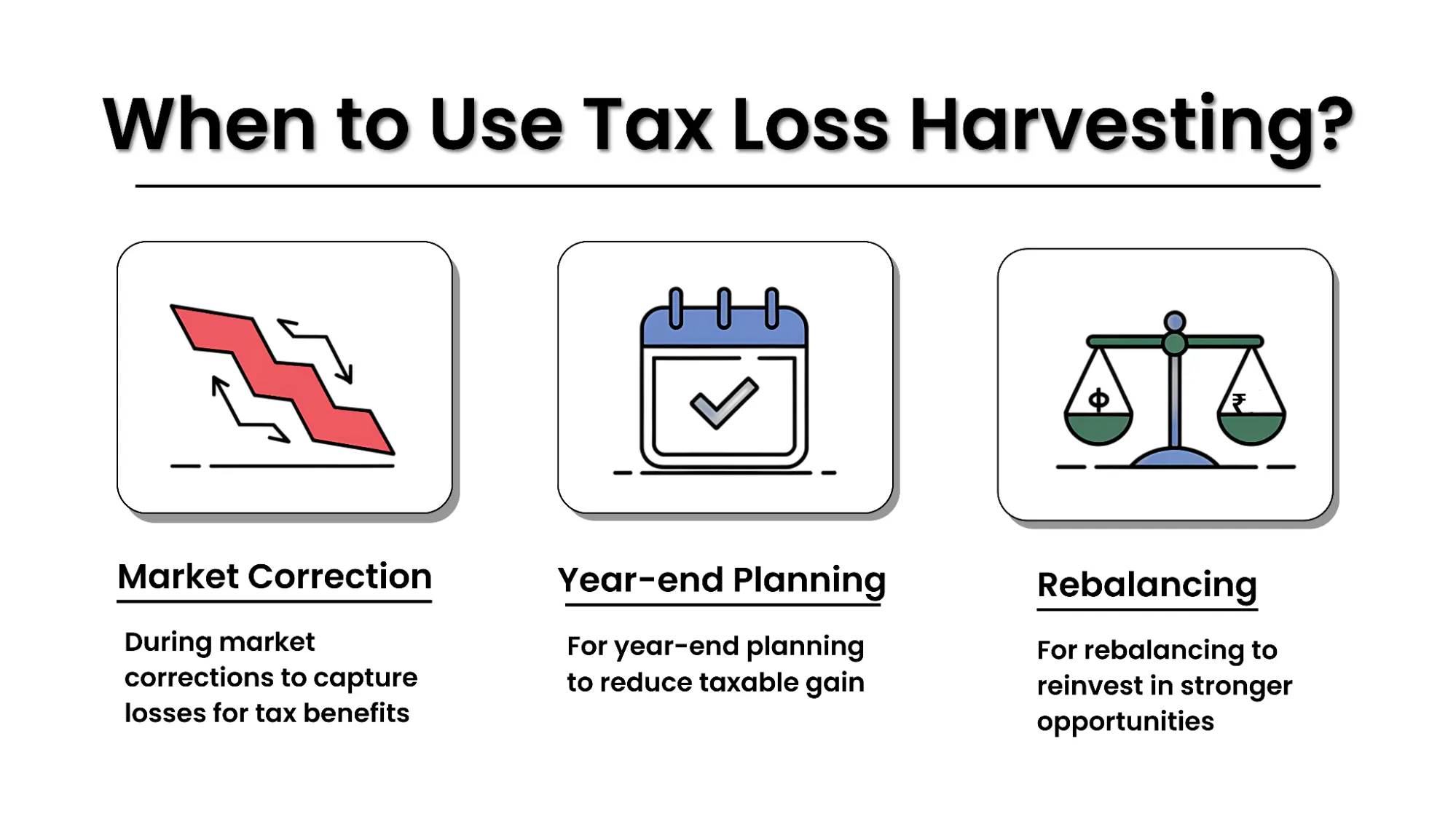
Timing Matters: Tax loss harvesting is most effective when done strategically, often before the financial year-end.
Harvest Losses Smartly
Tax loss harvesting is a smart way to turn market losses into tax advantages. By strategically offsetting your gains with losses, you can reduce your tax liability and keep your portfolio efficient. However, it’s important to apply this strategy carefully, keeping your long-term financial goals in mind.
‘Tax Your Losses, Not Your Gains’
Disclaimer: The information provided in our blogs is for informational purposes only and should not be construed as financial, investment, or trading advice. Trading and investing in the securities market carries risk. Always conduct your own research and consult with a qualified financial advisor before making any investment decisions. Past performance is not indicative of future results. Copyrighted and original content for your trading and investing needs.
© 2025 — Tradejini. All Rights Reserved.