


Owning a premium smartphone often means more than just having a phone: a sleek, stylish device that blends cutting-edge technology with a sense of luxury. It’s not merely a phone; it’s a status symbol. Whether it is the premium design, the exclusivity, or the social appeal that comes with owning one (or even the influence of peer pressure), the significance of a flagship smartphone is undeniable, especially among Gen Z. For many, it represents more than functionality; it is a statement of identity and belonging in a fast-paced, image-conscious world.
But let us take a moment to think about the financial side of this allure. While owning the latest high-end device is exciting, have you ever considered the alternative? What if the money spent on this coveted gadget could work harder for you instead? Imagine investing that amount in a mutual fund or the stock market, letting it grow rather than fade into obsolescence. Let us explore a real-life example to see how trading short-term desires for smart investments can pay off in the long run.
Flagship Phone vs. Stock Investment
In 2014, a flagship smartphone was launched in India at a price of ₹49,990. Back then, owning one symbolized modernity and being part of an elite group of consumers in India.
But pause for a moment. What if, instead of purchasing that smartphone, you had decided to invest that ₹49,990? For example, in 2014, Bajaj Finance Ltd. stock was trading at just ₹155 per share. With ₹49,990, you could have purchased approximately 322 shares. Fast forward to 2nd May 2025, and the stock price has skyrocketed to ₹8,862 per share. That investment would now be worth an astonishing ₹2,853,564. The stock has given an absolute return of 5689% at an impressive CAGR of 46% for just over 11 years.
While the mobile phone offered pride and utility back then, it is now outdated. In contrast, investing in a growing company like Bajaj Finance Ltd. would have transformed your ₹49,990 into a life-changing sum today.
Turning Big-Ticket Purchases into Investment Opportunities
Now that you have seen how investing in a single stock can make a significant difference, let us shift gears and explore how your money can grow with an alternative investment option: the SIP in mutual funds. This method offers a balanced, systematic approach that harnesses the power of consistent contributions and compounding over time. Mutual fund investment in India has become increasingly popular among young investors due to its accessibility, diversification benefits, and potential for long-term growth.
But what if you chose to use that money differently? Imagine being 20 years old and making a smart financial decision: instead of spending ₹49,990 on the latest premium gadget, you invest it as a lump sum in mutual funds. Assuming an average annual return of 18% (while keeping in mind that mutual fund returns can vary), in 20 years, by the time you turn 40, your investment could grow to an impressive ₹13,69,378.
This is the magic of compounding, a power that rewards patience and consistency. Starting early not only amplifies returns but also builds a financial safety net for future aspirations, whether it’s buying a house, funding a child’s education, or enjoying a comfortable retirement.
Why SIPs Work Wonders
SIPs are a brilliant alternative for those wanting a systematic wealth creation approach. They leverage rupee cost averaging to smooth out market fluctuations and allow even small, consistent investments to compound over time.SIP investment benefits include financial discipline, flexibility, and the ability to start small while building wealth gradually.
Mutual funds also evolve with your financial journey. In your 20s, they help establish a foundation. By your 30s and 40s, they support family milestones like education or marriage. In your 50s, they become a tool for retirement planning and creating a legacy.
When selecting a mutual fund, focus on a few key factors:
- Track Record: Choose funds with a history of strong performance.
- Fund Manager: Focus on funds managed by expertise, ensuring well-researched strategies and timely allocation decisions for sustained growth.
- Expense Ratio: Opt for funds with lower fees, allowing a greater portion of your money to stay invested. Inflation: Select funds with returns that consistently outpace inflation to ensure real financial growth.
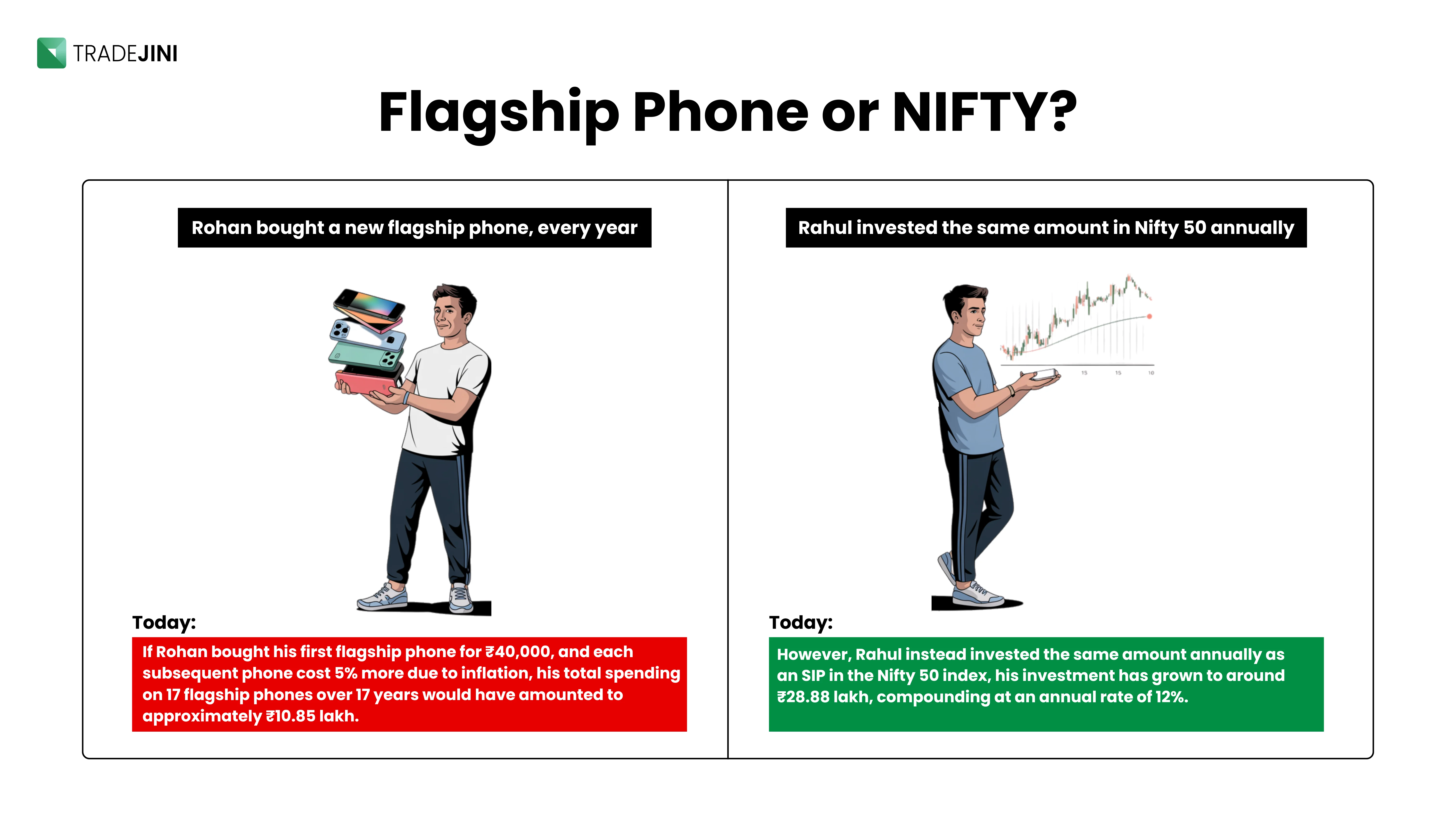
Opportunity Cost and the Bigger Picture
Whether it’s a premium gadget, a luxury vacation, or another indulgence, ‘every rupee spent is a rupee not invested’. While the satisfaction of owning a classy new device is undeniable, its financial cost extends beyond the sticker price.
On the other hand, investments provide long-term financial rewards, ensuring preparedness for life’s uncertainties and enabling milestones without financial stress.
The Final Choice
So, is it a high-end smartphone or SIP? The decision is not about right or wrong, it is about what matters most to you. If the smartphone enhances your life and brings value, it might be worth the investment. But if your focus is on wealth creation and securing your financial future, SIPs or stocks are the smarter choices.
Ultimately, it comes down to priorities: do you value instant gratification or long-term financial growth? Your choices today will shape your tomorrow.
‘So, before making that big purchase, ask yourself: Is this an investment or an expense?’
.webp%3Falt%3Dmedia%26token%3D0ead9799-20bc-4d1e-ae8f-d75ab18921b5&w=3840&q=75)


