

Volatility is a constant companion of financial markets. Whether you're a seasoned trader or a cautious investor, knowing what causes sharp market moves can make all the difference. This article explores key triggers behind volatility, how it has shaped markets historically, and what strategies help in navigating it calmly.
If you are investing in stocks, it is crucial to be prepared for fluctuations and avoid panic-selling during downturns. After all, have markets ever moved in just one direction? Rarely. While buying low and selling high is ideal, timing market tops and bottoms is nearly impossible.
Emotional reactions like panic-selling during corrections or chasing rallies often lead to missed opportunities or avoidable losses. Staying informed about volatility drivers helps investors remain calm and focus on long-term goals.
What causes stock market volatility?
1. Interest rate uncertainty
Central banks such as the Reserve Bank of India (RBI) and the U.S. Federal Reserve significantly influence market sentiment through changes in interest rates.
- Rising interest rates make borrowing more expensive for individuals and businesses. This slows down spending and investment, potentially reducing corporate earnings and dragging down stock prices.
- Falling or steady interest rates ease borrowing, boosting spending and corporate growth, often lifting equity markets.
2. Inflation and economic data
Inflation reduces purchasing power and squeezes company margins when rising costs can't be passed on to consumers.
- A surge in inflation often prompts central banks to tighten monetary policy by raising interest rates.
- While necessary, aggressive rate hikes can stifle growth and weaken investor confidence.
3. Geopolitical events and global conflicts
Global tensions such as wars, trade disputes, or political instability inject uncertainty into financial markets.
- These events disrupt supply chains, influence commodity prices, and create inflationary pressures.
- Investors tend to move towards safe-haven assets like gold or government bonds, leading to sudden market shifts.
Below are a few recent examples:

4. Shifting investor sentiment & market psychology
Investor emotions like fear and greed often override fundamentals, amplifying price swings.
- Bull markets can lead to overoptimism, pushing stocks above fair value and forming bubbles.
- Bear markets can trigger panic-selling, even when fundamentals remain strong.
Case in Point:
In September 2024, FIIs (Foreign Institutional Investors) pulled out nearly ₹3 lakh crore from Indian markets. This heavy outflow put significant pressure on indices and increased overall volatility.
5. Corporate Earnings and Sector-Specific Risks
Corporate earnings reflect a company’s financial health. Strong earnings boost confidence; weak earnings erode it.
- Sectors sensitive to global demand or raw material costs are particularly exposed.
- In Q3 2024, several Indian firms posted below-expectation results, continuing a trend of weakening year-on-year and quarter-on-quarter performance. This further contributed to market uncertainty.

When valuations detach from fundamentals or systemic risks arise (e.g., rate hikes, geopolitical unrest), markets often correct sharply. But timely policy responses can help determine recovery speed.
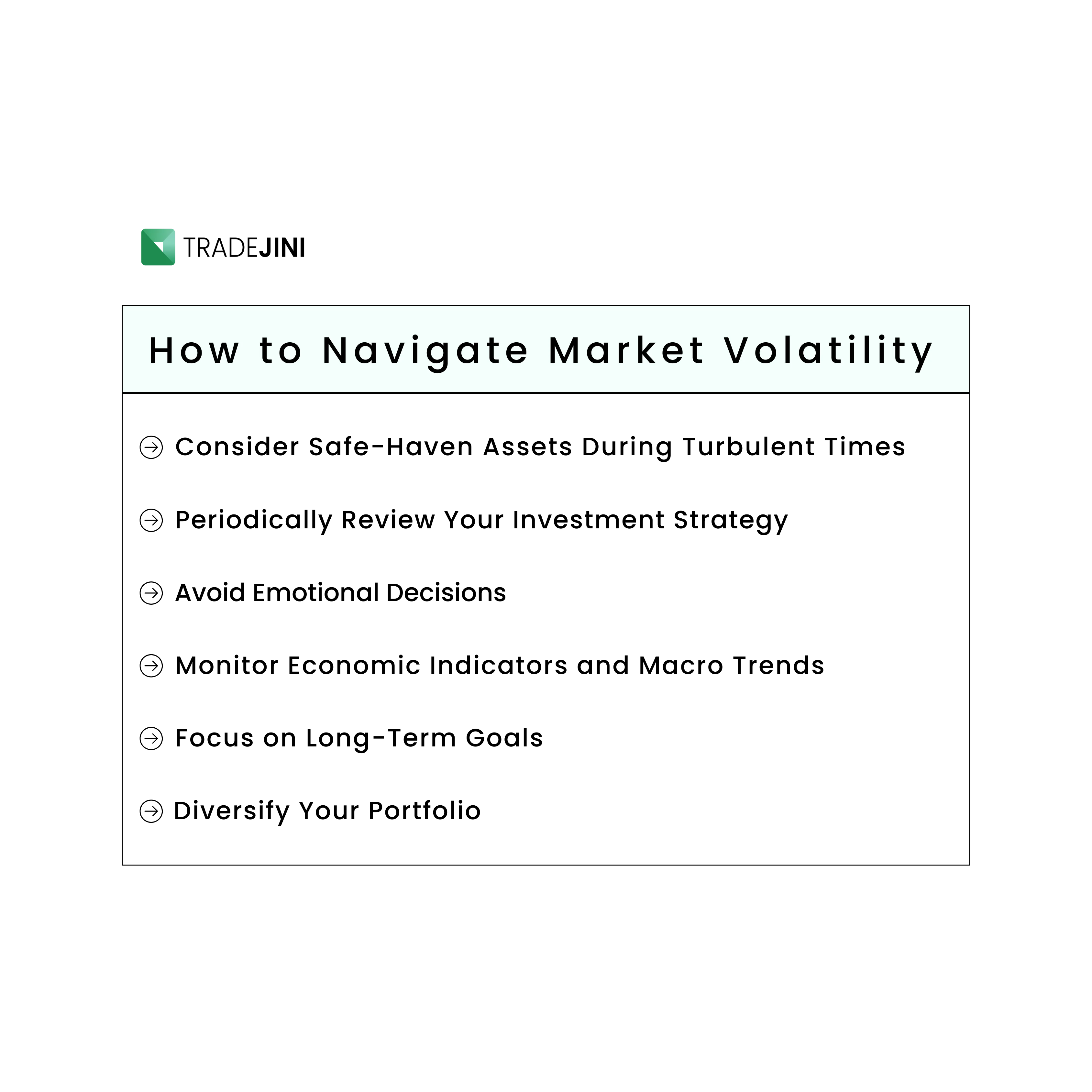
Volatility can be an opportunity
Market volatility is not always bad. For investors who stay calm and informed, it can present entry points and long-term opportunities. The more you understand what's driving volatility, be it policy shifts, global events, or sentiment swings, the better positioned you are to act wisely. Equity market volatility often reflects broader economic uncertainties, while Bank Nifty volatility can highlight stress or momentum within the financial sector specifically. As history shows, patience and discipline often outperform emotional trading, even in the most turbulent times.
.webp%3Falt%3Dmedia%26token%3D0ead9799-20bc-4d1e-ae8f-d75ab18921b5&w=3840&q=75)