

Somewhere between the last Lego set and the first phone, your child steps into the tween years. Pocket money disappears faster, branded sneakers become essential, and weekend plans suddenly cost more than expected. At this stage, kids can understand budgeting, think ahead about saving, and differentiate between needs and wants. But it’s also when peer pressure grows stronger, marketing becomes more persuasive, and digital spending feels effortless, making it the perfect time to teach lasting financial lessons.
Building independence through budgeting
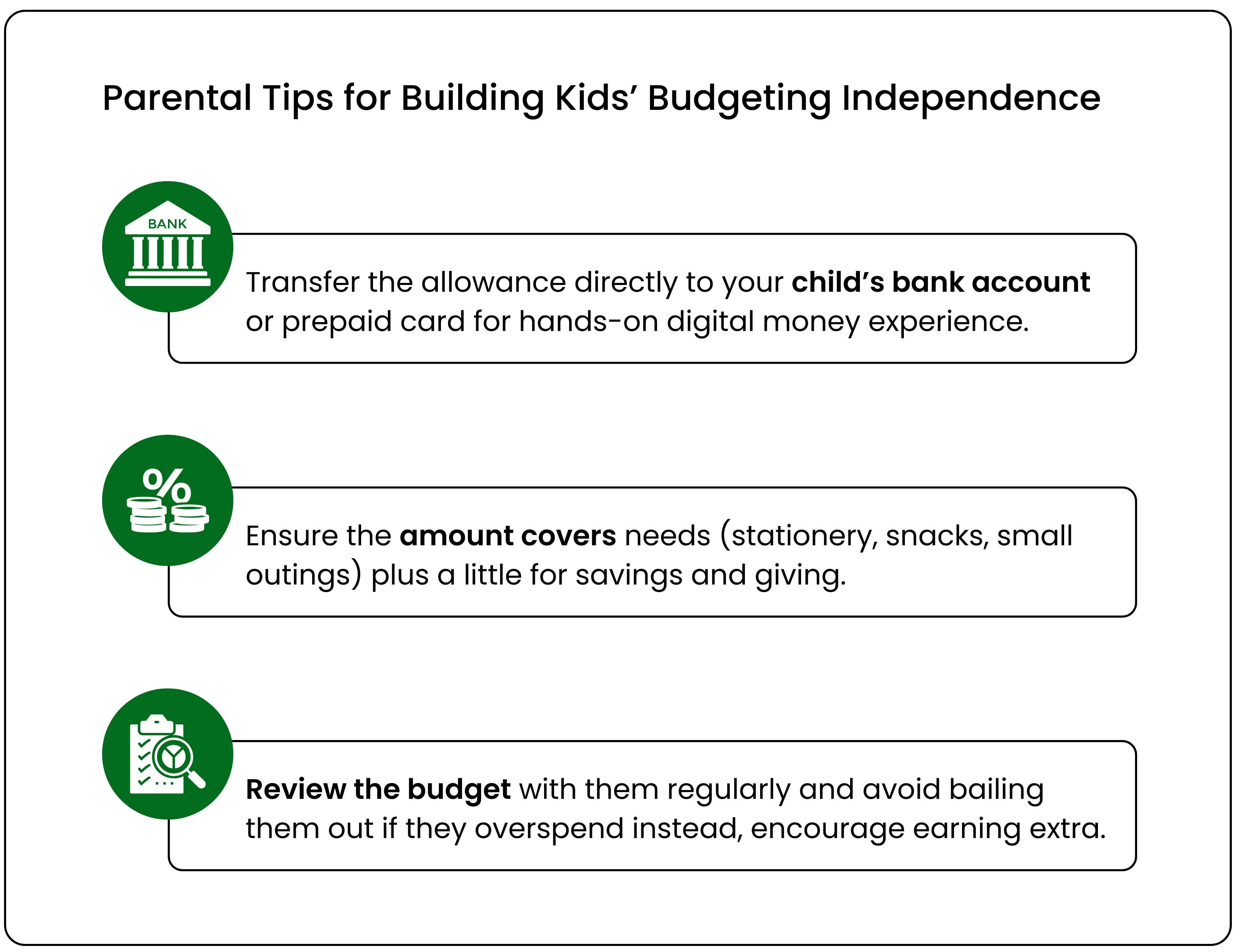
By this age, children should be managing their own money. Providing a biweekly allowance, transferred directly to their bank account, encourages them to plan instead of spending impulsively.
Handling peer pressure and trends
At the age of 11–13, the desire to fit in can heavily influence spending choices. Requests for branded shoes, latest phone, or trendy accessories may be frequent. Instead of saying ‘no’ outright, discuss how advertising works and why certain brands cost more. If they still want it, cover the basic cost and have them fund the ‘brand premium’ themselves. This approach teaches them to evaluate value versus price before deciding.
Expanding purchase responsibilities
Now, it’s time to let your kids manage more. From buying casual clothes to paying for movie tickets or outings with friends.
Suggestions for parents:
Give them a back to school budget and guide them in comparison shopping.
Discuss ‘needs’ versus ‘wants’ before purchases.
Allow freedom within boundaries, you still have the final say for certain categories like style or appropriateness.
Also Read: Teaching Kids Healthy Spending and Smart Saving
Setting long-term goals
Tweens can now grasp the concept of saving for bigger goals. Help them choose one or two major targets each year, like a cricket bat, a musical instrument, or a holiday activity. You can maintain their motivation by matching their savings. If larger milestones like college or a future vehicle are in sight, start those conversations early to instill patience and planning skills.
Bank accounts and digital skills
Opening a savings account in your child’s name, with you as guardian, is a key step towards independence. Show them how to check balances, track spending, and make small withdrawals. Link their allowance to the account digitally and introduce kid-friendly budgeting apps. If you feel they are ready, allow small supervised online purchases to reinforce that digital money is still real money.
Giving and values
If generosity is part of your family values, involve your child in it early. Encourage setting aside a portion of their allowance for causes they care about. Whenever possible, let them donate in person to witness the impact.
Introducing the concept of debt
Small, structured ‘loans’ from you can teach repayment discipline without real-world risks. If they want something beyond their budget, lend them money with a clear repayment schedule. This hands-on approach helps them understand debt responsibility.
Leading by example
Money habits speak louder than lectures. Your child will follow your example if you shop around, save money, and talk about money honestly (and calmly). Refrain from being too severe or too forgiving, and keep in mind that kids frequently anticipate living the same way as their parents when they grow up.
When it comes to finance for teens, the tween years are the perfect foundation stage. This is when money management for teens becomes more than just saving loose change, it’s about learning to plan, prioritize, and make informed choices. Parents can start teaching teens about money through simple, everyday decisions that build towards solid personal finance skills for teens. Using resources like a money management for young adults books or an age-appropriate financial guide for young adults can make lessons more engaging. Early financial literacy for teenagers not only prepares them for high school expenses but also sets the tone for smart finance for young adults later in life. A structured financial education for teens, from budgeting practice to supervised digital transactions, helps strengthen the connection between teens and money, creating confidence and independence before they reach adulthood.
Disclaimer: The information provided in our blogs is for informational purposes only and should not be construed as financial, investment, or trading advice. Trading and investing in the securities market carries risk. Always conduct your own research and consult with a qualified financial advisor before making any investment decisions. Past performance is not indicative of future results. Copyrighted and original content for your trading and investing needs.
© 2025 — Tradejini. All Rights Reserved.