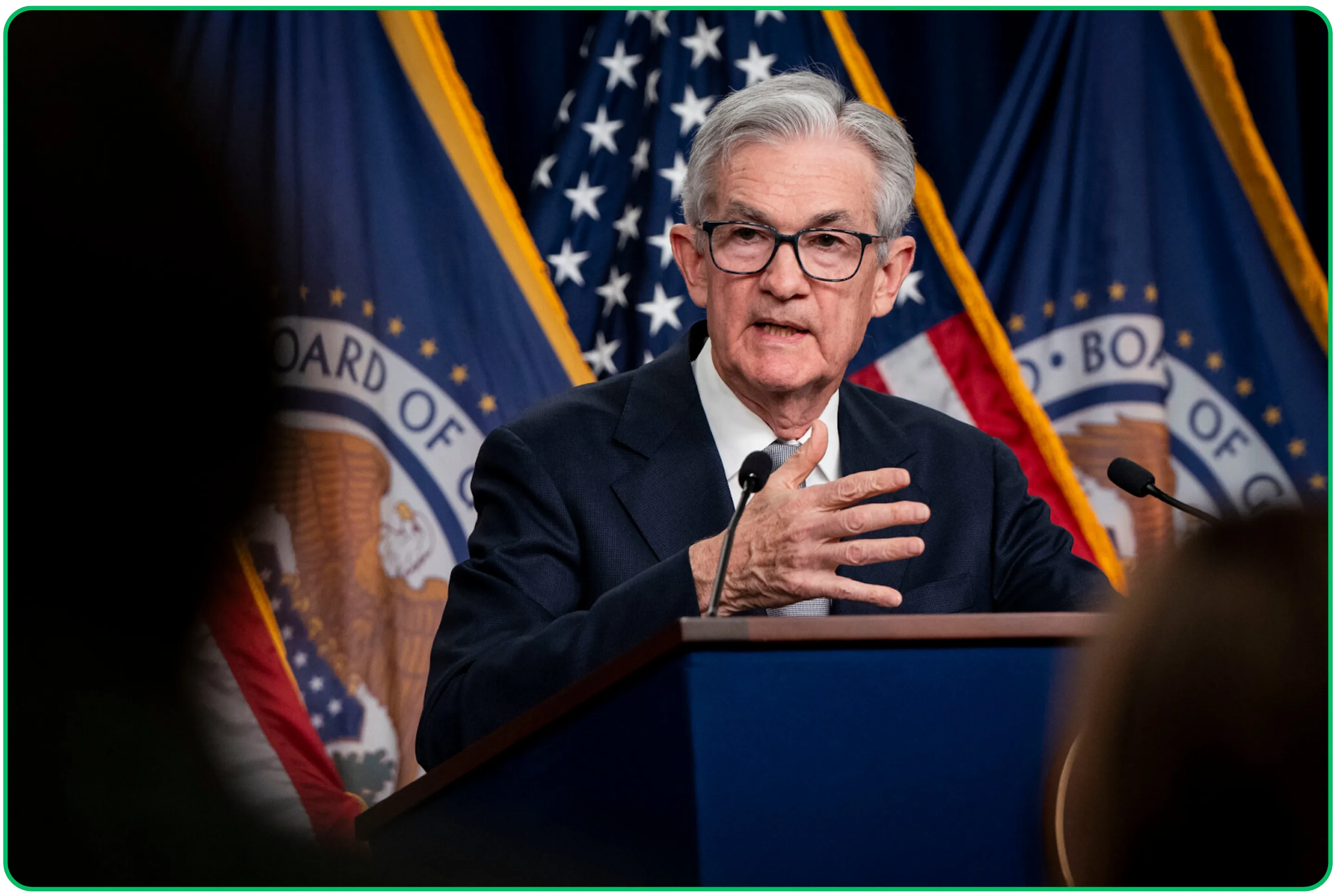
Federal Reserve Chair Jerome Powell delivered a highly-anticipated address yesterday at the National Association for Business Economics (NABE) annual meeting in Philadelphia, offering crucial insights into the central bank's current economic assessment and Federal Reserve Monetary Policy outlook. The key signal for markets was the potential path for interest rates, but his comments also provided a deeper look into the evolving risks facing the US Economic Outlook 2025.
The Path for Interest Rates: More Cuts Ahead?
Powell indicated that the Federal Reserve is likely on track to implement two more quarter-point Fed Rate Cut 2025 actions this year.
This forward guidance suggests the central bank remains tilted toward an accommodative stance. Following an initial rate reduction at the September meeting, this reinforces the view that the Fed is prepared to ease financial conditions further to support economic activity, particularly as global and domestic risks persist. The Powell Rate Cut Signal essentially means the Fed is buying insurance against a potential economic slowdown.
If you would like to read other market news related to Tata Motors demerger, click here
Shifting Focus With Rising Risks to Employment
While Powell maintained that "the outlook for employment and inflation does not appear to have changed much since our September meeting," he certainly highlighted a heightened concern over one of the Fed Dual Mandate goals: maximum employment.
In his Jerome Powell NABE Speech, the Chairman flagged a "significant slowdown in hiring" as a growing threat to the U.S. economy, underscoring a broader US Employment Slowdown. This is a critical signal, indicating that the Federal Reserve's balance of risks is tilting more toward protecting the labor market. Powell noted that payroll gains have "slowed sharply," likely due to factors like lower immigration and a decline in labor force participation. This shift in focus is what justifies the projected rate cuts the Fed wants to avoid a scenario where the job market rapidly deteriorates.
If you would like to read other market news related to Midwest LTD, click here
Inflation: Tariff-Driven, Not Broadly Pressurized
On the inflation front, Powell provided a welcome clarification: broad, sustained price pressures are not currently a major concern, giving the Fed room to maneuver on rates.
He acknowledged that tariffs have lifted the Fed's preferred measure of inflation. However, he was quick to clarify that outside of these specific, trade-policy-driven effects, there are no "broader inflationary pressures" that would cause prices to spiral higher. This assessment of Inflation and Tariffs Fed policy suggests the central bank views the current inflation bumps as temporary and localized ("one-time shifts") rather than a fundamental problem. This interpretation is key, as it provides the necessary flexibility to pursue rate cuts to support employment without immediately worrying about igniting runaway price increases.
Operating Under Constraints: The Government Shutdown
A factor complicating the Fed's analysis is the ongoing Impact of the Government Shutdown. Powell noted that the shutdown had temporarily limited access to official, high-quality economic data. The Federal Reserve relies heavily on comprehensive statistics to gauge the health of the economy, and having to navigate a period with incomplete or delayed official data adds a layer of complexity and uncertainty to the central bank’s task.
In conclusion, Powell’s speech was a carefully calibrated message. It confirmed a proactive, risk-management approach to monetary policy, prioritizing the need to guard against labor market deterioration through hinted-at future rate cuts. The market's focus will now shift to incoming data (once the government data flow is restored) and the Fed’s next policy meeting to confirm the timing of these anticipated rate reductions.
Turn research into action and explore smarter investing opportunities with CubePlus.
Disclaimer: The information provided in our blogs is for informational purposes only and should not be construed as financial, investment, or trading advice. Trading and investing in the securities market carries risk. Always conduct your own research and consult with a qualified financial advisor before making any investment decisions. Past performance is not indicative of future results. Copyrighted and original content for your trading and investing needs.
© 2025 — Tradejini. All Rights Reserved.