

Investing in mutual funds is one of the smartest ways to build long-term wealth. But many investors make one common mistake: they invest once and then forget about it. While mutual funds do offer professional management, your personal financial situation keeps changing and your portfolio should change with it. A regular portfolio review ensures that your investments remain aligned with your financial goals, risk tolerance, and market conditions. Think of it as a routine health check-up for your wealth.
What Does “Reviewing Your Portfolio” Actually Mean?

Reviewing your mutual fund portfolio simply means checking whether your current investments still align with your financial goals. Over time, your objectives or risk appetite may change, so it’s important to ensure your equity–debt mix still suits your comfort level. A review also helps you evaluate whether your funds are performing reasonably well compared to expectations and benchmarks. If something appears off-track—whether it’s performance, allocation, or your changing goals—you may need to make small adjustments. Overall, portfolio review is about staying aware and making informed decisions, not reacting to short-term market movements.
Why Regular Reviews Matter
Regular portfolio reviews are essential because both your life and the financial markets are constantly changing. As your personal goals evolve—such as planning for a home, your child’s education, or a major life event—your existing mutual fund allocation may no longer support your priorities. Your risk appetite also shifts over time; for example, a young investor can handle more equity exposure than someone approaching important financial responsibilities. Market movements can further distort your portfolio, especially when strong equity performance increases your equity share beyond what you originally intended, making your portfolio riskier than planned. In addition, some funds may start underperforming compared to their benchmark or peer group, and reviewing helps you identify whether they are still worth holding. Regular reviews also improve tax planning, allowing you to make strategic adjustments or redemptions that can reduce your tax burden, particularly toward the end of the financial year.
How Often Should You Review Your Portfolio?
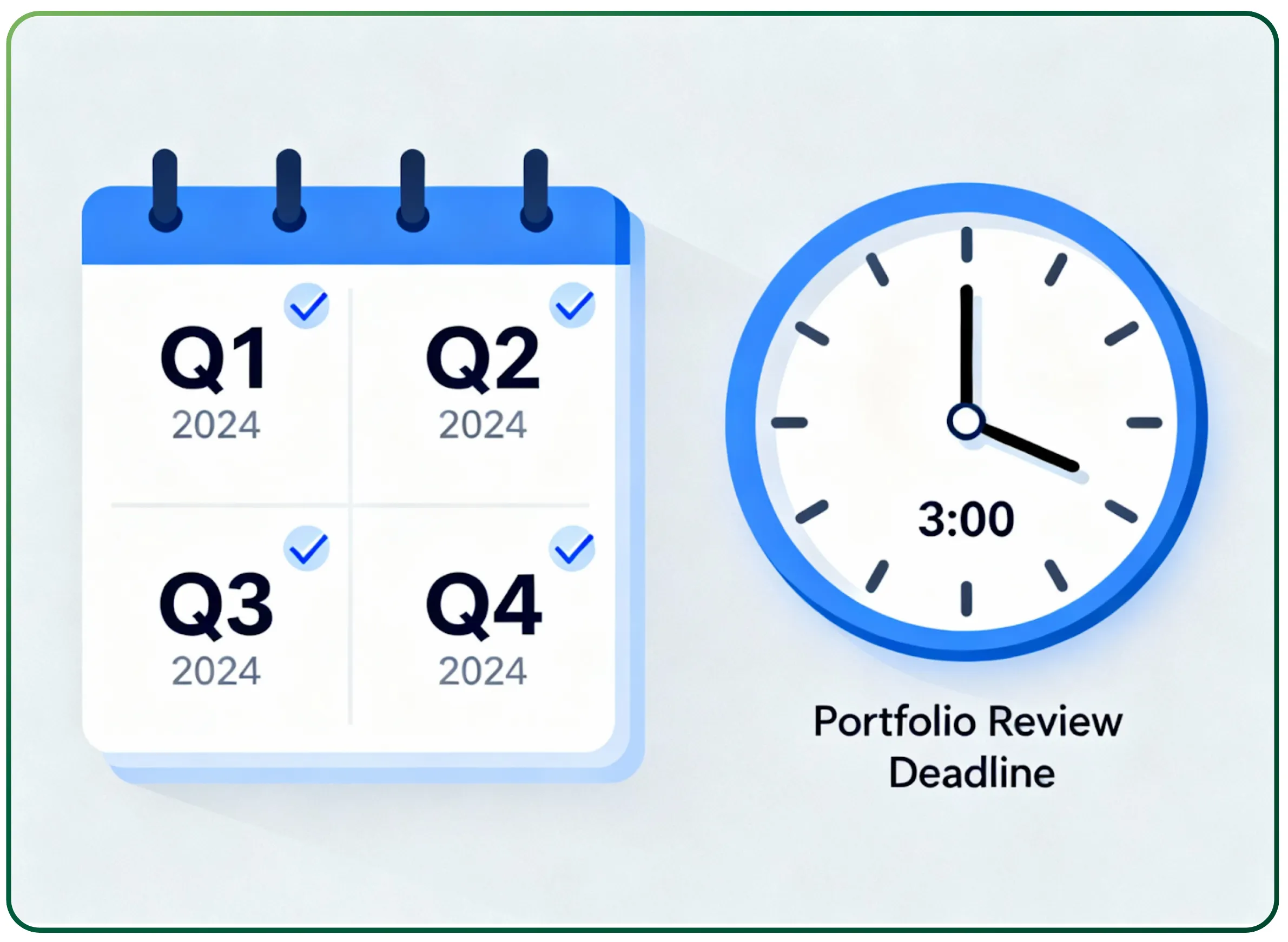
You do not need to check your portfolio every day. In fact, over-monitoring leads to emotional decisions.
A practical approach is:
Once a year: Ideal for most investors
Every 6 months: If you are actively investing or approaching major financial goals
During major life events: Marriage, job change, new responsibilities, etc. Consistency matters more than frequency.
How to Conduct an Effective Portfolio Review

Step 1: Revisit Your Financial Goals by asking
- Have my goals changed?
- Am I still saving for the same purpose?
- Do I need to adjust how much I invest?
- Your portfolio should support your future needs — not past plans.
Step 2: Check Your Asset Allocation
- Your asset allocation is the percentage of equity, debt, and hybrid funds in your portfolio.
- If equity exposure has grown too much → reduce it
- If debt exposure has become too large → increase equity
- The aim is to bring your portfolio back to your original comfort level of risk.
Step 3: Evaluate Fund Performance on these parameters
- Are they beating or matching their benchmark?
- Are they performing better or worse than peer funds?
- Have they underperformed for more than 2–3 years consistently?
- If a fund underperforms for too long, it may be time to replace it.
Step 4: Rebalance the Portfolio
Rebalancing means adjusting your investments back to their intended mix.
You can rebalance by:
- Selling a portion of funds that have grown too much
Redirecting future SIPs toward weaker sections of your portfolio Adding new funds to fill gaps
It’s a disciplined approach to controlling risk instead of chasing returns.
Step 5: Review Tax Implications
- Before making any changes, always consider:
- Long-term vs. short-term capital gains
- Tax on equity vs. debt funds
- Whether redeeming now will trigger unnecessary taxes
- Sometimes, delaying rebalancing by a few months can save tax.
Common Mistakes to Avoid During Portfolio Reviews

Reviewing Too Frequently
Checking your portfolio too often can lead to emotional reactions and impulsive decisions. Short-term fluctuations are normal and should not dictate long-term strategy.
Overreacting to Market Volatility
Responding to temporary market drops may cause you to exit valuable investments prematurely. Mutual funds are designed for long-term growth, not day-to-day tracking.
Judging Funds on One Year of Performance
A single year of underperformance does not define a fund’s quality. Performance should be assessed over multiple years and compared with relevant benchmarks and peers.
Holding Too Many Funds
Over-diversification can dilute returns and make your portfolio difficult to manage. A focused, well-selected set of schemes is far more effective.
Ignoring Key Fund Details
Important factors such as expense ratios, fund manager changes, and strategy shifts can significantly influence long-term performance and should never be overlooked.
Final Thoughts: Make Portfolio Review a Habit
- Reviewing your mutual fund portfolio is not a complex process. It’s simply a habit that ensures
- Your investments match your goals
- Your risk is controlled
- Your portfolio stays healthy and efficient
- You stay prepared for life’s changes
- A disciplined review, once or twice a year can make a massive difference in your long-term wealth creation journey.
Also Read: The Pareto Strategy explained for investing in mutual funds
Key Takeaways
Regular portfolio reviews ensure your investments stay aligned with your evolving financial goals and risk appetite.
Asset allocation can shift over time due to market movements, making periodic rebalancing essential to maintain the right risk level.
Fund performance should be assessed over longer periods, not on short-term fluctuations or single-year results.
Avoid common mistakes such as checking too frequently, over-diversifying, or ignoring important fund details like expense ratios.
Consistency matters more than frequency—annual or semi-annual reviews are ideal for maintaining a healthy, goal-focused investment portfolio.
Start yours with smart investing on CubePlus and take control of your financial goals. Click here to sign up
Disclaimer: The information provided in our blogs is for informational purposes only and should not be construed as financial, investment, or trading advice. Trading and investing in the securities market carries risk. Always conduct your own research and consult with a qualified financial advisor before making any investment decisions. Past performance is not indicative of future results. Copyrighted and original content for your trading and investing needs.
© 2025 — Tradejini. All Rights Reserved.


