If you have followed the Indian startup ecosystem, you have likely come across the term venture capital or VC. Venture capital is private equity investing dedicated to early-stage companies called startups. These businesses carry high risk because they are still building products, finding customers, and figuring out business models. Banks and traditional institutions usually avoid lending at such early stages. This is where the Venture Capital India ecosystem plays a critical role by funding promising ideas in exchange for equity ownership.
Startups need capital early in their journey to build the product, hire talent, scale operations, and compete. Promoters rarely have enough of their own funds to sustain growth. A venture capital fund provides money in exchange for ownership in the company, expecting high returns if the startup succeeds. Because the risk is high, the reward potential must be significantly higher, too.
Also read: India’s startup growth hit by funding winter
Who Are the Key Players?
The VC ecosystem involves multiple stakeholders who together help turn ideas into scalable companies:
1.Limited Partners (LPs)
These are investors who contribute capital to a VC fund. They can be:
Pension funds
Sovereign wealth funds
Corporate investors
Family offices
High-net-worth individuals
LPs expect long-term returns when the VC fund exits its investments.
2.Venture Capital Firms (General Partners / GPs)
These firms manage LP money and deploy it into promising startups. They also mentor founders and help with strategy, hiring, governance, and future fundraising.
3.Startups
Companies are seeking capital to grow. They offer equity (ownership) in return for funding.
4.Startup Enablers
Incubators, accelerators, and centres of excellence that provide infrastructure, early support, customer access, and guidance.
Together, these participants form the fuel supply of India’s innovation economy.
Funding Stages in Venture Capital
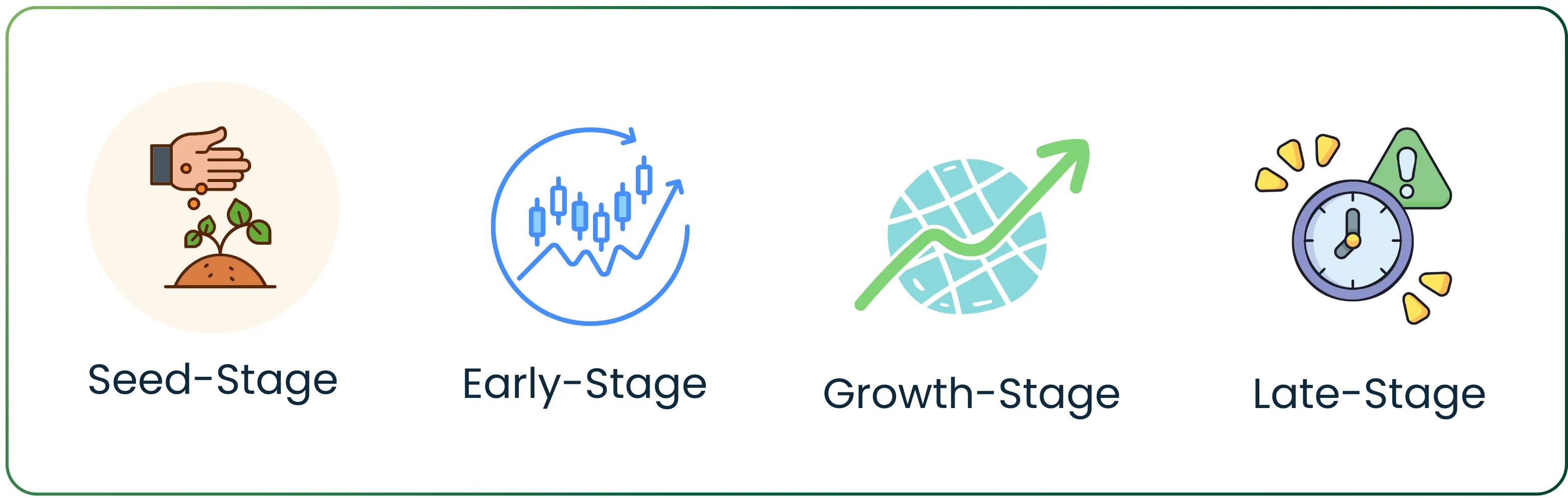
VC funding happens in phases, depending on a company’s maturity:
| Stage | Purpose | Typical Use of Funds |
|---|---|---|
| Seed | Idea to prototype | MVP development, early hiring |
| Series A | Early market traction | Scale product, marketing, expansion |
| Series B & C | Growth stage | Geographic expansion, tech upgrades |
| Late-stage / Pre-IPO | Mature scaling | Profitability push, entry into public markets |
What Do VCs Get in Return?
When VCs fund startups, they usually receive:
Preference shares
Not common equity
Preference shares include protective rights such as:
Liquidation preference (priority in payouts)
Anti-dilution protection
Voting and veto rights on key decisions
These rights ensure investors are protected in downside scenarios since startups inherently carry high risks.
How a VC fund works lifecycle?
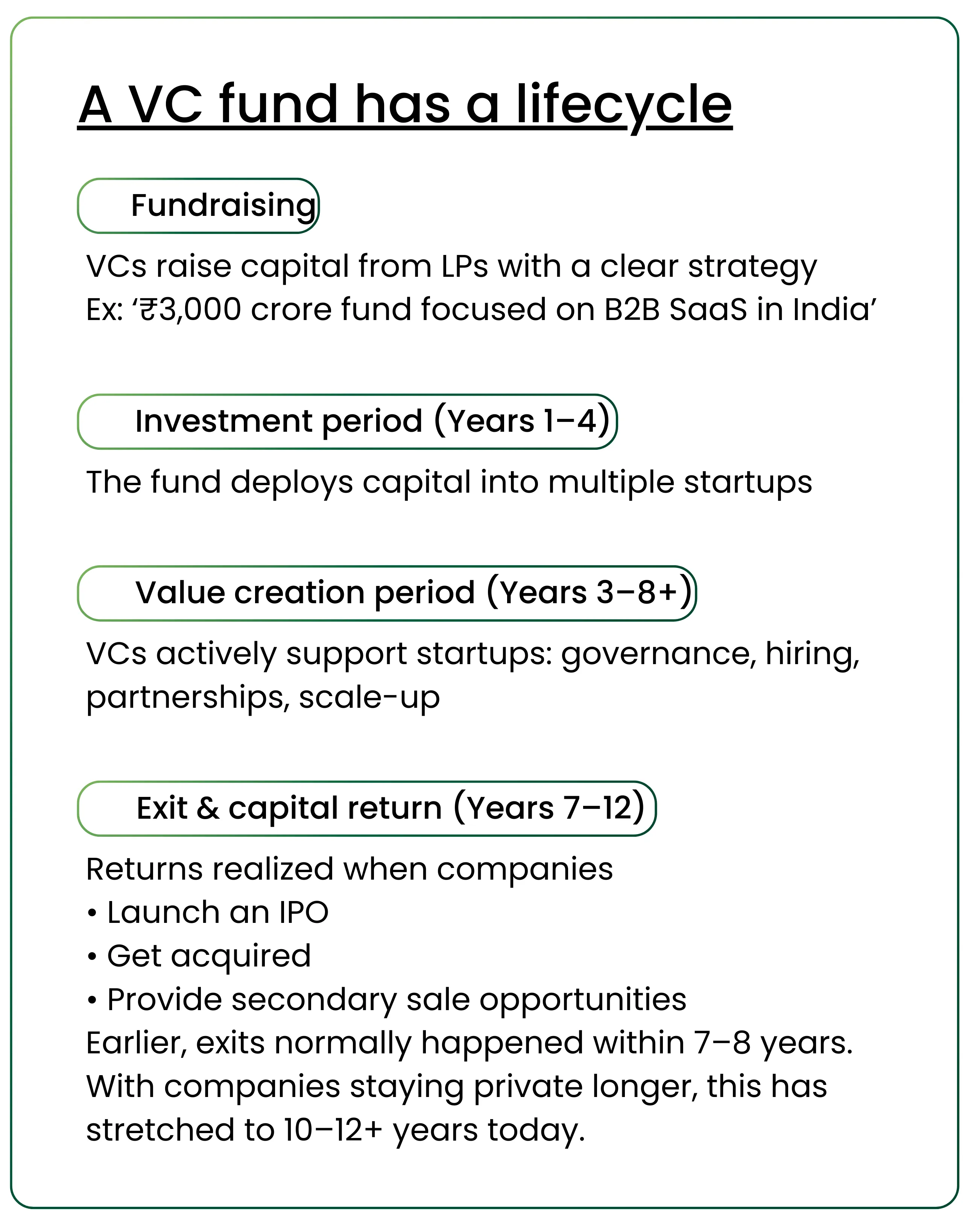
How Returns/IRR Work in VC
VC investing follows a power-law distribution:
Many startups fail
Some return capital
A few deliver outsized gains
Those rare winners determine the success of the entire fund. Performance is measured through Internal Rate of Return IRR Venture Capital. A well-performing fund targets:
20% to 25%+ IRR over a decade
Not easy, but possible when one or two ‘unicorn-level’ successes emerge.
The Indian Venture Capital Journey
The Indian venture capital landscape began to take shape in the late 1980s with early initiatives from IFCI, ICICI, and UTI. Still, the real momentum arrived during the 1999 tech and internet boom, when India had barely 15 to 20 active VC firms. Fast forward to today, and the scene looks completely different. With more than 1,500 venture capital firms now active, India has emerged as the third-largest startup ecosystem globally, supported by strong Indian startup ecosystem growth statistics.
The growth has spread beyond metros into Tier-2 and Tier-3 India, and investors are looking well past traditional software opportunities. From fintech and SaaS to healthcare, EVs, deep-tech and agritech, VCs are increasingly backing India-first solutions that solve real structural challenges and create scalable businesses for the future.
Recovery in 2024–2025
Funding activity cooled down briefly after the 2021-2022 boom. But momentum returned:
2024 saw Indian VC investments rebound meaningfully
2025 reported a strong H1 with billions deployed across early and growth stages.
Domestic funds and corporate backers have become more significant than ever
Earlier, more than 85–90% of startup funding came from overseas investors. This is slowly changing, a healthy sign for India’s economic autonomy. More exits via IPOs and strategic acquisitions are again improving investor confidence.
Looking Ahead
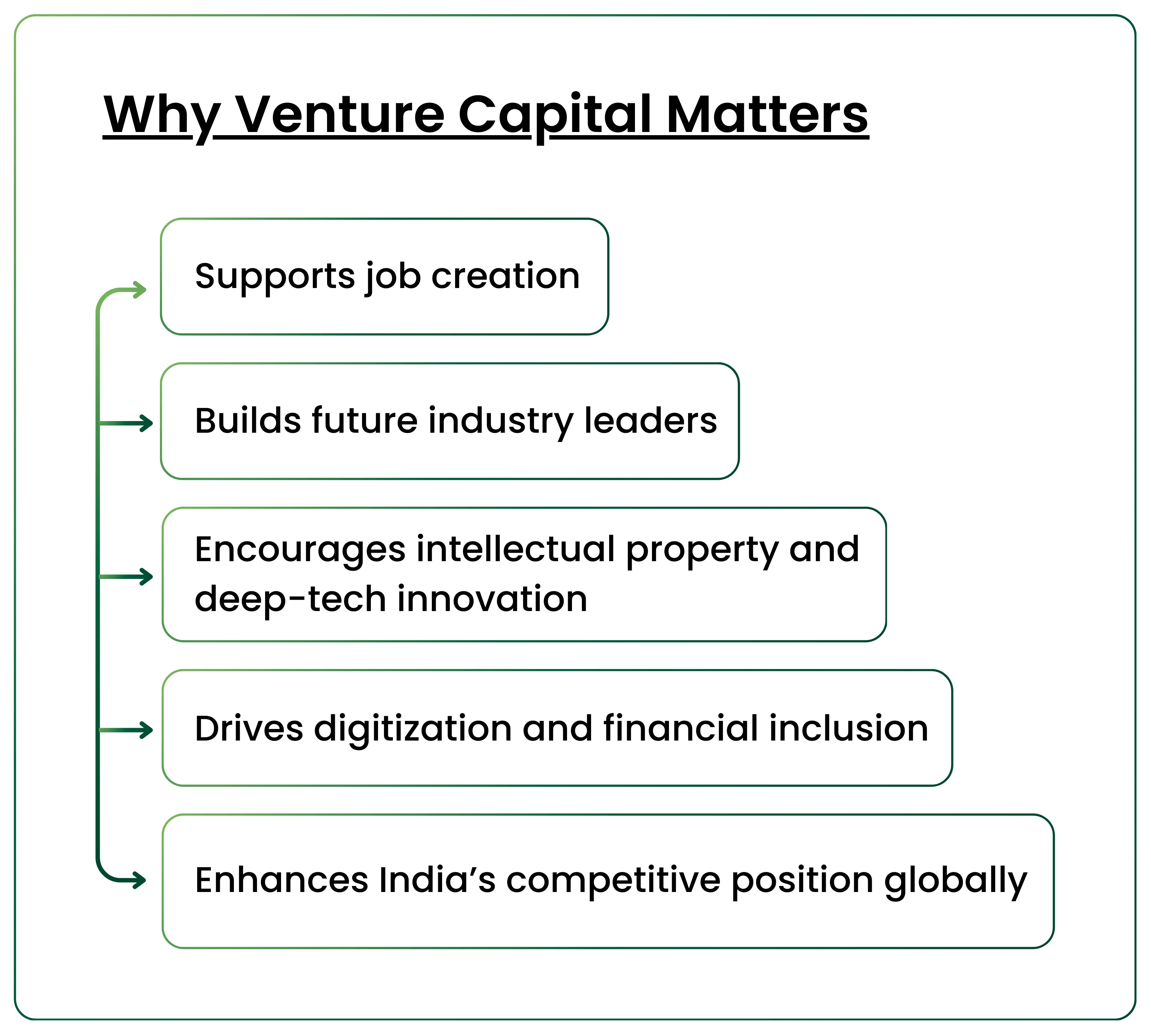
Venture capital is more than just money. It is partnership, guidance, and risk-taking that help shape the companies of tomorrow. The entrepreneurial energy in India is undeniable, and the VC ecosystem is evolving to unlock that potential at scale.
As we go forward, understanding VC, how funds work, what rights investors have, and how returns are generated will be essential not only for founders but also for investors who want to participate in India’s growth story.
Many venture-backed startups eventually get listed in the public markets through IPOs. Keep an eye out for upcoming IPO opportunities and apply easily through your trading account. Check out the latest listings on Tradejini and start exploring the companies.
Disclaimer: The information provided in our blogs is for informational purposes only and should not be construed as financial, investment, or trading advice. Trading and investing in the securities market carries risk. Always conduct your own research and consult with a qualified financial advisor before making any investment decisions. Past performance is not indicative of future results. Copyrighted and original content for your trading and investing needs.
© 2025 — Tradejini. All Rights Reserved.
.webp%3Falt%3Dmedia%26token%3D0ead9799-20bc-4d1e-ae8f-d75ab18921b5&w=3840&q=75)