In today’s interconnected world, the Indian stock market doesn’t move in isolation. It constantly reacts to global markets, international indices, and macroeconomic elements that influence investor sentiment and market performance. Understanding which global indices affect the Indian market is crucial for informed investment decisions and long-term success.
Global Markets and Their Influence on Indian Stock Markets
The global economy plays a defining role in shaping Indian markets. With expanding trade, digital finance, and foreign participation, the Indian stock markets are now tightly connected with global stock markets and international benchmarks.
Movements in indices such as the Dow Jones Industrial Average (DJIA), S&P 500, NASDAQ, Hang Seng Index, MSCI World Index, and the MSCI Emerging Markets Index directly affect the Indian market. A rise or fall in these global indices can trigger volatility in Indian equities, stock prices, and market sentiment.
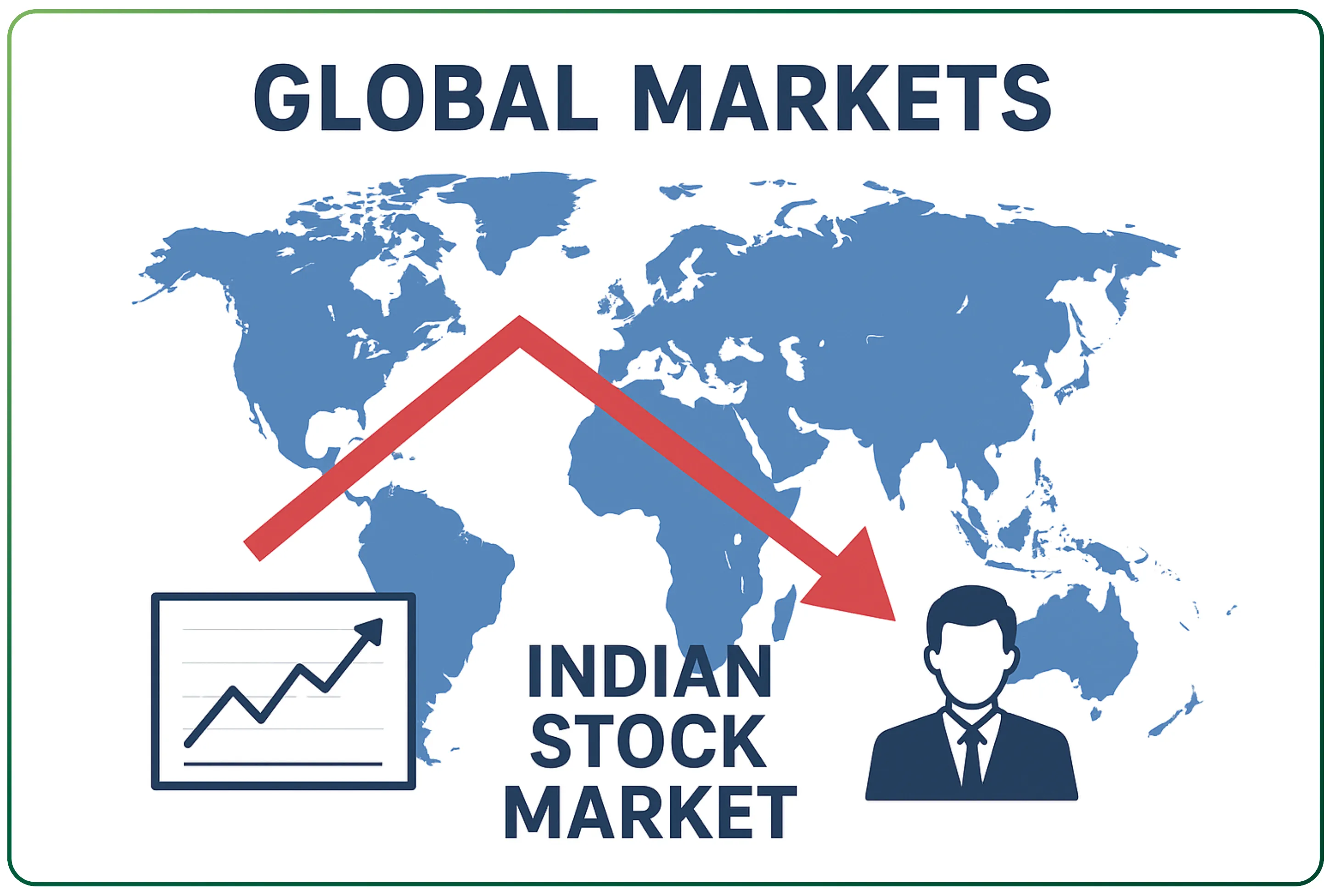
Indian Stock Market: A Reflection of Global Sentiment
The Indian stock market mirrors the mood of global financial markets. When foreign institutional investors (FIIs) increase foreign investment flows, Indian stocks and individual stocks across various industries see bullish trends. Conversely, global uncertainty or negative trends in international markets can lead to foreign outflows, weakening India’s stock market.
The Nifty 50 and Sensex, which represent most Indian companies, often track indices that affect the Indian market like the Dow Jones Industrial Average, MSCI Emerging Markets Index, and Hang Seng Index. These market indices act as international benchmarks reflecting global economic growth and investor sentiment.
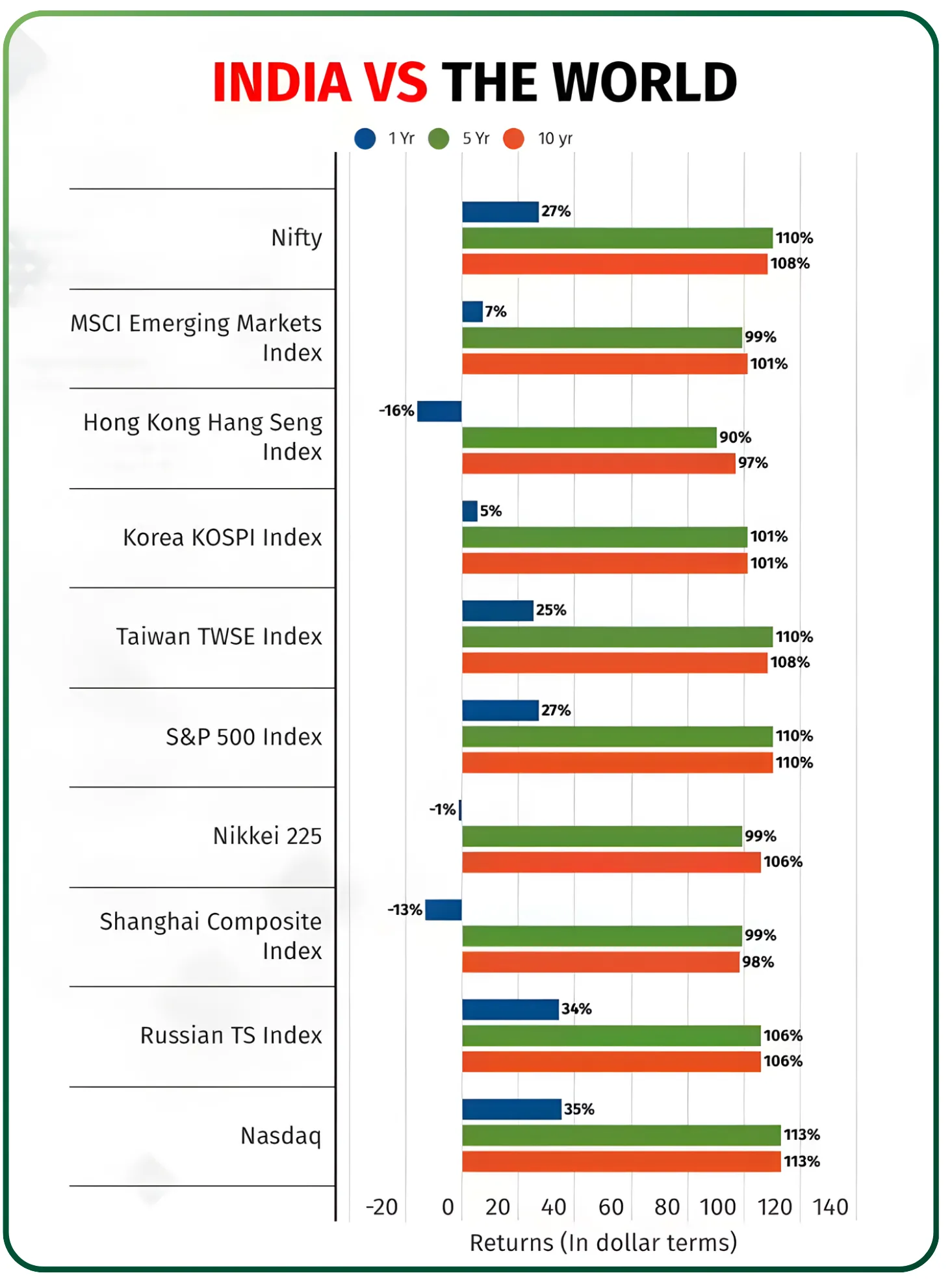
Global Indices and How They Affect Indian Markets
The major global market indices that affect the Indian stock movement include:
| Global Index | Region | Key Influence on India |
|---|---|---|
| Dow Jones Industrial Average (DJIA) | United States | Indicates global risk appetite and US economic health. |
| S&P 500 | United States | Affects foreign investment flows and US dollar strength. |
| NASDAQ Composite | United States | Impacts IT and technology stocks in Indian equities. |
| Hang Seng Index | Hong Kong | Signals trends in Asian financial markets. |
| MSCI World Index | Global | Tracks market performance of developed economies. |
| MSCI Emerging Markets Index | Emerging Markets | Guides foreign investors toward emerging markets like India. |
| Dollar Index (DXY) | Global | Measures US dollar strength and influences Indian rupee and foreign flows. |
Snapshot of Global vs Indian Markets (2025)
| Metric | Recent Data | Key Insight |
|---|---|---|
| Nifty 50 (India) | ~25,722 (Oct 2025) | Reflects current valuation of the Indian stock market. |
| Dow Jones Industrial Average (US) | Up ~9–10% YTD (2025) | Shows US market strength; global benchmark. |
| S&P 500 (US) | Up ~13.7% YTD (2025) | Reflects broad US markets and investor optimism. |
| MSCI Emerging Markets Index | Stable YTD | Indicates selective foreign inflows in emerging markets. |
| MSCI World Index | Positive trend YTD | Shows global market resilience. |
| Dollar Index (DXY) | Above 100 (2025) | Strong dollar pressures the Indian rupee. |
| USD/INR | ₹85.7 per USD (mid-2025) | Currency trend impacting foreign investment flows. |
| Foreign Investment Flows | Net outflow recently | Reflects cautious FII sentiment. |
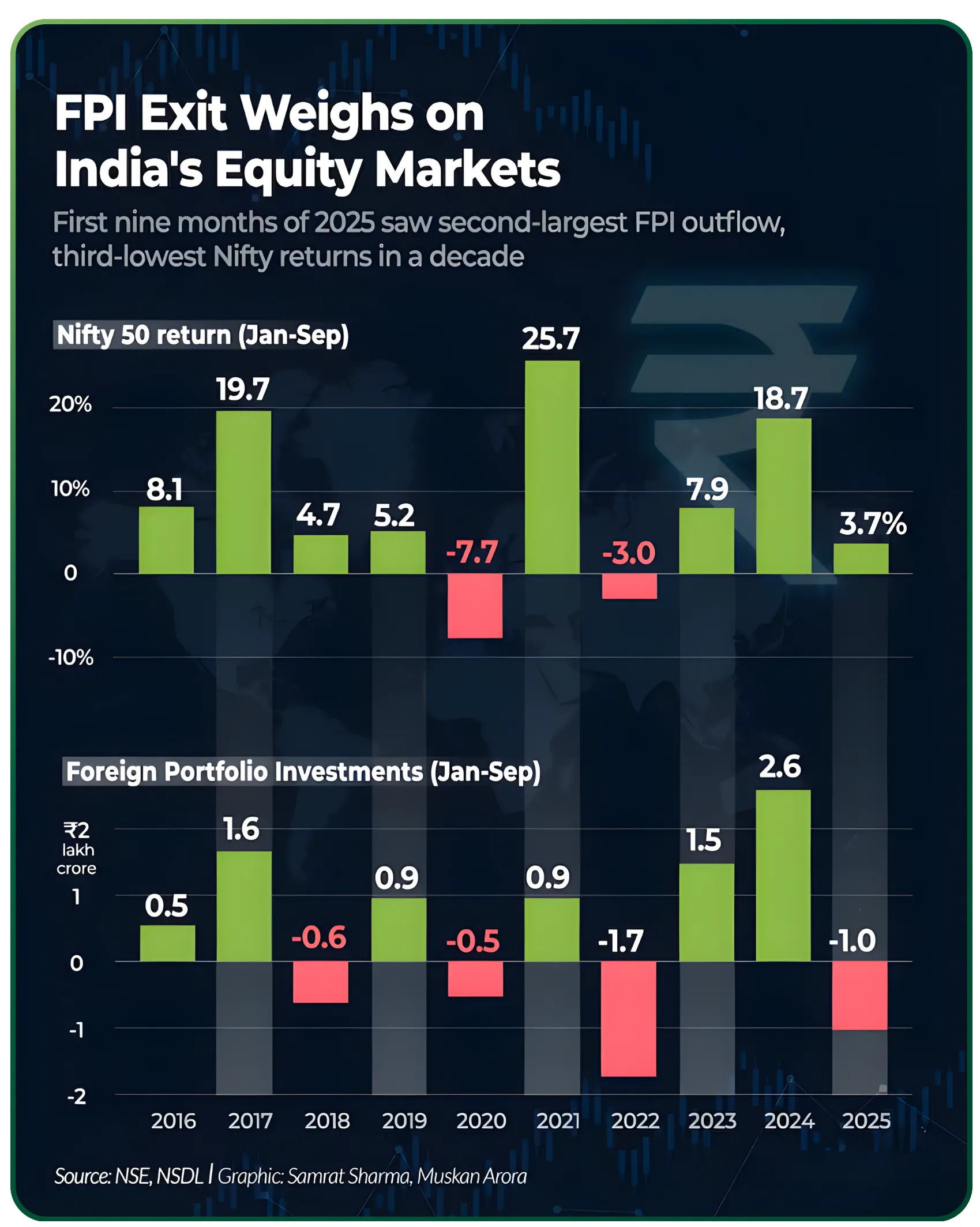
Foreign Institutional Investors (FIIs) and Capital Flows
Foreign institutional investors play a vital role in the Indian stock markets. Their capital flows, foreign inflows, and foreign investment decisions are heavily influenced by international markets, commodity prices, geopolitical events, and global economic growth.
During a global financial crisis, FIIs often withdraw funds from emerging markets, leading to price fluctuations and a decline in share prices of Indian companies. Conversely, strong global economies and positive market trends drive foreign investment flows into capital markets and stock exchanges of India.
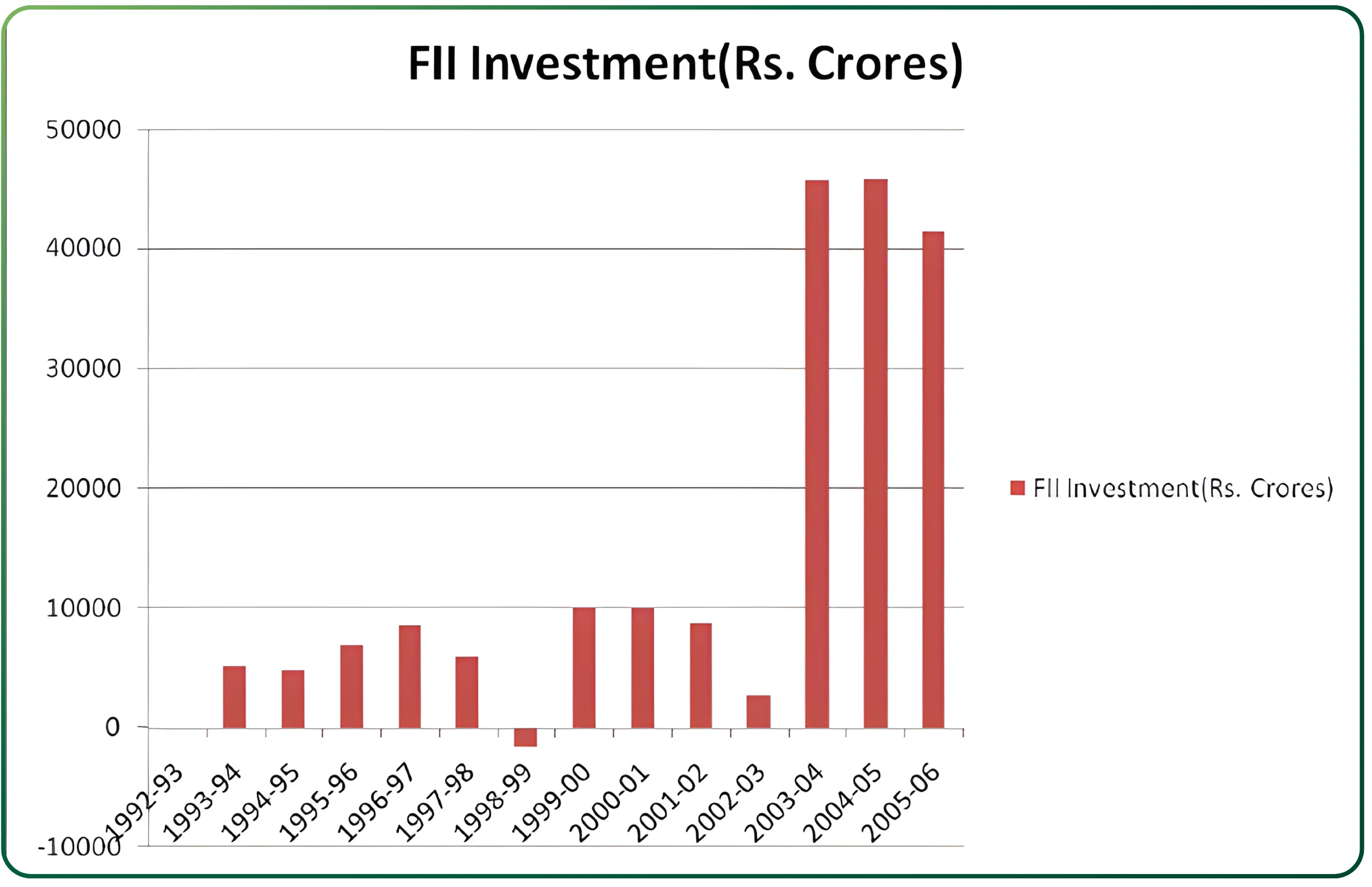
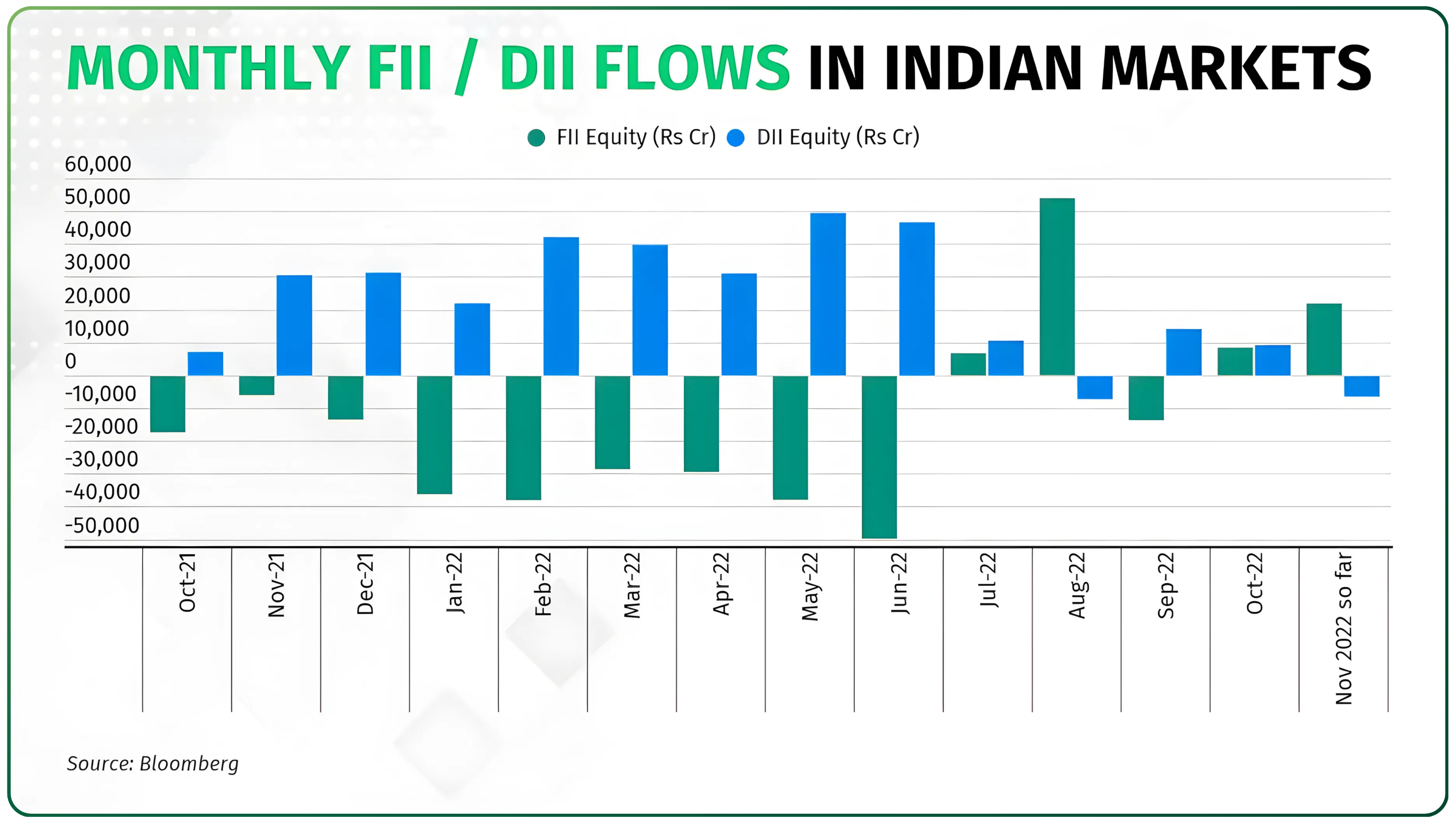
Global Financial Crisis
The global financial crisis is one of the most powerful reminders of how global stock markets and domestic factors are deeply interconnected. For instance, the 2008 crisis in the US market triggered a worldwide sell-off, hitting emerging markets like India hard.
During such periods, foreign institutional investors pull out their funds to minimize risk, leading to reduced foreign inflows and significant declines in Indian equities. These negative trends cause price fluctuations, lower share prices, and deteriorate market sentiment.
Learning from past financial markets disruptions, Indian investors now track global indices, economic health, and international benchmarks closely to prepare for possible volatility. The global financial crisis underscores that in a truly interconnected world, no stock market remains unaffected.
Global Markets
The global markets serve as a powerful barometer for international market trends, foreign investment flows, and global economic growth. Movements in US indices like the Dow Jones Industrial Average, S&P 500, and NASDAQ, as well as Asian indices such as the Hang Seng Index, directly affect India’s stock market and foreign institutional investor behavior.
When global economies perform well, foreign investment into Indian markets increases, improving market sentiment and capital flows. On the other hand, geopolitical events, commodity price spikes, or rising US dollar values reflected through the Dollar Index can trigger foreign outflows, affecting market performance.
Understanding these global market indices helps Indian investors and traders make informed investment decisions, align with market trends, and anticipate shifts in international markets.
Dollar Index
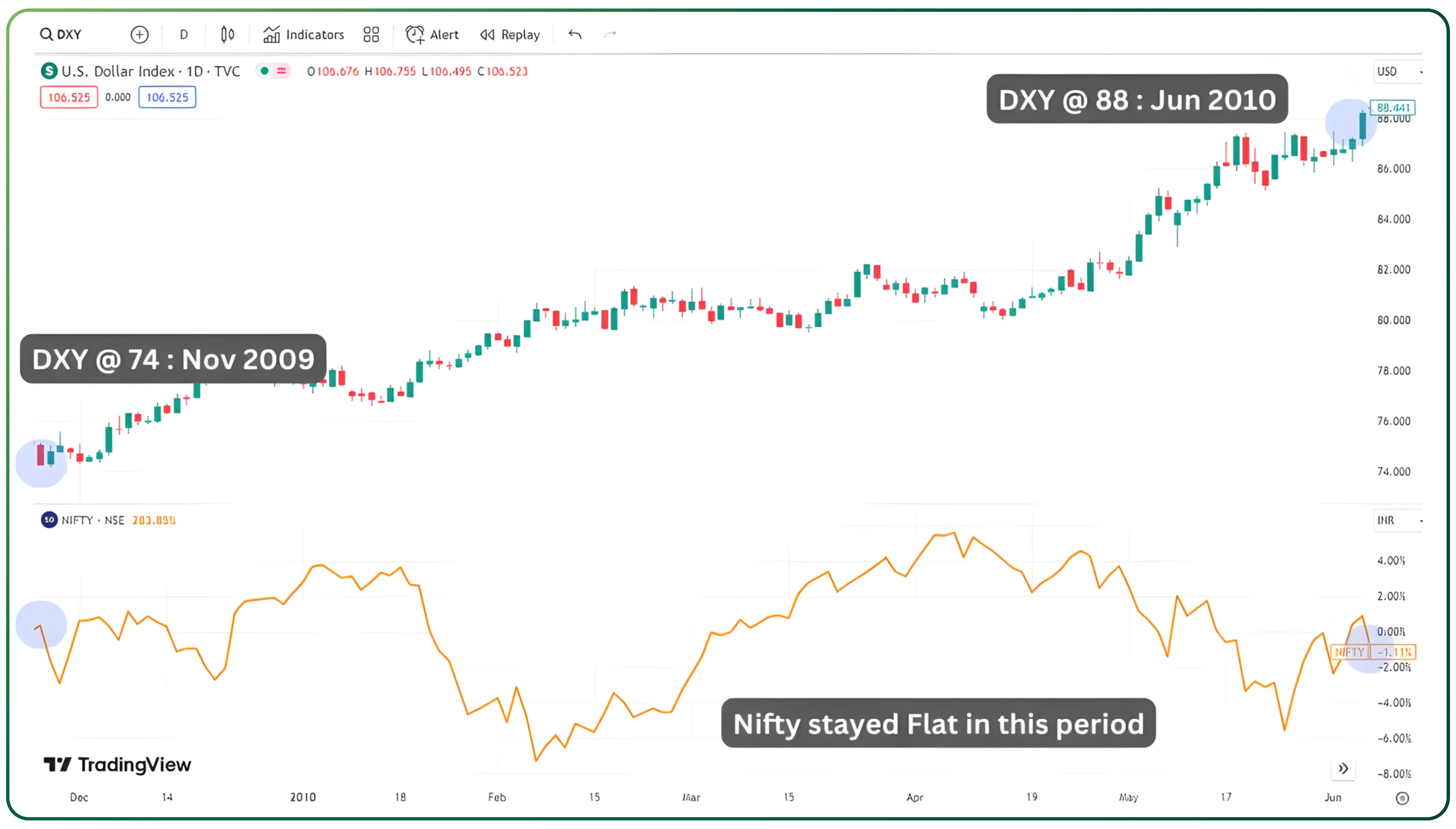
The Dollar Index (DXY) tracks the value of the US dollar against major world currencies and plays a critical role in foreign investment flows and the Indian rupee’s stability. A strong US dollar generally leads to depreciation in emerging market currencies, including the Indian rupee, resulting in reduced foreign inflows and lower foreign investment in Indian equities. A weaker dollar, on the other hand, attracts foreign investors to emerging markets like India, strengthening capital flows and market sentiment.
Global Events
Global events—from geopolitical tensions and trade wars to commodity price fluctuations and macroeconomic elements—have a direct bearing on stock markets worldwide. Events such as interest rate hikes in the US markets, conflicts in the Middle East, or shifts in global economies often cause price fluctuations in Indian stocks. Indian investors must therefore track international market trends and market indices to stay prepared for market volatility caused by such global events.
Indian Equities
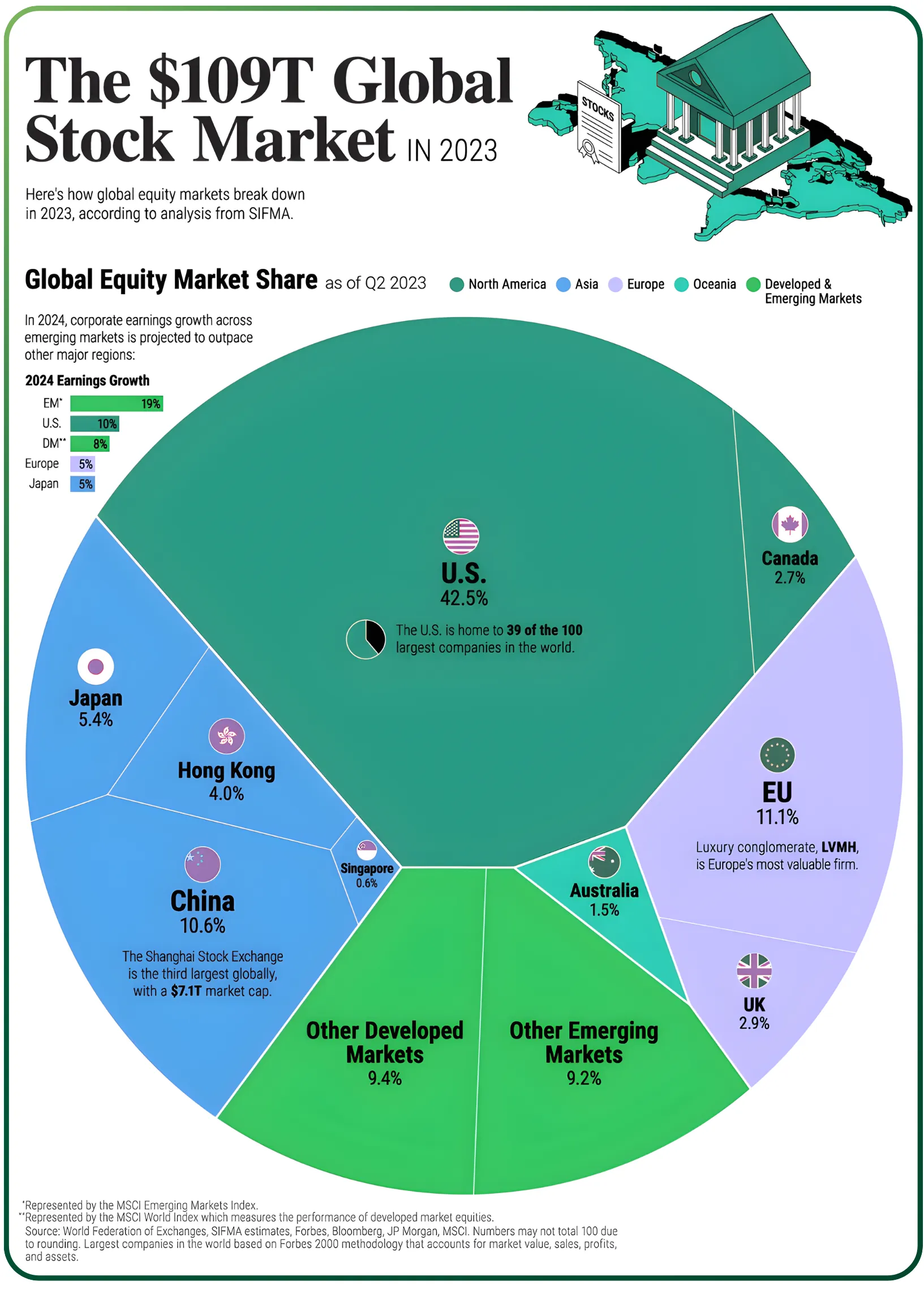
Indian equities have become an attractive choice for foreign investors because of the country’s strong economic health, digital growth, and stable capital markets. Many global indices such as the MSCI Emerging Markets Index include a significant weighting for Indian companies, reflecting India’s growing importance in global stock markets. Despite negative trends in international markets, Indian equities often show resilience due to robust domestic factors and the participation of Indian investors in long-term stock investments.
Indian Investors
The rise of Indian investors—both retail and institutional—has strengthened the Indian market’s base. With improved access to financial education and platforms, more individuals are making informed investment decisions. Tracking global indices provide signals, international benchmarks, and market sentiment, Indian investors can align their portfolios with global economic growth and anticipate market trends influenced by foreign investment flows and international markets.
Indian Markets
The Indian markets today are globally recognized as one of the most dynamic emerging markets. They are influenced by global market indices, capital flows, foreign inflows, and geopolitical events. Despite external shocks, the Indian stock markets remain resilient, backed by strong domestic factors, consistent market performance, and a growing base of foreign institutional investors. This adaptability makes India’s stock market a core part of the global share market, shaping and being shaped by international market trends.
Conclusion: The Global–Indian Market Connection
The Indian stock market is now part of a larger global share market ecosystem. The global index, whether it’s the MSCI World, Dow Jones Industrial Average, or Hang Seng Index, provides a window into global economic growth and international benchmarks.
As foreign investors continue to shape market sentiment, foreign flows, and foreign inflows, understanding this interconnected world enables both traders and long-term investors to navigate stock markets wisely.
In essence, the Indian market is a mirror reflecting the health of global economies. Staying aware of market indices, foreign investment flows, and global events empowers Indian investors to make smarter, more informed investment decisions in a truly global financial environment.
Disclaimer: The information provided in our blogs is for informational purposes only and should not be construed as financial, investment, or trading advice. Trading and investing in the securities market carries risk. Always conduct your own research and consult with a qualified financial advisor before making any investment decisions. Past performance is not indicative of future results. Copyrighted and original content for your trading and investing needs.
© 2025 — Tradejini. All Rights Reserved.

.webp%3Falt%3Dmedia%26token%3D0ead9799-20bc-4d1e-ae8f-d75ab18921b5&w=3840&q=75)