

New Cheque Clearing Rules
If you still use cheques for transactions, there’s an important update you should know. From October 4, 2025, the Reserve Bank of India (RBI) will roll out new cheque clearing rules in two phases. The move will make cheque settlements faster, reduce risks, and improve the overall customer experience.
Clearing House
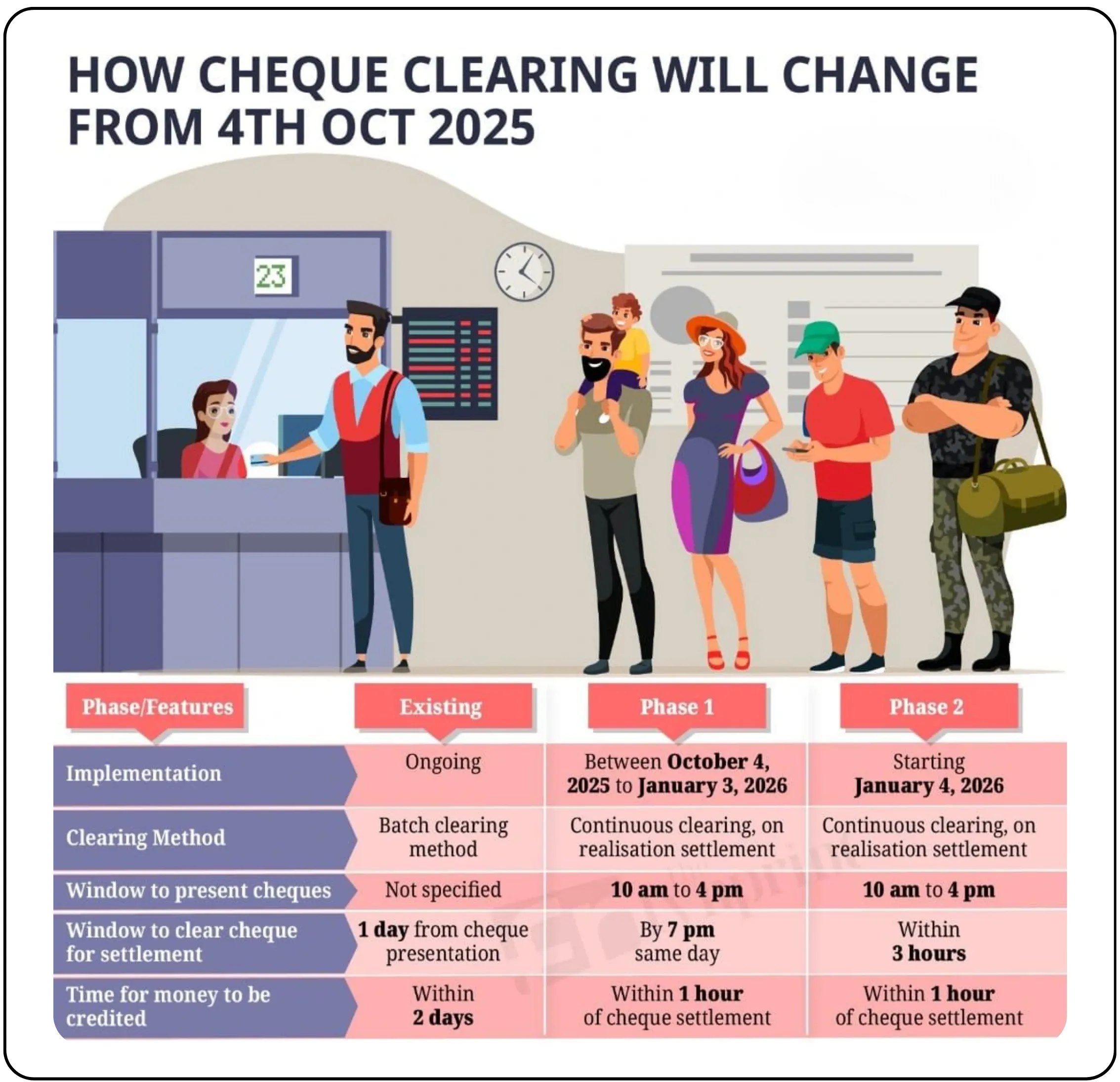
Currently, cheques are processed through a clearing house in a batch cycle. Banks usually take one working day to clear cheques, and the credited amount may take up to two days to reflect in the beneficiary’s account. While the system is reliable, it is slow compared to digital payment systems.
Continuous Clearing
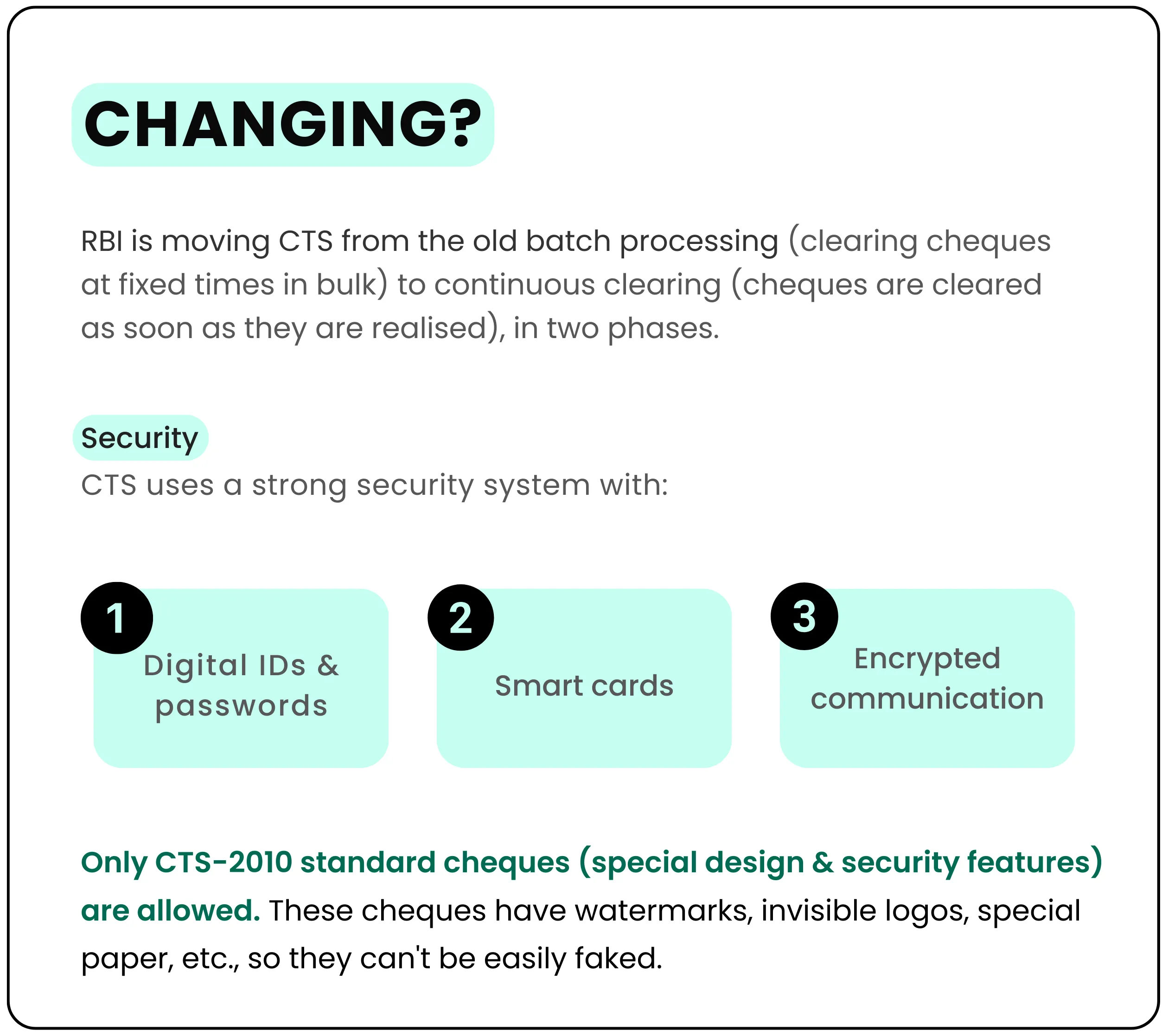
From October 4, 2025, India will shift to continuous clearing instead of batch-based processing. Under this model, cheques presented during banking hours will be cleared the same day, significantly improving fund availability.
Cheque Truncation System (CTS)
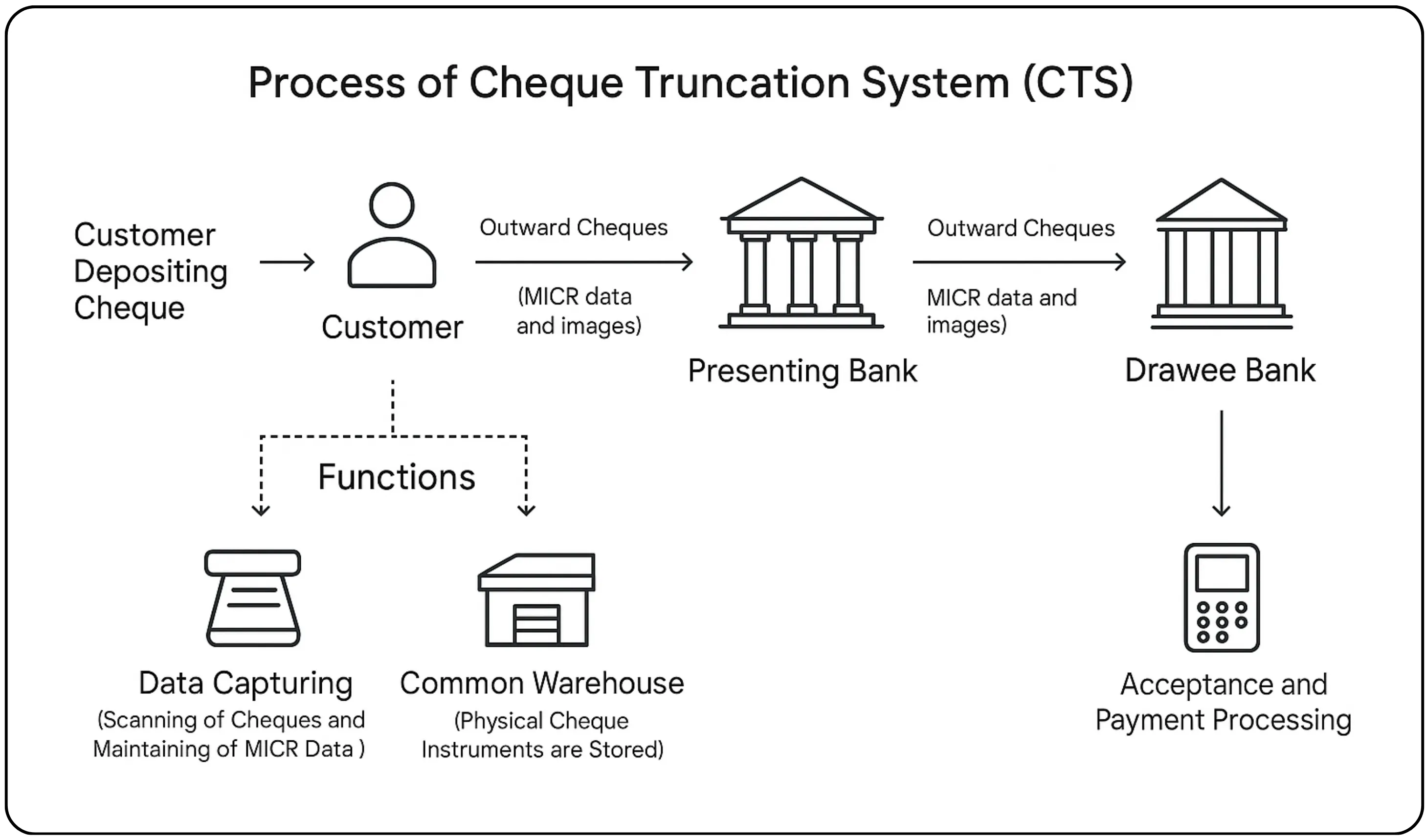
The transition builds upon the existing cheque truncation system (CTS), where physical cheques are scanned and processed electronically. By avoiding the physical movement of cheques, CTS already made the process faster. The new framework takes it further with realisation-based settlement.
Cheque Clearance
Phase 1 (October 4, 2025 – January 3, 2026)
Presentation window: 10 am to 4 pm
Drawee banks must confirm honour/dishonour by 7 pm same day
Funds credited to the beneficiary within 1 hour of cheque settlement
Phase 2 (from January 4, 2026)
Presentation window: 10 am to 4 pm
Cheques cleared within 3 hours of being deposited
Funds credited to the beneficiary within 1 hour of cheque settlement
Cheque Payments
For individuals and businesses that rely on cheques for high-value transactions, this change means:
Faster liquidity and improved fund access.
Reduced dependency on batch-based timelines.
More predictable and transparent cheque payments.
Continuous Clearing and Settlement
The new model introduces continuous clearing and settlement. This means that cheques are no longer held until the end of the day but instead processed in real time. Unconfirmed cheques will be treated as deemed approved, reducing delays and providing customers faster access to funds.
Cheque Clearing

By early 2026, cheque clearing in India will work almost like instant digital transfers. The reforms aim to reduce inefficiencies, shorten the clearing cycle, and improve the banking system’s ability to handle cheque-based transactions.
Cheque Deposited
If you deposit a cheque at your bank branch within the presentation window, you can expect it to be cleared and credited the same day. By Phase 2, the process will be even quicker within just a few hours.
Batch Processing
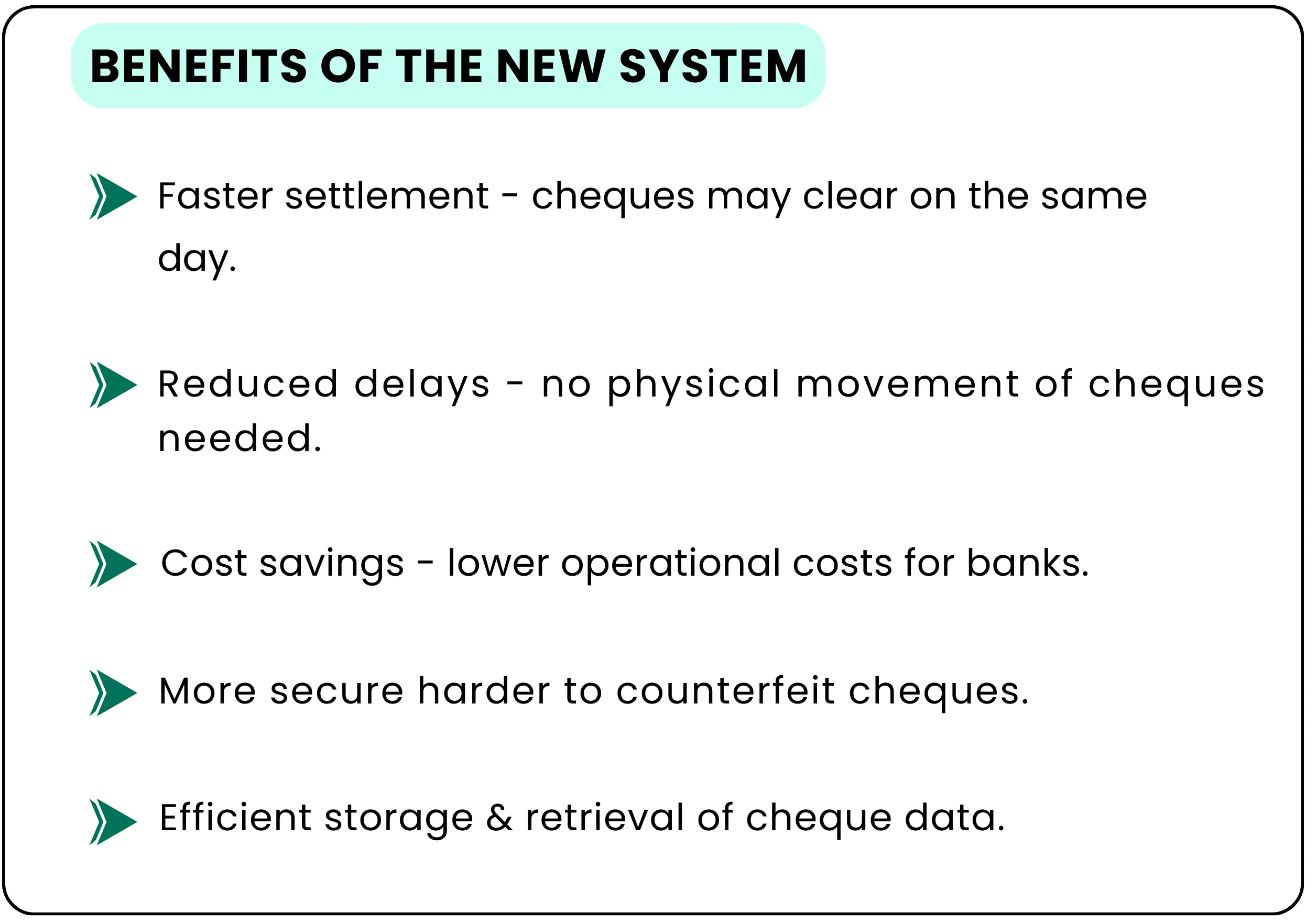
Earlier, cheques moved through batch processing, which meant delays and longer settlement times. The new system eliminates this by moving to real-time or near real-time confirmation, thus reducing settlement risks.
Cheque Truncation System
The cheque truncation system (CTS) remains the backbone of this transformation. By digitising cheque images, CTS already helped reduce fraud and speed up processing. The new framework builds on this, making cheque transactions even more efficient.
Clear Cheques
With drawee banks required to confirm cheques quickly, only honoured cheques will move to settlement. Dishonoured ones will be filtered out immediately, helping banks and customers save time.
Faster Cheque
Ultimately, these reforms are all about creating a faster cheque system. By January 2026, cheques will clear within hours instead of days, giving customers a smoother and more reliable experience.
Stay informed: The new system takes effect from October 4, 2025, with Phase 2 starting from January 4, 2026. For anyone still relying on cheque-based transactions, these changes will mean quicker access to funds and reduced settlement risks.
Disclaimer: The information provided in our blogs is for informational purposes only and should not be construed as financial, investment, or trading advice. Trading and investing in the securities market carries risk. Always conduct your own research and consult with a qualified financial advisor before making any investment decisions. Past performance is not indicative of future results. Copyrighted and original content for your trading and investing needs.
© 2025 — Tradejini. All Rights Reserved.