

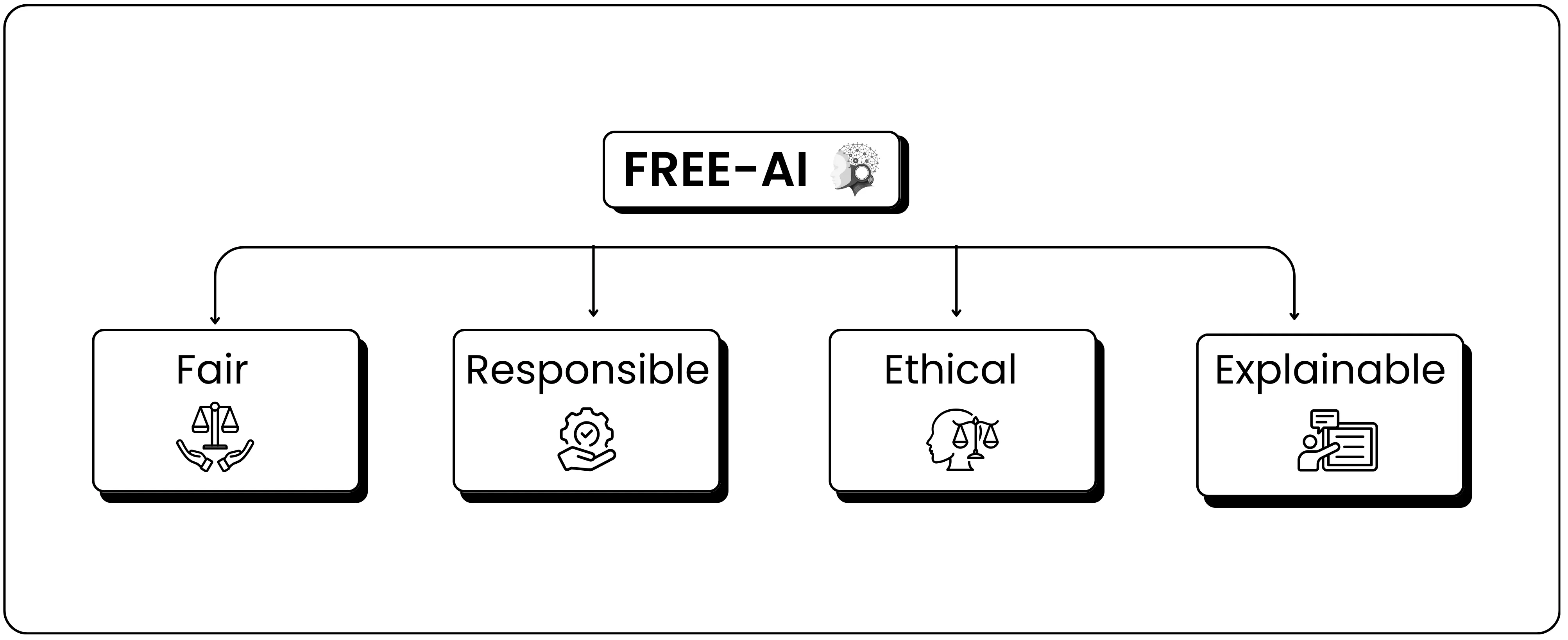
The Reserve Bank of India’s FY26 Fintech Strategy has introduced a new framework called FREE-AI, which stands for Fair, Responsible, Ethical, and Explainable AI. At first glance, it might sound like another regulation, but it actually reflects a deeper shift in how artificial intelligence (AI) should be developed and deployed in the Indian financial sector.
For fintechs and broking firms that are rapidly embracing AI to drive efficiency, client experience, and scale, this framework is not just about compliance. It’s a timely reminder that trust, transparency, and accountability must grow with innovation.
Ethical AI use is about systems, not just smart code
RBI FREE AI framework highlights four key principles for financial institutions.
- Fairness: ensures that decisions are free from discrimination.
- Responsibility: ensures that someone is accountable for AI outcomes.
- Ethical: It means aligning actions with the broader public interest.
- Explainability: clients and regulators should be able to understand how decisions are being made.
But these terms are not meant to be ticked off in a report. They raise more fundamental questions. Who approves an AI model before it goes live? Who monitors it over time? What happens if it starts showing bias or generating harm? Can it be stopped quickly if needed?
Also read: India Posts Surplus Amid Global Headwinds and Uncertainty
AI use depends on systems, not just software
Contrary to the growing misconception that ethics can be coded into algorithms, AI models do not imbibe ethics on their own. What really matters is how they are used, who oversees them, and what safeguards are in place.
AI models are generic in nature, and the output depends entirely on the data used for training. Therefore, trust must be built around the data that goes into the model, the training process, and the nature of the output it generates.
Ethical use of AI requires a clear governance structure. Having a plan ready if things go wrong. Feedback systems need to exist so models can learn and adapt. This is especially important for broking platforms.
Transparency and consent will shape client trust
AI systems, whether in broking or fintech, are built on data. But in finance, data is personal and includes your investment habits, risk profile, income patterns, and more. This is where transparency becomes key. Clients should know what data is being collected, how it’s being processed, and whether they have a choice to opt in or out.
For brokerage firms that are enhancing research tools, personalizing dashboards, or automating investment suggestions, algo trading is important; when client questions arise, the client should be informed and aware.
The RBI’s signal is clear. If AI is going to shape the future of financial services, it must do so with the full trust of the user. Building that trust starts with being transparent about data and clear about decision-making.
AI’s potential is real, but integration is not simple
AI is reshaping finance at a fast pace. The fintech AI market was valued at approximately ₹78,000 crore in 2021 and is projected to reach nearly ₹3.4 lakh crore by 2030. In the broking space too, AI is not only enhancing fraud detection and risk analysis but also transforming trading infrastructure.
AI isn’t just a plug-and-play solution. Most broking firms still operate with outdated systems. To adopt AI responsibly, firms need to upgrade their tech stack, improve data pipelines, and invest in cross-functional collaboration between product, compliance, and technology teams.
Firms that prepare early by setting up internal AI policies, training their teams, and testing models in sandbox environments will find themselves ahead of the curve.
Also read: Cost Inflation Index Simplified for Smarter Tax Saving
FREE-AI is a signal to act now, not a hurdle to delay innovation
For broking firms, the takeaway is clear. FREE-AI is not a restriction; it’s an opportunity to lead. Clients want better experiences, faster insights, and smarter tools, but they also want to feel safe and informed. Regulators aren’t against innovation. They want to ensure that innovation does not come at the cost of trust.
By embedding FREE-AI principles into their systems now, broking firms can show leadership. They can design AI tools that not only improve operations but also earn lasting client confidence. Power your trading with Tradejini API, which enables seamless integration of such innovative solutions.
The future of AI in finance will be shaped by those who can innovate responsibly. Whether you are building a new trading assistant or automating investment advice, the question isn’t just what your AI can do, but whether your systems are ready to support it when it matters most.
Tradejin offers its users free API integration, providing access to a wide range of algorithmic trading platforms. Want to open an account with Tradejini? Read the process on how to open an account in Tradejini.
Disclaimer: The information provided in our blogs is for informational purposes only and should not be construed as financial, investment, or trading advice. Trading and investing in the securities market carries risk. Always conduct your own research and consult with a qualified financial advisor before making any investment decisions. Past performance is not indicative of future results. Copyrighted and original content for your trading and investing needs.
© 2025 — Tradejini. All Rights Reserved.


