

What if I tell you, your gold has come from the stars? Yes, it is true. Gold was created billions of years ago, deep in space. Scientists believe gold forms during powerful cosmic events, such as supernovae and colossal collisions between neutron stars, that produce heavy elements and scatter them across the universe as stardust. The gold source traces back to these cosmic events, scattering precious elements across the universe.
Some of this gold-rich dust travelled through space and eventually reached Earth, primarily via meteorites that struck the planet after its formation. While most of Earth’s original gold sank into the core during its molten early stages, these meteorite impacts brought gold closer to the surface, where humans could later discover and mine it.
Even today, gold is found deep within rock layers or along riverbeds, where flowing water gradually deposits tiny particles over the course of centuries. In essence, every gold ornament we hold is ancient cosmic dust, a timeless gift from the universe, now shining in our hands.
Can humans create gold?
Technically, yes. But practically, no. Gold is a unique element that was created in space billions of years ago during massive cosmic events. While scientists can make gold by altering the atomic structure of other elements, like mercury, using advanced equipment such as nuclear reactors or particle accelerators, the process is incredibly expensive and energy-intensive. The cost of creating even a tiny amount of gold in this way is far higher than its actual market value. That’s why, instead of trying to manufacture gold, it’s much more practical to mine it from the Earth or recycle it from old jewellery and electronic devices.
Gold and the evolution of modern money
Long before coins and currency notes existed, trading goods meant directly exchanging items, a system known as barter. You might trade wheat for meat, but this method had a significant drawback: both parties needed to desire exactly what the other had. This didn't always happen, making trade complicated.
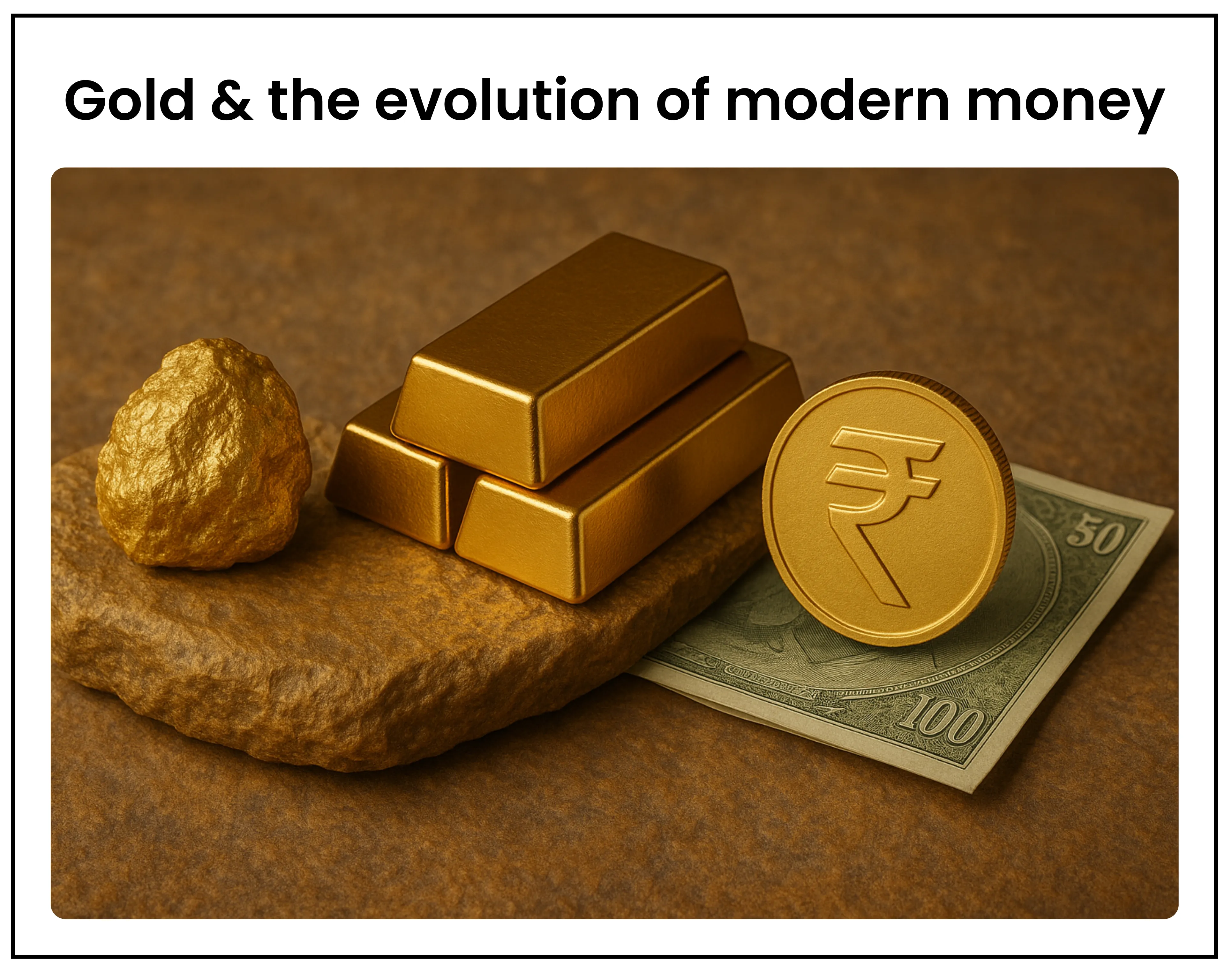
To simplify trade, ancient civilizations turned to gold as a universally accepted medium of exchange. From ancient Egypt to Mesopotamia, gold became valuable due to its rarity, durability, divisibility, and consistent shine. Kings treasured it, temples safeguarded it, and merchants relied on it, gold had emerged as the first universal form of money.
As international trade expanded, carrying heavy gold around became impractical. To meet the needs of expanding trade, ancient civilizations began to import gold from distant regions. People started storing gold securely with trusted goldsmiths like Edward Backwel, Wells Fargo, who in return gave receipts as proof of storage. Over time, these receipts evolved into paper money, with each note representing actual gold stored safely. This created a trustworthy financial system, as people knew their paper currency could always be exchanged back into gold.
However, a significant shift occurred in 1971 when the United States discontinued this gold backing, known as ending the ‘gold standard.’ Since then, money has derived value not from gold but from trust in governments and economies.
Today, gold is primarily seen as a reliable investment asset. Today, cash-for-gold programs enable people to convert old jewellery into money, reinforcing gold’s lasting value. During times of uncertainty, such as wars, economic crises, inflation, or global pandemics, investors continue to turn to gold. Its enduring stability makes it a dependable guardian of wealth, preserving value when other financial assets might falter.
Looking to safeguard your investments? Consider gold as a trusted asset to protect and grow your wealth through challenging times.
Also Read: How Technology is Redefining the Future of Gold Demand
The subprime crisis and gold
In 2008–2009, the world faced one of the worst financial crises in modern history, the Global Financial Crisis, triggered by the collapse of the U.S. housing market. To prevent a total economic meltdown, the U.S. government and the Federal Reserve launched a massive monetary rescue plan known as Quantitative Easing (QE).
Through QE, the government injected trillions of dollars into banks and financial markets by effectively ‘printing money.’ The aim was to boost liquidity, encourage lending, and prevent a deep recession.
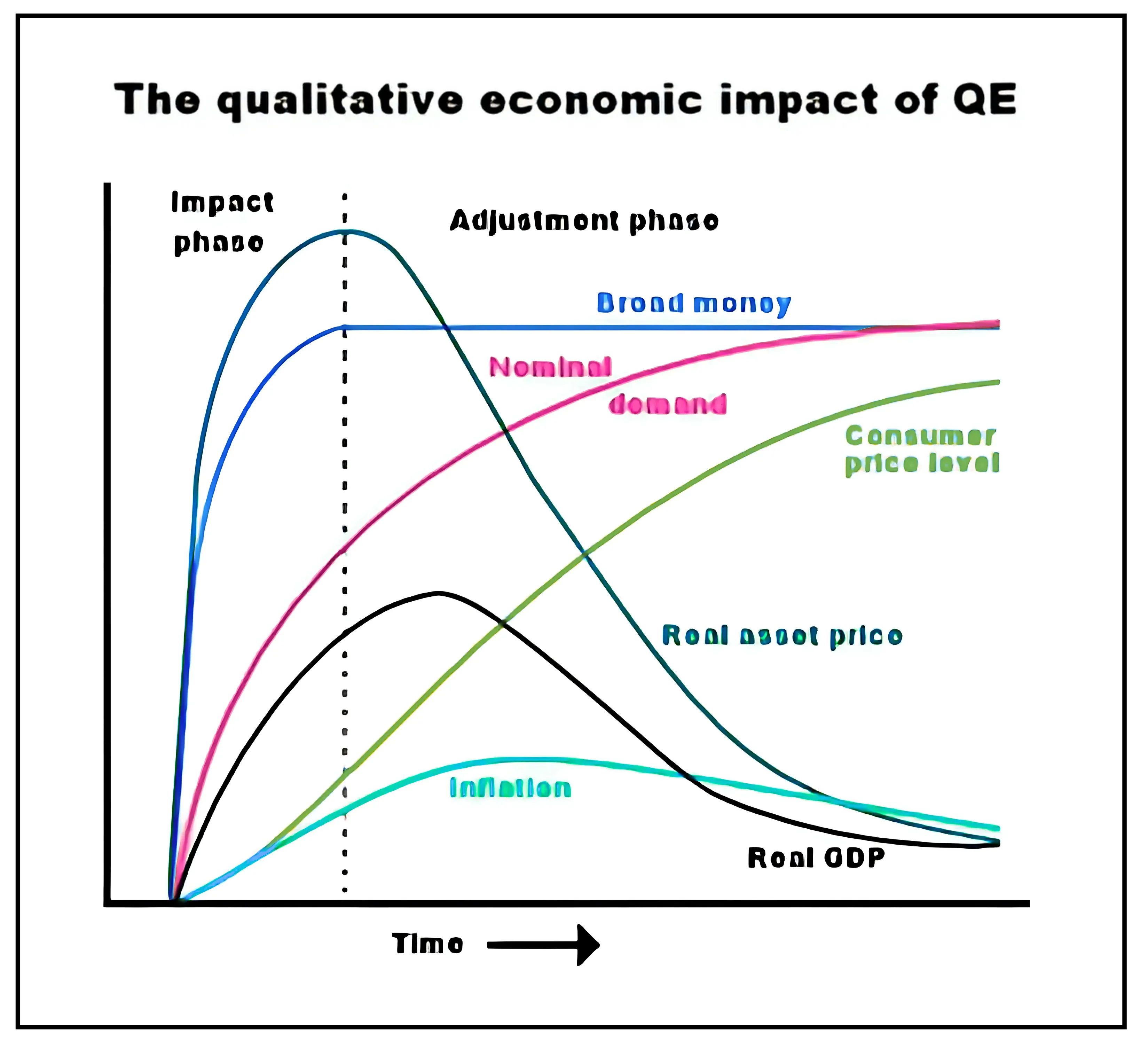
But this sudden surge in money supply made investors around the world nervous.
When Trust in Paper Fades, Gold Shines: People began to worry, ‘If so many dollars are being created, won’t that reduce their value?’ This fear of currency devaluation and rising inflation led many investors to lose confidence in paper money, or fiat currency.
And what did they turn to instead? Gold, the timeless haven…
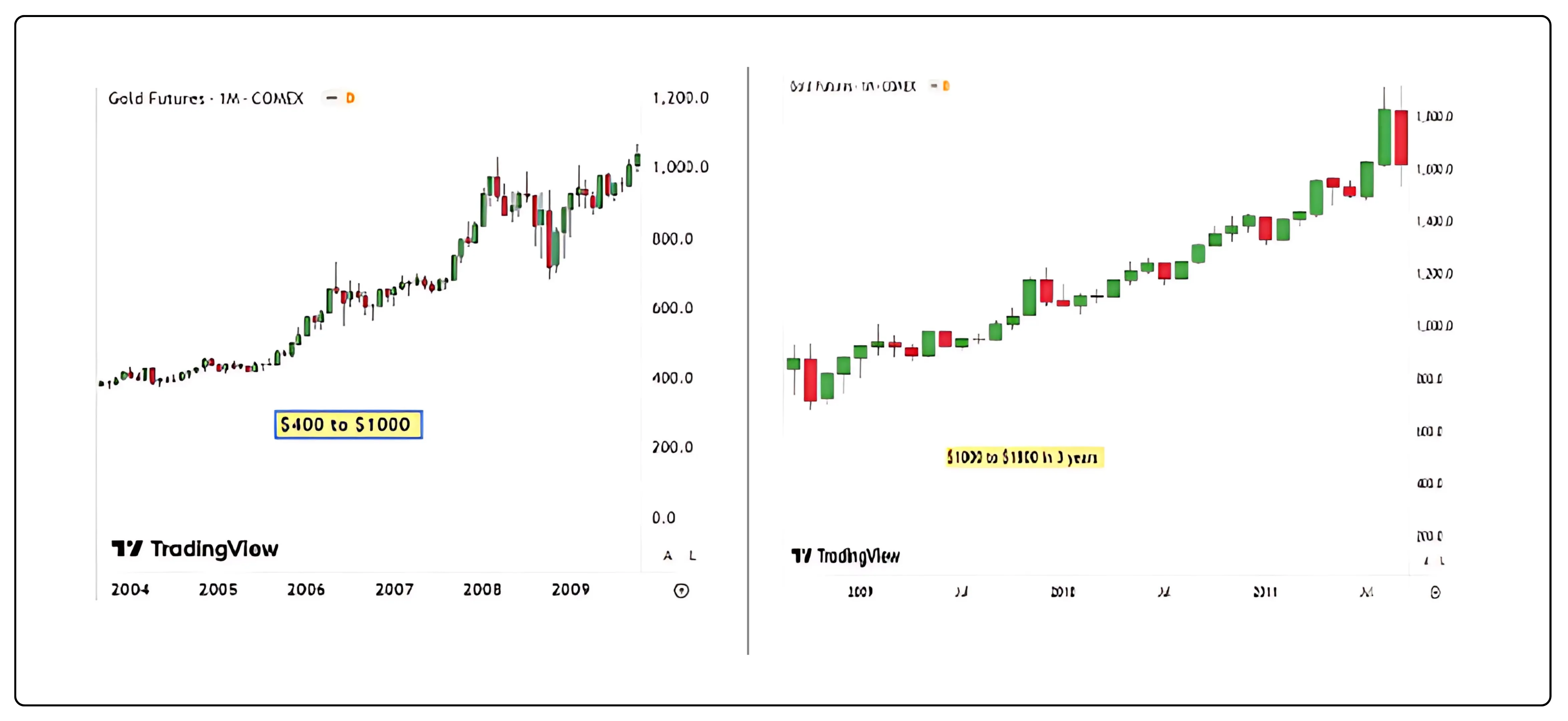
Between 2008 and 2011, gold prices skyrocketed from around $1,000 to $1,800 per ounce. This wasn’t just a price surge, it was a global vote of no-confidence in the dollar. Investors saw gold as a shield against inflation, a store of real value, and insurance against economic chaos.
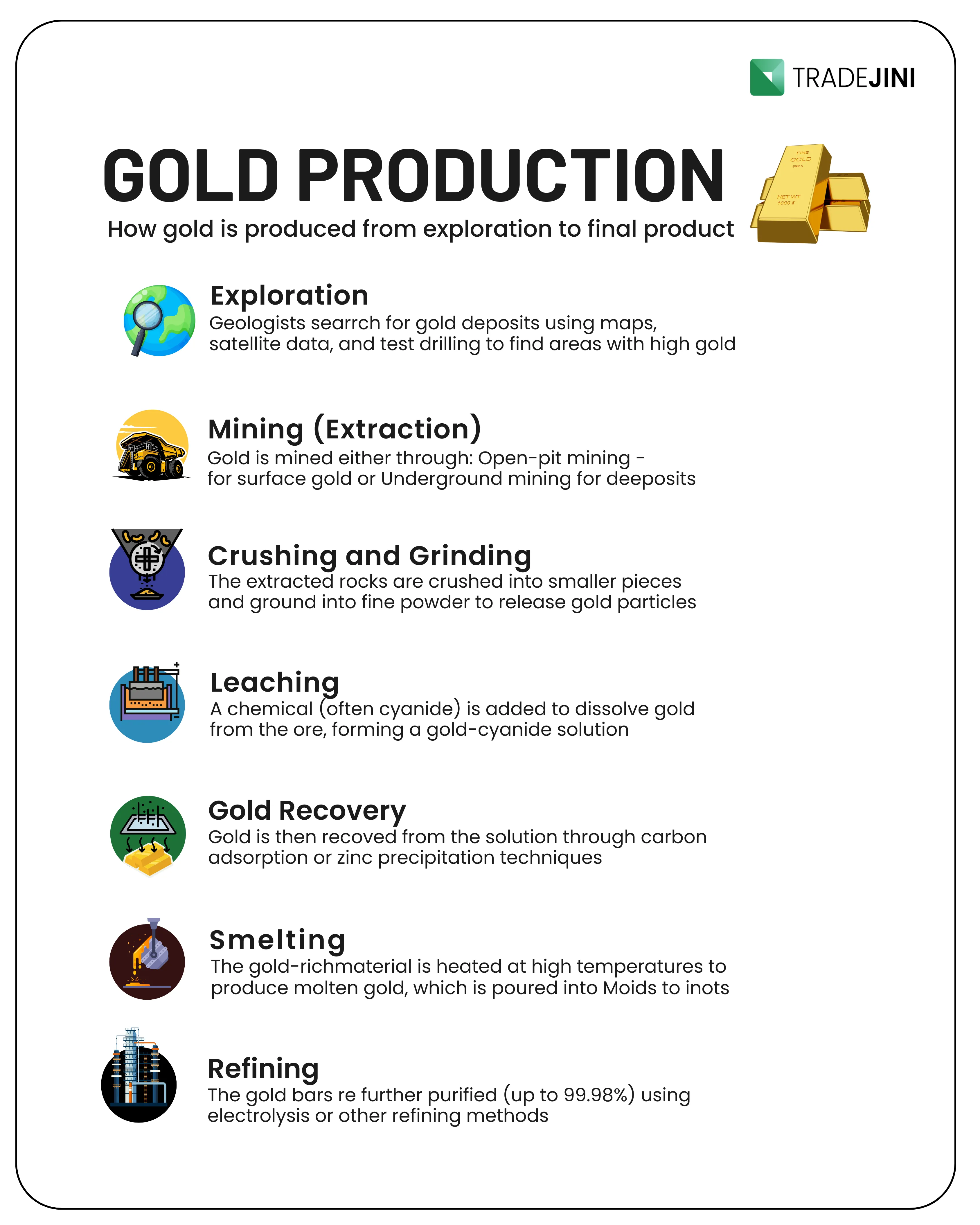
How gold is produced (earth to an ornament)
Gold production is a fascinating process that begins deep beneath the Earth’s surface. Here's how it typically happens:
Cost of mining
The cost of mining gold varies significantly across the globe, typically ranging between $900 and $1,300 per ounce. This variation is influenced by a combination of geological, operational, regulatory, and economic factors that determine the efficiency and viability of each mining project.
| Cost Type | Avg Cost/Ounce ($) | What it Covers |
|---|---|---|
| Mining & Processing | $800 – $1,000 | Digging gold out and turning ore into gold |
| Running the Mine | Included above | Paying workers, equipment, and admin |
| Refining & Shipping | $20 – $50 | Making gold pure and sending it to buyers |
| Other Costs | $50 – $100 | Environmental rules, safety, taxes |
Born in stars, trusted on earth
From its cosmic origins in star explosions to its place in modern vaults and investment portfolios, gold’s journey is nothing short of extraordinary. It has shaped economies, preserved wealth through crises, and continues to be a trusted store of value when markets grow uncertain. Whether mined from deep beneath the Earth or recycled from old jewellery, gold’s allure remains timeless. As global uncertainties persist, gold isn’t just a relic of the past, it is a relevant, resilient asset for the future. For investors seeking stability, gold continues to shine, both as a symbol and a safeguard of wealth.
Disclaimer: The information provided in our blogs is for informational purposes only and should not be construed as financial, investment, or trading advice. Trading and investing in the securities market carries risk. Always conduct your own research and consult with a qualified financial advisor before making any investment decisions. Past performance is not indicative of future results. Copyrighted and original content for your trading and investing needs.
© 2025 — Tradejini. All Rights Reserved.