

Pledging is a financial strategy that allows investors to use their mutual fund units as collateral to secure a loan from a financial institution. Instead of selling mutual fund investments to raise cash, investors can pledge their mutual funds and access funds quickly while keeping their investments intact. This process, known as pledging mutual funds, is especially useful for investors who need immediate liquidity but want to continue benefiting from the potential growth of their mutual fund units. By pledging mutual fund investments, investors can meet short-term financial needs without disrupting their long-term investment goals, making it a flexible and efficient way to manage both cash flow and investments.
What is a haircut in margin trading?
In simple terms, a haircut is the percentage reduction applied to the market value of a security to determine its collateral value in a margin account. This ensures that brokers have a risk buffer in case the price of the security falls suddenly.
When traders pledge securities (such as stocks, bonds, or mutual funds) as collateral for a margin loan, the broker does not consider the full market value of these securities. Investors can also pledge shares as collateral for margin trading. Instead, they apply a haircut to determine how much margin can be given against them. The borrowed funds can then be used to trade in the market, increasing the investor's buying power.
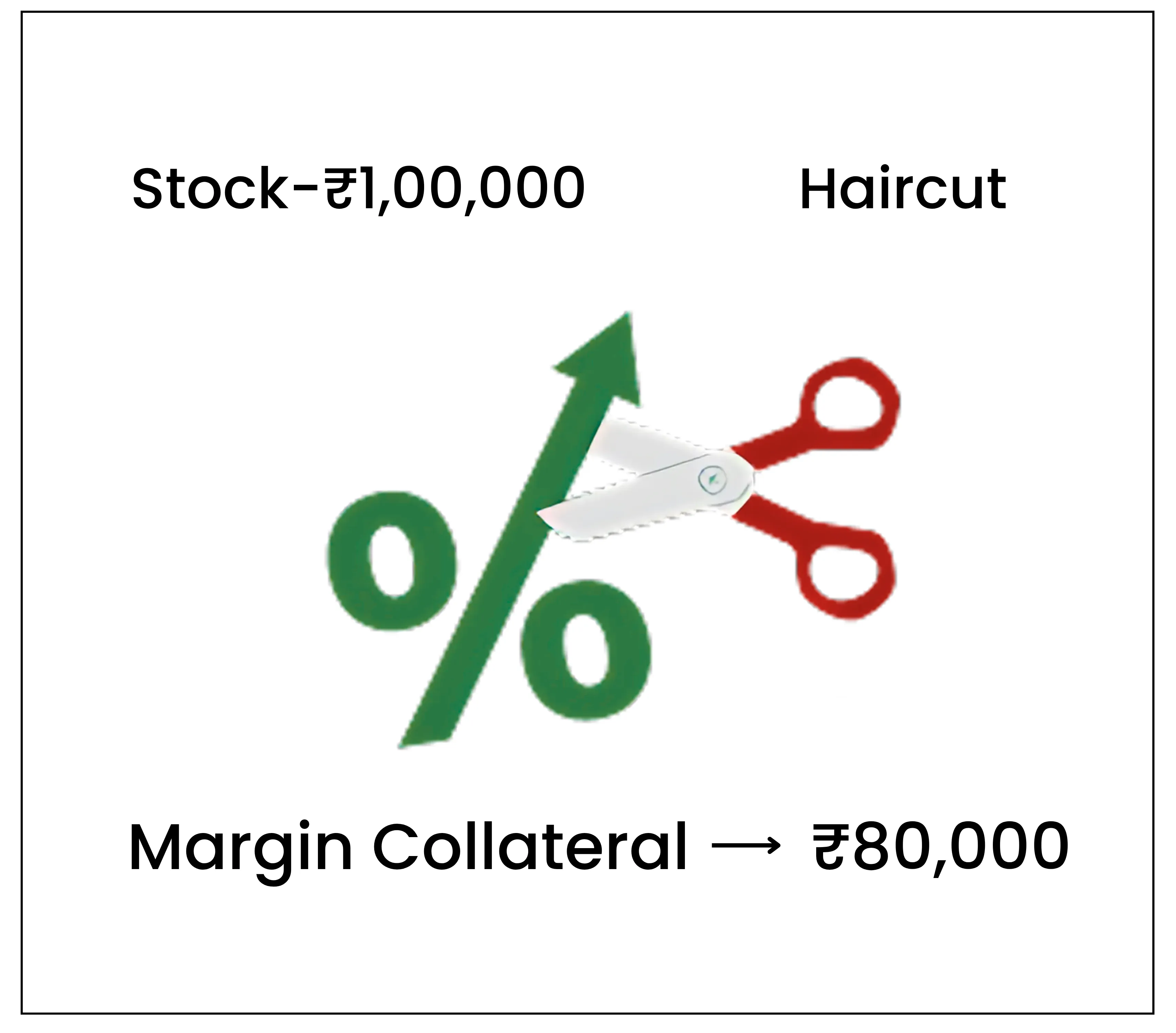
For example, if a stock has a market value of ₹1,00,000 and the broker applies a 20% haircut, then only ₹80,000 of its value will be considered as margin collateral. The remaining ₹20,000 is the haircut, which acts as a protective cushion against market volatility. The haircut is also applied to pledged shares in margin accounts. Similarly, the haircut percentage may vary for different types of securities, such as stocks, bonds, or mutual funds.
Why is a haircut applied?
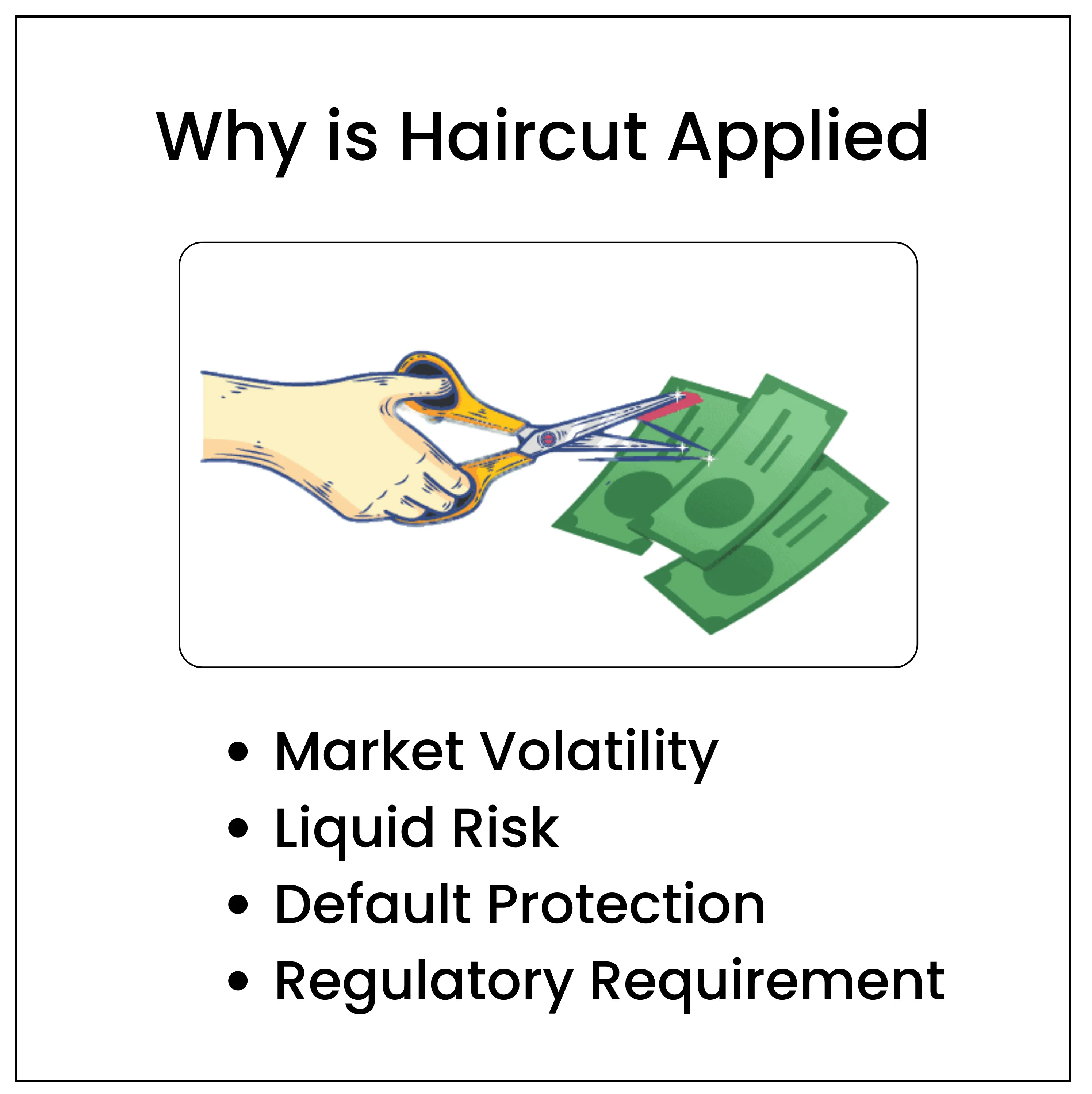
Haircuts are applied for several reasons, including:
Market Volatility – Stocks that experience frequent price fluctuations are considered riskier, so brokers apply a higher haircut to protect against potential losses.
Liquidity Risk – If a security is difficult to sell quickly, a higher haircut is used to account for the difficulty in converting it into cash.
Default Protection – If a trader defaults or is unable to meet margin requirements, the haircut ensures that the broker has enough security to recover the loan amount.
Regulatory Requirements – In India, SEBI (Securities and Exchange Board of India) mandates haircut levels to maintain stability in the financial markets and reduce systemic risks.
The difference in haircut percentages reflects the varying risk profiles of different securities. Understanding these differences helps investors choose the right collateral for their needs.
Also Read: 5 Common Mistakes Traders Make With Pledged Mutual Funds
Pledge mutual funds as collateral for F&O margin
To pledge mutual funds as collateral, investors must first ensure that their chosen mutual fund scheme is eligible for pledging with their financial institution. Once eligibility is confirmed, the investor submits a pledge request to the financial institution, which then verifies the details and marks a lien on the pledged mutual fund units. The pledge margin offered is typically a percentage of the current market value of the mutual fund units, often ranging from 50% to 80%. During this period, the pledged units cannot be sold or redeemed until the unpledged. However, investors continue to receive dividends and other benefits on the pledged units, allowing them to enjoy the ongoing advantages of their mutual fund investments even while they are being used as collateral.
Benefits of pledging mutual fund investments

Pledging mutual fund investments offers several significant benefits for investors. One of the main advantages is the ability to access funds without having to sell mutual fund units, which helps preserve long-term investment strategies and avoid potential losses from selling at a low market price. Additionally, pledging mutual funds based on their net asset value, investors can continue benefiting from potential growth as the net asset value appreciates, even while the units are locked as collateral.
By pledging mutual funds, investors can maintain their investment portfolio and continue to benefit from market growth, dividends, and other returns. This approach is particularly valuable in volatile markets, as it allows investors to access liquidity while keeping their investments working for them. Overall, pledging mutual fund investments is a smart way to balance immediate financial needs with long-term wealth creation.
Impact of haircut on traders
Haircuts directly affect how much leverage a trader can use. The haircut also determines the amount a trader can use to trade in the market. A higher haircut means lower buying power, as traders will need to pledge more securities to get the same margin amount.

For example, if a trader wants to place a trade worth ₹1,00,000 and their pledged stocks have a 20% haircut, they will need to pledge ₹1,25,000 worth of stocks to meet the requirement. If the haircut was only 10%, they would need to pledge only ₹1,11,111 worth of stocks.
Thus, understanding the haircut is crucial for margin traders to plan their positions effectively and avoid unexpected margin calls.
Haircuts in margin trading serve as a risk management tool for brokers and regulators to protect against sudden market fluctuations. By applying a discount on the collateral value of securities, brokers ensure that they have enough coverage in case the market moves unfavourably. Traders must always check the haircut percentage on pledged securities to optimize their margin usage and avoid financial strain. Whether you are a beginner or an experienced trader, understanding how haircuts work can help you manage risk and make informed trading decisions.
Also Read: Investing in Precious Metals Through ETFs in India
Disclaimer: The information provided in our blogs is for informational purposes only and should not be construed as financial, investment, or trading advice. Trading and investing in the securities market carries risk. Always conduct your own research and consult with a qualified financial advisor before making any investment decisions. Past performance is not indicative of future results. Copyrighted and original content for your trading and investing needs.
©️ 2025 — Tradejini. All Rights Reserved.


