

Every economy relies on a structured system to channel funds from savers to users. The securities market in India (stock exchange in India) comprises major stock exchanges like the NSE and BSE, which play a central role in this process. Understanding how Indian stock market works requires insight into how companies raise capital, how investors pursue returns, and how regulatory bodies ensure transparency and stability.
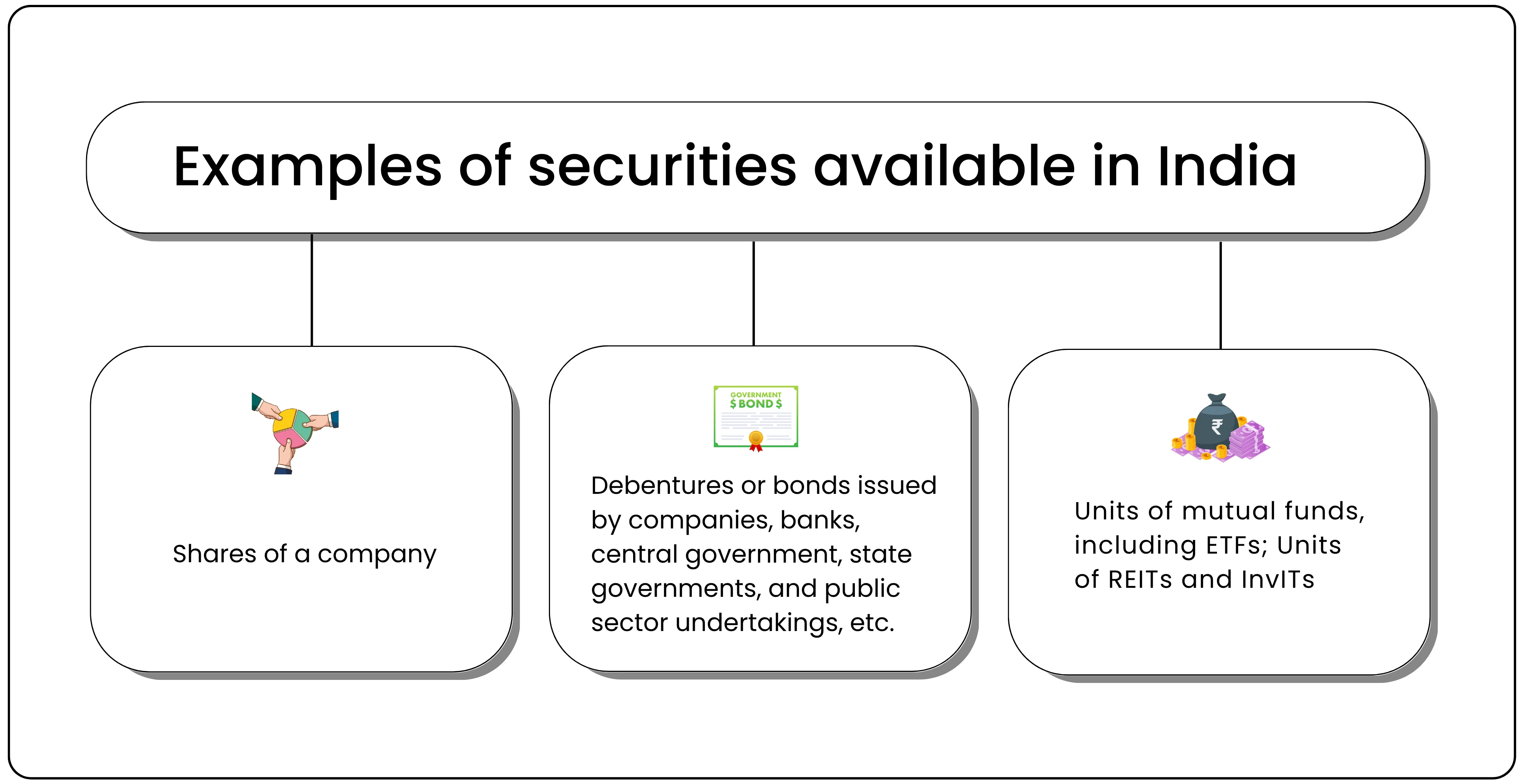
Much like banks enable lending, the securities market connects those in need of capital with those willing to provide it through instruments such as shares, bonds (Indian bond market), debentures, and government securities like Treasury Bills (T-Bill ). These instruments, collectively known as securities, allow individuals to invest in businesses and governments to raise funds from the public. Unlike consumer goods, securities are traded, often within seconds, on advanced electronic platforms that handle transactions worth crores of rupees every day.
Two markets, one purpose
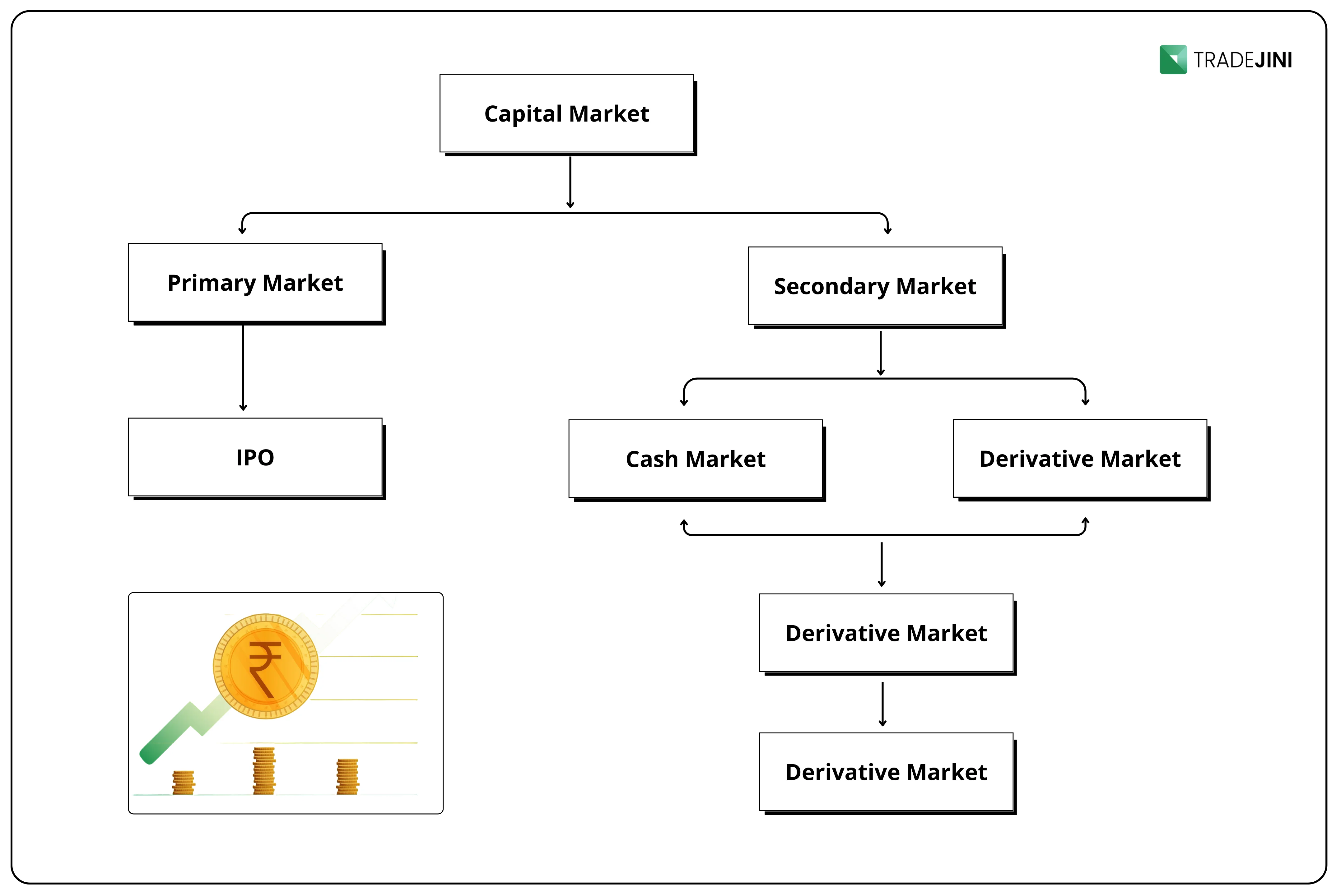
India’s securities market is divided into two major segments: the primary market and the secondary market. For anyone learning how Indian share market works, the primary market is where companies issue new securities. Once listed, they enter the secondary market. The Indian stock exchange today is a dynamic space where prices move in real time based on demand, news, and sentiment.
Before any stock is listed, a series of formal steps are followed. The company must get approval from the regulator, SEBI, enter into agreements with stock exchanges, appoint merchant bankers, and disclose financials in a public prospectus. Only then does the public offering open, allowing investors to apply for shares.
Once the securities are listed, they move into the secondary market, where trading between investors begins. This is the marketplace most people associate with the stock market, a dynamic space where prices move in real time based on news, demand, and investor sentiment. While retail investors use brokers to place trades, institutional investors often transact in large volumes, influencing liquidity and price discovery.
Also Read: 5 Reasons Why Sensex Is Always Higher Than Nifty
Behind the scenes, a well-defined infrastructure keeps the system running. Stock exchanges like NSE and BSE match orders, depositories such as NSDL and CDSL hold securities in electronic form, and clearing corporations ensure that trades are settled with precision. All of this is regulated and monitored by SEBI, which acts not just as a watchdog but also as a developer of the market, setting rules and promoting innovation.
Role of stock brokers and sub-brokers
Stock brokers like Tradejini are the licensed intermediaries who execute trades on behalf of investors. Registered with stock exchanges and regulated by SEBI, they serve as the official channel through which all secondary market transactions must pass. Whether an investor wants to buy or sell a share or bond, the trade must be routed through a registered broker.
Sub-brokers operate as an extension of these brokers, helping expand their reach, especially in smaller towns and semi-urban areas. While they are not directly registered with the exchange, they act as agents of stock brokers, enabling access for a wider base of retail investors.
In today’s market, brokers offer more than just execution. Many provide research reports, trading ideas, and market insights to help clients make informed investment decisions. Technology has also changed how trades are placed screen-based electronic platforms have become the norm, though phone-based trading support is still offered by many firms.
Brokers earn a commission or brokerage fee for each transaction, a cost that varies depending on the platform, volume, and type of security traded.
An engine of growth and trust
The securities market in India is not just about buying and selling stocks. It now even includes innovative initiatives like the Social Stock Exchange India, a platform enabling NGOs to raise funds transparently. Household savings transform into business investments through this channel. It allows companies to expand, governments to fund infrastructure, and individuals to grow their wealth. From mutual funds and insurance companies to NRIs and pension funds, the market serves a wide range of participants, all governed by a shared need for transparency and trust.
In recent years, India’s capital markets have deepened significantly, driven by technology, policy reforms, and growing retail participation. Yet the fundamentals remain the same, a regulated, transparent environment where securities are issued, traded, and settled.
At its best, the securities market is more than a platform. It is a bridge, one that links savings to opportunity, speculation to discipline, and risk to reward.
Disclaimer: The information provided in our blogs is for informational purposes only and should not be construed as financial, investment, or trading advice. Trading and investing in the securities market carries risk. Always conduct your own research and consult with a qualified financial advisor before making any investment decisions. Past performance is not indicative of future results. Copyrighted and original content for your trading and investing needs.
© 2025 — Tradejini. All Rights Reserved.
.webp%3Falt%3Dmedia%26token%3D0ead9799-20bc-4d1e-ae8f-d75ab18921b5&w=3840&q=75)