After years of slow negotiations and quiet diplomacy, India and the European Union have finally crossed the finish line on a comprehensive Free Trade Agreement. Often described as one of the most ambitious trade pacts India has signed, the deal is set to reshape how goods move between the two economies, covering nearly all traded products once it comes into force.
The deal is likely to improve market access for Indian exporters in textiles, pharma, and engineering, even as phased tariff reductions open domestic automobile and liquor markets to greater European competition. The India EU Free Trade Agreement 2026 marks one of the most comprehensive bilateral trade agreements India EU has ever concluded, covering almost the entire trade basket across goods and services with long-term structural implications for Indian exporters.
Deal Overview
According to India’s commerce ministry, the FTA implementation timeline has been structured to balance export acceleration with gradual protection for sensitive domestic industries. The FTA provides duty-free access for 90% of Indian goods initially (expanding to 93% within 7 years) to the EU, covering 99.5% of trade value with concessions, while India cuts tariffs on 96.6% of EU imports, saving EU exporters €4 billion annually. It targets sectors like engineering, textiles, and pharmaceuticals, aiming to double bilateral trade by 2032 and integrate India into EU supply chains. Formal signing follows a 5-6 month legal review and ratification process.
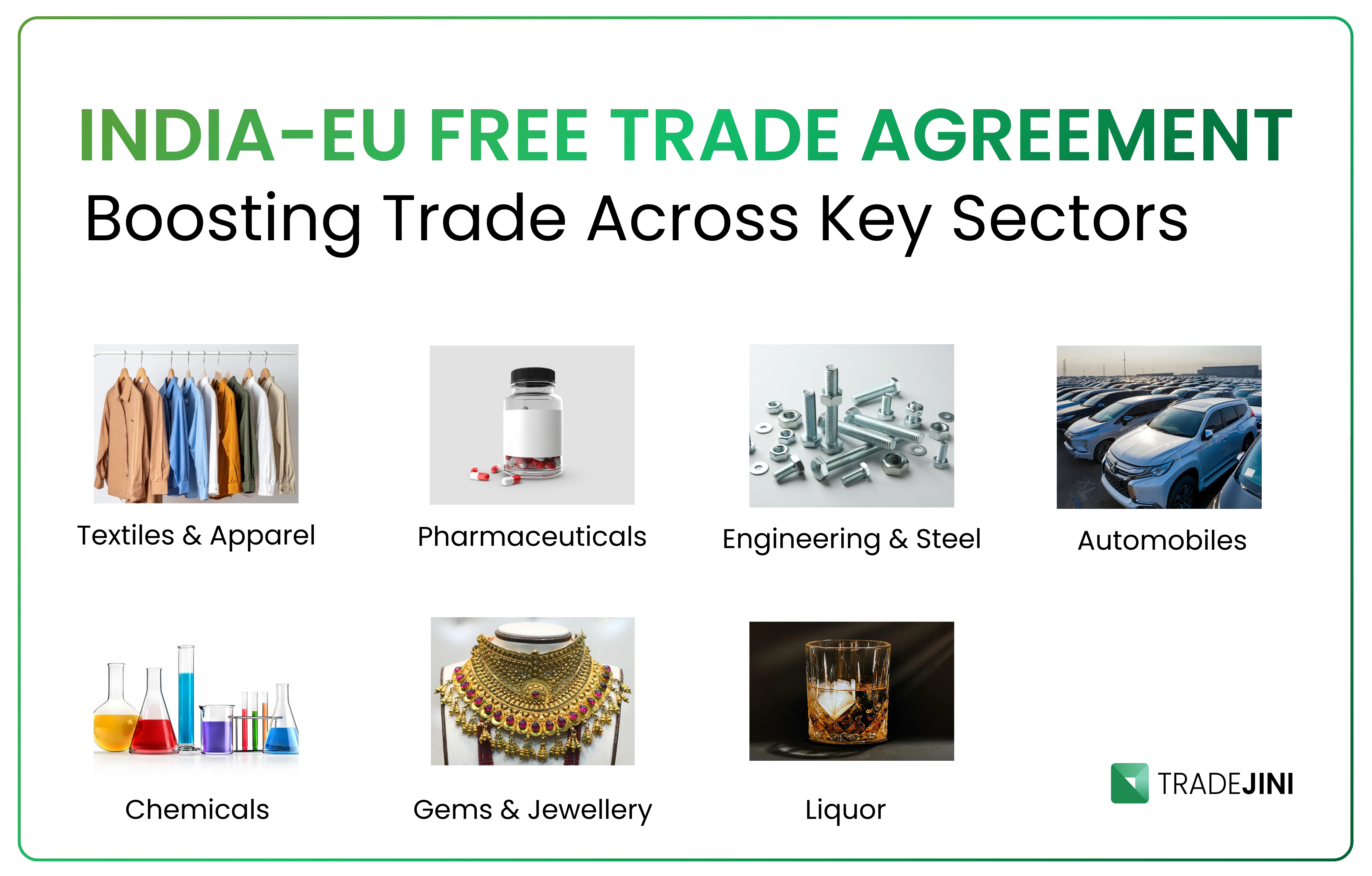
Export-Oriented Sectors
| Sector | Listed Beneficiaries | Impact |
|---|---|---|
| Textiles & Apparel | Welspun Living, KPR Mills, S.P. Apparels, Vardhman Textiles, Indo Count Industries, Gokaldas Exports, Arvind Ltd |
EU duties cut to zero from 10–12%; level playing field with Bangladesh, Vietnam |
| Pharmaceuticals | Dr. Reddy's, Torrent Pharma, Cipla, Sun Pharma, Lupin |
Tariffs eliminated in 5–7 years; improved regulatory cooperation |
| Chemicals | SRF, Navin Fluorine, Gujarat Fluorochemicals, Aarti Industries, PI Industries, UPL |
Reduced duties; EU market access for specialty chemicals |
| Gems & Jewellery | Titan Company, Senco Gold, Kalyan Jewellers |
Tariffs phased to zero; access to $45B EU market |
| Engineering & Steel | Bharat Forge, Tata Steel, JSW Steel, Jindal Stainless, SAIL, HEG, Graphite India |
‘Euro-plus-one’ shift; higher OEM engagement; carbon border tax concerns |
| Two-Wheelers | Bajaj Auto, TVS Motor | EU duties on motorcycles reduced by ~8% |
| IT Services | TCS, Infosys, Wipro, HCL Tech, Tech Mahindra, L&T Technology Services, KPIT Technologies |
Improved service access; diversification from US dependence |
| Leather & Footwear | Relaxo Footwears, Bata India, Liberty Shoes |
Tariffs reduced from 8–15% to zero |
| Marine Products | Avanti Feeds, Waterbase Limited | Zero tariffs on seafood exports |
| Agro-Chemicals | Godrej Agrovet, Coromandel International, Rallis India |
Improved market access for formulations |
Zero-duty access under the agreement is expected to significantly boost Indian textile exports to Europe, restoring competitiveness against Bangladesh and Vietnam, which previously enjoyed preferential access.
Also Read: India Highlights Clean Energy Push as Union Minister Meets Global Leaders at WEF 2026
Import-Competing Sectors
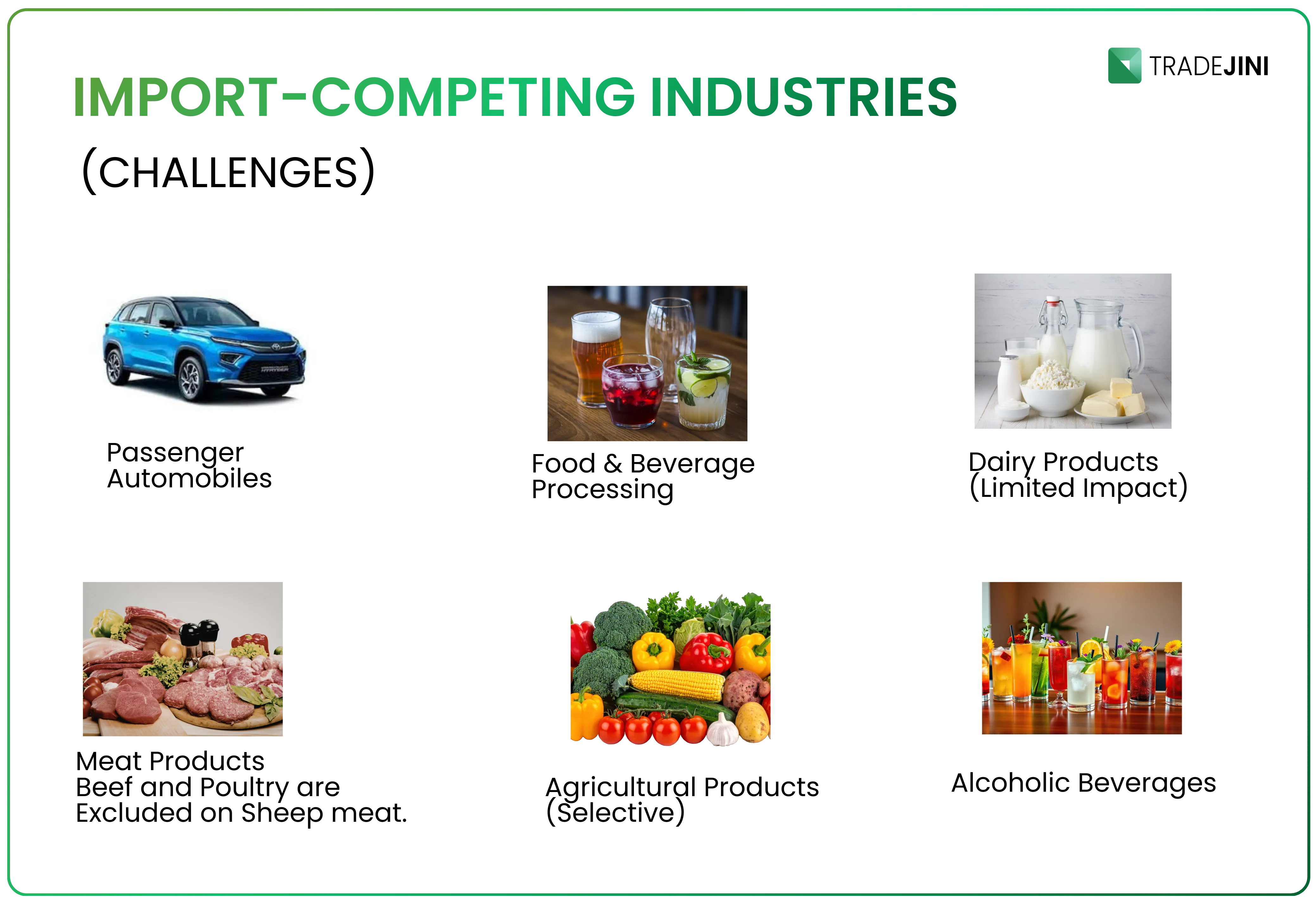
Automobiles and liquor face increased competition from cheaper EU imports under phased duty reductions.
Automobile Tariff Phase-Out Details
Import duties on European cars will drop from 110% to 10% over 5-10 years under the following structure:
| Timeline | Details |
|---|---|
| Year 1 | Tariffs reduced to 30–40% (from 110%) |
| Year 5–10 | Tariffs reach 10% |
| Annual Quota | 200,000–250,000 vehicles per year |
| Price Threshold | €15,000 / ₹15 lakh (cars below this threshold excluded) |
| EV Protection | EVs excluded from liberalization for first 5 years |
| Auto Parts | Fully liberalized (tariffs eliminated) in 5–10 years |
Liquor Tariff Reductions
Import duties on European alcoholic beverages will be reduced as follows:
| Product | Current Tariff | New Tariff |
|---|---|---|
| Premium Wine | Up to 150% | 20% (via 75% initially) |
| Mid-Range Wine | Up to 150% | 30% |
| Spirits (Whisky, Vodka, Gin, Rum) | Up to 150% | 40% |
| Beer | Around 110% | 50% |
Impacted Listed Companies
| Sector | Listed Companies | Market Reaction |
|---|---|---|
| Automobiles | Mahindra & Mahindra, Maruti Suzuki, Tata Motors, Hyundai Motor India | Shares fell 1–5% on announcement; concerns over phased tariff reductions |
| Alcoholic Beverages | Sula Vineyards, United Breweries (Heineken), United Spirits (Diageo), Radico Khaitan | Shares declined 2–4%; increased competition from EU wines and spirits |
Market Reactions and Expert Views
Auto stocks declined 1-5% immediately following the announcement due to concerns about phased duty reductions, while textile stocks gained on expectations of improved EU market access. Emkay, Elara Capital, Swastika, HSBC, and Goldman Sachs see long-term gains for export-oriented sectors offsetting import pressures. Moody's and other rating agencies highlight manufacturing and FDI boosts for India's economy.
Complete List of Impacted Industries
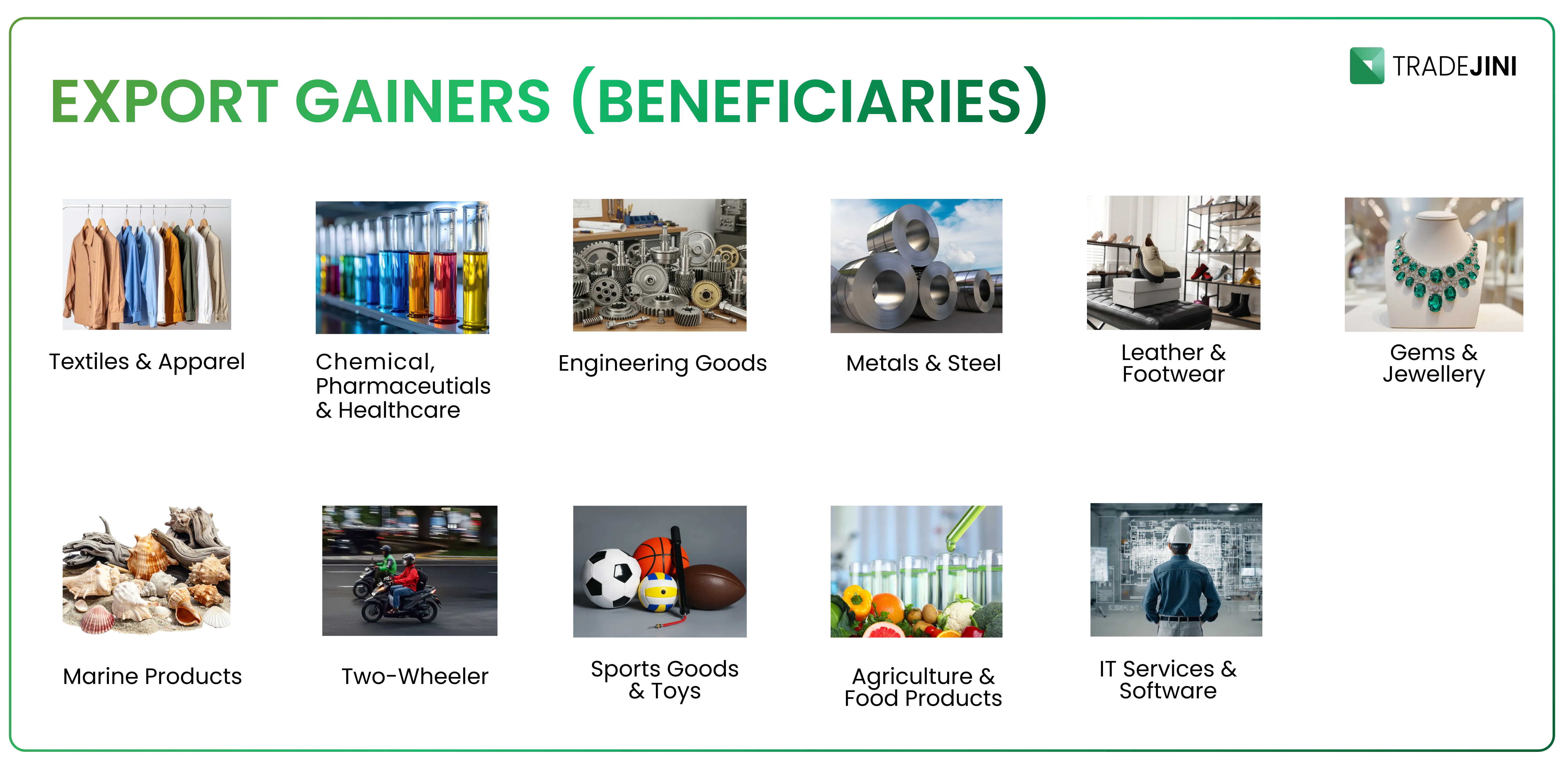
Export Gainers (Beneficiaries)
1. Textiles and Apparel:
- Garments, readymade clothing, home textiles (towels, bed linen)
- Cotton yarn and fabrics
- Technical textiles
2. Pharmaceuticals and Healthcare:
- Generic medicines and formulations
- Active Pharmaceutical Ingredients (APIs)
- Medical devices and equipment
3. Chemicals and Petrochemicals:
- Specialty chemicals
- Industrial chemicals
- Fluorochemicals and agrochemicals
- Plastics and polymers
4. Gems, Jewellery and Precious Metals:
- Cut and polished diamonds
- Gold and silver jewellery
- Precious stones processing
5. Engineering Goods:
- Machinery and industrial equipment
- Electrical equipment and components
- Precision instruments
- Auto components and parts
6. Metals and Steel:
- Iron and steel products
- Stainless steel
- Aluminum products
- Graphite and specialty alloys
7. Leather and Footwear:
- Leather goods and accessories
- Footwear (all categories)
- Tanned leather
8. Marine Products:
- Seafood and fish products
- Shrimp and aquaculture
- Processed marine products
9. IT Services and Software:
- Software development and IT consulting
- Business process outsourcing (BPO)
- Engineering R&D services
- Digital services
10. Electronics and Electrical Equipment:
- Consumer electronics
- Electronic components
- Electrical machinery
11. Two-Wheeler Automobiles:
- Motorcycles and scooters
- Electric two-wheelers
12. Handicrafts and Artisan Products:
- Traditional handicrafts
- Handloom products
- Artisanal goods
13. Sports Goods and Toys:
- Sports equipment
- Toys and games
14. Agriculture and Food Products (Select):
- Tea and spices
- Processed foods
- Basmati rice (with GI protection)
Import-Competing Industries (Challenges)
1. Passenger Automobiles:
- Luxury and premium cars
- Mid-segment passenger vehicles
- Electric vehicles (protected for 5 years)
2. Alcoholic Beverages:
- Wine producers
- Domestic spirits manufacturers
- Beer breweries
3. Food and Beverage Processing:
- Chocolates and confectionery
- Processed foods (pasta, biscuits)
- Fruit juices
4. Dairy Products (Limited Impact):
- Cheese and dairy processors
- Note: Milk powder, butter excluded from liberalization
5. Agricultural Products (Selective):
- Fruits (apples, pears, kiwi under quota)
- Olive oil and vegetable oils
- Table grapes, cucumbers (limited quotas)
6. Meat Products:
- Sausages and meat preparations
- Sheep meat
- Note: Beef and poultry excluded from liberalization
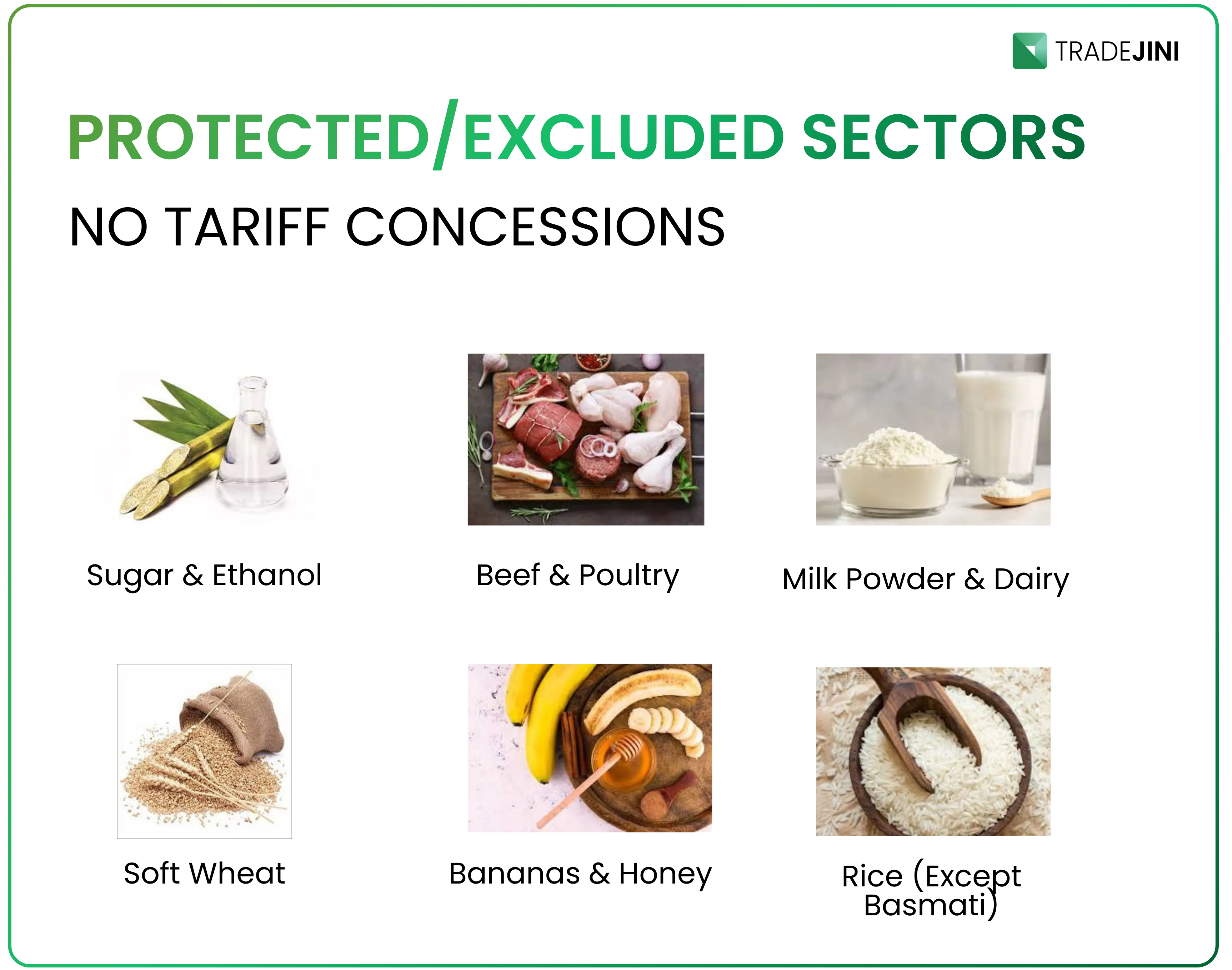
Protected/ Excluded Sectors
The following Indian sectors remain protected with no tariff concessions:
- Sugar and ethanol
- Rice (except Basmati with GI)
- Soft wheat
- Beef and poultry
- Milk powder and dairy sensitivities
- Banana and honey
Also Read: India’s 2025 Market Performance Powered by Domestic Capital
Strategic and Economic Implications
Economic Impact:
- Expected to double bilateral trade by 2032
- Potential to create 6–7 million jobs in labor-intensive sectors
- Unlocks $75 billion in fresh export opportunities
- Integration into EU supply chains
Geopolitical Context:
- Comes amid US tariff tensions (50% tariffs on some Indian exports)
- Reduces India’s dependence on US markets
- Strengthens India–EU strategic partnership
- Part of broader effort to diversify supply chains away from China
Implementation Timeline:
- Legal review and translation: 5–6 months
- Ratification by EU Parliament and Indian government required
- Expected entry into force: Late 2026 or early 2027
- Tariff reductions phased over 7–10 years for most sectors
The Structural Shift
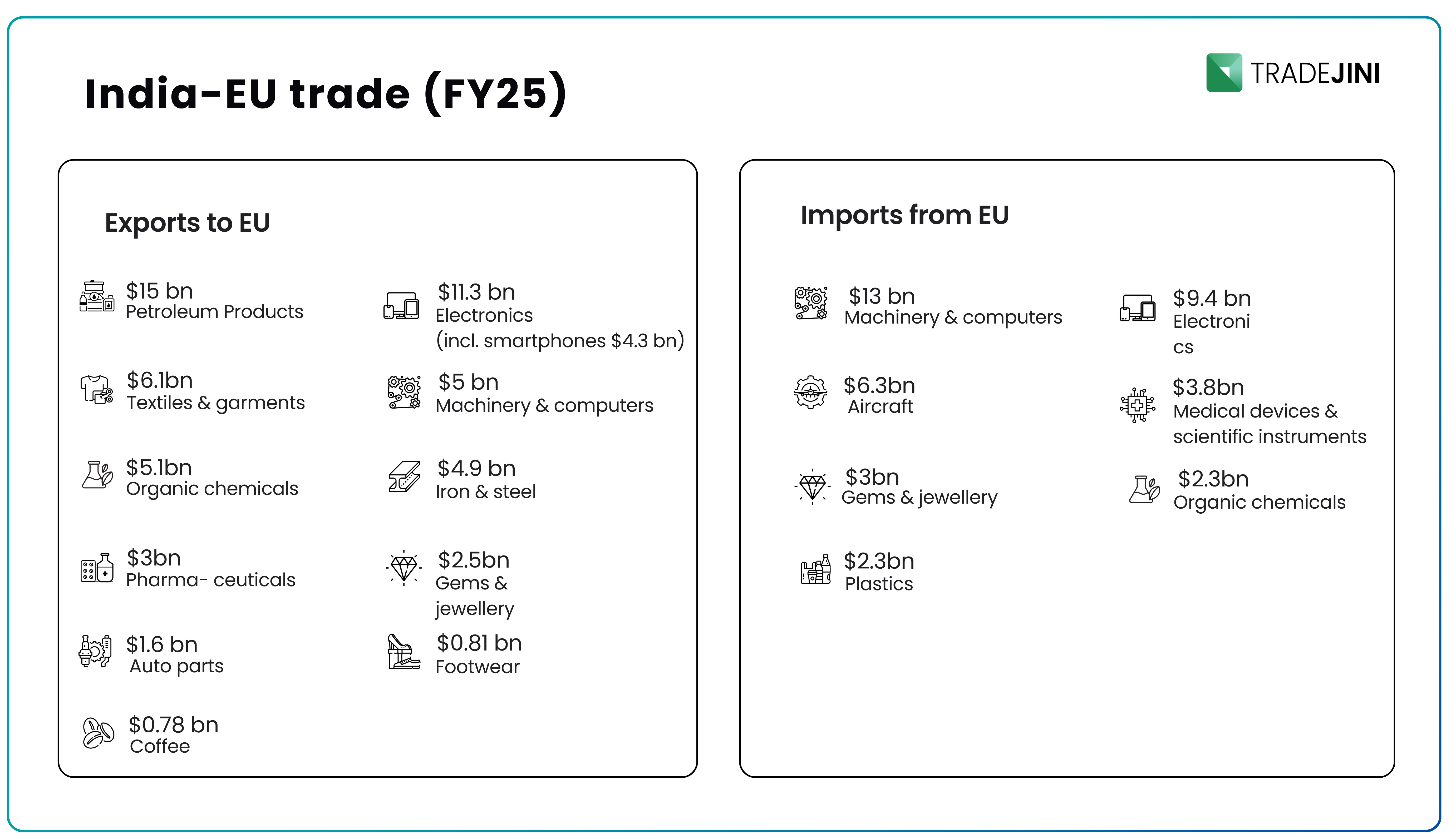
The India-EU FTA represents a transformative shift in global trade architecture, creating opportunities for Indian exporters while introducing competitive pressures on import-competing sectors. The phased implementation provides time for domestic industries to adjust, while export-oriented sectors stand to gain significantly from improved market access. The deal's success will depend on effective implementation, addressing non-tariff barriers, and India's ability to scale up production capacity to meet European demand. Over the next decade, the India EU Free Trade Agreement 2026 is likely to reshape India’s export profile, reward scale-efficient manufacturers, and redefine competitive dynamics across multiple consumer and industrial sectors.
Disclaimer: The information provided in our blogs is for informational purposes only and should not be construed as financial, investment, or trading advice. Trading and investing in the securities market carries risk. Always conduct your own research and consult with a qualified financial advisor before making any investment decisions. Past performance is not indicative of future results. Copyrighted and original content for your trading and investing needs.
© 2026 — Tradejini. All Rights Reserved.