

To offer stock market research or investment recommendations to the public in India, registration with SEBI as a Research Analyst (RA) is mandatory. This applies to both individuals and companies. The process has been made fully online through portals like BSE’s RA platform. This guide is based on the BSE RA Enlistment Portal process, which streamlines the registration workflow online. Here's a clear, step-by-step guide to becoming a SEBI-registered Research Analyst.
1. Who Can Apply?
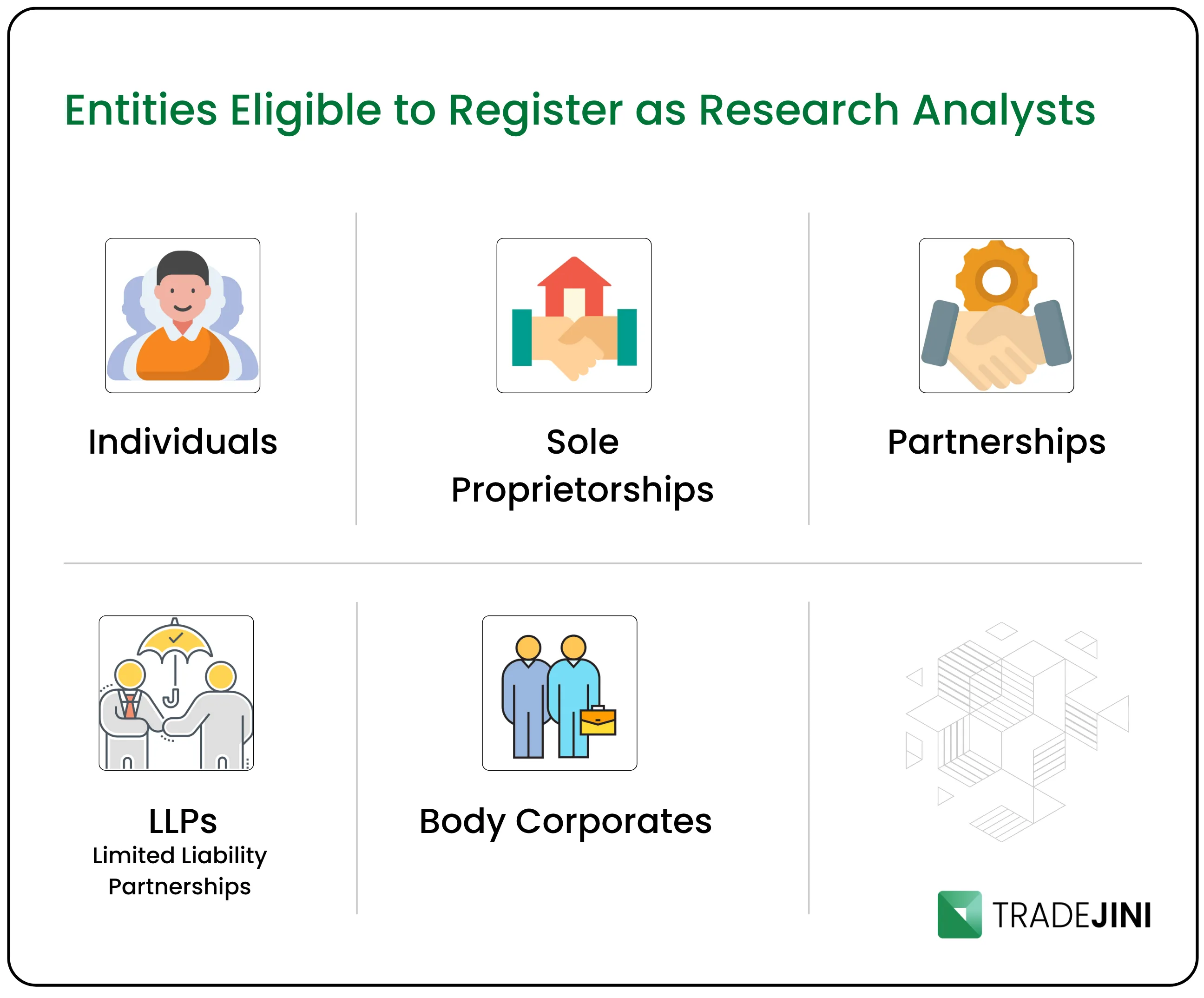
Applicants must comply with the SEBI (Research Analyst) Regulations, 2014 and the SEBI Master Circular for RAs (June 2023). These documents outline the academic, experience, and procedural requirements necessary for registration.
2. Eligibility Criteria
For individuals and those associated with entities, SEBI mandates:
Educational Qualification: A professional qualification or postgraduate degree/diploma in finance, business management, economics, or related fields. Alternatively, a graduate degree in any discipline with at least five years of relevant experience.
Certifications: Completion of the NISM-Series-XV: Research Analyst Certification Examination. (Ensure that all research analysts in your team (if any) also maintain valid NISM certification throughout the registration term.)
Infrastructure: An appropriate office setup, systems for research and record keeping, and adequate documentation policies.
Criteria: The applicant must not have any history of fraud or regulatory violations.
3. Registration Process (Three-step)
Step 1: Application on the BSE Portal
Visit the BSE RA Registration Portal and navigate to the ‘Enlistment’ section.
Select ‘New Application.’ Choose ‘Research Analyst’ as the category, and register with your basic details: name, mobile number, email, and designation.
Choose your entity type (Individual/LLP/Partnership/Corporate).
Once registered, the applicant lands on the registration page, where they need to submit multiple data points across tabs.
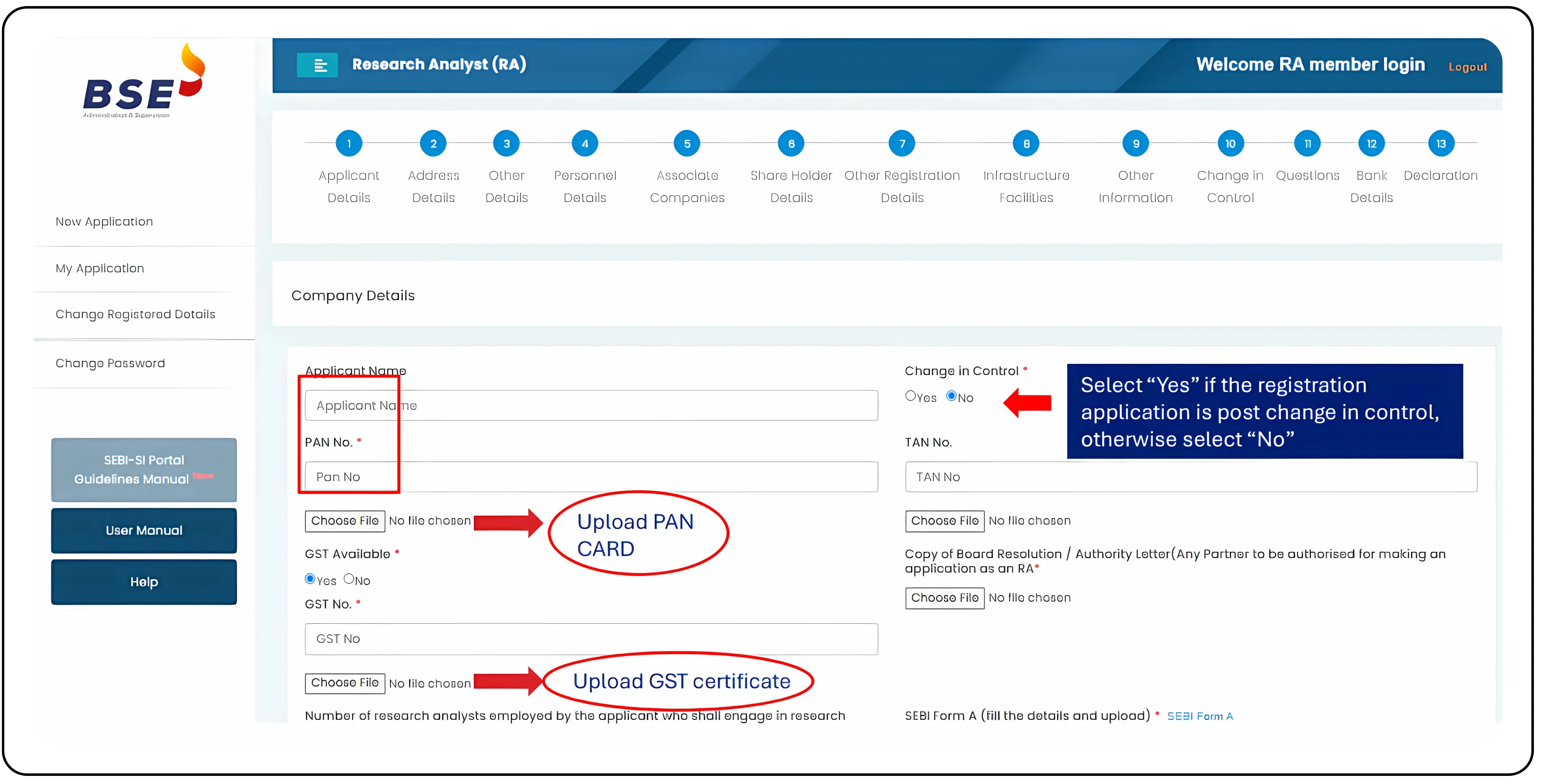
Complete all 12 application tabs, including personal information, professional details, infrastructure setup, existing registrations, and dispute history (if any).
Upload relevant documents (PAN, GST, educational certificates, rent/ownership proof, etc.) as per the checklist provided on the BSE portal.
Step 2: Documentation & Verification
BSE will verify the application and may ask for clarifications or corrections.
After resolving any observations, BSE forwards the application to SEBI.
SEBI performs a final review, seeking clarifications if necessary.
SEBI-registered research analysts should know what insider trading is and why SEBI takes it seriously. Insider trading? India Says ‘Namaste, Not Today’
Step 3: Payment & Certification
Once SEBI approves the application, you will need to:
Pay the non-refundable application processing fee and applicable platform charges.
Submit the registration fee and security deposit, if applicable.
SEBI will then issue a Registration Certificate. The BSE also provides an enlistment confirmation.
4. Documents
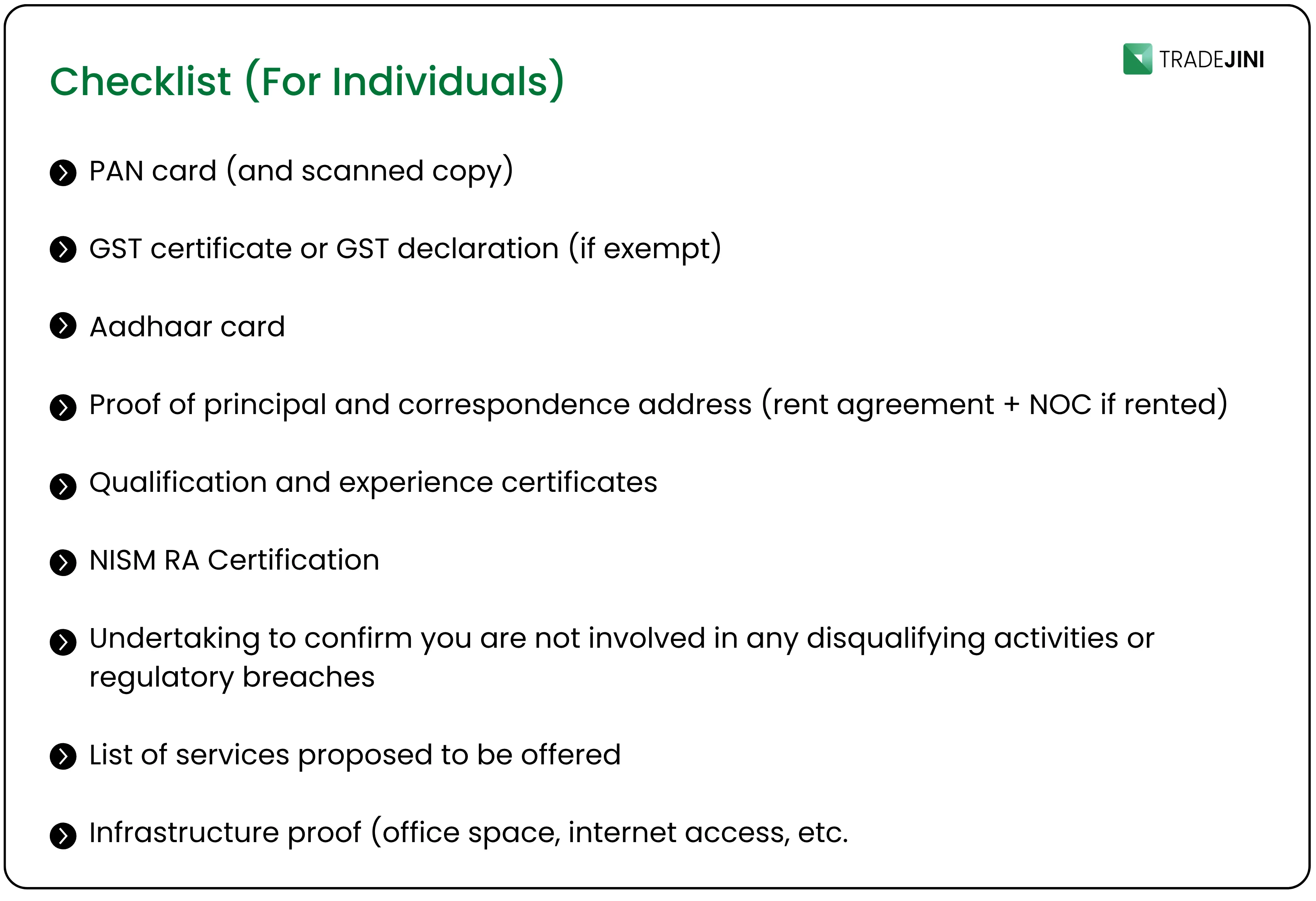
Use the format prescribed under Schedule II of SEBI (Intermediaries) Regulations, 2008, for the ‘fit and proper’ declaration.
If the application is signed by an authorized representative instead of the applicant, attach a letter of authorization from the promoter or director.
A downloadable checklist is available on the BSE RA registration page and should be followed meticulously to avoid delays.
Delays may occur if document validation or clarification stages take longer at either BSE or SEBI.
5. Post-Registration Compliance
Once registered, a Research Analyst must:
Disclose any conflicts of interest in reports
Maintain research records for at least five years
Comply with advertisement guidelines
File periodic reports with SEBI
Renew the NISM certification every three years
*Non-compliance can result in penalties or even the cancellation of registration.
SEBI’s RA registration framework ensures that only qualified and compliant individuals or entities offer investment research to Indian investors. While the process may seem document-heavy, platforms like BSE’s enlistment portal and the pre-application checklist simplify the journey.
If you are serious about offering stock market research or running a research desk professionally, becoming SEBI-registered isn't just mandatory, it's also a mark of credibility in India's financial ecosystem.
Disclaimer: The information provided in our blogs is for informational purposes only and should not be construed as financial, investment, or trading advice. Trading and investing in the securities market carries risk. Always conduct your own research and consult with a qualified financial advisor before making any investment decisions. Past performance is not indicative of future results. Copyrighted and original content for your trading and investing needs.
© 2025 — Tradejini. All Rights Reserved.
.webp%3Falt%3Dmedia%26token%3D0ead9799-20bc-4d1e-ae8f-d75ab18921b5&w=3840&q=75)