

If you have ever wondered who receives a dividend, when it gets credited, or what the different dividend dates mean, this guide answers all the key questions in one place.
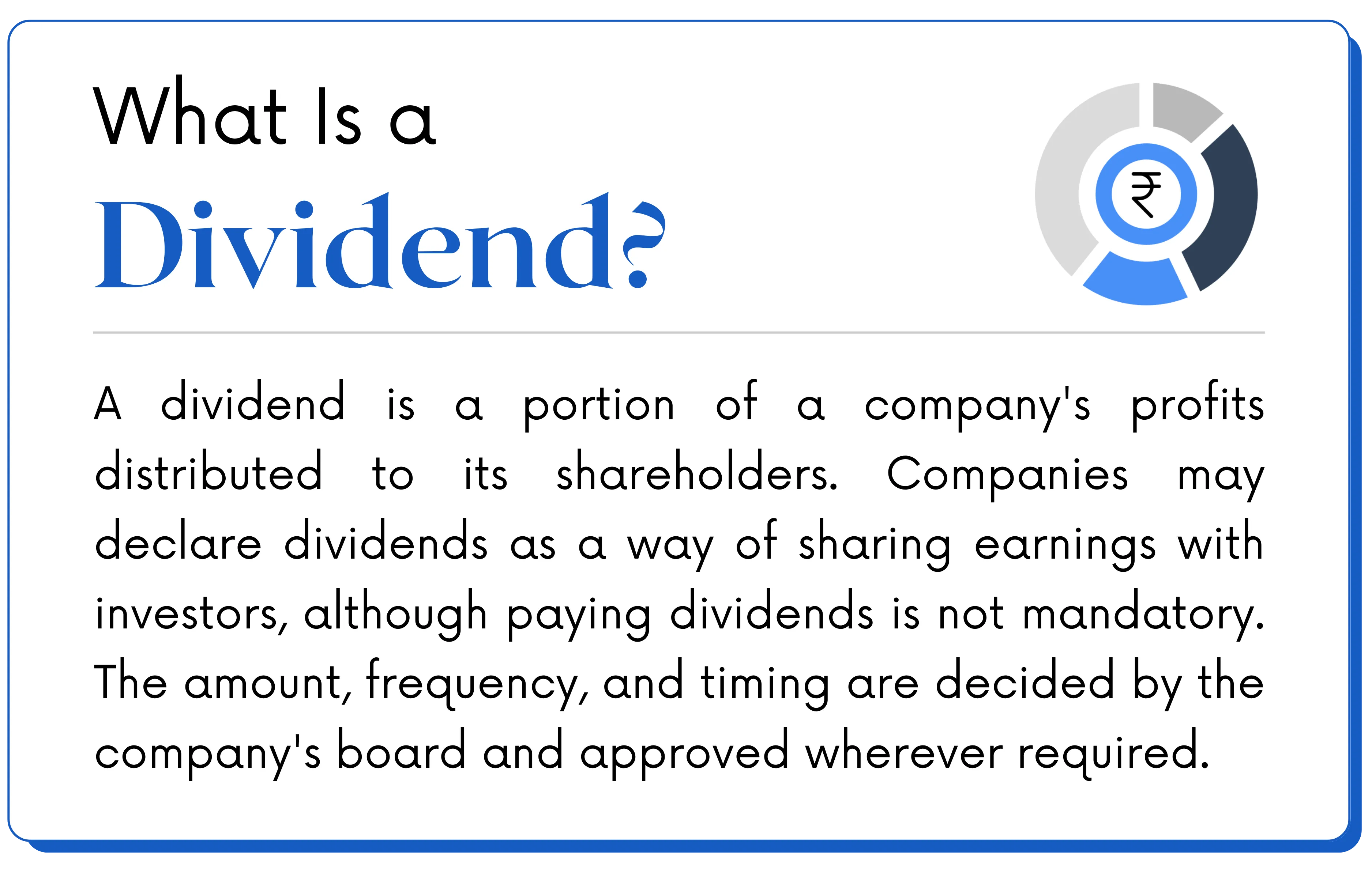
Dividend Declaration
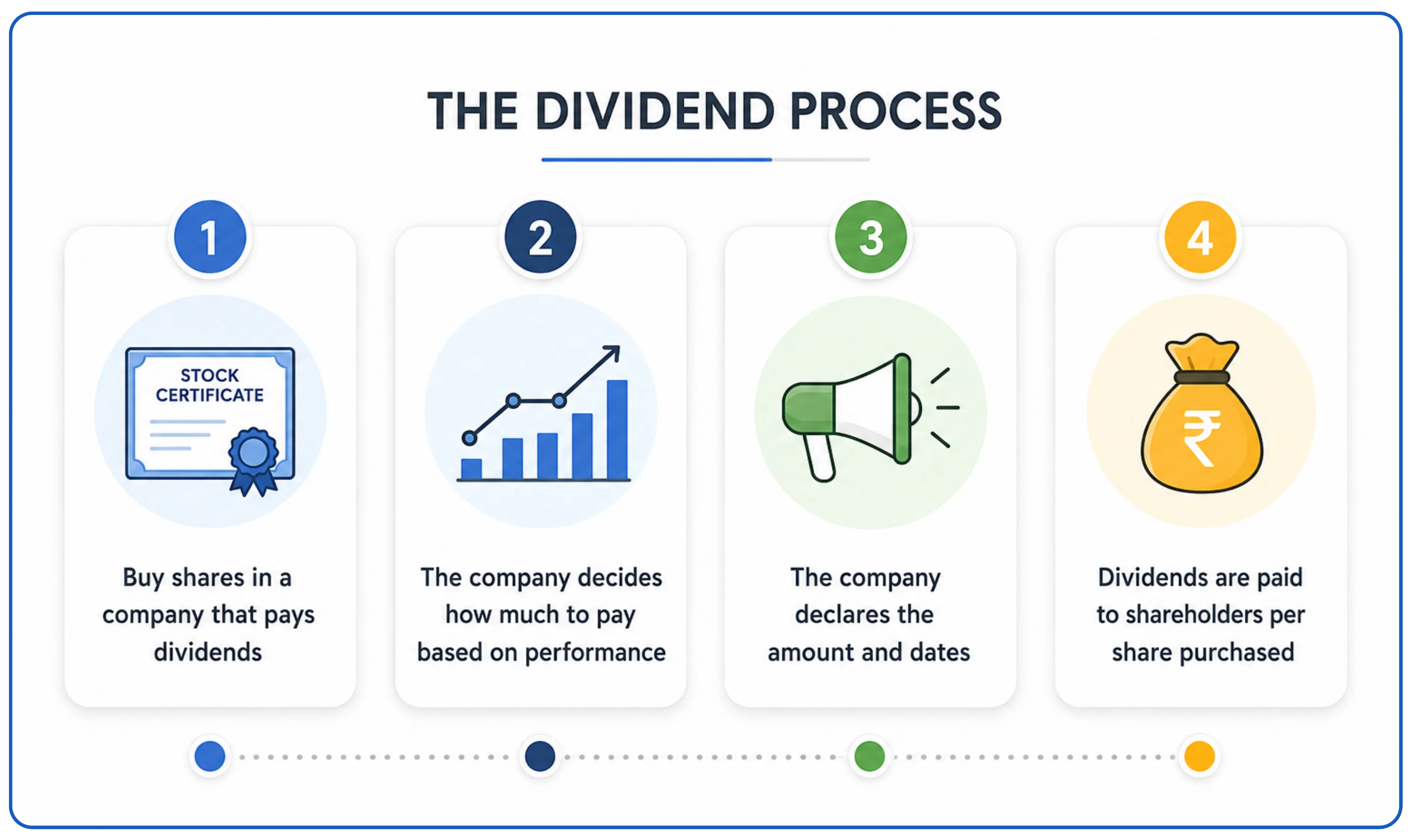
The process begins when the company's Board of Directors announces a dividend. The announcement generally includes:
- Dividend amount per share
- Type of dividend (interim or final)
- Record date
- Payment date (or expected payment schedule)
For example, if a company declares a dividend of ₹15 per share, every eligible shareholder will receive ₹15 for each share they own on the record date.
The Ex-Dividend Date
Ex-dividend date is one of the most important dates for investors. This is the first trading day on which a buyer of the stock will not be entitled to receive the announced dividend. Because Indian equity markets follow a T+1 settlement cycle, investors generally need to purchase the shares before the ex-dividend date to become eligible for the dividend. If you buy the shares on or after the ex-dividend date, the dividend will be paid to the previous shareholder.
Why Does the Share Price Fall on the Ex-Dividend Date?
On the ex-dividend date, the stock usually opens lower by approximately the dividend amount.
For example:
- Previous closing price: ₹500
- Dividend announced: ₹10 per share
The stock may open around ₹490 on the ex-dividend date, though the actual movement depends on overall market conditions, supply and demand, and investor sentiment. This adjustment reflects the fact that new buyers are no longer entitled to receive the announced dividend.
Also Read: Stock Buybacks: Why Do Companies Repurchase Shares?
What Is the Record Date?
The record date is the date on which the company checks its list of shareholders to determine who is eligible to receive the dividend. Only investors whose names appear in the company's shareholder records on this date will receive the dividend.
Is the Ex-Dividend Date the Same as the Record Date?
In India today, they are typically the same calendar date for listed companies because of the T+1 settlement cycle. Since settlements happen within one business day, exchanges fix the ex-dividend date so that eligible shareholders appear in the company's records by the record date.
When Is the Dividend Credited?
After the record date, the company processes the dividend payment. The amount is credited directly to the shareholder's registered bank account through electronic transfer. The timeline depends on whether it is an interim or final dividend and the company's payment schedule.
Generally, investors may receive the dividend within a few days to a few weeks after the record date. For listed companies in India:
Interim dividends are generally paid within 30 days of declaration.
Final dividends, once approved by shareholders at the AGM, are generally paid within 30 days of approval.
Many companies complete the payment much earlier.
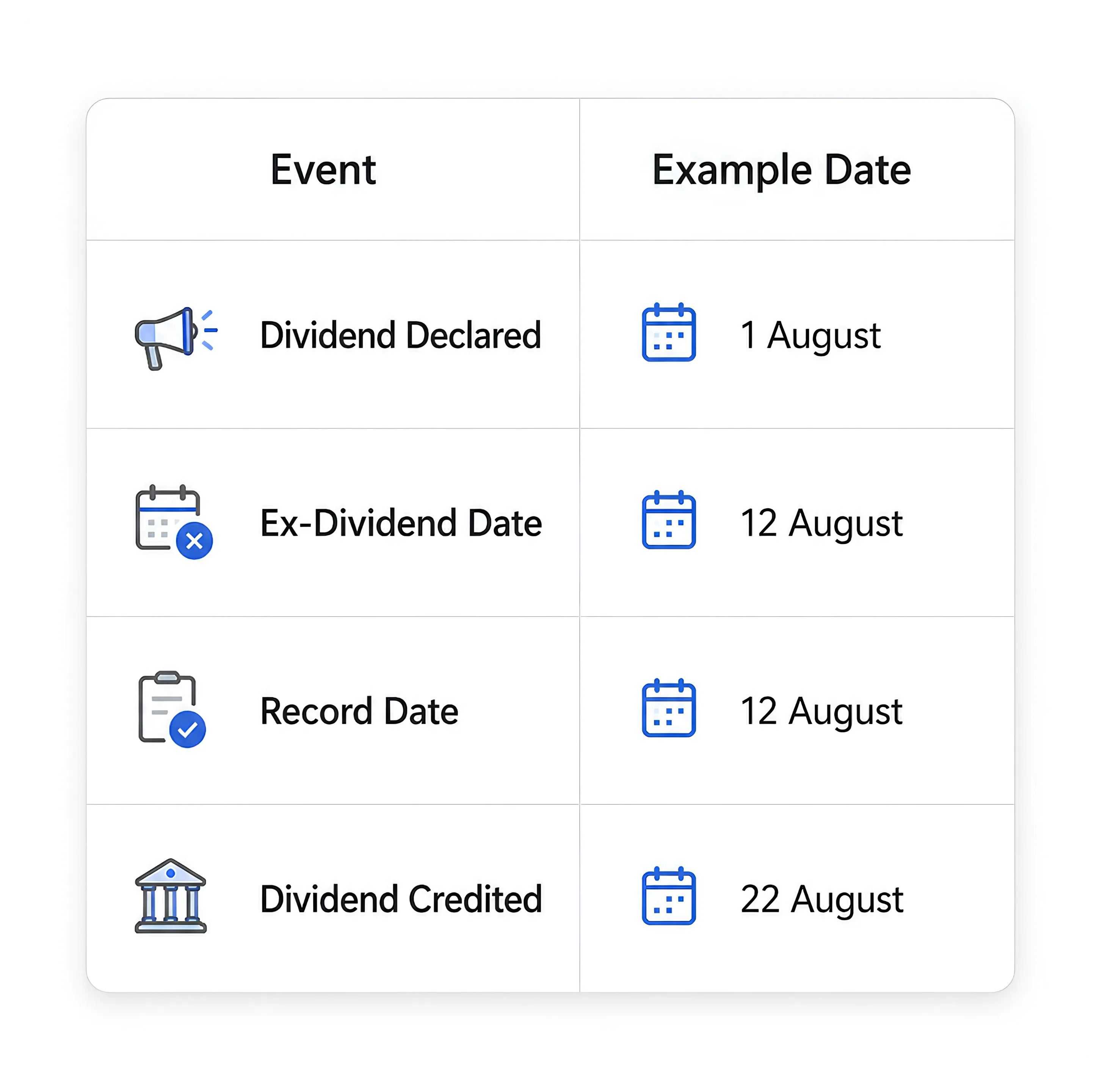
In the example below, investors would need to buy the shares before 12 August to become eligible for the dividend.
| If You... | Will You Receive Dividend? |
|---|---|
| Bought shares before the ex-dividend date | Yes ✅ |
| Bought shares on the ex-dividend date | No ❌ |
| Sold shares on or after the ex-dividend date | Yes, if eligible before the ex-date ✅ |
| Bought shares after the ex-dividend date | No ❌ |
Why Is There a Gap Between the Declaration and Record Date?
SEBI regulations require listed companies to provide sufficient notice before determining which shareholders are eligible.
This gap gives exchanges, depositories, brokers, and investors enough time to process settlements and update shareholder records. It also ensures transparency by allowing investors to know the dividend details before the eligibility date.
Disclaimer: The information provided in our blogs is for informational purposes only and should not be construed as financial, investment, or trading advice. Trading and investing in the securities market carries risk. Always conduct your own research and consult with a qualified financial advisor before making any investment decisions. Past performance is not indicative of future results. Copyrighted and original content for your trading and investing needs.
© 2026 — Tradejini. All Rights Reserved.

.webp%3Falt%3Dmedia%26token%3D0ead9799-20bc-4d1e-ae8f-d75ab18921b5&w=3840&q=75)