As investors look beyond the usual equity and mutual fund routes, commodities are emerging as an interesting opportunity. We often hear headlines like ‘Crude oil surge impacts stock market’ or ‘Gold hits new highs’, proving how these raw materials influence the entire economy. From the petrol we use daily to metals used in infrastructure, commodities shape industries and market behaviour.
What Is the Commodity Market?
Commodity markets are platforms where raw materials are bought and sold, either for current delivery or future settlement. These items are essential inputs for almost everything around us, from food on the table to large construction projects.
They also offer portfolio diversification, acting as an alternative asset class alongside equity and debt.
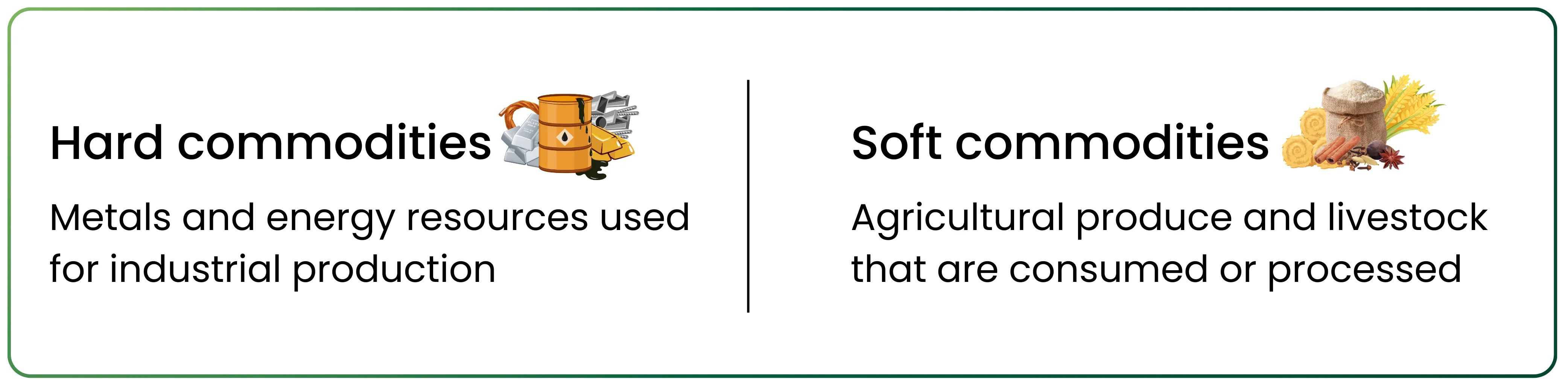
Commodity markets are broadly classified into:
How Does the Commodity Market Work?
Commodity trading in India happens in three ways:
| Market Type | What It Means | Key Purpose |
|---|---|---|
| Physical Market | Actual delivery of goods happens | Buyers and sellers negotiate on the spot |
| Spot Market | Trade today, delivery soon | Immediate price discovery |
| Derivatives Market | Only contracts are traded (Futures & Options) | Hedging and speculation based on expected price movement |
Most retail investors participate through commodity derivatives, similar to equity futures and options.
Types of Commodities Traded in India
| Category | Examples |
|---|---|
| Precious Metals | Gold, Silver |
| Industrial Metals | Copper, Aluminium, Nickel, Lead |
| Energy | Crude Oil, Natural Gas |
| Agricultural Produce | Cotton, Soybean, Turmeric, Wheat, Rice |
| Livestock & Meat | Cattle, other livestock-linked contracts |
What Affects Commodity Prices?
Natural conditions: monsoons, drought, climate events
Economic trends: inflation, recession signals, currency volatility
Geopolitics: wars and sanctions impact supply chains
Technological changes: mining, new energy sources, efficiency
Speculation: futures trading influences short-term prices
Commodity traders must consider both global and domestic events.
Growth of Commodity Trading in India
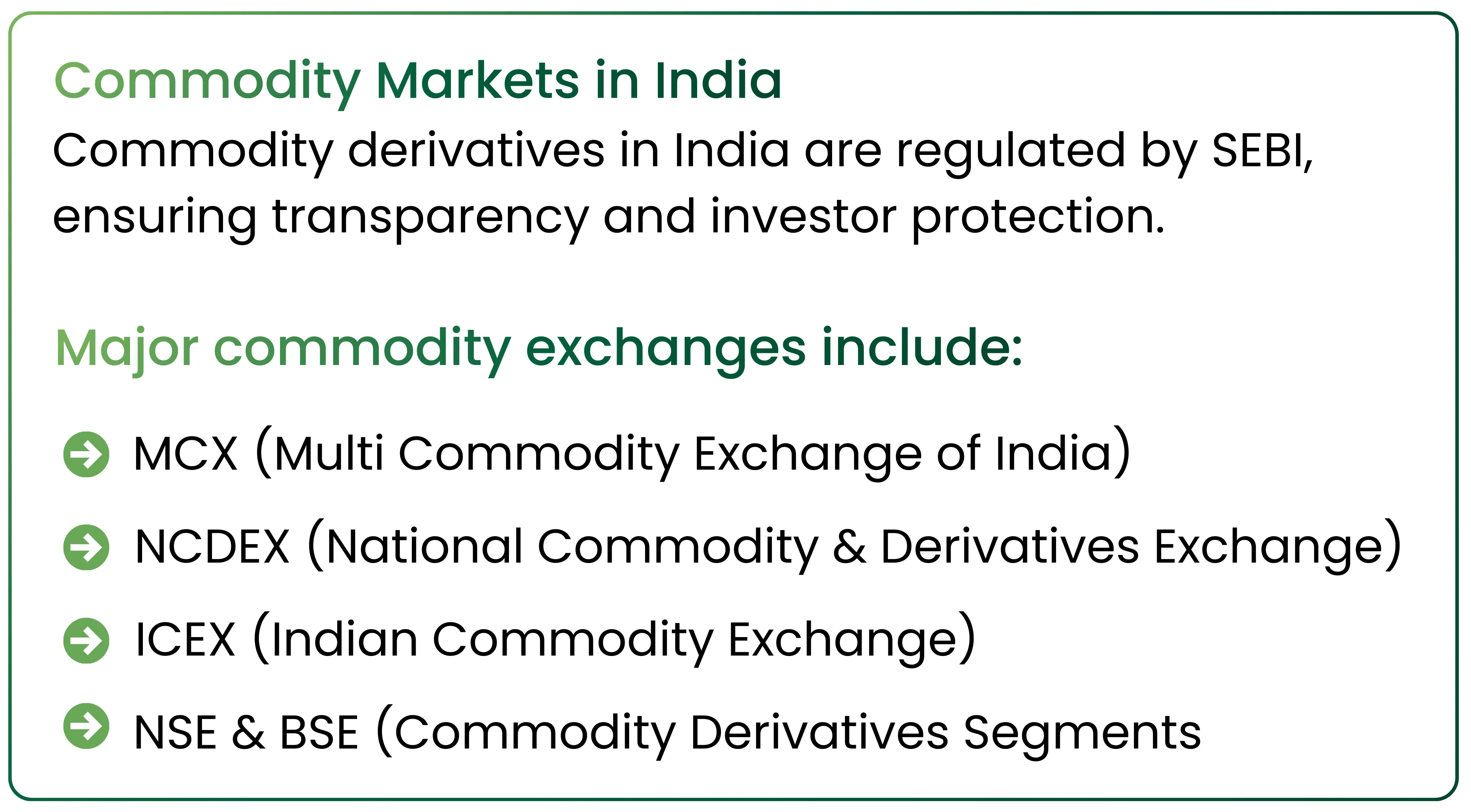
Technology adoption and broader access have supported growth in participation among Indian retail investors.
- Commodity indices track performance similar to equity indices
- Increasing shift toward gold and energy contracts for hedging
- Data and tools are now available on Tradejini
Also Read: New to Trading? Learn About the Trading Terminal
How to invest in Commodities on Tradejini
To trade in commodities, you need:
Tradejini Demat + Trading Account enabled for the commodity segment
Basic understanding of contract specifications such as lot size, expiry, and tick value
Awareness of risks, volatility and margin requirements
Ways to invest
Commodity Futures & Options
Commodity Gold ETF
Commodity-linked Mutual Funds (only gold)
Should You Invest in Commodities?
| Pros | Cons |
|---|---|
| Helps diversify portfolio | Can be highly volatile due to global factors |
| Useful for hedging inflation and market risks | Requires understanding of risks & contract design |
| Lower capital than physical commodity buying | Potential leverage risk in derivatives |
Commodities influence daily life and financial markets alike. With proper research, risk awareness, and a diversified approach, commodity trading can complement long-term wealth building. Start small, learn the contracts, and avoid overexposure to a single commodity.
Click here to start your trading journey with CubePlus
Disclaimer: The information provided in our blogs is for informational purposes only and should not be construed as financial, investment, or trading advice. Trading and investing in the securities market carries risk. Always conduct your own research and consult with a qualified financial advisor before making any investment decisions. Past performance is not indicative of future results. Copyrighted and original content for your trading and investing needs.
© 2025 — Tradejini. All Rights Reserved.
.webp%3Falt%3Dmedia%26token%3D0ead9799-20bc-4d1e-ae8f-d75ab18921b5&w=3840&q=75)