A Bull Put Spread is a smart way to trade when you expect a stock or index to bounce off support and hold above a certain level. It comes with limited risk, a defined reward, and works well for traders looking to play range-bound setups or mild bullish reversals, particularly as expiry approaches.
Let’s walk through how it actually plays out using real chart and option chain data.
What is a Bull Put Spread?
This strategy involves two legs:
- Sell a higher strike put (at-the-money or slightly out-of-the-money)
- Buy a lower strike put (further out-of-the-money)
The result is a net credit (bull put credit spread). You make a profit as long as the price stays above the strike of the put you sold.
Example setup:
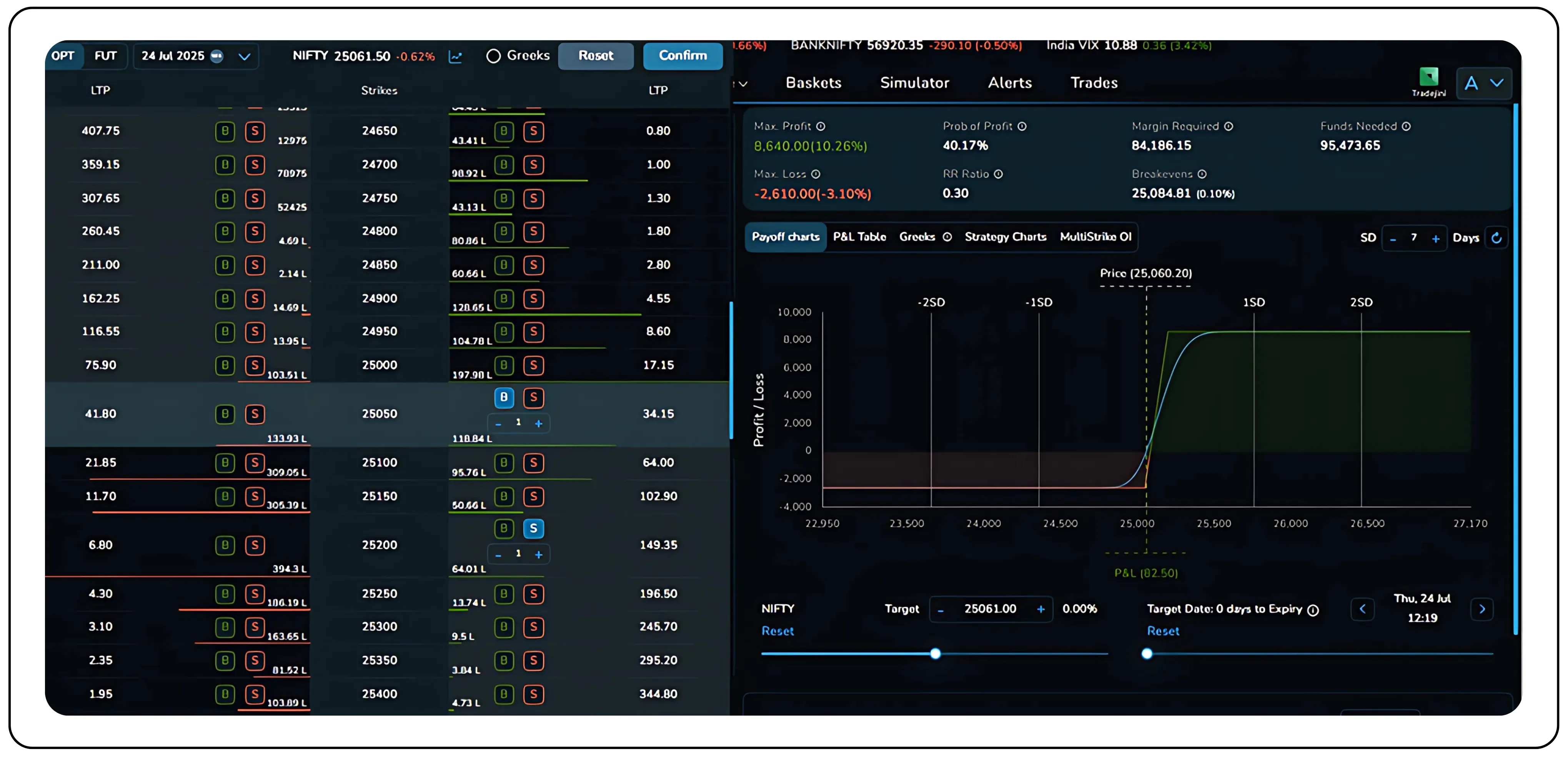
- Sell 25,200 PE @ 150.50
- Buy 25,050 PE @ 35.30
Net Credit = ₹115.20
Max Profit = ₹8,640
Max Loss = ₹2,610
Breakeven = ₹25,085 approx.
Also read: Call Ratio Spread Explained Through Real Trades
Why use this near the reversal zone?
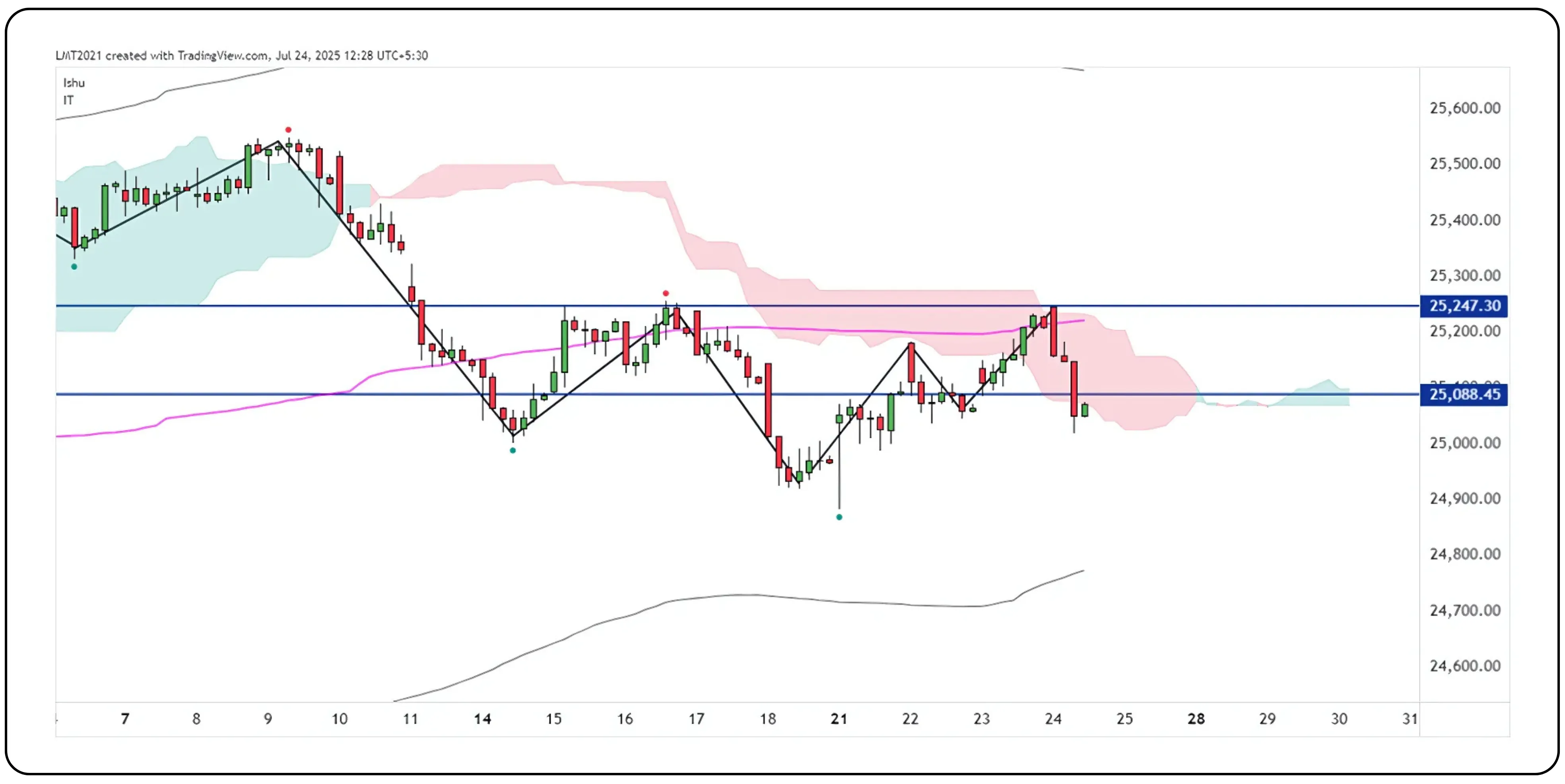
Here’s what the price action shows:
- NIFTY has pulled back to the ₹25,088 support area
- Price is hovering near the Ichimoku cloud base, which often acts as a reversal zone
- The structure looks like a bullish pullback within a broader range
Rather than buying futures or calls (which can carry higher risk near expiry), you can use a Bull Put Spread to profit if NIFTY simply holds above 25,100. You don’t need a big rally, just stability above support.
How greeks help with Bull Put Spread
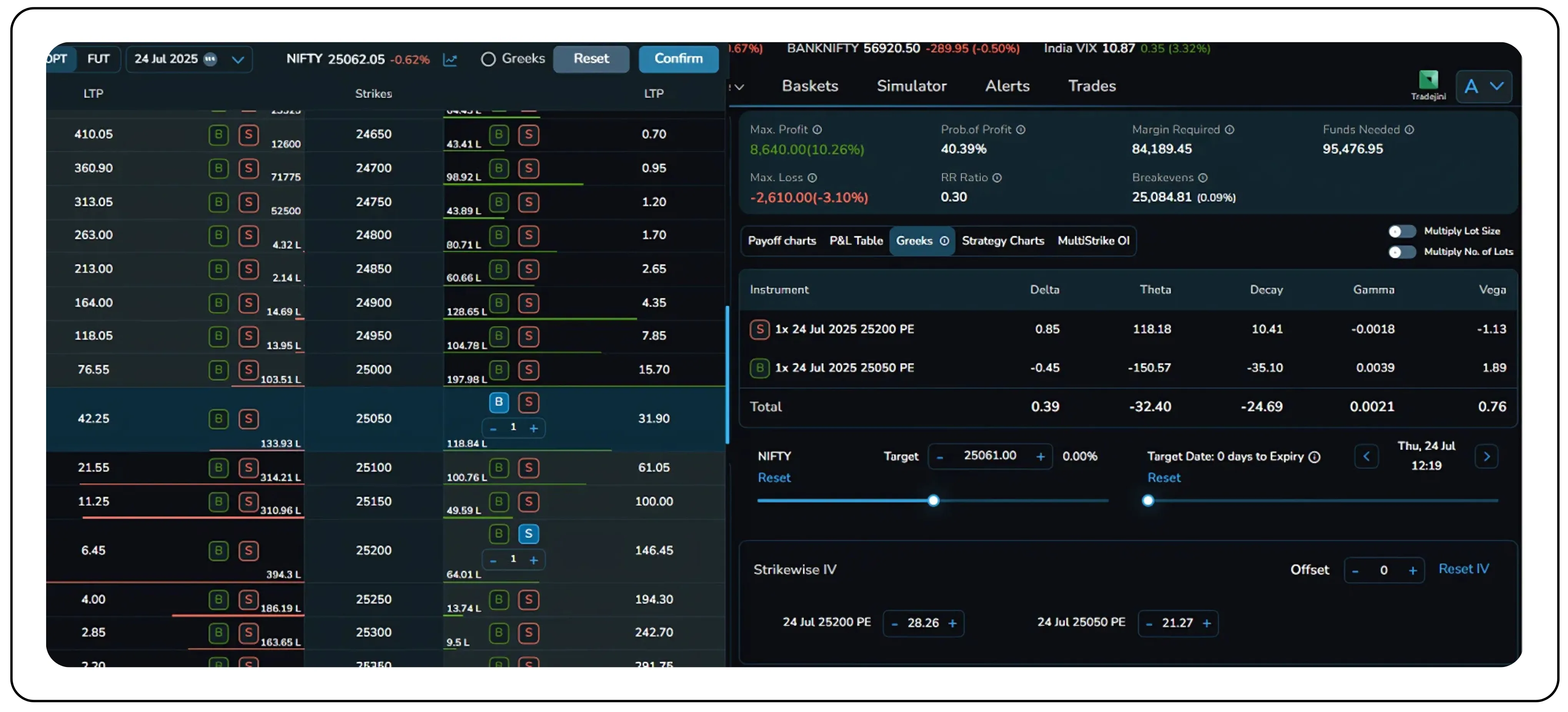
Understanding the Greeks helps you fine-tune the setup and manage risk more effectively:
| Greek | What it tells you |
|---|---|
| Delta | Slightly positive, indicating a mild bullish bias |
| Theta | Positive (around ₹24/day), so time decay works in your favour |
| Vega | Small positive Vega means you benefit if volatility drops as expiry nears |
| Gamma | Low Gamma reduces sensitivity to sharp price moves, lowering whipsaw risk |
When you set up this trade near a strong support zone, and the market is showing signs of mean reversion, the combination of time decay, low volatility, and price stabilization works in your favour.
Also read: How to Interpret Open Interest and Price Data: A Trader’s Guide
Risk–Reward and Probability
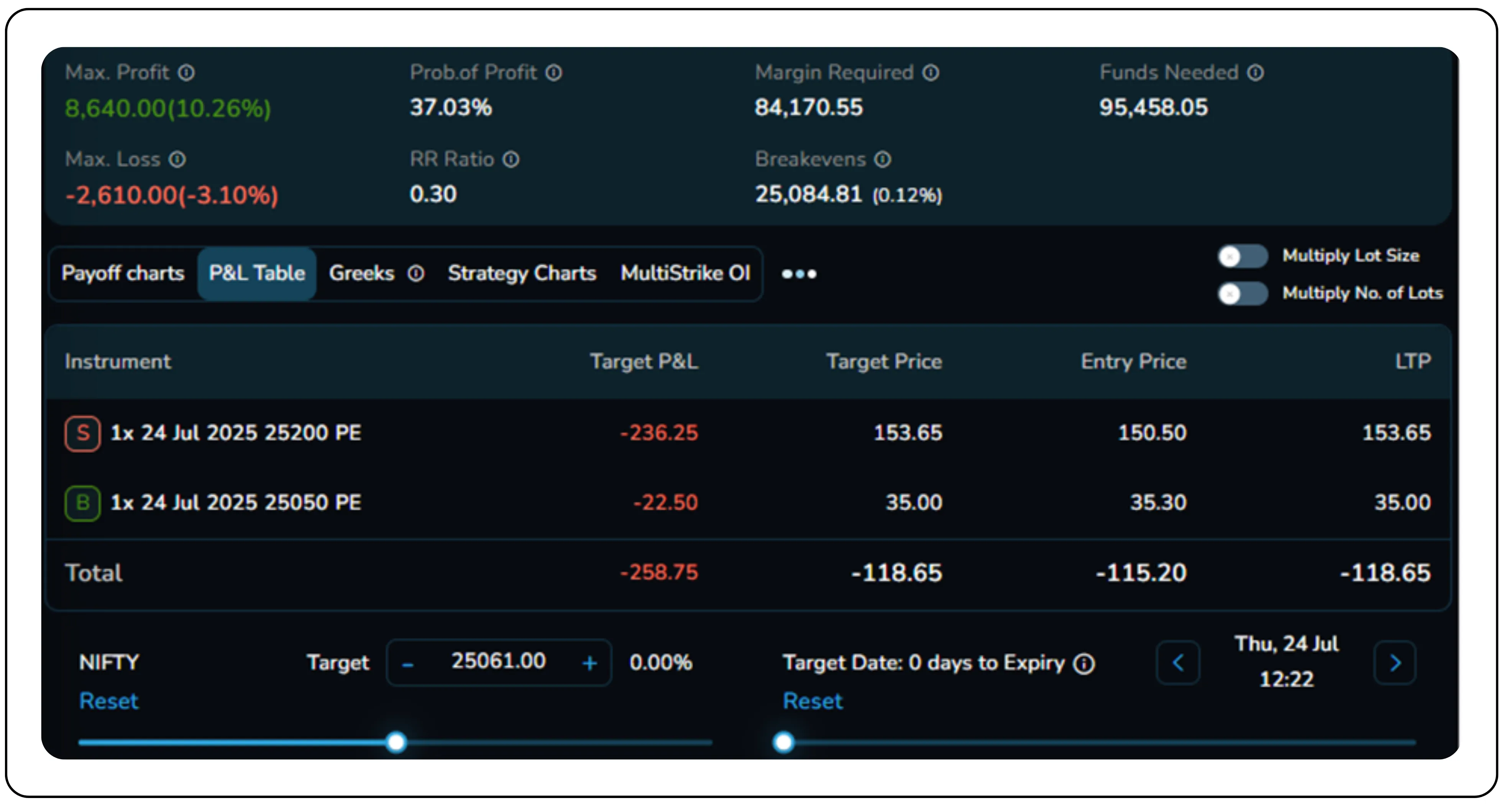
- Risk–Reward Ratio: 0.30 (Risk ₹2,610 for a potential reward of ₹8,640)
- Probability of Profit: Around 37–40%
This setup works best when entered near a strong support zone and close to expiry, where time decay speeds up and works in your favour.
When to exit or adjust?
Exit early if the position loses 50% of the credit received, a basic stop-loss rule
Book profits once 70–80% of the maximum reward is captured
Roll the spread (bull spread using put) to the next expiry if the price stalls near breakeven close to expiry day
This keeps your risk controlled while still letting the trade work in your favour if the setup holds.
Final thoughts
A Bull Put Spread isn’t just a bullish play, it’s a precision tool for traders expecting the price to hold steady or bounce modestly from key levels, making it a smart choice for executing a bull spread using put options. When you combine this setup with clearly defined support and resistance zones, context from the Ichimoku cloud, and regular monitoring of the Greeks, you significantly increase your chances of capturing profits with limited risk. This strategy works particularly well as expiry approaches, when time decay accelerates and favors the bull put option spread.
If you're ready to put these strategies into action, open your CubePlus account and take the first step toward smart, goal-based trading. Click here to sign up and start trading with an edge.
Disclaimer: The information provided in our blogs is for informational purposes only and should not be construed as financial, investment, or trading advice. Trading and investing in the securities market carries risk. Always conduct your own research and consult with a qualified financial advisor before making any investment decisions. Past performance is not indicative of future results. Copyrighted and original content for your trading and investing needs.
© 2025 — Tradejini. All Rights Reserved.