I have seen many traders begin with the same dream, finding that one perfect strategy that never fails. But ask any market veteran, and they will tell you the truth, that ‘You don’t lose to the market; you lose to your own mind.’ This is where trading psychology silently controls everything.
When I started reading about the legendary Turtle Traders, I realised they had uncovered this insight back in the 1980s. They were all taught the same rules, followed the same system, yet still ended up with dramatically different results.
The reason?
Their mindset, not their method, is the true Turtle Traders experiment mindset.
1. The Real Battle Is Inside Your Head
The Turtle experiment proved something powerful: most people fail not because the system doesn’t work, but because they can’t follow it when emotions take over. That’s where true emotional discipline separates winners from quitters.
The Turtles who succeeded weren’t the smartest. They were the calmest. They could take 10 losing trades in a row and still follow the same rule on the 11th.
And that’s where most traders, even today, stumble. They chase short-term comfort, skipping trades after losses or booking profits too early, and end up killing long-term returns.
Read part 1: The Turtle Trading Approach
2. The Biases That Break Traders
Even in 2025, Indian traders continue to fall for the same psychological traps that Curtis Faith wrote about decades ago.
Here are a few that every retail investor should recognise:
| Bias | What It Looks Like in the Market | Turtle Fix |
|---|---|---|
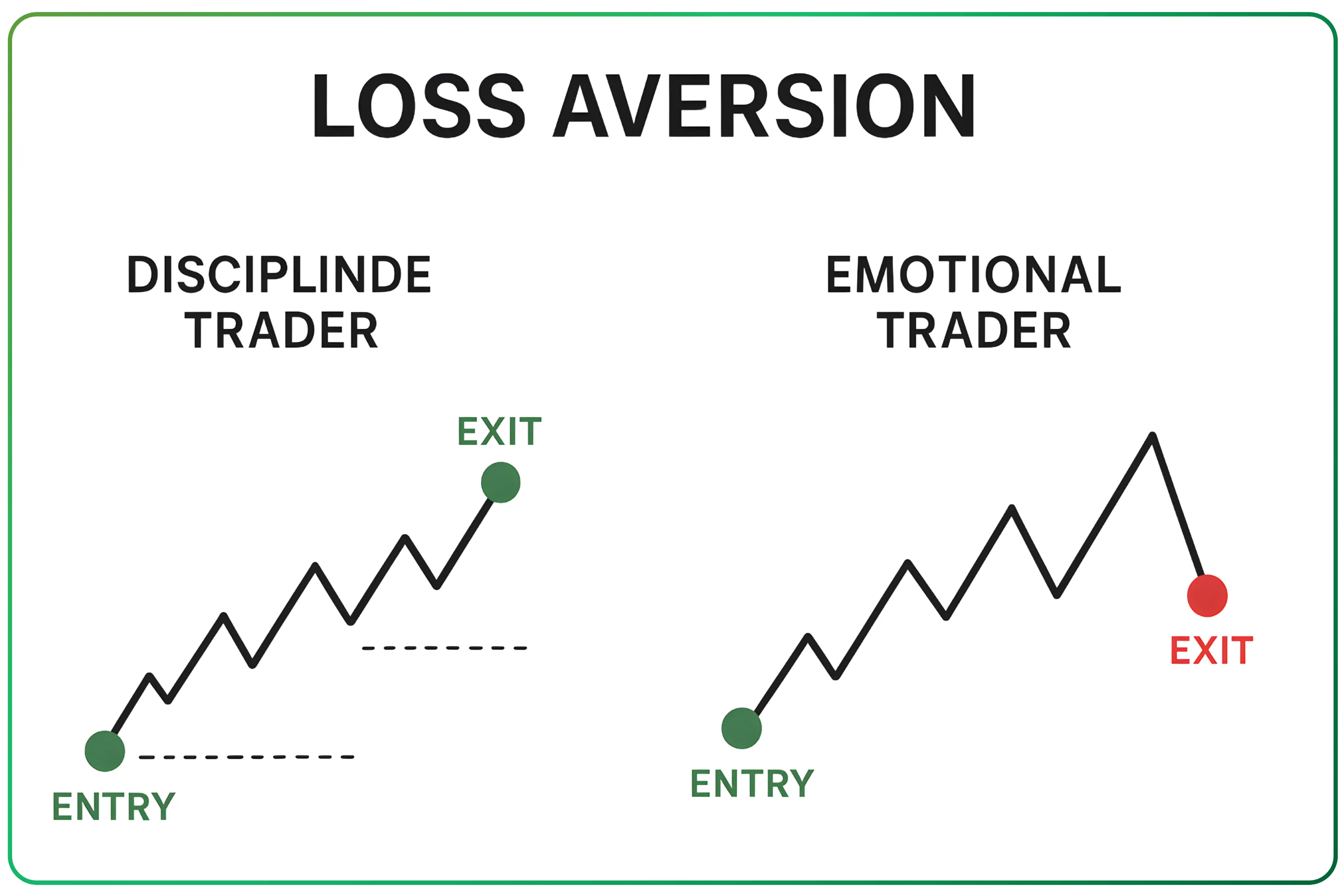
| Loss Aversion | You hold on to losing trades hoping they’ll “bounce back.” | Cut losses fast. Take small hits; avoid big blows. This is classic loss aversion in trading finance. |
| Sunk Cost Fallacy | “I’ve already lost ₹20,000 on this stock, might as well wait till it recovers.” | Forget the past. Focus only on future risk vs reward. |
| Recency Bias | You changed your system after two bad weeks. | Stick to your tested plan; short-term noise means nothing. |
| Outcome Bias | You call a bad trade “good” because it made money. | Judge your decision, not just the result. |
| Herd Mentality | You buy smallcaps because everyone on social media is bullish. | If everyone’s on one side, you’re probably late. |
3. How Emotions Play Out in Indian Markets
Let’s take a real-world scenario. In August 2025, crude oil shot past $95 a barrel, and Indian oil marketing stocks like BPCL and HPCL started falling sharply. Many retail traders panicked, dumping stocks at a loss.
A few days later, crude cooled off to $88, and those same traders watched prices rebound, regretting their emotional exits.
This is loss aversion in action, the fear of short-term pain overshadowing the logic of long-term probability.
Meanwhile, the few who stuck to their plan, placed stop-losses, and waited for confirmation, they lived to trade another day.
4. The Turtle Way to Emotional Discipline
The Turtle Way wasn’t just about formulas; it was about psychological conditioning. They were trained to trust the process over feelings, much like a pilot who flies by instruments, not instinct.
Here’s how you can apply that discipline in today’s market:
Automate trade exits and stop losses. Use conditional orders or stop triggers. Don’t decide in the heat of the moment.
Trade small. Keep your position size low enough that one loss doesn’t shake your confidence.
Importance of predefined risk in trading. Before every trade, know your maximum loss.
Accept imperfection. Even the Turtles had 60–70% losing trades, and still made millions.
5. How This Applies Beyond Trading
The Turtle mindset isn’t limited to F&O. It’s equally powerful in long-term investing and Think of it this way
When the market dips 10%, do you stop your SIPs?
OR
When a midcap fund underperforms for a quarter, do you switch schemes?
If yes, you are reacting emotionally. If no, congratulations, you are already building a Turtle temperament.
Now, Your Turtle Test #2
Assume you have taken five trades in Nifty options. All five hit stop-losses. Your sixth trade setup appears identical to your rulebook entry.
Will you, or skip it because you are frustrated?
If you take it without hesitation, you have just passed the hardest part of trading psychology.
And if not, then the next chapter is for you Thinking Like a Turtle | How Traders & Investors See Market Differently
Build turtle-level discipline. Sign up and start your CubePlus journey today.
Disclaimer: The information provided in our blogs is for informational purposes only and should not be construed as financial, investment, or trading advice. Trading and investing in the securities market carries risk. Always conduct your own research and consult with a qualified financial advisor before making any investment decisions. Past performance is not indicative of future results. Copyrighted and original content for your trading and investing needs.
© 2025 — Tradejini. All Rights Reserved.