

Before we move to Part 3, would you like to connect with our Part 2 series first?
Here’s the link:The Turtle Trading Approach

When an investor buys ITC, he’s thinking about brands, cash flows, and earnings five years out. When a trader buys ITC Futures, none of that matters. What matters is something far less romantic: ‘Will the price move in his favour before his stop-loss is hit?’
That’s why the Turtles ignored balance sheets and management debates. They cared about probabilities, win rates, and risk-reward ratios, the core of the turtle trading approach Nifty 50.
Systematic trading rules Curtis Faith shows it is not guessing. It follows systematic trading rules.
Same market, two very different games.
| Investor’s Mindset | Trader’s Mindset |
|---|---|
| Focus: Value and long-term compounding | Focus: Momentum and price action |
| Horizon: Years or decades | Horizon: Hours to months |
| Tool: Equity and mutual funds | Tool: Futures, options, or leveraged positions |
| Success metric: CAGR, dividends | Success metric: Win rate and risk-reward ratio |
| Emotion: Patience and conviction | Emotion: Detachment and discipline |
Why Most Retail Traders Struggle
Most retail participants in India don’t fail because markets are rigged or because institutions are smarter.
They fail because they trade with an investor’s mindset.
They buy small-cap stocks believing they are long-term bets, then panic when prices fall 10%.
They buy Bank Nifty options for a ‘quick trade, but hold them for days because they don’t want to book a loss.
This confusion is lethal. Trading without a plan and investing without conviction lead to the same outcome, that is, avoidable losses.

Now, if you bought Nifty Futures because it broke above a 20-day high, that’s the only reason that matters. If the stop-loss is hit, you exit. Even if the TV says it’s just a temporary correction., or thr even if social media swears the rally is about to resume.
Also Read: What Is Settlement guarantee fund?
Here’s how you can think like a Turtle whether you are investing or trading:
As a Trader: You need a system. It could be a simple moving average breakout, a price channel, or a momentum setup. Define your risk, size your trades properly, and follow the system for 20 to 30 trades before judging it. Not three trades. Not one bad week.
As an Investor: The same discipline applies. Automate your SIPs, rebalance once a year, and ignore market noise between results seasons. Long-term wealth is built through consistency, not constant action.
A Simple Case Study
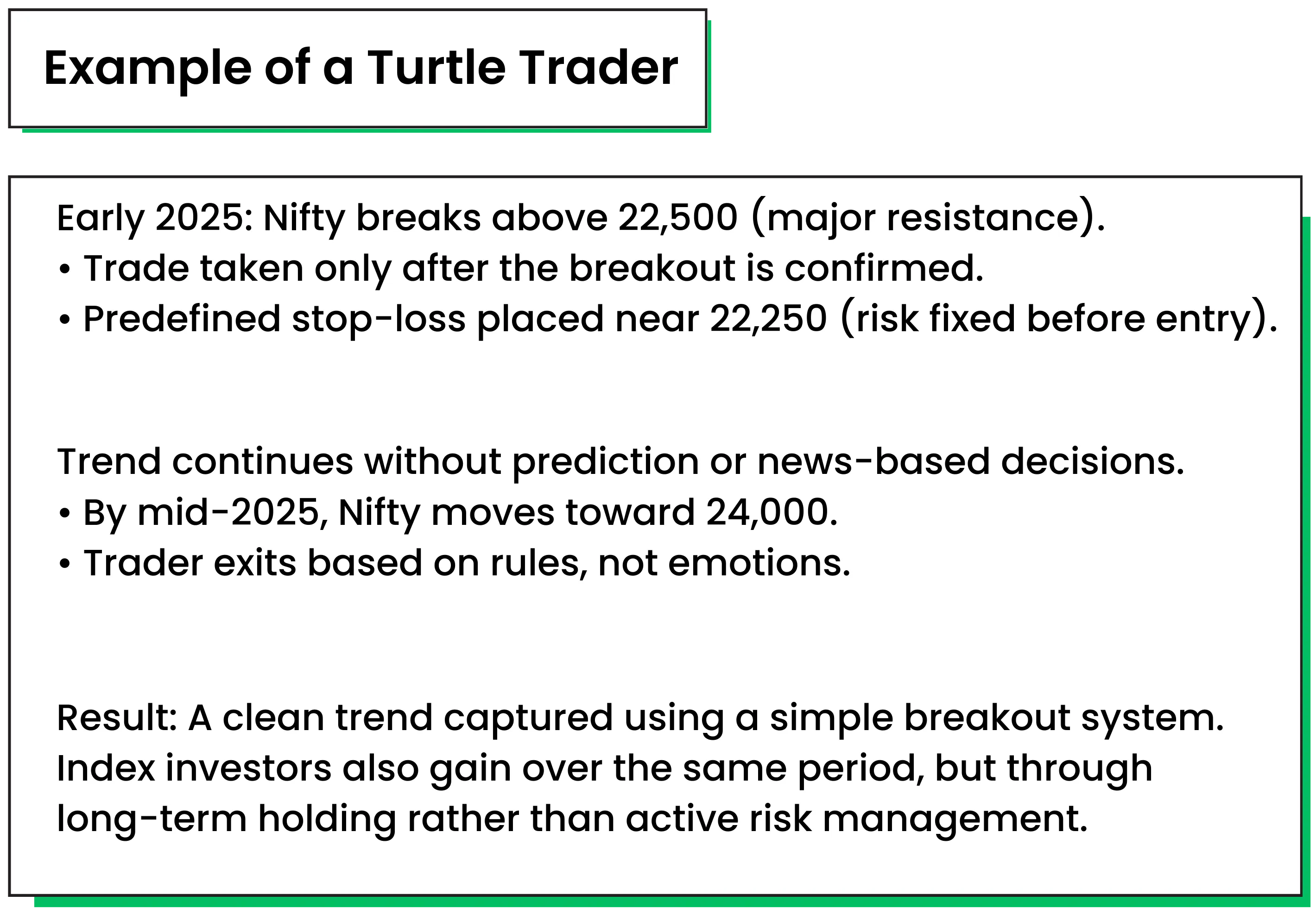
Turtle Test #3
You buy HDFC Bank at ₹946 (price as of 7 Jan 2026). Your stop-loss is ₹920. The stock slips to ₹928. Headlines turn negative, and panic builds. Do you stick to your stop-loss or sell early out of fear?
Your answer decides whether you are acting like a disciplined trader or a worried investor…… (This is Trading vs Investing India 2025 in action.)
Think
Platforms like the Tradejini CubePlus trading platform make execution easier, but discipline still has to come from the trader. Tools don’t replace systems. Rules do.
Disclaimer: The information provided in our blogs is for informational purposes only and should not be construed as financial, investment, or trading advice. Trading and investing in the securities market carries risk. Always conduct your own research and consult with a qualified financial advisor before making any investment decisions. Past performance is not indicative of future results. Copyrighted and original content for your trading and investing needs.
© 2026 — Tradejini. All Rights Reserved.