


You must have read news like these in recent months.
‘SEBI raids trading academy in crackdown on finfluencers.’
‘SEBI ban on trading influencers’
‘Self-styled market guru banned from trading.’
‘Online influencer ordered to return crores earned through misleading advice.’
You have probably seen the news scroll across your feed, a popular trading guru banned, another influencer forced to refund crores, and a fresh raid making headlines. At first, it feels like the usual market drama. But SEBI isn’t just reacting, it’s acting with intent.
By banning unregistered advisors, removing misleading content, and tightening rules for online financial promotions, the regulator is making it clear that financial advice on social media must follow the same standards as anywhere else.
SEBI’s Finfluencer crackdown
| Timeline | Key Action/Event |
|---|---|
| 2023–2024 | Fines and bans on top claimed finfluencers, etc. |
| Oct 2024 | Removal of 70,000+ misleading posts/accounts by unregistered influencers |
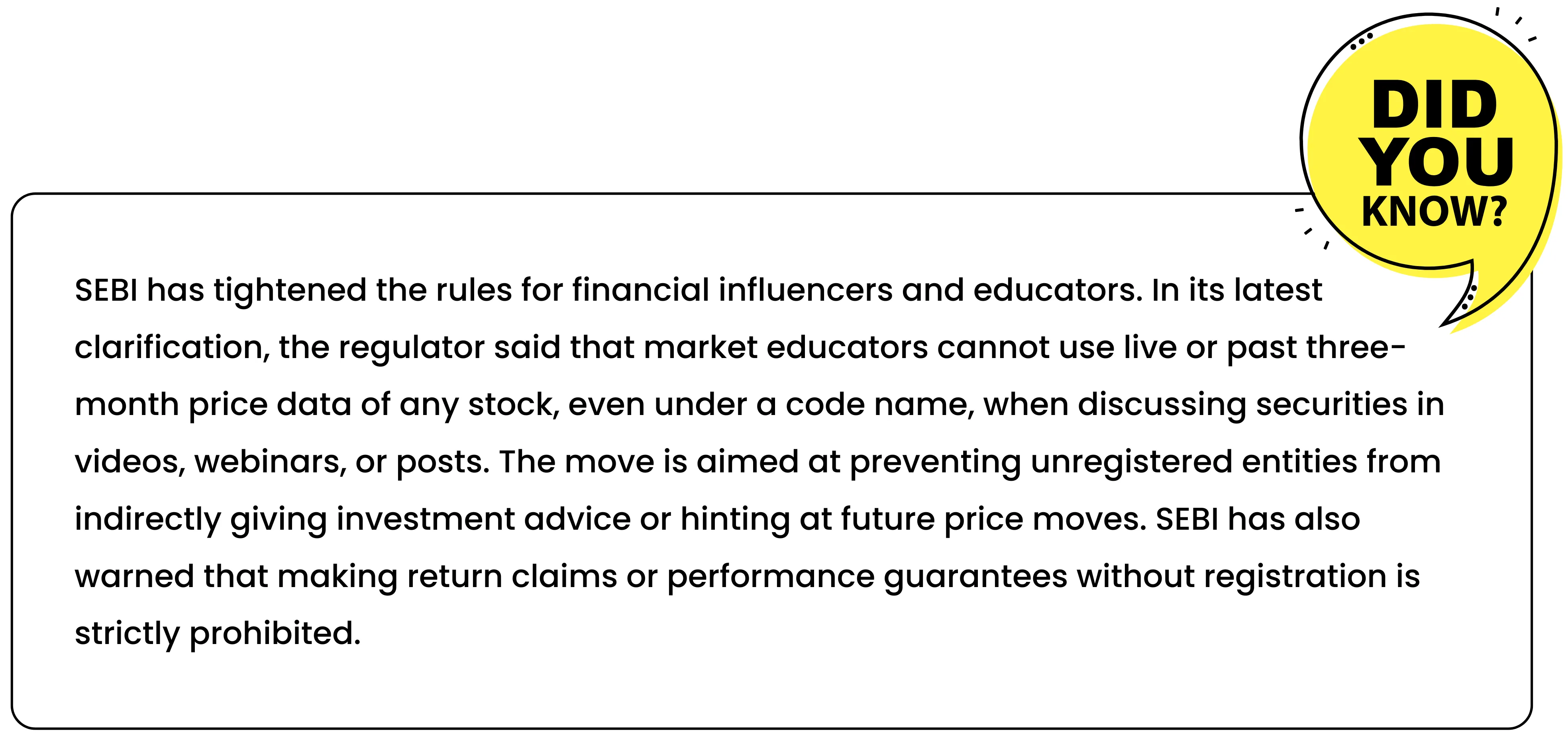
| Aug 29, 2024 | Rule enforcing 3-month lag pricing in educational content |
| Dec 2024 | Meta mandates SEBI verification for investment ads in India |
| May 2025 | Investor advisory on WhatsApp scam schemes |
| Mid-2025 | Search operations targeting major finfluencers |
| 2024–2025 | Crackdown on derivatives speculation linked to finfluencer influence |
What SEBI ban really means
When SEBI bans a so-called trading guru, it doesn’t just stop them from posting videos.
It means:
- They can no longer access the securities market.
- They cannot give any form of investment advice, no YouTube tips, no Telegram groups, no paid courses disguised as ‘education.’
- They may have to refund money earned through unregistered advisory services, often running into crores.
- In some cases, fines are imposed and bank accounts frozen.
Check out Tradejini’s free API here
Why is SEBI cracking down?
The answer lies with these finfluencers. Many of them claim to be ‘educators.’ They put out videos, show live trades, promise quick profits, and lure thousands of first-time investors. But behind the curtain, several indulge in:
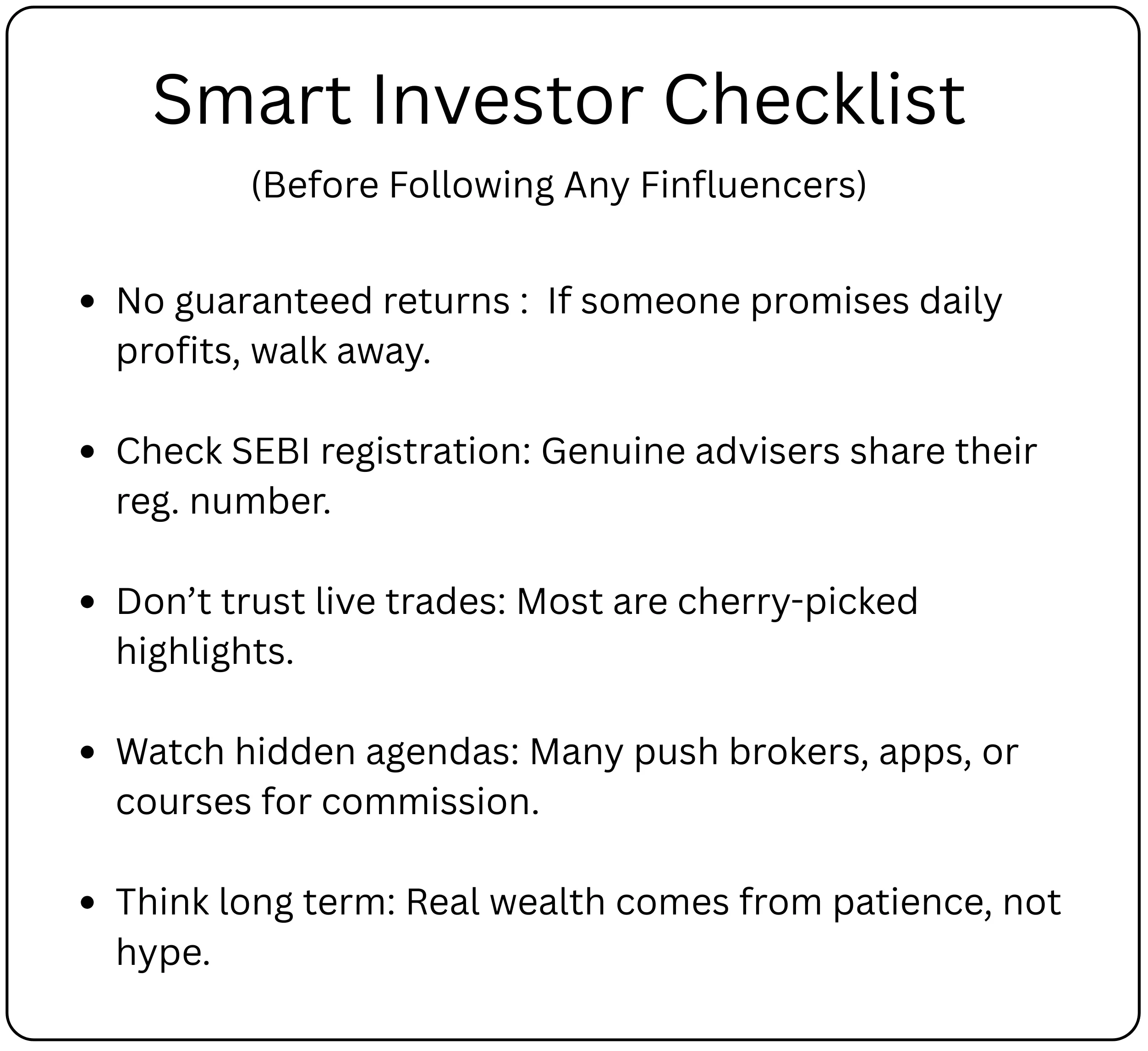
- Unregistered advice: Giving buy/sell calls without a SEBI license.
- Market manipulation: Pushing small-cap stocks, creating hype, and then exiting at a profit.
- False promises: ‘Guaranteed returns,’ screenshots of only winning trades, and hiding the real risks.
Why It Matters
India today has one of the youngest investor bases in the world, with millions entering the market for the very first time. But their first point of contact isn’t a classroom, a SEBI handbook, or even a broker’s website. It’s often a flashy 60-second reel promising ₹5,000 a day through options trading.
The problem is, this content is far from harmless. It fuels unrealistic expectations, encourages reckless speculation, and in many cases wipes out hard-earned savings. Genuine, registered advisers operate under strict rules designed to protect investors. Unregistered finfluencers sidestep those safeguards, turning financial education into nothing more than a sales pitch.
That is why the bans we see today are not just about disciplining a few bad actors. They are a clear message: India’s markets cannot be allowed to turn into a casino driven by hype, hashtags, and half-truths.
The big picture
Many claim to be experts, but in reality, they cross the line into investment advice without a SEBI license, which is strictly prohibited. Under SEBI rules for financial influencers, giving buy or sell calls without proper registration counts as unregistered advisory. In fact, SEBI action against unregistered advisors has already led to heavy penalties and bans. So, is giving stock advice without a license illegal? Yes, it is and that’s exactly why we are seeing a strong SEBI crackdown on finfluencers today. Some of these influencers indulge in market manipulation, false promises of guaranteed returns, and hidden conflicts of interest, all of which violate SEBI regulations for trading educators. To bring clarity, the regulator has also issued SEBI finfluencer guidelines 2025, including specific SEBI rules for Instagram finfluencers, making it clear that hype-driven content is no substitute for registered financial advice.
Yes, you will continue to read more headlines: another raid, another ban, another fine. Some will be dramatic, some will be technical. But behind that is a simple truth: SEBI is drawing a line. Financial education is welcome, but market manipulation in the guise of education is not. And if that saves thousands of young investors from burning their fingers on their first trade, then perhaps the regulator’s heavy hand is exactly what the market needs.
Disclaimer: The information provided in our blogs is for informational purposes only and should not be construed as financial, investment, or trading advice. Trading and investing in the securities market carries risk. Always conduct your own research and consult with a qualified financial advisor before making any investment decisions. Past performance is not indicative of future results. Copyrighted and original content for your trading and investing needs.
© 2025 — Tradejini. All Rights Reserved.
.webp%3Falt%3Dmedia%26token%3D0ead9799-20bc-4d1e-ae8f-d75ab18921b5&w=3840&q=75)


