

If you’re new to stock trading, you’ve probably heard terms like intraday vs delivery or intraday trading vs delivery thrown around. They sound technical, maybe even a little intimidating, but the core idea is simple. These are just two different ways people buy and sell stocks.
Intraday trading is for those who want to buy and sell on the same day, trying to make quick gains from small price movements. Delivery trading, on the other hand, is about holding on to shares for days, months or even years more like investing than trading.
In the next sections, we’ll walk through how each approach works, what kind of mindset or risk appetite they suit, and what to watch out for before you pick a side. Whether you're chasing short-term moves or building a long-term portfolio, getting these basics right makes a big difference.Whether you're chasing short-term moves or building a long-term portfolio, understanding the difference between intraday and delivery makes a big difference.
Intraday trading
Intraday trading refers to the practice of buying and selling stocks within the same trading day, with the aim of profiting from short-term price movements that occur over minutes or hours. All positions must be closed before the market closes, typically by 3:15 PM to avoid overnight risk. If not squared off manually, brokers may either auto-close the trades or convert them into delivery based on account settings. Intraday trading is fast-paced, carries high risk, and requires constant monitoring. It focuses on real-time price action rather than company fundamentals, relying heavily on charts, technical patterns, and market news for decision-making.
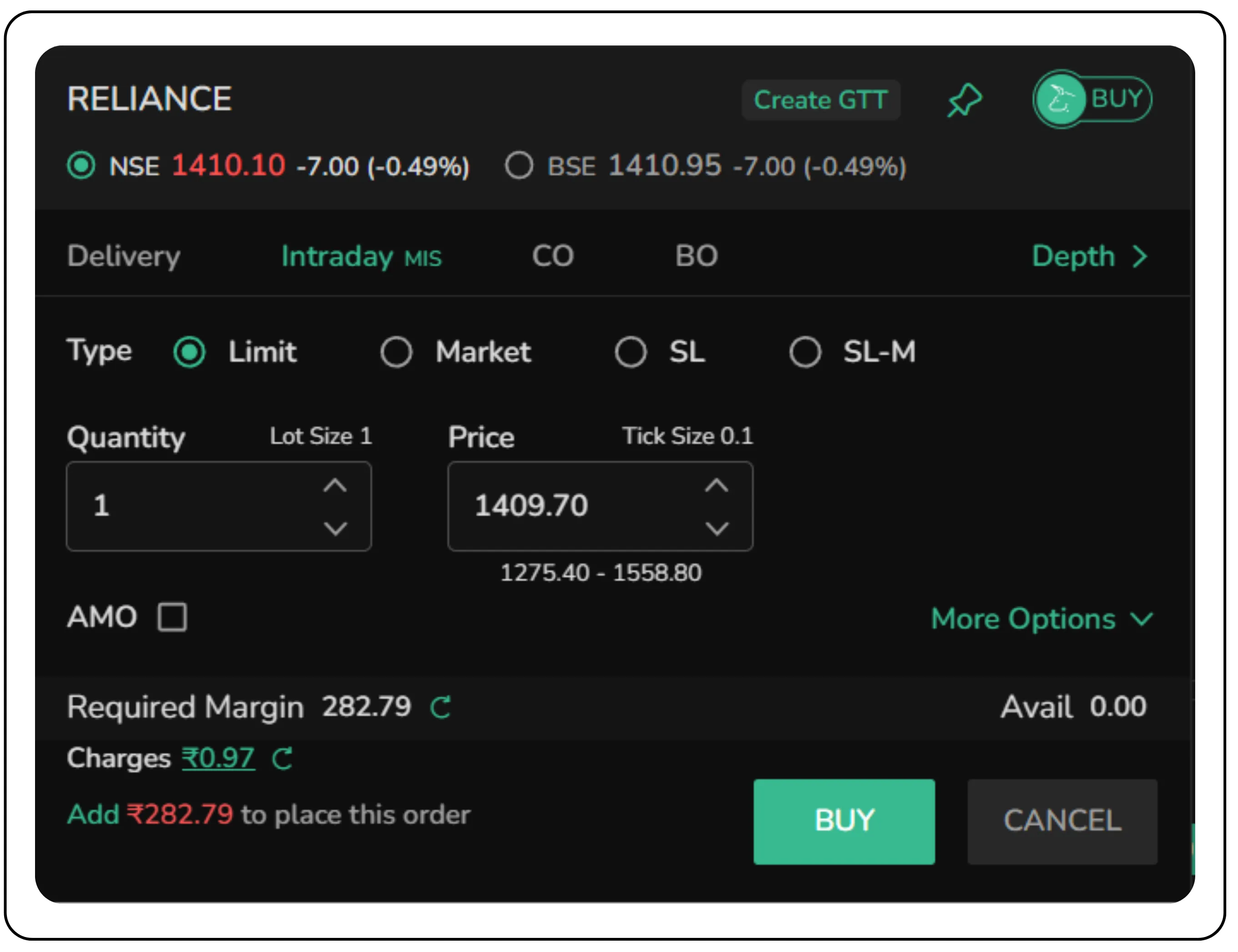
For example, buying 1 share of Reliance at ₹1,409.70 might only need ₹282.79 as margin. That’s because the broker offers up to 5x leverage on certain stocks for intraday trading. But there’s a catch, you have to close the position the same day before 3:15 PM. If you don’t, the broker will step in and do it for you. This setup is ideal for short-term trades where you’re looking to enter and exit within market hours.
Points to remember before trading intraday
Choose stocks you understand well: Start with companies whose business models and sectors you're familiar with. When you understand what drives a stock’s price be it earnings, news, or sector trends you’re better equipped to anticipate short-term movements and make confident decisions.
Watch the volatility: Go for stocks that show consistent intraday movement, but avoid those that swing wildly. As a rule of thumb, steer clear of stocks that move more than 3 percent a day, they can be unpredictable and carry higher risk.
Stick with market movers: Choose stocks that tend to follow broader market trends. If a stock moves in line with indices like the Nifty or Sensex, it becomes easier to read short-term price direction based on overall market cues.
Pay attention to volume: Look for stocks with strong trading volume. High volume means more participation and better price action. It also gives you more flexibility to enter or exit trades quickly, which is critical when you're trading within a single day.
Also Read: The First Stock I Ever Bought And What It Taught Me
Delivery trading
Delivery trading refers to the practice of buying shares and taking actual ownership of them in a Demat account, with the intention of holding them for more than one day often for weeks, months, or even years.
Unlike intraday trading, it focuses on long-term wealth creation rather than short-term price movements. Delivery trading suits investors who rely on fundamental research, have a clear investment strategy, and possess the patience to hold through market fluctuations.
For example, take a look at the image, you’ll notice that you need to pay the full amount upfront. Buying that same Reliance share at ₹1,409.70 will cost ₹1,412.10, including charges. Once the trade is complete, the shares are credited to your Demat account. You can hold them for as long as you want, which makes delivery trading a better fit for long-term investment goals.
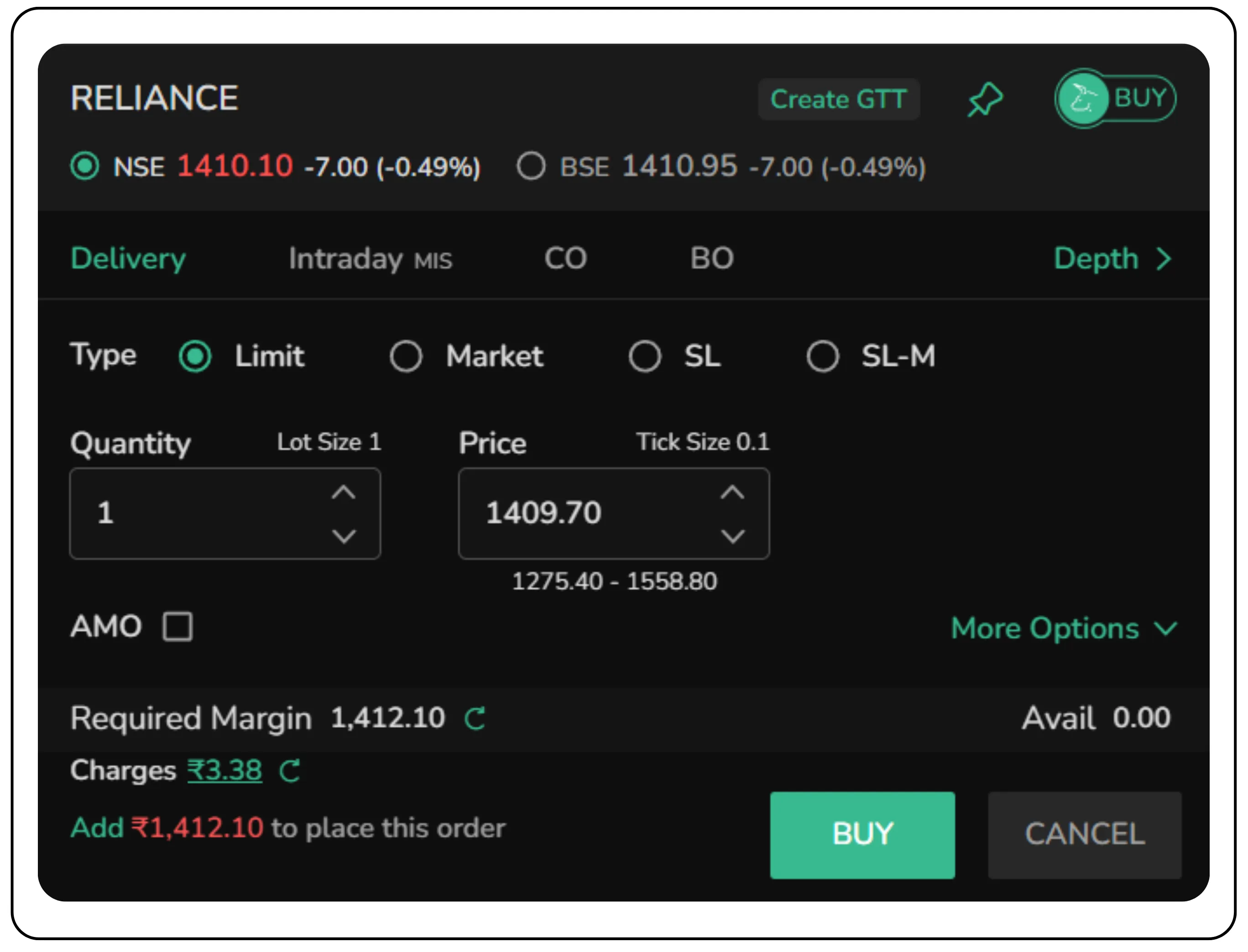
The key difference: intraday trading requires a smaller margin because brokers typically offer up to 5x leverage on individual stocks. This means you can trade with more capital than you actually have, but you must close the position within the same day. On the other hand, delivery trading needs full payment since you're taking actual ownership of the shares, which you can hold for as long as you want.
Steps involved in delivery based trades using Cubeplus
- Place the order: You start by placing a buy order through your trading platform or broker. The system matches your order with someone selling that stock.
- Trade gets executed: Once there’s a match, the trade goes through. Your buy order is confirmed, and the process moves to settlement.
- Settlement kicks in: You pay the full amount for the shares, and the seller begins the transfer. This is part of the T+2 settlement cycle.
- Shares hit your Demat account: Two working days after the trade (T+2), the shares get credited to your Demat account. At this point, you officially own them.
- You’re now a shareholder: You can hold the shares as long as you want. Plus, you’re eligible for all the perks that come with ownership—dividends, bonus shares, rights issues, and anything else the company offers.
Conclusion
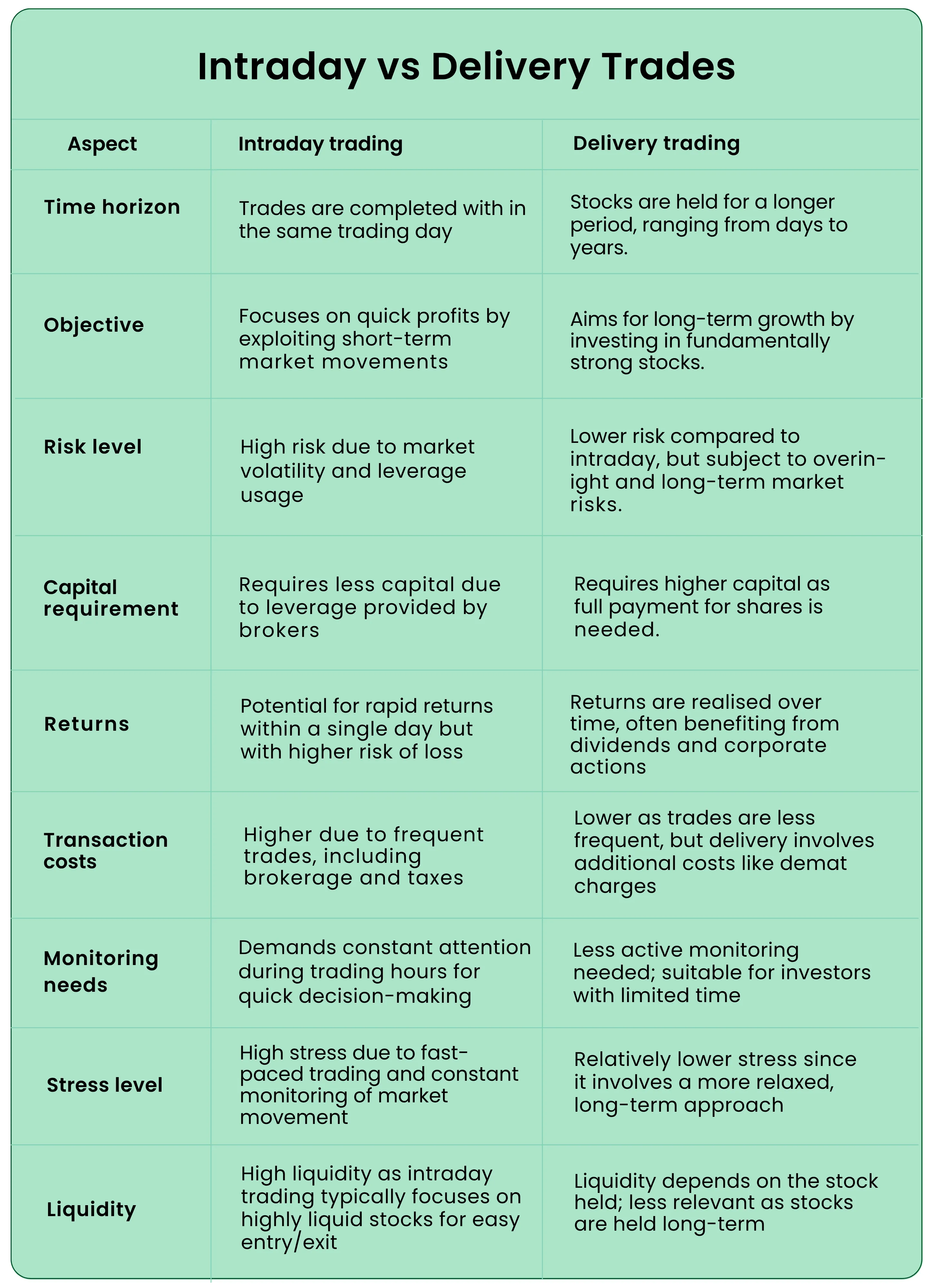
Both intraday and delivery trading have their own advantages, depending on your financial goals, risk tolerance, and the time you can dedicate to the market.
Intraday trading is ideal for those who prefer quick decisions and short-term gains, while delivery trading suits investors who believe in long-term wealth creation.
As a beginner, it’s important to understand how each method works before diving in. Start small, stay consistent, and keep learning—that’s the key to growing confidently in the stock market.
And now it's your turn to open your CubePlus account.
Disclaimer: The information provided in our blogs is for informational purposes only and should not be construed as financial, investment, or trading advice. Trading and investing in the securities market carries risk. Always conduct your own research and consult with a qualified financial advisor before making any investment decisions. Past performance is not indicative of future results. Copyrighted and original content for your trading and investing needs.
© 2025 — Tradejini. All Rights Reserved.
.webp%3Falt%3Dmedia%26token%3D0ead9799-20bc-4d1e-ae8f-d75ab18921b5&w=3840&q=75)


