In the last part of our series, ‘Choosing the Right Mutual Fund Type for You’, we explored how mutual funds are classified based on structure and investment objective. From open-ended, closed-ended, and interval schemes to equity, debt, hybrid, liquid, and even commodity funds, we broke down how each type caters to different investor goals.
Want to know more? Read about it here
Mutual funds have long been a preferred choice for Indian investors, and in recent years, exchange-traded funds (ETFs) have also gained popularity. Both offer diversification, professional management, and transparency, but they operate slightly differently. In this article, we’ll walk through ETFs, NAV, the different investment options available, and systematic strategies like SIP, SWP, and STP. We’ll also touch upon how returns and expenses are measured, so you get a complete view of how these products function.
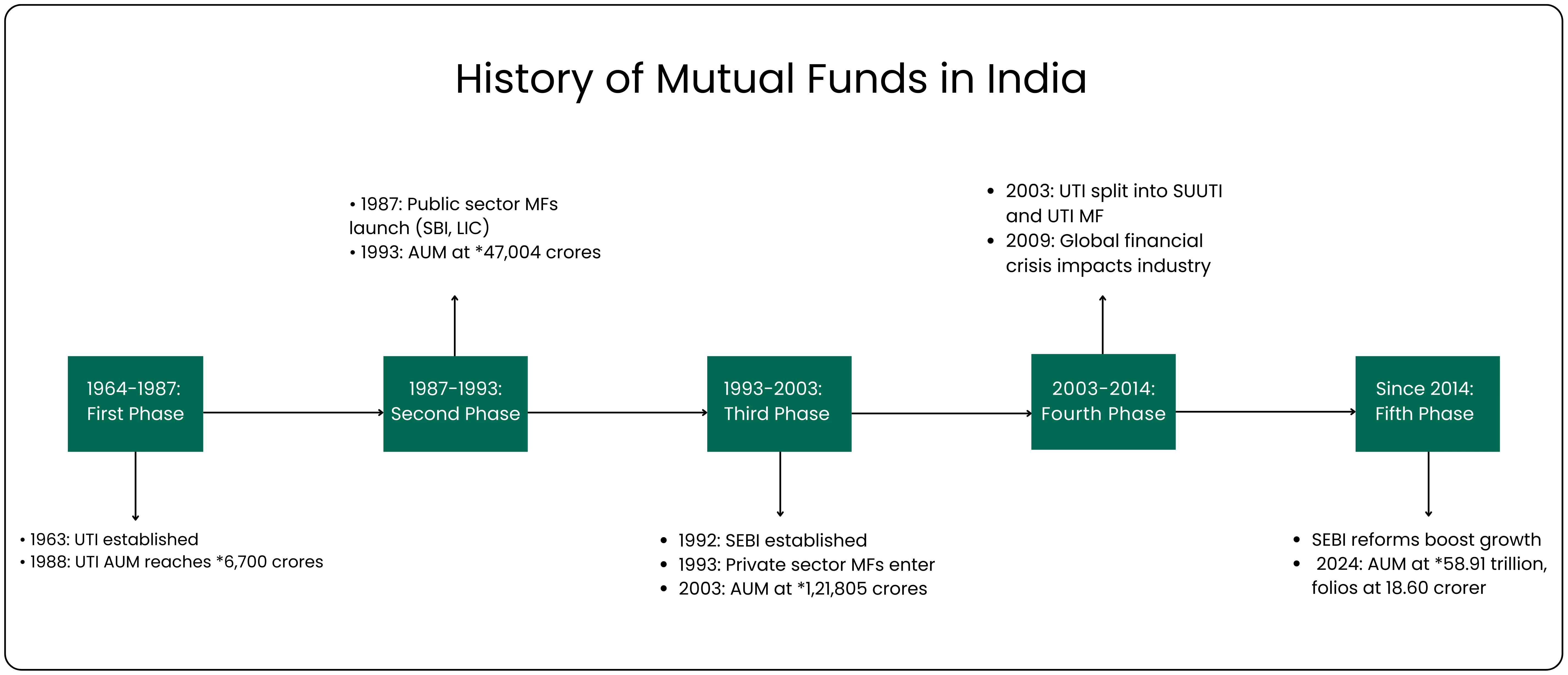
Exchange Traded Funds (ETFs)
An ETF is like a mutual fund that trades on the stock exchange, just like a share. It usually mirrors the performance of a benchmark index such as the Nifty 50 or Sensex. Unlike a regular mutual fund, which updates its NAV only once a day, an ETF’s price changes throughout the day depending on market demand and supply. The classic debate of ETF vs mutual fund comes in while both aim to give investors diversification, their structures differ. Many investors often ask, what is better mutual fund or ETF? The truth is, it depends on goals and costs. If you’re comparing ETF vs mutual fund pros and cons, ETFs are lower cost and more liquid, while mutual funds provide flexibility through options like SIPs and SWPs. In short, ETF or mutual fund which is better comes down to your time horizon and comfort with trading.
For investors, ETFs bring together the best of both worlds: the diversification of an index fund and the flexibility of a stock. You can buy even a single unit, short-sell, or do intraday trading, which isn’t possible with traditional mutual funds. Another advantage is cost ETFs typically have lower expense ratios than actively managed funds. (not treated as passively managed funds).
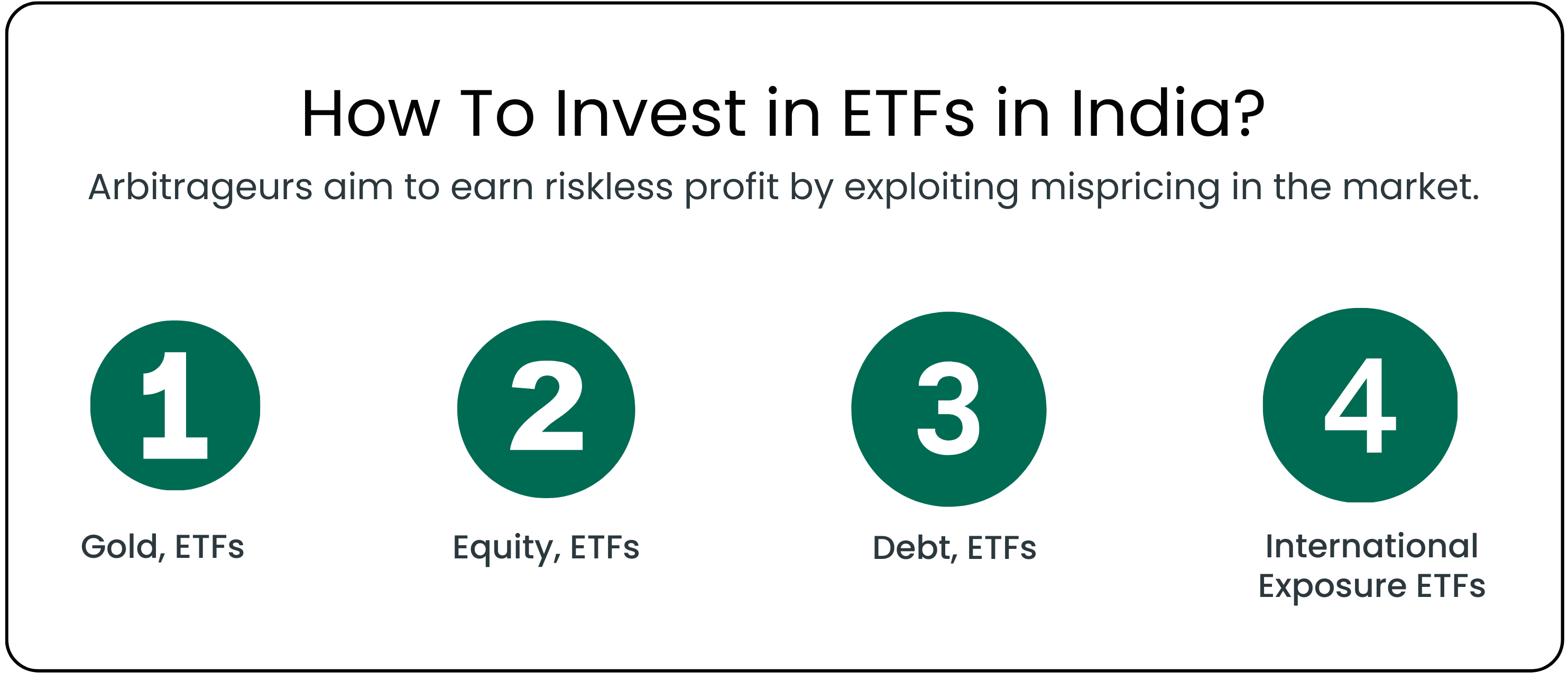
Today in India, you’ll find popular ETFs such as Nippon India ETF Nifty BeES, SBI ETF Sensex, Kotak Gold ETF, and ICICI Prudential Nifty Next 50 ETF. These give investors an easy way to track the broader market, specific sectors, or even commodities like gold.
This means the mutual fund and ETF similarities both let you diversify your portfolio, offer liquidity, and are handled by a fund manager or a rules-based system.
Net Asset Value (NAV)
The NAV of a mutual fund is simply its per-unit price. It reflects the total value of the fund’s assets after deducting liabilities, divided by the number of outstanding units.

For instance, imagine a fund with assets worth ₹1,250 crore and liabilities of ₹20 crore. That leaves net assets of ₹1,230 crore. If 100 crore units are outstanding, the NAV would be ₹12.30.
What matters to investors is how NAV grows over time. If you invested when the NAV was ₹10 and it grew to ₹12.30, that’s a 23% gain. However, your personal return also depends on factors such as dividends and expenses.
Curious to learn more about NAV? Read our detailed blog here
Choosing Between Dividend and Growth Options
Mutual funds generally give investors three choices:
- Dividend Option – The fund distributes profits to you periodically, but the NAV reduces by the same amount.
- Growth Option – Profits are reinvested, so the NAV rises steadily. Over the long term, this option usually helps in building wealth.
- Dividend Reinvestment – Instead of receiving cash, your dividends buy additional units of the fund.
Some funds also offer a bonus option, where you get extra units and the NAV adjusts accordingly. These options suit different investor needs: income-seekers may prefer dividends, while long-term wealth builders usually stick to growth.
SIP: Systematic Investment Plan
A SIP is one of the most effective ways to invest in mutual funds. Instead of putting in a lump sum investment, you invest a fixed amount every month, regardless of market levels. This strategy, known as rupee cost averaging, ensures you buy more units when the market is low and fewer when it’s high.
Over time, SIPs also benefit from compounding. For example, if you invest ₹5,000 a month for 10 years in an equity fund that delivers 12% annual returns, you could accumulate nearly ₹11.6 lakh against your ₹6 lakh investment.
The beauty of SIPs is that they instil financial discipline, require only a small monthly commitment, and take the stress out of market timing.
SWP: Systematic Withdrawal Plan
If SIPs are designed for accumulation, SWPs are built for payouts. With an SWP, you can withdraw a fixed amount from your mutual fund at regular intervals. Retirees often use this option to generate steady income without fully exiting their investments.
For instance, you could set up a plan to withdraw ₹20,000 every month from your debt or balanced fund, while the rest of your money continues to grow. It’s a practical way to fund expenses while staying invested.
STP: Systematic Transfer Plan
An STP allows you to gradually shift money from one fund to another. Suppose you received a lump sum of ₹6 lakh but don’t want to put it all into equities at once. You could park it in a liquid fund and set up an STP to transfer ₹50,000 every month into an equity fund. This way, you reduce the risk of entering the market at the wrong time.
STPs are also useful for reducing equity exposure before retirement or for tax planning by moving funds into ELSS schemes within the same fund house.
Measuring Returns
Investors often look at two types of returns:
- Absolute Return, which shows the total growth in value over a period.
- CAGR (Compounded Annual Growth Rate), which smooths out the return and tells you the average yearly growth.
Say you bought units at an NAV of ₹80 and sold them after three years at ₹160. The absolute return is 100%, but CAGR works out to around 26% per year.
If dividends are paid, they must be factored in as well. For example, if you bought units at ₹50, sold at ₹90 after two years and also received ₹5 as a dividend, your effective return is higher than the price difference suggests.
Measuring Expenses
Like any business, mutual funds incur costs, which are passed on to investors through the expense ratio. This includes fund management fees, marketing, brokerage, and administrative costs. Lower expense ratios are generally better for investors.
The portfolio turnover ratio shows how frequently a fund manager buys and sells securities. High turnover often means higher costs.
Then there are entry and exit loads. While entry loads have largely been scrapped in India, some funds still charge an exit load if you redeem units within a short holding period.
For example, if you invested ₹1 lakh at an NAV of ₹50 (2,000 units) and redeemed after two years at an NAV of ₹70 with an exit load of 1%, you would get ₹1,38,600 instead of ₹1,40,000. These small differences can add up over time.
Choose wisely
Whether it’s ETFs that offer low-cost access to indices, SIPs that build wealth steadily, or SWPs that provide income during retirement, mutual funds cater to a wide range of financial needs. Both ETFs and mutual funds qualify as long-term investment tools, provided you align them with your goals. The Indian mutual fund industry has crossed ₹60 lakh crore in assets under management in 2025, and continues to grow as more investors embrace these products.
The key is to understand your own goals, growth, income, or tax efficiency and choose the right mix of funds and options. Mutual funds are not just investment products; they are tools to help you stay disciplined, beat inflation, and work towards financial independence.
Check out our complete Mutual Funds guide here
Disclaimer: The information provided in our blogs is for informational purposes only and should not be construed as financial, investment, or trading advice. Trading and investing in the securities market carries risk. Always conduct your own research and consult with a qualified financial advisor before making any investment decisions. Past performance is not indicative of future results. Copyrighted and original content for your trading and investing needs.
© 2025 — Tradejini. All Rights Reserved.