Markets may look like numbers on a screen, but they behave like battlegrounds. Capital is your ammunition, psychology is the terrain, and survival depends more on preparation than prediction.
More than 2,500 years ago, Sun Tzu wrote The Art of War. The language is ancient, but the principles mirror how the smartest traders, hedge funds, and portfolio managers operate today. This isn’t philosophy — it's a practical strategy with direct application to Indian markets.
1. “Every battle is won before it is fought.”
In the market, outcomes are largely decided before execution. Your research, risk framework, position sizing, and exit plan matter more than reacting after entry. Retail traders often chase action, but professionals wait for alignment and confirmation.
For example, during the 2020 COVID market crash, DIIs (Domestic Institutional Investors) were net buyers while retail sentiment was largely negative, supporting recovery in many well-managed stocks. Those who prepared ahead benefited, showing that preparation is the real alpha.
2. “Know yourself, know your enemy.”
Understanding your risk tolerance, temperament, and time horizon is as important as reading the market. A good idea without the right temperament often fails. Professionals also study market structure, sentiment, and liquidity flows, not just stock tips.
During the late 1990s and early 2000s, Infosys attracted cautious retail investors, and institutions recognized broader technology trends, demonstrating disciplined positioning. Knowing yourself and the market allows you to avoid overtrading or taking misaligned positions.
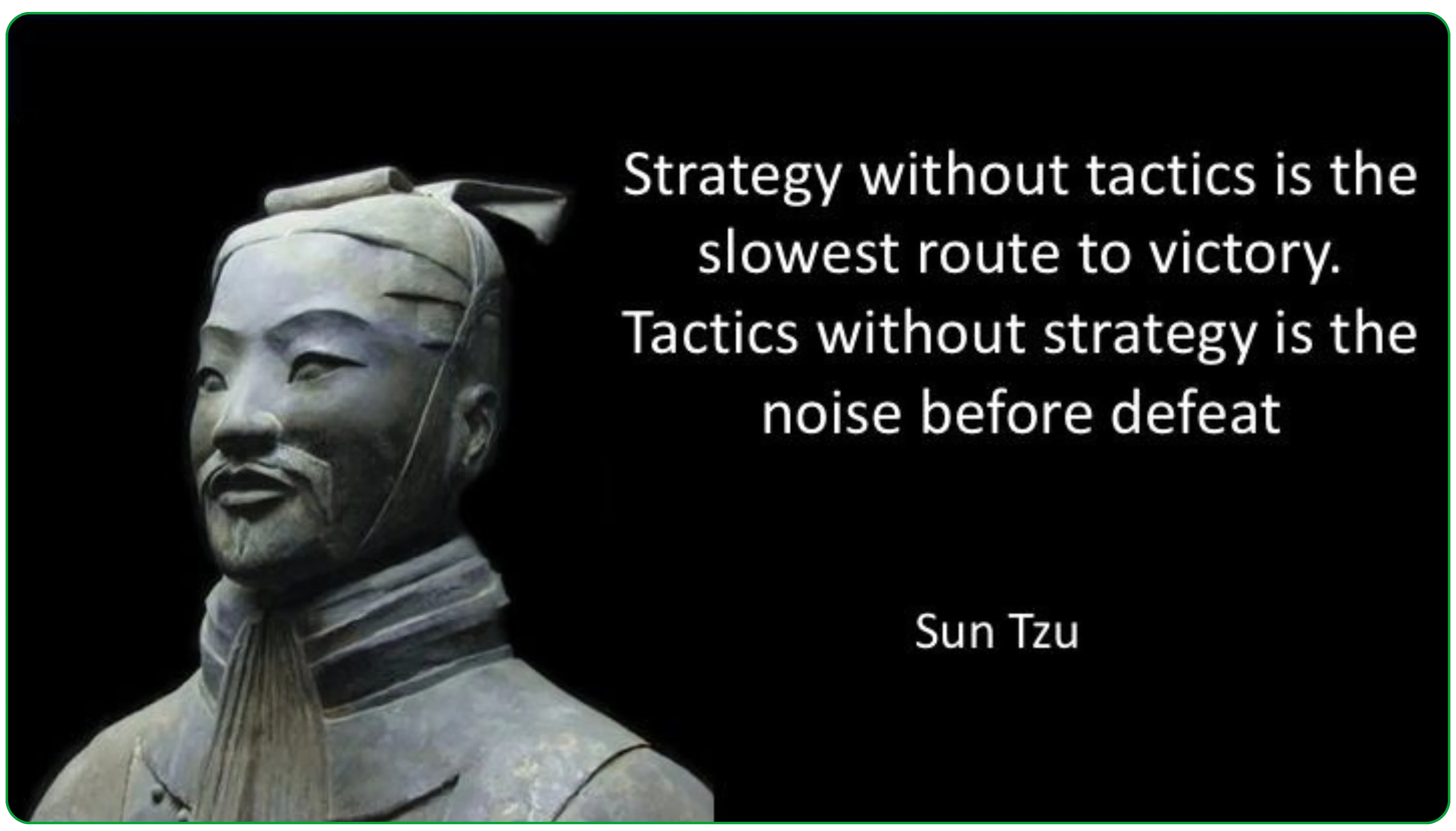
3. “He will win who knows when to fight and when not to fight.”
Most retail traders lose not because of bad strategies, but because they feel compelled to be constantly active. Cash is a position. Doing nothing is a strategy. Smart investors strike only when the odds are clearly in their favour.
For example, during the early rollout of Reliance Jio, institutions positioned themselves strategically while retail traders were more hesitant. Waiting for the right moment and striking decisively is how professionals gain an edge.
4. “In the midst of chaos, there is opportunity.”
Panic creates mispricing. Crisis creates entry points. Volatility destroys the unprepared but rewards the disciplined. If you have a defined plan, chaos becomes fuel, not danger.
During March 2020, several fundamentally strong financial stocks experienced temporary declines. Disciplined investors who recognized long-term value captured gains as markets stabilized. This demonstrates that volatility is an opportunity for those prepared.
5. “Appear weak when you are strong.”
Smart money accumulates quietly when retail is fearful. Narratives follow positioning, not the other way around. The loudest story is rarely the most profitable.
In many smallcaps and PSUs, rallies often begin when sentiment is lukewarm. Retail tends to chase trends after news breaks, while professionals exploit inefficiencies silently.
To read about Varun Beverages Ltd, click here
Practical Market Applications
- Treat capital as a finite resource and protect it first.
- Build frameworks, not forecasts.
- Define exit rules before entering any position.
- Size positions based on risk, not just conviction.
- Study liquidity, flows, and crowd behaviour.
- Be patient. Inefficiency appears when others act emotionally.
- Observe professional behaviour in Indian markets and learn discipline without copying scale.
- Track historical market events to identify patterns of opportunity and caution.
Case Studies
| Case Study | Period / Context | Key Insight |
|---|---|---|
| DIIs during 2020 crash | March–May 2020 | Prepared domestic institutions accumulated quality stocks (HDFC Bank, Reliance, Asian Paints) while retail sentiment was negative supporting market recovery. |
| Infosys (late 1990s & early 2000s) | Y2K and global tech boom | Institutions identified long-term technology potential early, positioning strategically while retail remained cautious. |
| Financial stocks during March 2020 | Pandemic-driven volatility | Disciplined investors used sharp declines in quality financial names like Bajaj Finance and HDFC Bank to build positions reaping significant gains in recovery. |
| Smallcaps and PSUs | Various accumulation phases | Professionals often accumulate quietly when sentiment is lukewarm; such stealth buying precedes major rallies unseen by retail investors. |
If you want to read about Sky Gold and Diamonds, click here
Takeaway
The stock market is not just data; it is conflict. Sun Tzu’s principles endure because they are not about war; they are about decision-making under uncertainty. By combining trading discipline with an understanding of institutional behaviour, retail investors can operate with both prudence and edge.
Disclaimer: The information provided in our blogs is for informational purposes only and should not be construed as financial, investment, or trading advice. Trading and investing in the securities market carries risk. Always conduct your own research and consult with a qualified financial advisor before making any investment decisions. Past performance is not indicative of future results. Copyrighted and original content for your trading and investing needs.
© 2025 — Tradejini. All Rights Reserved.
.webp%3Falt%3Dmedia%26token%3D0ead9799-20bc-4d1e-ae8f-d75ab18921b5&w=3840&q=75)