A quiet shift has been taking shape across trading communities in India. More and more traders, financial professionals, and even small trading business owners are choosing to move their base from India to Dubai. This isn’t a short-term migration trend or a social-media fad. It’s a structural shift driven by tax policies, access to global markets, regulatory clarity, and the long-term benefits of establishing residency in the UAE.
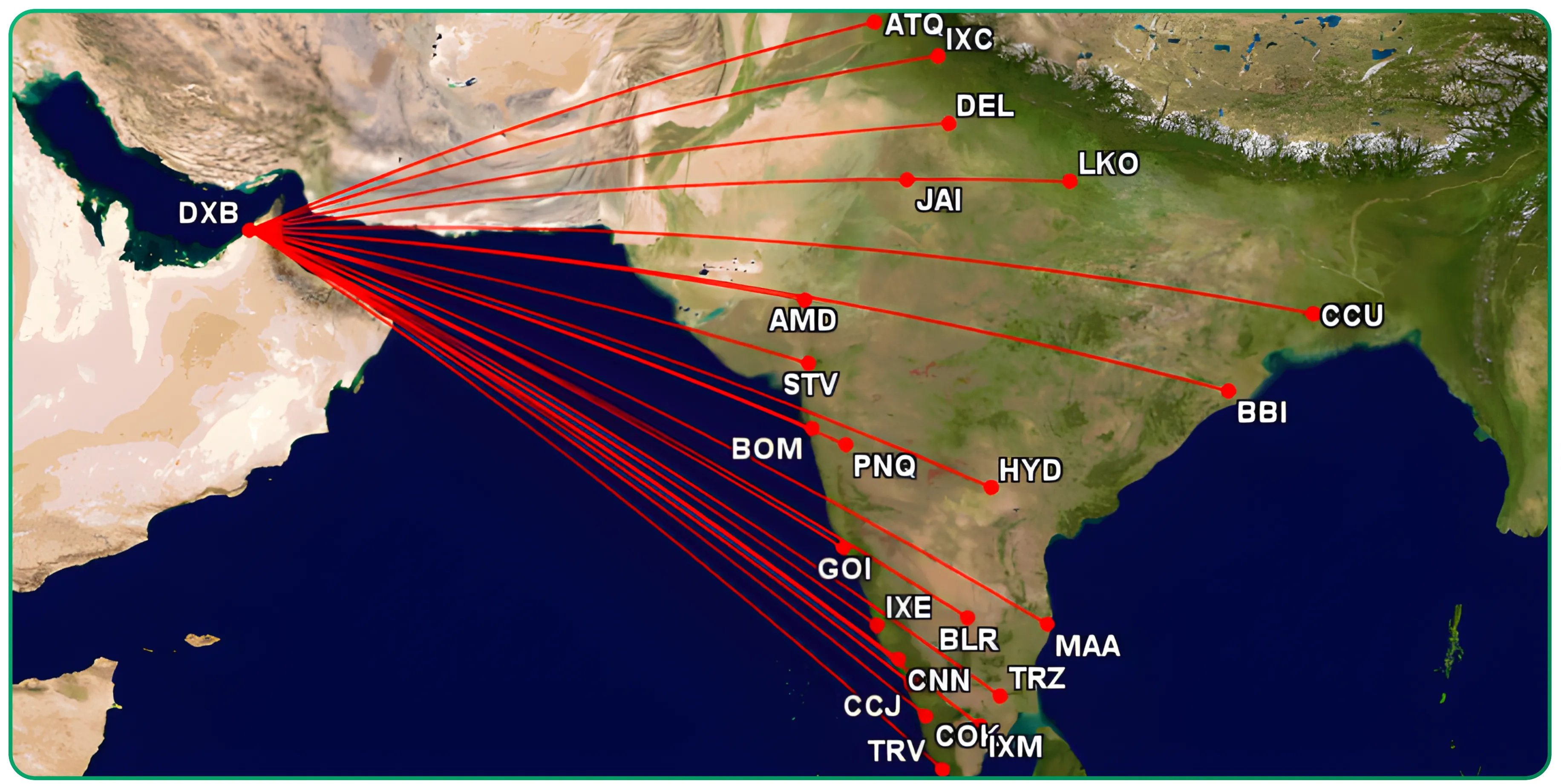
If you spend any time on finance Twitter, browse through trading forums, or simply observe the number of Indian NRIs now trading from Dubai International Financial Centre or various free zones, it becomes clear that this is a deeper realignment. For many, the question is no longer whether Dubai is better, but how soon they should make the move. And the reasons begin with the one word every trader thinks about constantly: tax.
Income Tax
India taxes trading profits, treats F&O income as business income, imposes tax on global income for residents, and expects detailed compliance every year. Add capital gains tax, tax deducted at source, and strict reporting requirements, and the entire system turns into a maze that requires serious effort to navigate. Many traders don’t mind paying taxes; they mind the complexity and unpredictability that surrounds it.
Dubai approaches this completely differently. There is no personal income tax, no capital gains tax, and no tax on foreign income if you’re a non-resident of India. For someone earning consistently through trading profits, forex trading, global market exposure, stock trading abroad or crypto trading, the difference becomes massive over time. A decade of saving taxes in the UAE can completely transform long-term wealth building.
The biggest advantage is predictability. You know exactly how much of your money stays with you because the UAE doesn’t tax personal income at all. Traders who operate through global brokers like Interactive Brokers or who receive income in US dollars find this particularly life-changing. Instead of worrying about the tax implications of every trade or international transfer, they work in a system that is built to support cross-border investments and trading activities without unnecessary friction.
Of course, compliance still matters. If someone continues to be an Indian resident for tax purposes, India will tax global income. But once they qualify as a non-resident Indian, their foreign income remains tax-free. That difference (resident vs non-resident) is central to why so many traders are making the switch.
If you’re interested in systematic strategies, you can also read our breakdown of The Turtle Trading Approach for a deeper look at rule-based trading.
Forex Trading
Forex trading has become one of the key reasons traders explore opportunities abroad. India’s regulations on forex trading are designed to protect retail traders and maintain compliance with FEMA, which means access to certain international currency pairs and offshore forex platforms is limited. These rules create a more structured environment for Indian residents, but some traders who want broader exposure to global markets look toward locations like Dubai, where forex trading frameworks allow wider access and more flexibility.
Dubai removes these restrictions entirely. The city has become a hub for forex traders, allowing them full access to the financial markets without the limitations imposed in India. Traders can open a trading account with global forex brokers, use advanced trading tools, and access deep liquidity around the clock. The regulatory environment is clearer and far more supportive of legitimate forex trading as a business.
For Indian traders who are looking for broader access to global markets, Dubai offers a more flexible environment. It allows them to trade professionally, manage larger positions, explore different strategies, and enter global markets without fear of violating local regulations. The combination of tax-free profits and unrestricted access to forex markets is exactly why this segment of traders has been one of the fastest to relocate.
Indian Traders
It’s not just wealthy traders or large prop desks moving abroad. A growing mix of individuals (from beginner traders to advanced market professionals) is shifting to Dubai because it offers a cleaner, more stable environment for trading as a full-time career.
For many traders, the decision comes after considering a few recurring questions about their long-term plans. They think about how trading profits are taxed, how global income is treated under the resident tax rules, how international transfers work, and how financial regulations shape what trading activities they can access. These factors naturally lead some traders to explore whether another financial hub, such as Dubai, aligns better with their goals.
Dubai answers all those questions with greater clarity. For a trader, currency speculator, crypto enthusiast, financial educator or even an algo developer, the UAE offers a platform to operate with fewer barriers. The city is built for global business, and that includes trading. Money moves more easily, bank accounts are structured for international transfers, and traders are treated like legitimate professionals rather than outliers navigating regulatory grey zones.
Pay Taxes
The tax conversation deserves its own space because it’s the primary trigger for relocation. Many Indian traders assume that moving to Dubai automatically eliminates all Indian taxes. That’s not accurate. If you remain an Indian resident according to income-tax rules, your global income continues to be taxable in India. But once you become a non-resident Indian, the taxation changes dramatically.
As an NRI, India taxes only the income earned within India, such as Indian stock market capital gains, rental income from Indian property, or income generated within the country. Everything earned abroad, whether through forex trading, stock trading in global markets, crypto trading, or foreign business income, remains exempt from Indian taxes.
This is why ensuring compliance becomes crucial. Misreporting your residency status or shifting money without proper documentation can cause problems later. Most traders take professional guidance to make a clean transition.
Bank Accounts
Dubai’s banking system is built for people who operate internationally. Multi-currency bank accounts, especially accounts that hold US dollars or other strong currencies, are common. International transfers are easier, faster and more transparent.
For traders, this makes a significant difference. In India, receiving foreign income or sending money to global brokerages can trigger multiple verification checks. In the UAE, such transactions are considered routine. The whole system (from account opening to receiving trading profits) feels smoother and more aligned with how traders operate globally.
This is also why so many Indian traders start shifting their trading accounts to global platforms. Dubai simply makes the experience easier and more reliable.
You might also find value in our guide on Six Common Mistakes Investors Make. It highlights the patterns that usually hold investors back and how to avoid them with simple, practical adjustments.
Indian Stock Market
Moving to Dubai doesn’t exempt anyone from paying taxes on the Indian stock market. If you trade on NSE or BSE, India will tax that income regardless of where you live. That’s because India taxes income at the source, and stock trading in India counts as Indian-sourced income.
But here’s the catch: once traders move to Dubai, many of them naturally reduce their exposure to the Indian stock market. Not because Indian stocks are bad, but because Dubai opens up a world of opportunities that were either inaccessible or over-regulated earlier. Traders begin exploring US markets, European markets, global indices, international futures, commodity contracts and crypto, all without personal income tax on those trading profits.
Over time, their dependence on the Indian stock market reduces. Their strategy becomes global and their portfolios become diversified far beyond domestic equities.
Stock Trading
Stock traders find Dubai particularly appealing because the entire global ecosystem becomes accessible without restrictions. Indian traders who were once limited to domestic markets suddenly gain access to multi-asset platforms, international futures exchanges, advanced trading platforms, and a much wider range of investment products.
The shift in perspective is huge. Instead of thinking only in terms of NIFTY, Bank NIFTY, F&O positions or Indian equity delivery, they begin exploring global markets with higher liquidity, different time zones and more trading opportunities. The removal of capital gains tax on foreign investments allows stock traders to experiment without worrying about how much will be deducted later.
As a result, trading becomes a more scalable activity.
Moving to Dubai
Relocating is not just a financial decision. It’s also a lifestyle choice. Dubai offers modern infrastructure, safety, a large Indian community, predictable laws, and an efficient environment for business. While the cost of living is not cheap, the lack of personal income tax often evens out the equation.
Cultural adjustment is easy for most Indians because the UAE has one of the largest Indian populations outside India. Most people describe the process as a smooth transition rather than a dramatic lifestyle shift. And because the city has countless free zones, it remains one of the easiest places in the world to set up a trading business or investment entity.
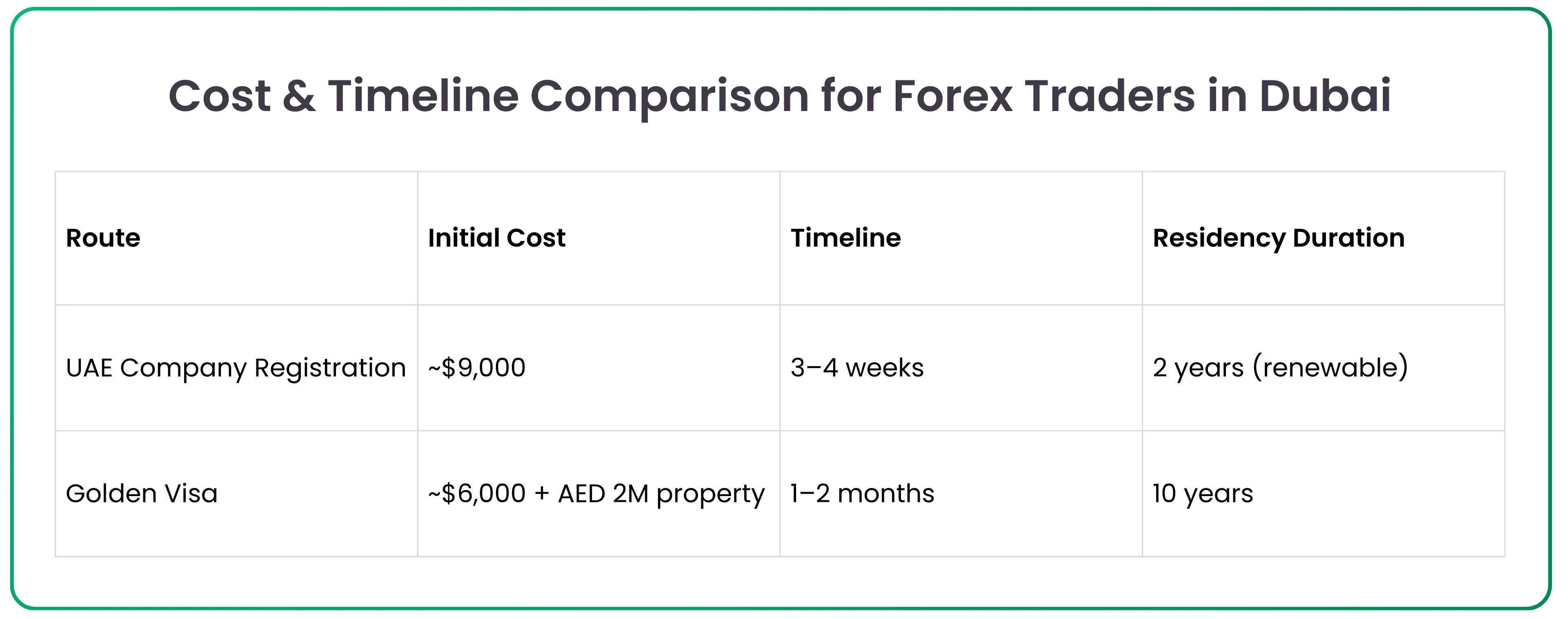
Relocating to Dubai also requires a clear understanding of the costs involved. While the city offers tax benefits and broader access to global markets, moving there isn’t something you do on a tight budget. Setting up a base (whether through a company in a free zone, a work permit, or eventually a Golden Visa) comes with registration fees, visa expenses, and higher living costs compared to most Indian cities. Accommodation, schooling, insurance, and day-to-day expenses can add up quickly, which means traders need a stable income and enough savings to manage both the one-time setup costs and the recurring cost of living. Moving to Dubai works best for traders who have strong, consistent earnings and can comfortably handle the financial commitment that comes with relocating to a global financial hub.
Crypto Traders
Crypto traders have been some of the earliest movers. India’s 30% tax on crypto profits and 1% TDS on every transaction created a significant burden for active traders. Dubai, however, treats crypto as a legitimate asset class and imposes no personal tax on crypto gains. With regulated exchanges, a tech-forward environment, and friendlier banking integrations, the UAE has become a global hub for crypto professionals.
For Indian crypto traders, the decision almost feels obvious. Instead of navigating India’s complex taxation on virtual assets, they operate in a jurisdiction that encourages innovation and treats crypto as part of the financial system rather than something unusual.
You might also find value in our take on Why Wealthy Indians Are Buying Second Homes Abroad, a look at the global shift in lifestyle, taxation, and investment preferences.
Golden Visa
Long-term residency is one of the most powerful incentives Dubai offers. The Golden Visa gives traders, entrepreneurs, and investors a 10-year residency that can be renewed. It offers freedom to live, work, invest and sponsor family members without depending on an employer.
For traders looking to build a long-term future abroad, the Golden Visa adds a layer of stability. It ensures that the trading business operates smoothly and that the trader can plan years ahead without worrying about visa renewal cycles. The UAE government has made it easier for high-income professionals and business owners to qualify, which is why the Golden Visa has become a key part of the relocation strategy.
Final Thoughts
Relocating to Dubai isn’t an overnight shortcut, and it isn’t something that happens just by landing there on a tourist visa. The benefits the UAE offers (whether tax advantages, access to global markets, or long-term residency) come into play only when you meet the proper requirements. Most traders enter through employment, build their careers for a few years, or qualify for programs like the Golden Visa. And if someone plans to open their own firm, the setup cost of a registered business in a free zone or in the Dubai International Financial Centre can be significant.
When you look at everything together, the decision really depends on the scale and stability of your income. Moving to another country makes sense only if your trading profits are consistently high and you’re confident operating in global markets such as US options, forex trading or international equities. If avoiding Indian taxes were as simple as booking a ticket, every trader earning a crore or two a year would already be in Dubai. The reality is far more structured, and the transition requires careful planning and full compliance with residency rules.
Living in Dubai also comes with its own financial considerations. It’s a more expensive city, and anyone thinking about relocating has to weigh how much they save on personal income tax and capital gains tax against the one-time moving expenses, business setup costs, and recurring living costs. Family factors matter just as much as financial ones, because relocating affects lifestyle, schooling, and long-term stability.
In the end, Dubai offers a compelling platform for traders who want broader access to global markets and a tax-free framework on foreign income. But it’s a decision that works best when it’s backed by high income, strong trading skills, and a clear plan; not impulse.
Ready to put your money to work? Start investing in mutual funds with CubePlus today.
Disclaimer: The information provided in our blogs is for informational purposes only and should not be construed as financial, investment, or trading advice. Trading and investing in the securities market carries risk. Always conduct your own research and consult with a qualified financial advisor before making any investment decisions. Past performance is not indicative of future results. Copyrighted and original content for your trading and investing needs.
© 2025 — Tradejini. All Rights Reserved.