Cash vs non-cash component is a fundamental concept in margin for trading This will help an investor or trader to plan his liquidity, risk, investment and trading objectives for mutual funds, stock equity funds, bond funds. This comprehensive guide explains how brokers allocate your margin daily, highlighting cash, government securities, debt securities, and other securities used as collateral.
1. What Is margin? Understanding collateral and initial margin
Margin is the collateral a broker requires for allowing clients to open a position in equity or commodity derivative segment. It represents your initial investment or initial margin your own assets (cash, shares, mutual funds or other securities). This collateral value determines your trading power and the size of the position you can take.
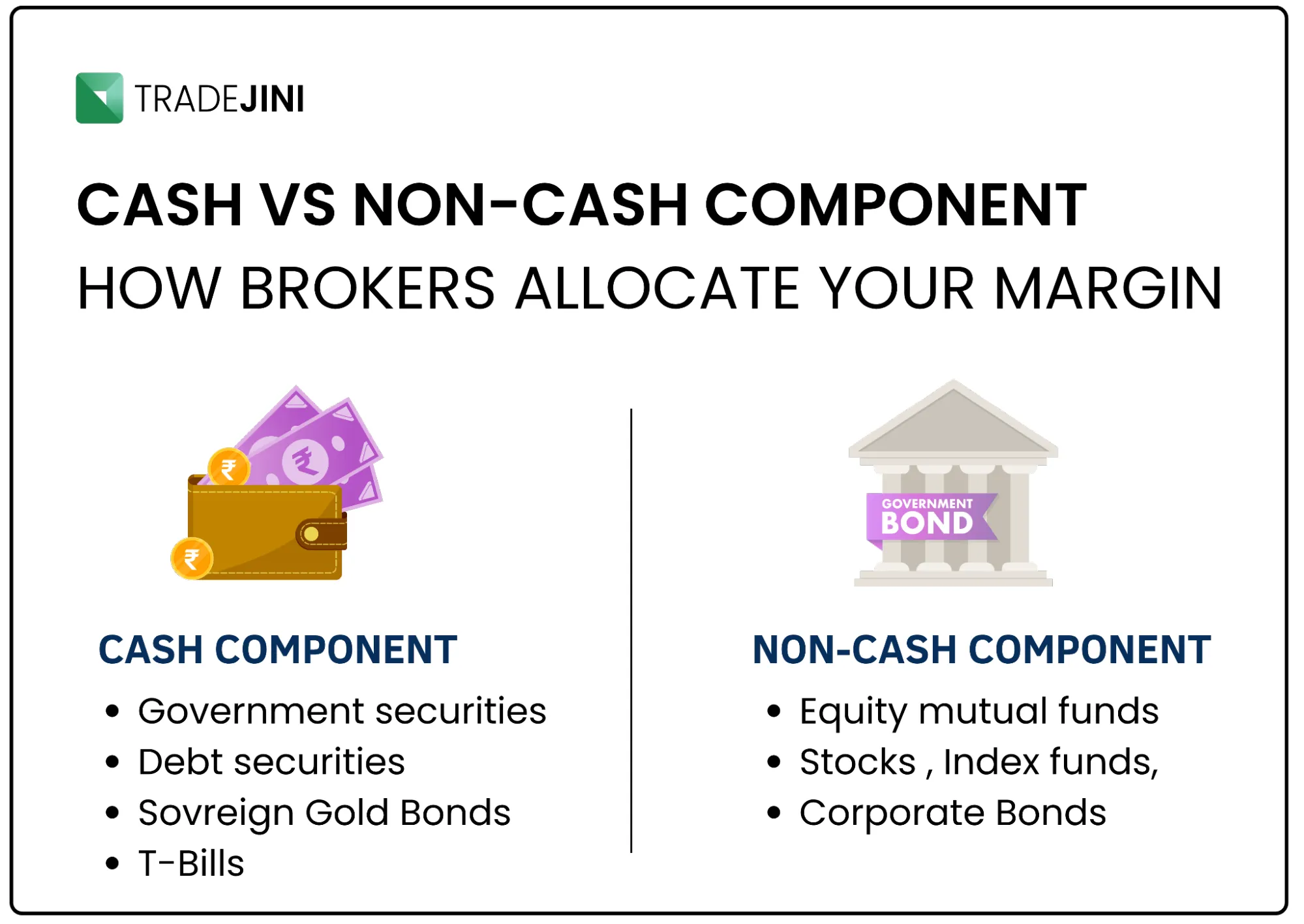
2. Cash component vs Non-cash component
2.1 Cash component
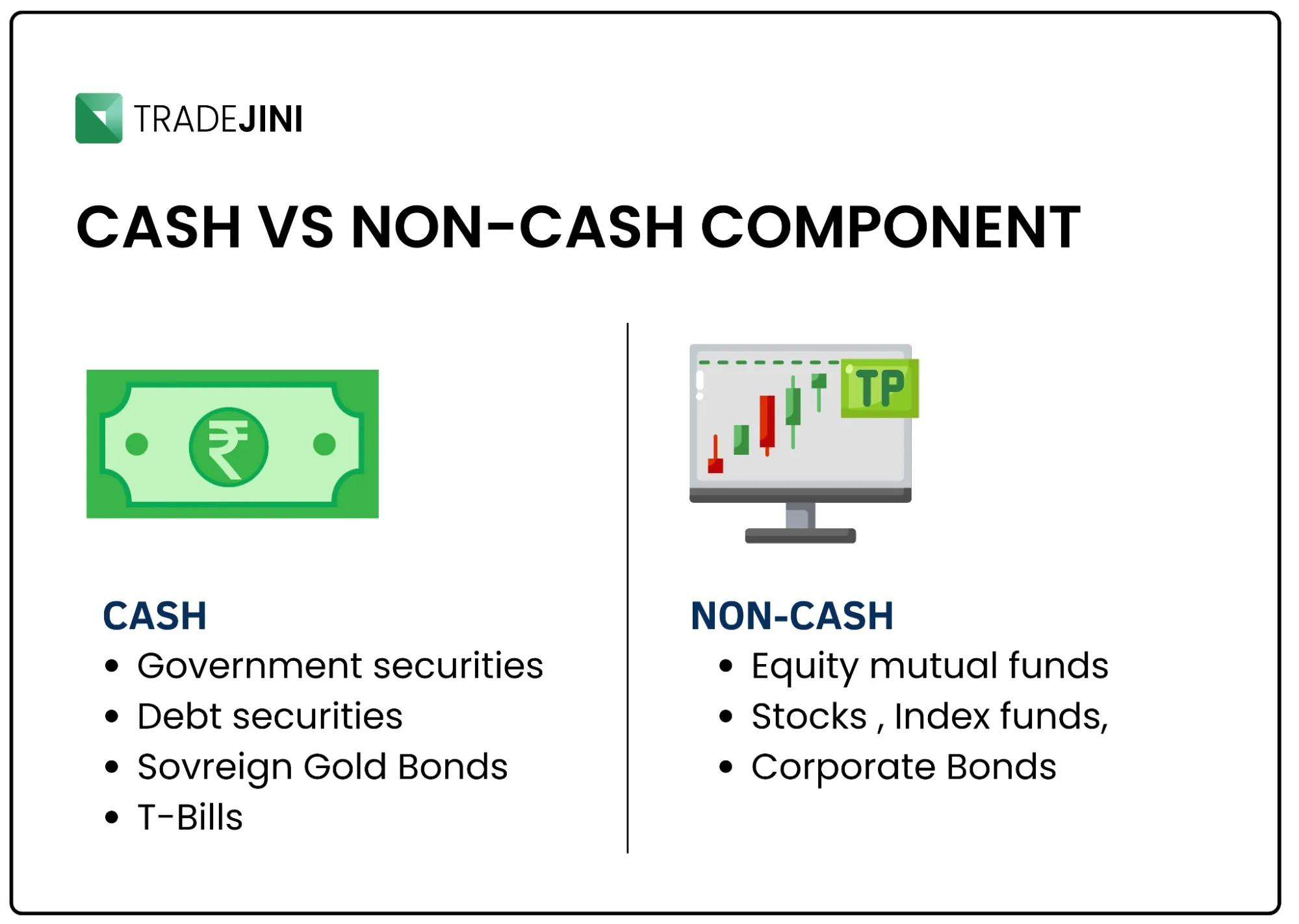
This refers to:
Actual cash in your trading account.
Money market funds and liquid mutual funds
Government securities
Debt securities
Sovreign Gold Bonds
T-Bills
2.2 Non-cash component
This includes:
Equity mutual funds
Stocks , Index funds,
Coprorate Bonds
All securities from approved security list of the exchanges
All collateral value is subject to haircuts. Typically Non-cash collateral will have higher haircut
3. Why the split matters for investors
3.1 Liquidity & risk
If investors do not maintain the minimum cash component (at least 50%) of the margin requirement, they might end up paying interest charges on the shortfall (17 to 18%).
3.2 Regulatory rules
Regulated by exchanges, brokers must enforce minimum value thresholds. For instance, as per regulation cash or cash equivalent must represent at least 50% of total margin required.
3.3 Investment objectives
Your fund’s portfolio, net asset value, total value, and net asset all shape your investment objectives. Understanding your margin split ensures your trading aligns with long-term goals and professional management.
Also read: Here’s Why Pledging Mutual Funds Makes More Sense
4. Margin allocation: Real-world example
Consider a futures position requiring ₹100,000 margin:
₹40,000 deposit in cash (banks, money market funds)
₹80,000 in government equity mutual funds; posted post-haircut margin value = ₹60,000
Total value = ₹100,000
If you incur ₹15,000 MTM loss intraday, the same will be debited from your cash pool. If cash falls below the 50% minimum requirement threshold, the broker will charge interest on the shortfall.
5. Tips for Mutual Fund Investors & Equity Traders
Monitor collateral allocation: Check broker dashboards to compare pledged securities held vs. available cash.
Maintain buffer: Keep extra cash beyond required margin to absorb sudden market swings.
Know haircut rates: For ETFs, equities, mutual funds—haircuts reduce collateral value.
Avoid illiquid securities: Stay away from funds or shares that have high redemption fees or low daily trading volume.
Understand deposit and redemption fees: Some mutual funds charge exit loads affecting your funds' portfolio value.
Also read: Here’s Why Pledging Mutual Funds Makes More Sense
6. Smart margin means smarter trading
Cash vs non-cash component isn’t just industry jargon, it’s at the core of your trading account’s health. To avoid unnecessary interest charges, understanding collateral margin, securities held, and margin split helps you manage risk and optimize returns. By positioning cash, government securities, bonds, and equity smartly, you stay liquid, compliant, and prepared; no matter how the market moves.
Also read: Watertech Leader Transforming Dirty Water into Liquid Gold
Also read: Are Mutual Funds Safe? Who’s Handling My Money, And Can I Trust Them?
Disclaimer: The information provided in our blogs is for informational purposes only and should not be construed as financial, investment, or trading advice. Trading and investing in the securities market carries risk. Always conduct your own research and consult with a qualified financial advisor before making any investment decisions. Past performance is not indicative of future results. Copyrighted and original content for your trading and investing needs.
©️ 2025 — Tradejini. All Rights Reserved.