Most people invest in mutual funds through an app in under five minutes. They pick a fund because a friend recommended it or because it shows up on top of a list. Few actually understand the terms sitting quietly in their account statement. This is not just a vocabulary problem. Understanding these terms affects how much you pay, how much tax you owe, and how you react when markets fall. This guide walks through the terms that matter, explains them quickly, and moves on.
How a Mutual Fund Is Structured
A mutual fund pools money from many investors and invests it in stocks, bonds, or a mix of both. The company that runs this pool is called an AMC, short for Asset Management Company. Names like HDFC Mutual Fund or SBI Mutual Fund are AMCs. Within an AMC, each specific fund you can invest in is called a scheme.
When you invest, you do not buy shares of a company. You buy units of the scheme. The price of one unit is called the NAV, or Net Asset Value. It changes every day based on how the underlying investments perform. Your account with a particular scheme is identified by a folio number, which works like your unique ID with that fund house.
Behind the scenes, a trustee oversees the AMC to make sure investor money is being handled properly. A fund manager, or a small team of them, makes the actual decisions about what to buy and sell within the scheme.
The Ways You Can Invest
The most common way to invest regularly is a SIP, or Systematic Investment Plan. You commit to investing a fixed amount every month, and it gets deducted automatically. This smooths out market ups and downs over time instead of betting on one entry point.
If you have a large amount ready to invest at once, that is called a lumpsum investment. Some investors prefer to start with a lumpsum and continue with SIPs afterward.
An STP, or Systematic Transfer Plan, moves your money automatically from one scheme to another at regular intervals. This is often used to shift a lumpsum gradually from a debt fund into an equity fund rather than moving it all at once. An SWP, or Systematic Withdrawal Plan, does the reverse. It withdraws a fixed amount from your investment at regular intervals, which is useful for anyone who wants a regular income from their fund holdings.
A switch simply means moving your money from one scheme to another within the same AMC. And a step up SIP, sometimes called a top up SIP, increases your SIP amount automatically every year, which matches the fact that most people's incomes grow over time too.
What It Actually Costs You
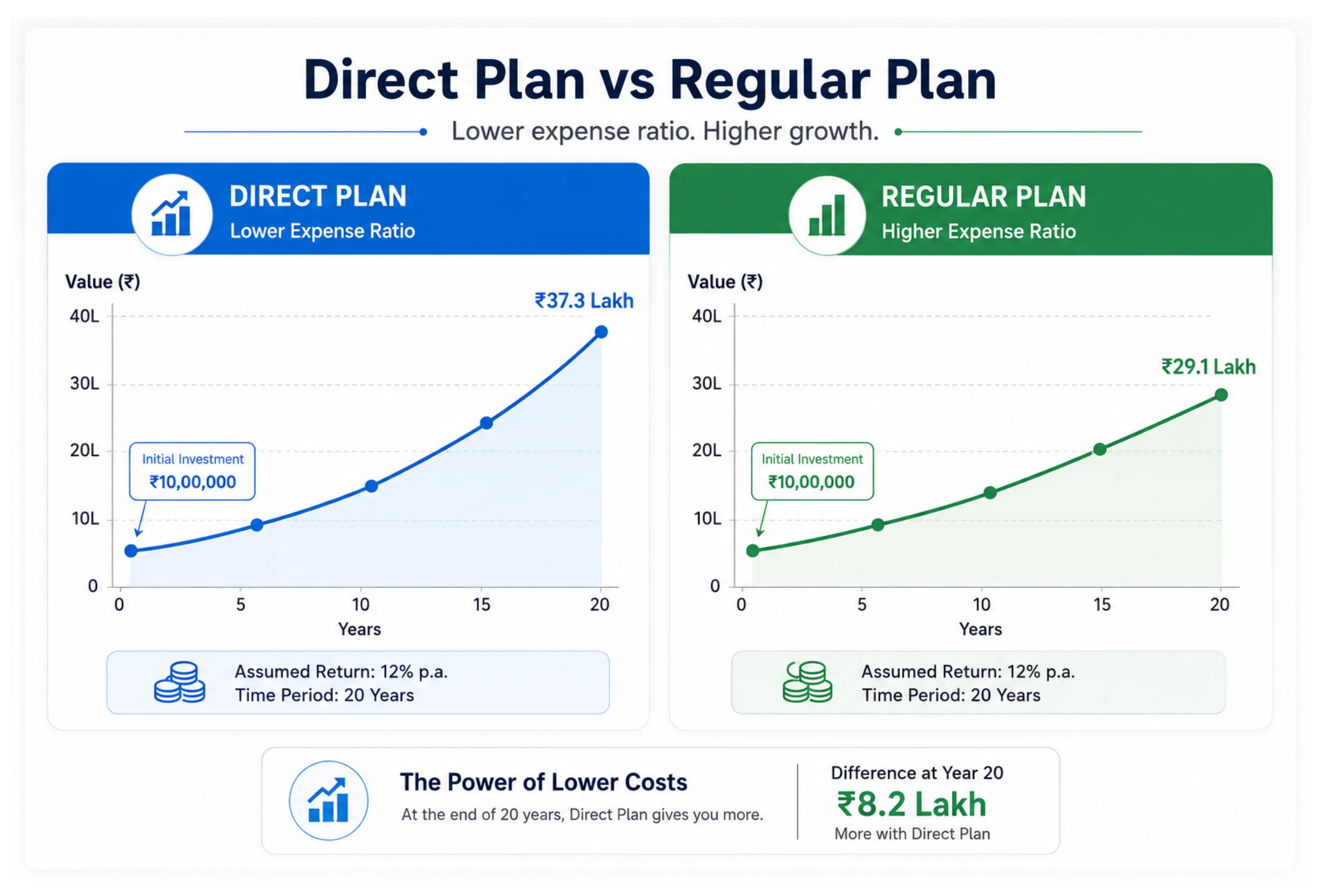
Every mutual fund charges an annual fee for running the scheme, called the expense ratio. It is expressed as a percentage of your investment and is deducted automatically, so you never see it as a separate charge, but it quietly eats into your returns every year. A difference of even one percent in expense ratio, compounded over fifteen or twenty years, can mean a noticeably smaller corpus at the end.
If you exit a fund earlier than a specified period, usually within a year, you may be charged an exit load, typically around one percent of your investment value. There used to be an entry load charged when you invested, but that was scrapped by regulation back in 2009, so you will not encounter it today.
How to Actually Judge Performance
The most common mistake investors make is judging a fund purely on its trailing one-year return. A fund that looks great this year might have simply gotten lucky with sector timing, and a fund that looks average might be quietly consistent year after year. Understanding a few key metrics helps you look past the headline number.
CAGR, or Compound Annual Growth Rate, tells you the annualized return over a period, smoothing out the year-to-year bumps. Absolute return is simpler and just tells you the total percentage gain or loss without annualizing it, which is fine for short periods but misleading for long ones. If you have invested through SIPs, the more accurate number to look at is XIRR, which accounts for the fact that your money went in at different times and calculates a proper annualized return on all of it together.
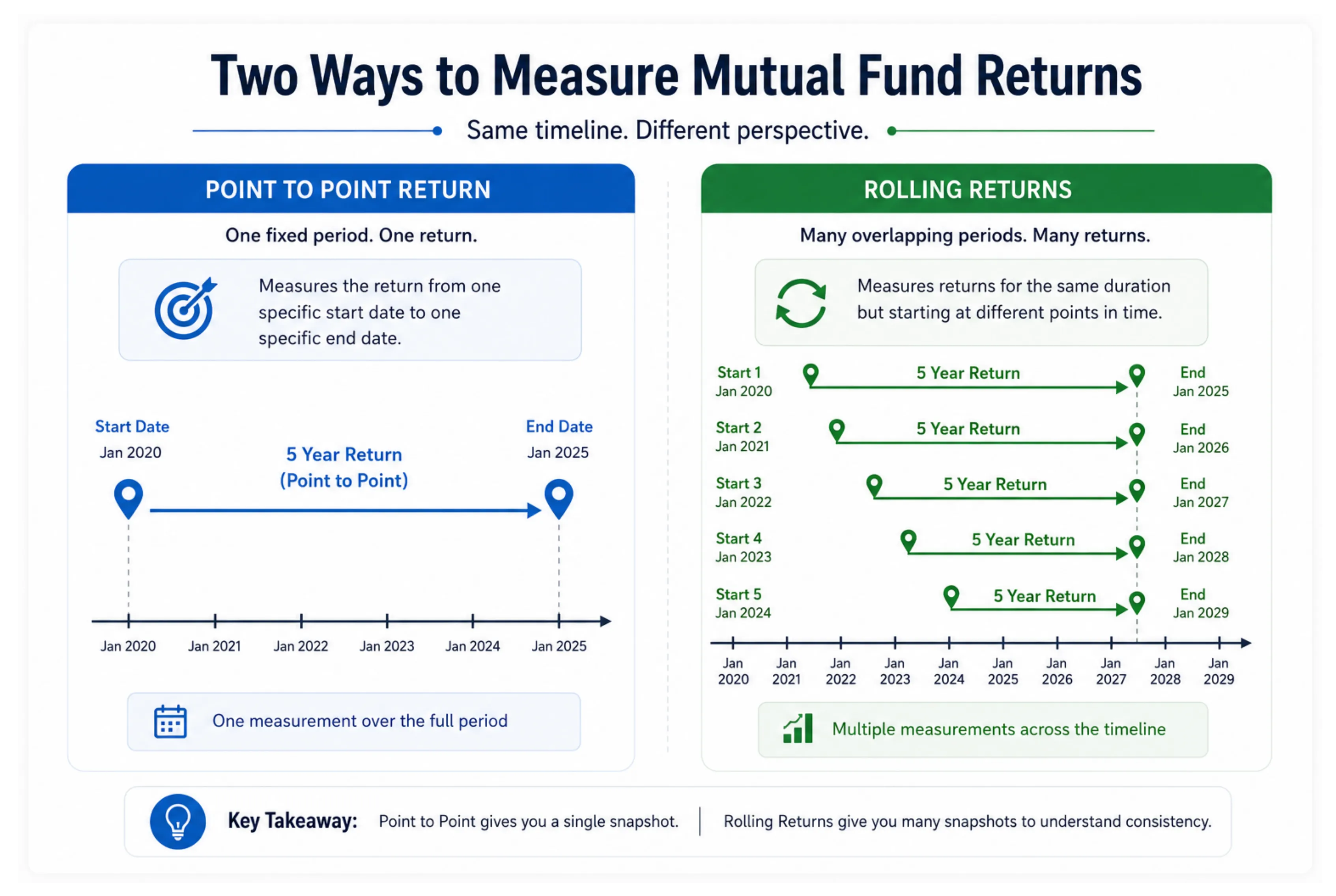
Every fund is compared against a benchmark, usually an index relevant to its category. Alpha tells you how much extra return the fund generated over that benchmark, and beta tells you how volatile the fund is compared to the market, where a beta of one means it moves in line with the market. The Sharpe ratio measures how much return the fund earned for the amount of risk it took, and a higher Sharpe ratio generally means better risk-adjusted performance. Rolling returns, which look at performance across many overlapping time periods rather than one fixed window, give a much more honest picture of consistency than a single point-to-point number.
What Is Actually Inside the Fund
Beyond returns, it helps to know what a fund is holding and how it behaves internally. The portfolio turnover ratio tells you how frequently the fund buys and sells its holdings within a year. A high turnover often means higher transaction costs passed on to you, and sometimes higher tax impact too.
For debt funds specifically, two numbers matter a lot. Modified duration tells you how sensitive the fund is to interest rate changes, where a higher duration means more sensitivity. YTM, or Yield to Maturity, gives you a rough idea of what return to expect if all the bonds in the fund are held until they mature. Alongside these, check the credit rating of the underlying holdings, since a fund loaded with lower-rated debt is taking on more default risk in exchange for a higher yield.
For equity funds, look at how concentrated the portfolio is. If the top five stocks or one sector make up a huge share of the fund, that reduces the diversification benefit you are supposedly getting from a mutual fund in the first place.
##Taxes You Need to Know
How long you hold a fund before selling determines how it gets taxed. Gains from investments sold before a certain holding period are called short-term capital gains, or STCG, and are taxed at a higher rate. Gains from investments held longer than that threshold are long-term capital gains, or LTCG, usually taxed at a lower rate, often with a certain exempted amount each year. The exact holding period and rates differ between equity funds, debt funds, and hybrid funds, so it is worth checking current rules rather than assuming they are the same across categories.
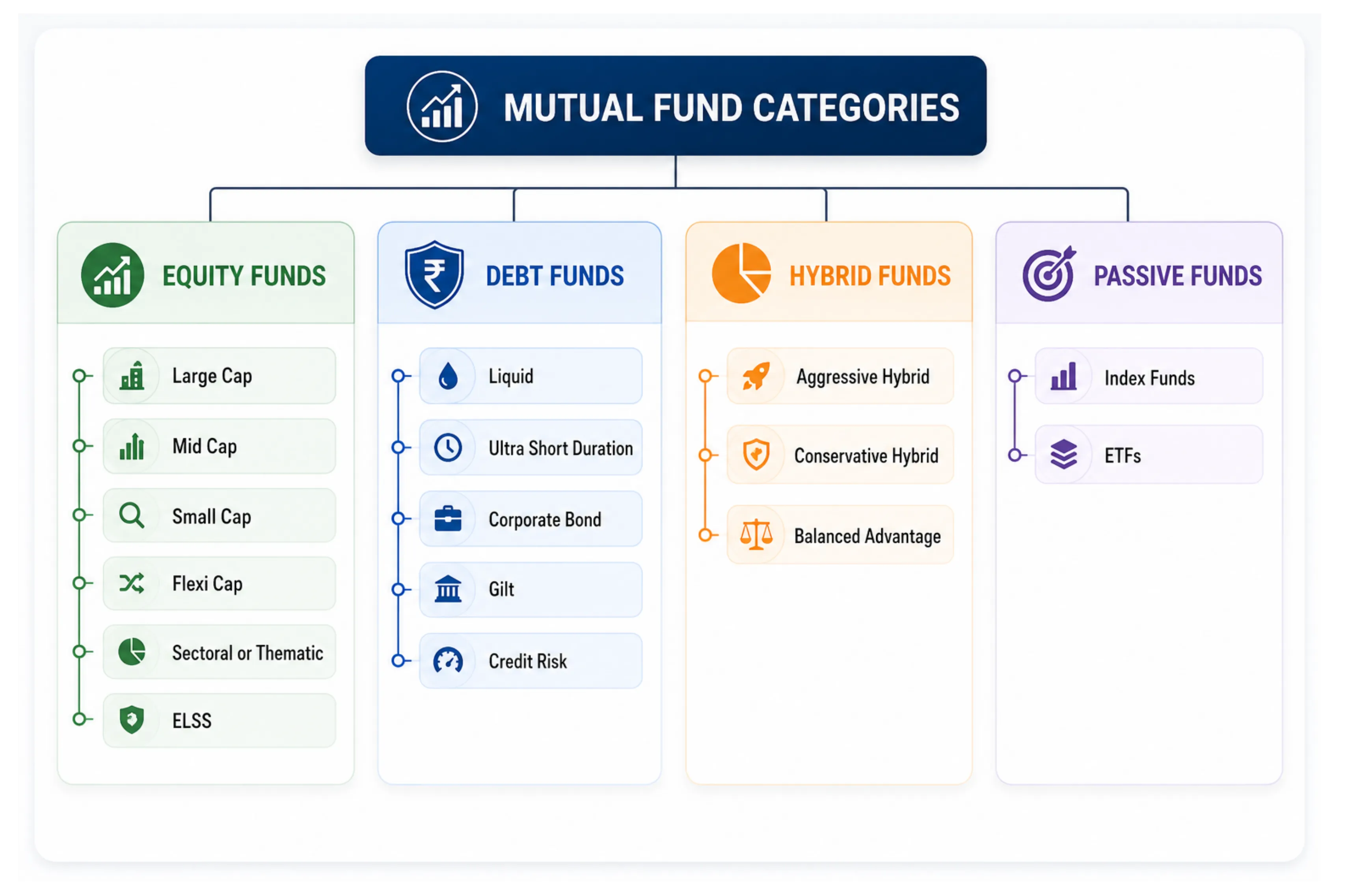
ELSS funds, the tax-saving equity funds mentioned earlier, come with a mandatory three-year lock-in, during which you cannot redeem your units at all. In exchange, the amount invested qualifies for a deduction under tax rules. One thing worth knowing is that the indexation benefit debt funds used to get, which adjusted your purchase cost for inflation before calculating tax, was removed for most debt fund investments made after April 2023. This changed the tax picture for debt funds quite a bit, so if you are holding older debt fund units, the older rules may still apply to them.
A Practical Checklist to Actually Use
Before you invest, be clear about your goal and how long you can stay invested, since that decides which category of fund even makes sense for you. Check whether you are buying a direct or regular plan, since that small difference in expense ratio adds up over time. Look at the exit load and any lock-in period, so you are not surprised later.
Once you are invested, do not just glance at the trailing one-year return every few months. Look at how consistent the fund has been over rolling periods and how it compares to its benchmark over time, not just recently. Keep an eye on whether the fund manager has changed or if the AMC has quietly shifted the fund's category or mandate, since this happens more often than people realize. If you hold more than one fund, check whether they overlap heavily in the same stocks, since that defeats the purpose of diversifying in the first place. Once a year, revisit your asset allocation and rebalance if it has drifted far from your original plan, rather than reacting to short-term market noise.
When it is time to redeem, check your holding period first, so you know whether you are looking at short-term or long-term capital gains, and check if an exit load applies. None of this requires expert-level knowledge. It just requires knowing what these terms mean, which is exactly what this guide was for.
Disclaimer: The information provided in our blogs is for informational purposes only and should not be construed as financial, investment, or trading advice. Trading and investing in the securities market carries risk. Always conduct your own research and consult with a qualified financial advisor before making any investment decisions. Past performance is not indicative of future results. Copyrighted and original content for your trading and investing needs.
© 2026 — Tradejini. All Rights Reserved.


.webp%3Falt%3Dmedia%26token%3D95b8e400-dddc-4dbb-9213-6caa6b886a90&w=3840&q=75)