


Okay, real talk. If you have been investing for a while, you have probably come across these two terms thrown around, REIT and InvIT. And if your reaction was ‘sounds fancy, probably not for me,’ you are not alone.
REITs and InvITs might not be as familiar as stocks or mutual funds, but they have been available to Indian investors since 2014. As awareness grows, more investors are taking a closer look at how these assets fit into a diversified portfolio.
REITs vs. InvITs…Same Same, But Very Different
Think of both REITs and InvITs like mutual funds, but instead of investing in stocks or bonds, they invest in physical assets.
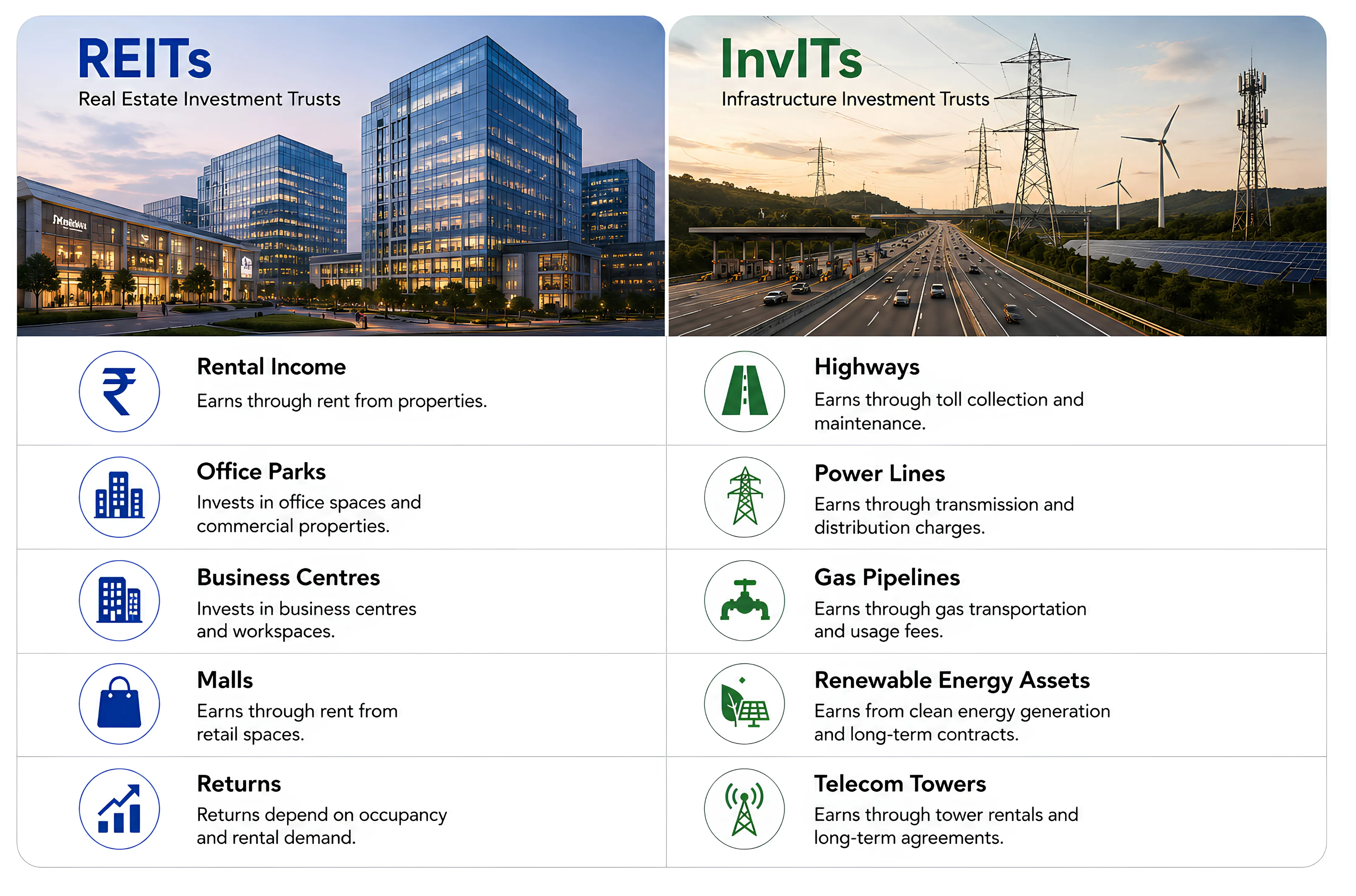
REITs (Real Estate Investment Trusts) own commercial real estate, office parks, malls, and business districts. You pool money with other investors; the trust manages these properties; tenants pay rent; and that income flows back to you as dividends. Simple enough.
InvITs (Infrastructure Investment Trusts) do the same thing, but with infrastructure: highways, gas pipelines, power transmission lines, and warehouses. The trust owns these projects, earns revenue from them (tolls, usage fees, power tariffs), and distributes most of it back to investors.
So both give you exposure to large physical assets you would never be able to invest in on your own. That's the appeal.
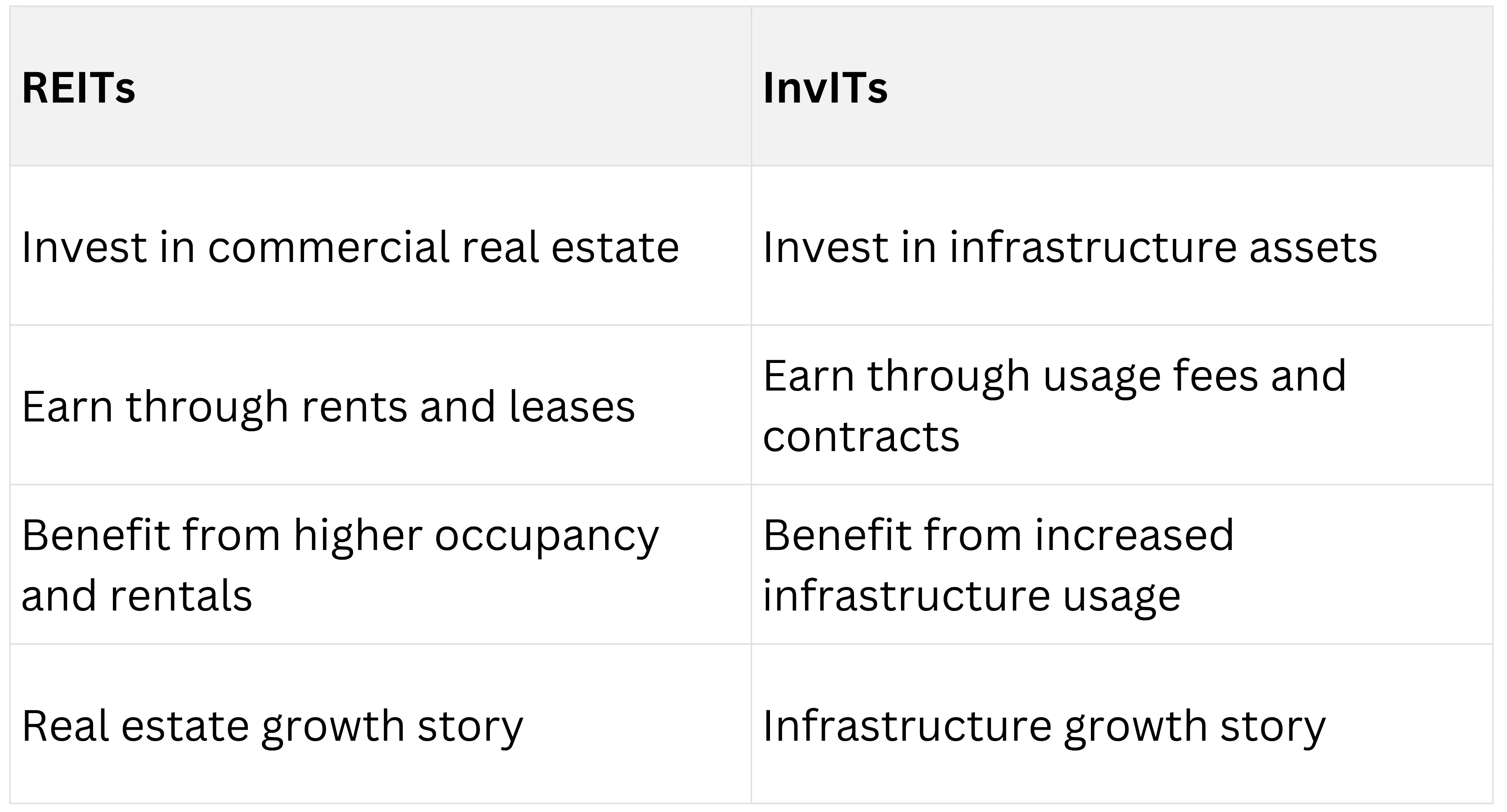
Where do they start to differ?
Stability
This is probably the most important distinction for most investors. REITs are comparatively more stable. Why? Because 80% of their assets must be in income-generating, already completed properties. Tenants sign long-term lease agreements. The income is fairly predictable. You are essentially getting a slice of rent from some of India's biggest corporate campuses.
InvITs are a bit more unpredictable, not bad, just different. Their revenues depend on capacity utilization. A road project earns from toll collection. A gas pipeline earns from volumes transported. These numbers can swing based on traffic, policy changes, or just how the economy is doing. More variables, more complexity.
Risk profile
REITs have the classic interest rate risk, when rates go up, investors tend to rotate out of REITs into safer instruments. It's a well-documented pattern globally, even if it feels counterintuitive rising rates often mean a stronger economy = better occupancy = better rents, so go figure.
InvITs carry a different kind of risk, execution and policy risk. Most infra projects run on government concessions. If the government builds a parallel toll-free highway, your toll road InvIT suddenly has a very bad day. That's not a hypothetical, it's happened.
Liquidity
Both trade on the stock exchange, so you can exit when you want. But REITs tend to be more liquid, with lower unit prices and more retail familiarity with real estate compared to infrastructure assets.
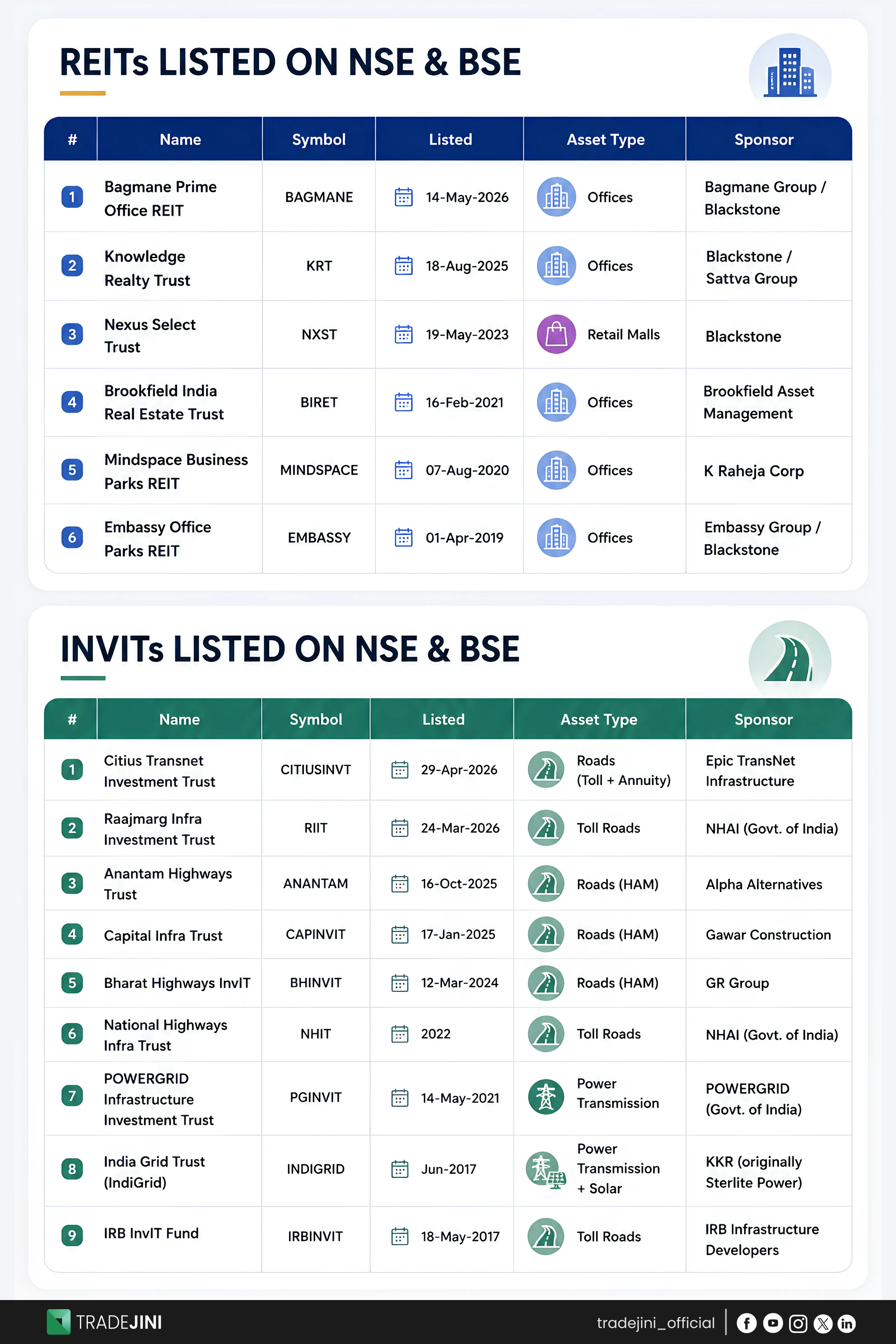
How growth shows up
With REITs, growth is visible, the trust redevelops properties, acquires new ones, and adds leasable area. You can see it. With InvITs, you need to dig into the books a bit more. Growth comes through bidding for new concession projects, which is less tangible and harder to track without actively following the trust's announcements.
So which one is right for you? Honestly? That depends on what you want.
If you want steady, predictable income with relatively lower complexity, REITs make more sense to start with. The underlying concept (rent from commercial property) is easier to wrap your head around.
If you are comfortable with slightly higher complexity and want exposure to India's infrastructure growth story, InvITs are interesting, especially as the country keeps building highways, pipelines, and power grids.
Both mandate distributing 90% of their income to investors, so either way, you are getting regular payouts. Neither is a growth stock. Think of them more like high-quality income instruments with some appreciation potential.
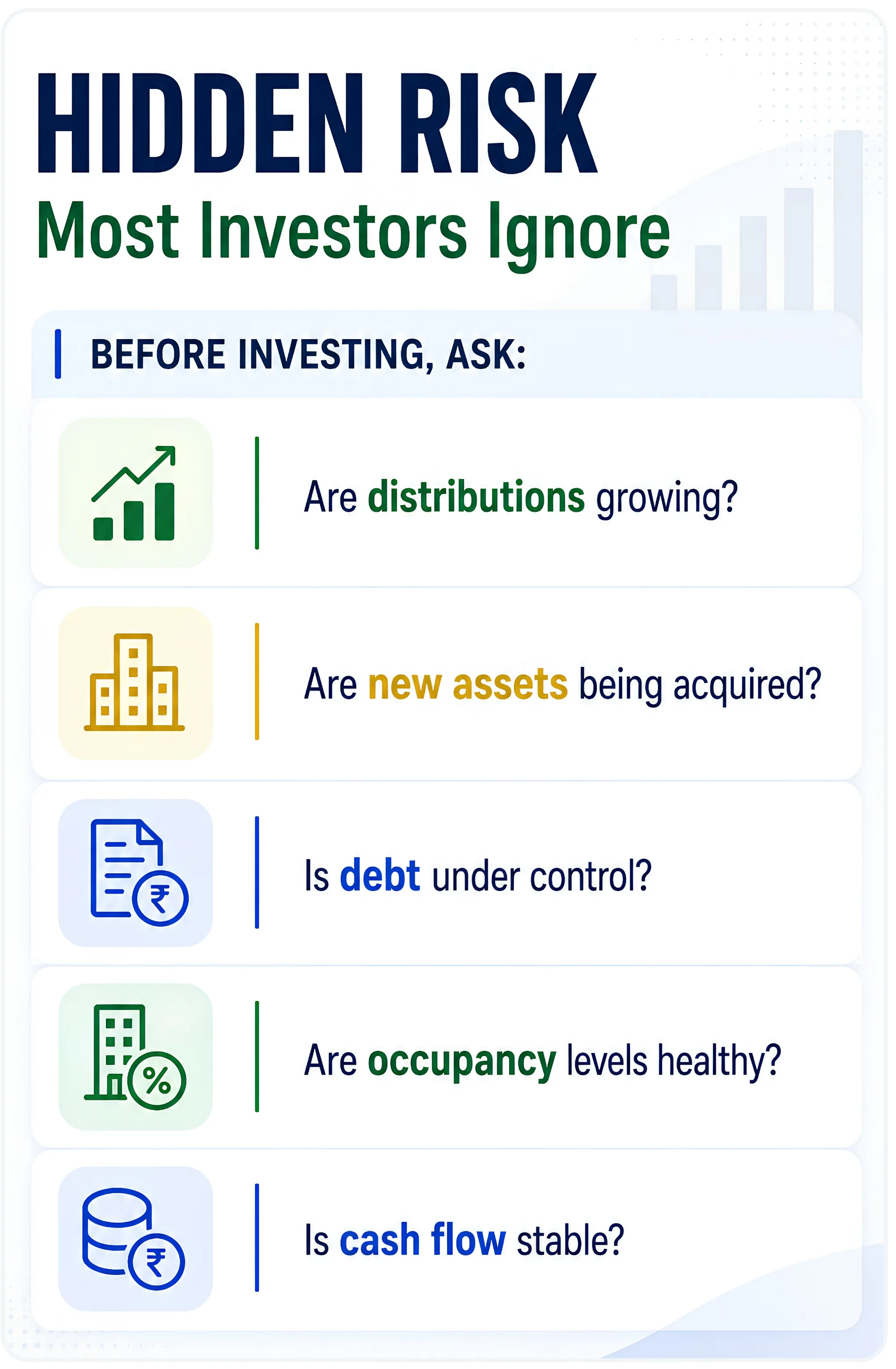
One thing we had suggest: don't just look at the yield number. Look at the quality of the underlying assets, the sponsors behind the trust, and their track record. The yield can look attractive on paper; what matters is whether those assets actually keep generating that income 5 years from now.
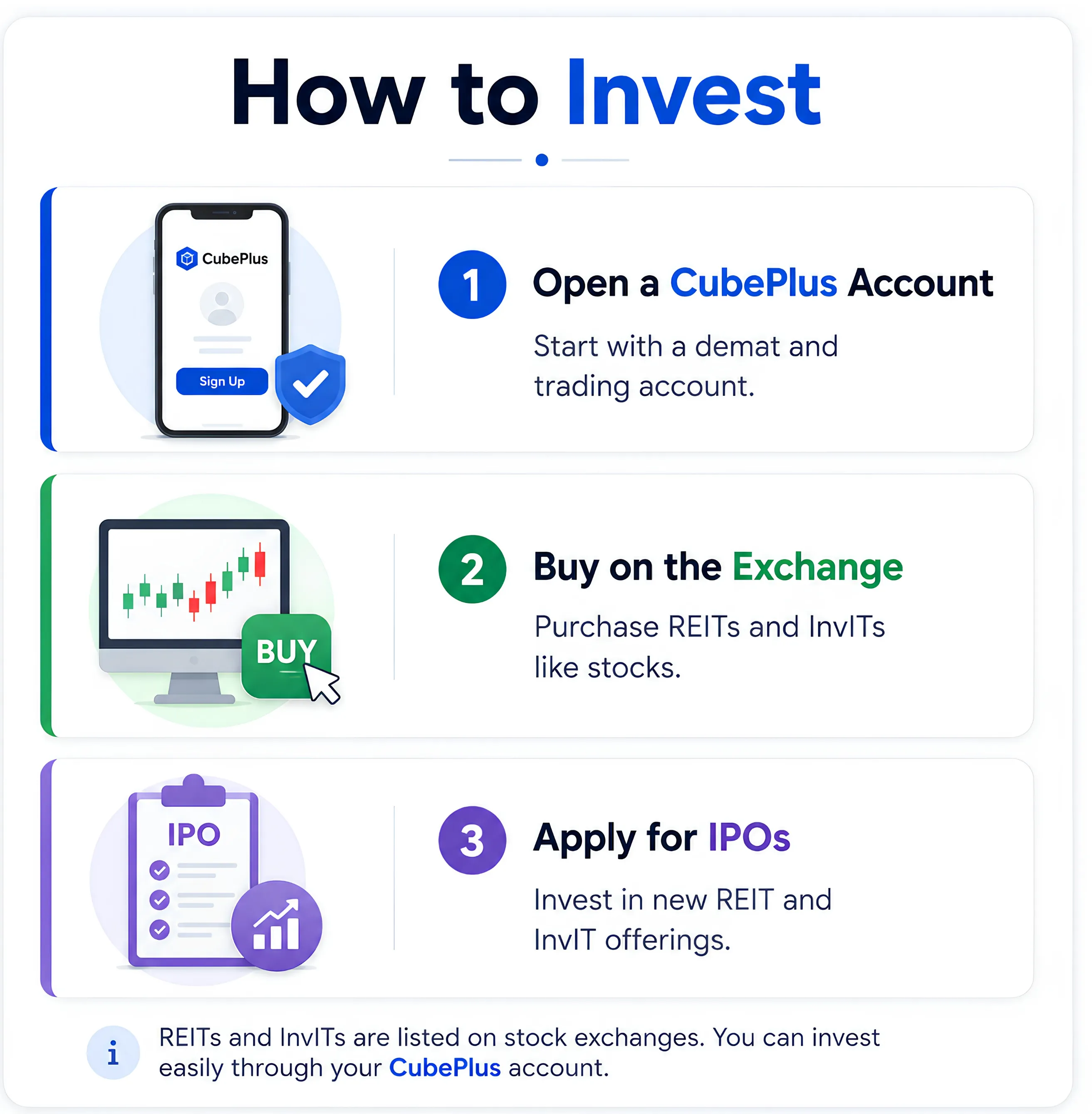
Whether you're looking at REITs, InvITs, or stocks, the first step is getting started. Sign up on Cubeplus and start your investment journey.
Disclaimer: The information provided in our blogs is for informational purposes only and should not be construed as financial, investment, or trading advice. Trading and investing in the securities market carries risk. Always conduct your own research and consult with a qualified financial advisor before making any investment decisions. Past performance is not indicative of future results. Copyrighted and original content for your trading and investing needs.
© 2026 — Tradejini. All Rights Reserved.


.webp%3Falt%3Dmedia%26token%3D95b8e400-dddc-4dbb-9213-6caa6b886a90&w=3840&q=75)
