Indian investors often find themselves choosing between two very different paths, market-linked products or real estate. In recent years, that decision has increasingly come down to two options: Real Estate Investment Trusts (REITs) and mutual funds. Both bring money from multiple investors and offer diversification, but the similarities stop there. The assets they hold, how easily they can be sold, the risks involved, and the way returns are taxed can be markedly different, making the choice one that depends heavily on individual goals and comfort with risk.
Understanding the Structures:
Mutual Funds, REITs and Real Estate Mutual Funds (FoFs)
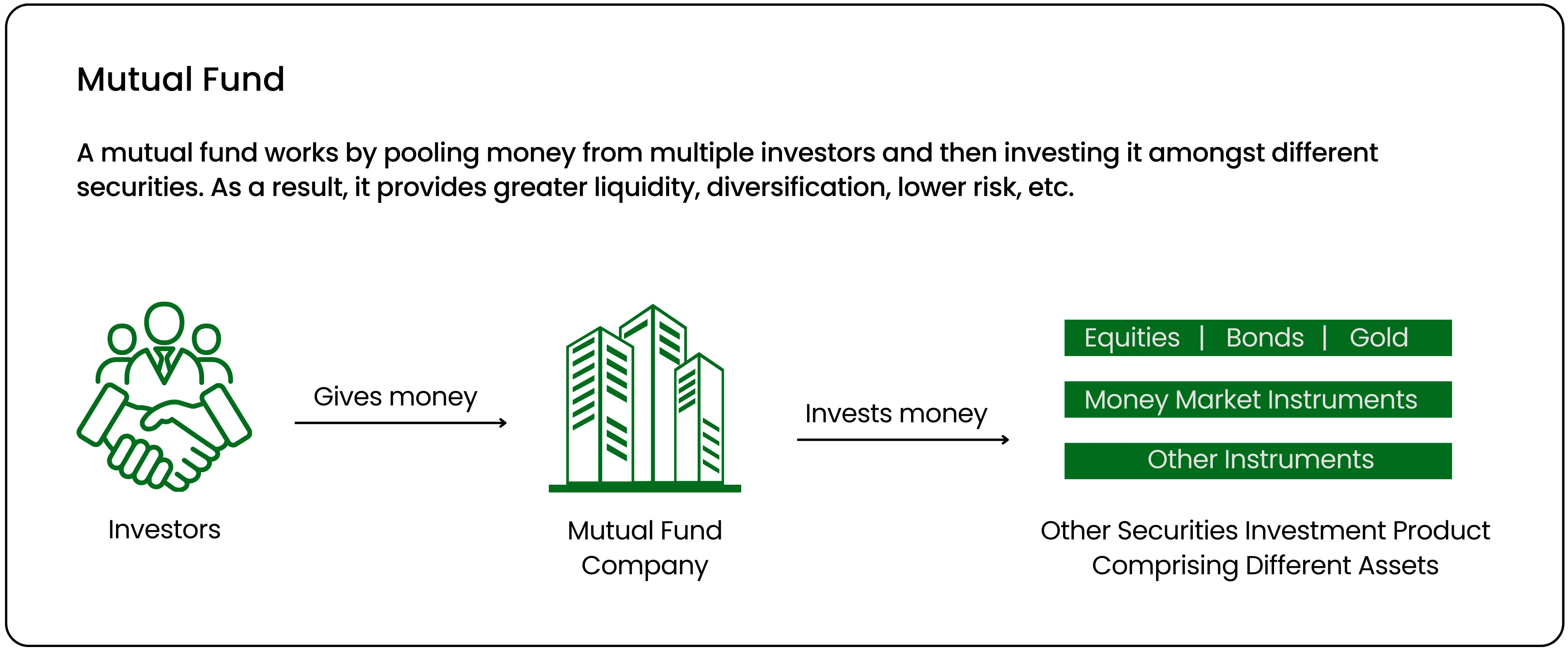
Mutual funds collect money from retail and institutional investors to invest in a broad basket of securities such as equities, bonds and money market instruments. Professional fund managers actively decide the asset allocation with the aim of balancing risk and return. Investors can redeem units at the prevailing Net Asset Value (NAV), making mutual funds one of the most liquid investment vehicles available.
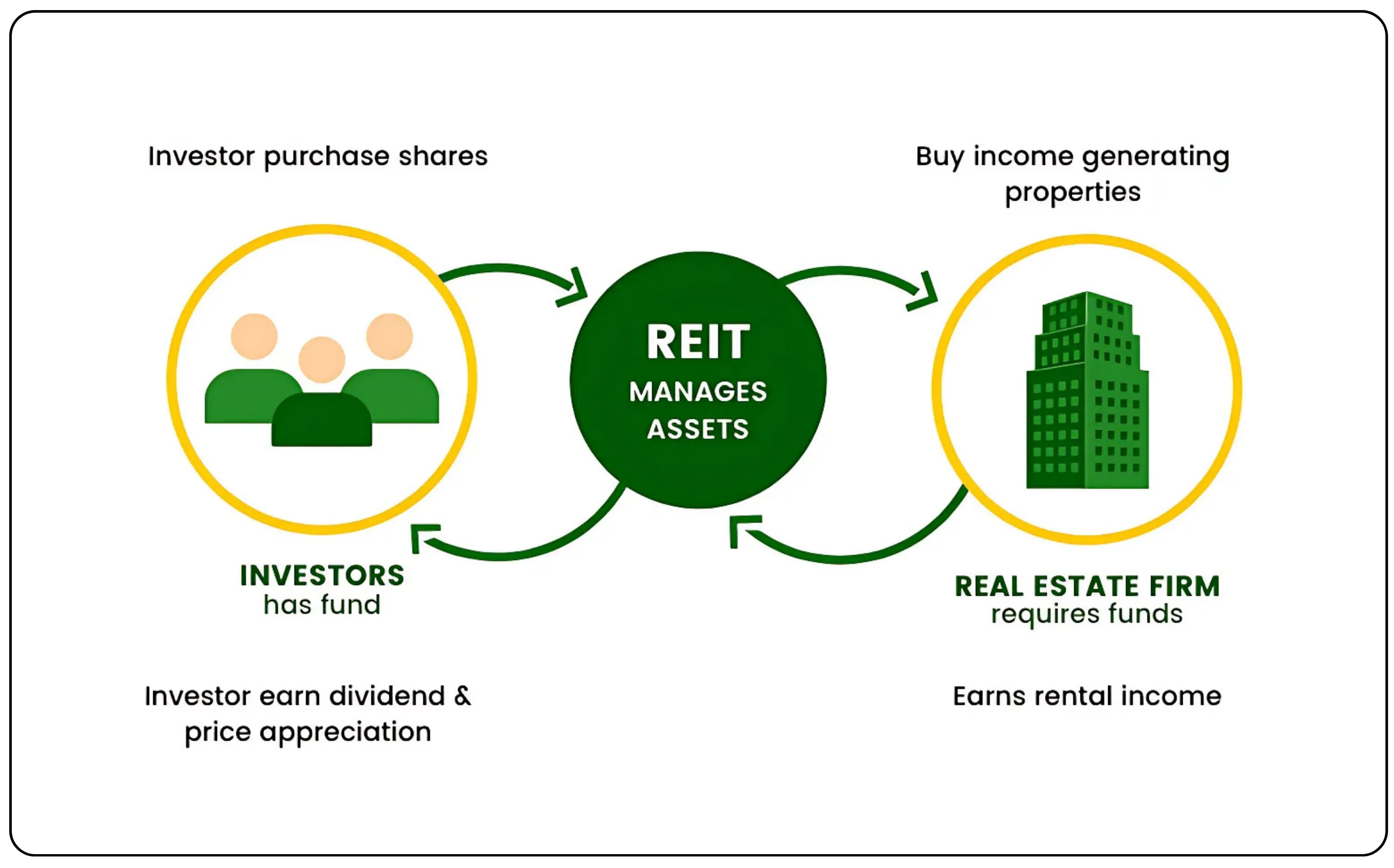
By contrast, REITs are companies or trusts that own, operate or finance income-generating real estate. In India, they are listed on stock exchanges, allowing investors to buy and sell units via a Demat account. The underlying properties are usually high-quality commercial assets, with regulations mandating that at least 80 per cent of investments go into completed and revenue-generating projects. This structure allows retail investors to gain exposure to real estate without the need to buy property outright.FoFs targeting office-led portfolios are frequently marketed as commercial real estate mutual funds.
Also read: Mutual Fund Benefits and Limitations
Risk and Return Profiles
Global Route: Equity REIT Mutual Funds
Investors seeking wider diversification can use equity REIT mutual funds (global FoFs) that own listed REITs across offices, retail, logistics and data centres.
Historical trends indicate that REITs have the potential to deliver strong returns during favourable market cycles. For instance, research from the US-based National Association of Real Estate Investment Trusts (NAREIT) shows that, in certain periods, REIT returns have outpaced those of traditional market instruments. This data, however, reflects the more mature US market; Indian REITs are relatively new, and their performance can differ due to local market conditions, regulatory frameworks and demand dynamics. Still, REIT returns remain closely linked to property market health and broader economic factors. A slowdown can hurt occupancy rates and rental yields, potentially lowering payouts and even causing capital depreciation.
Mutual funds particularly equity-oriented schemes generally offer steadier performance over the long term, thanks to diversification across sectors and companies. Skilled fund managers allocate capital in a way that reduces exposure to any single underperforming asset. While market volatility can still affect short-term returns, the likelihood of a complete capital loss is typically lower than with investments concentrated in real estate A subset—mutual funds that invest in REITs—allocated to domestic or global REITs via fund-of-funds (FoFs).
Liquidity, Accessibility & Minimums: REITs vs Real Estate Mutual Funds FoFs branded as REIT mutual funds typically allow SIPs and normal redemptions like other mutual funds, while listed REIT units trade intraday on exchanges.
REITs vs mutual funds comparison
| Feature | Mutual Funds | REITs |
|---|---|---|
| Underlying Assets | Equities, bonds, debt instruments, hybrids | Commercial real estate (≈80% completed, up to 20% under construction) |
| Liquidity | High; online redemptions typically settle in 2–3 working days |
Exchange-traded; liquidity can thin out during market stress |
| Minimum Investment | As low as ₹500 via SIP | Higher; exchange lot sizes / market price apply |
| Risk Profile | Diversified; market risk spread across many securities |
Concentrated property-cycle risk; sector / geography tenant exposure |
| Returns (typical) | ~10–15% historically (varies by category/tenure) |
~6–7% income yields; upside in property upcycles |
| Tax Benefits | No 80C under new regime; ELSS eligible only under old regime |
No 80C; dividend/rental components generally taxed at slab rates |
| Capital Gains Tax (headline) |
STCG: 20%; LTCG: 12.5% above ₹1.25 lakh (no indexation) |
STCG: 20%; LTCG: 12.5% above ₹1.25 lakh (no indexation) |
| Payouts | NAV growth (capital appreciation) + optional dividends |
Mandated distribution of at least 90% of taxable income (typically quarterly) |
Also called real estate investment trust mutual funds or mutual funds that invest in REITs.
(It simply means a mutual fund that invests your money in REITs (Real Estate Investment Trusts) on your behalf)
Also read: The First Stock I Ever Bought And What It Taught Me
Tax snapshot
| Tax Aspect | Mutual Funds | REITs |
|---|---|---|
| STCG (≤ 12 months) | Equity-oriented funds: 20% | 20% |
| LTCG (> 12 months) | ₹1.25 lakh annual exemption; gains above taxed at 12.5%; no indexation for equity funds |
₹1.25 lakh annual exemption; gains above taxed at 12.5%; no indexation |
| Debt Funds (purchased ≥ Apr 1, 2023) |
Taxed at investor’s slab rate for both short & long term; no indexation |
— |
| Dividend Income | Taxed at slab rate if SPV hasn’t paid corporate tax; may be exempt otherwise |
Rental/Interest-like Income: Taxed at slab rate; 10% TDS for resident investors |
| Distribution Requirement | — | Must distribute ≥90% of taxable income (generally quarterly) |
Note: This is a formatting of the figures you supplied (2025 rules). Tax law can change and individual situations vary, consider a tax professional for personalized advice.
Also read : Taxation on Stock Market Investments in India
Conclusion
Choosing between REITs and mutual funds ultimately comes down to investment objectives and risk appetite. Mutual funds may appeal to investors seeking long-term growth with liquidity and diversification. REITs, on the other hand, could suit those looking for exposure to real estate income streams without the operational burden of owning property. For many, a blend of both could provide balanced anchoring portfolios with mutual funds while adding REITs as a satellite allocation to capture real estate cycles. A balanced core in diversified equity/debt mutual funds with a small portion in real estate mutual funds (REIT FoFs) or direct REITs can capture property cycles without sacrificing liquidity.
Disclaimer: The information provided in our blogs is for informational purposes only and should not be construed as financial, investment, or trading advice. Trading and investing in the securities market carries risk. Always conduct your own research and consult with a qualified financial advisor before making any investment decisions. Past performance is not indicative of future results. Copyrighted and original content for your trading and investing needs.
© 2025 — Tradejini. All Rights Reserved.