Debtor days, or Days Sales Outstanding (DSO), tell you how long a company takes to collect cash from customers after making a sale on credit. In simple terms, it measures Accounts Receivable efficiency by showing how quickly a business converts its outstanding invoices into cash.
It’s a key indicator of how efficiently a company manages its cash flow and customer payments.
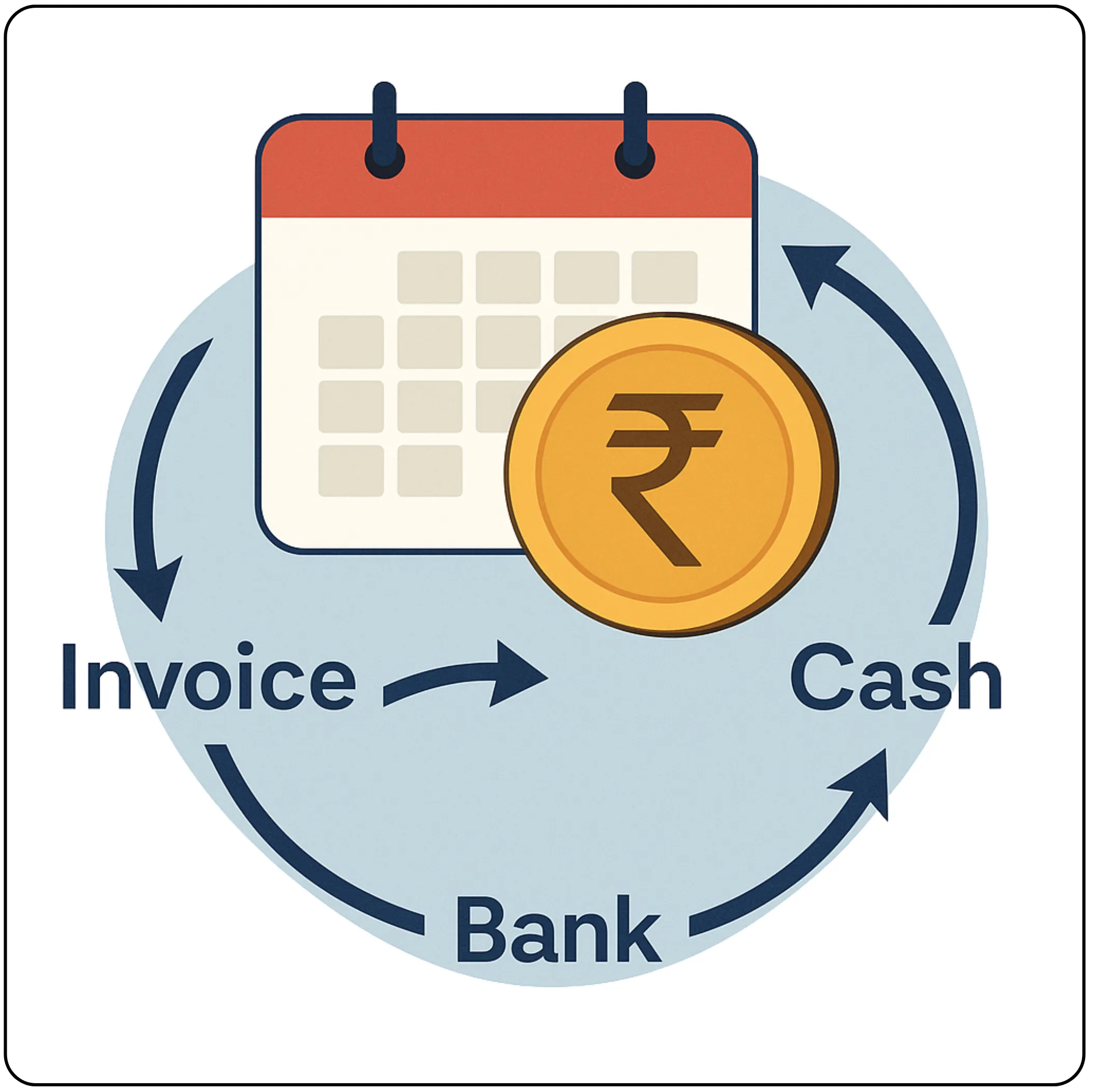
The Debtor Days formula is defined as:
Debtor Days = (Average Accounts Receivable ÷ Credit Sales) × 365.
For instance, if a company has average receivables of ₹50,000 and annual credit sales of ₹6,00,000, its debtor days would be (₹50,000 ÷ ₹6,00,000) × 365 = 30.4 days.
That means, on average, the company collects its dues in about 30 days.
Why Debtor Days Matter
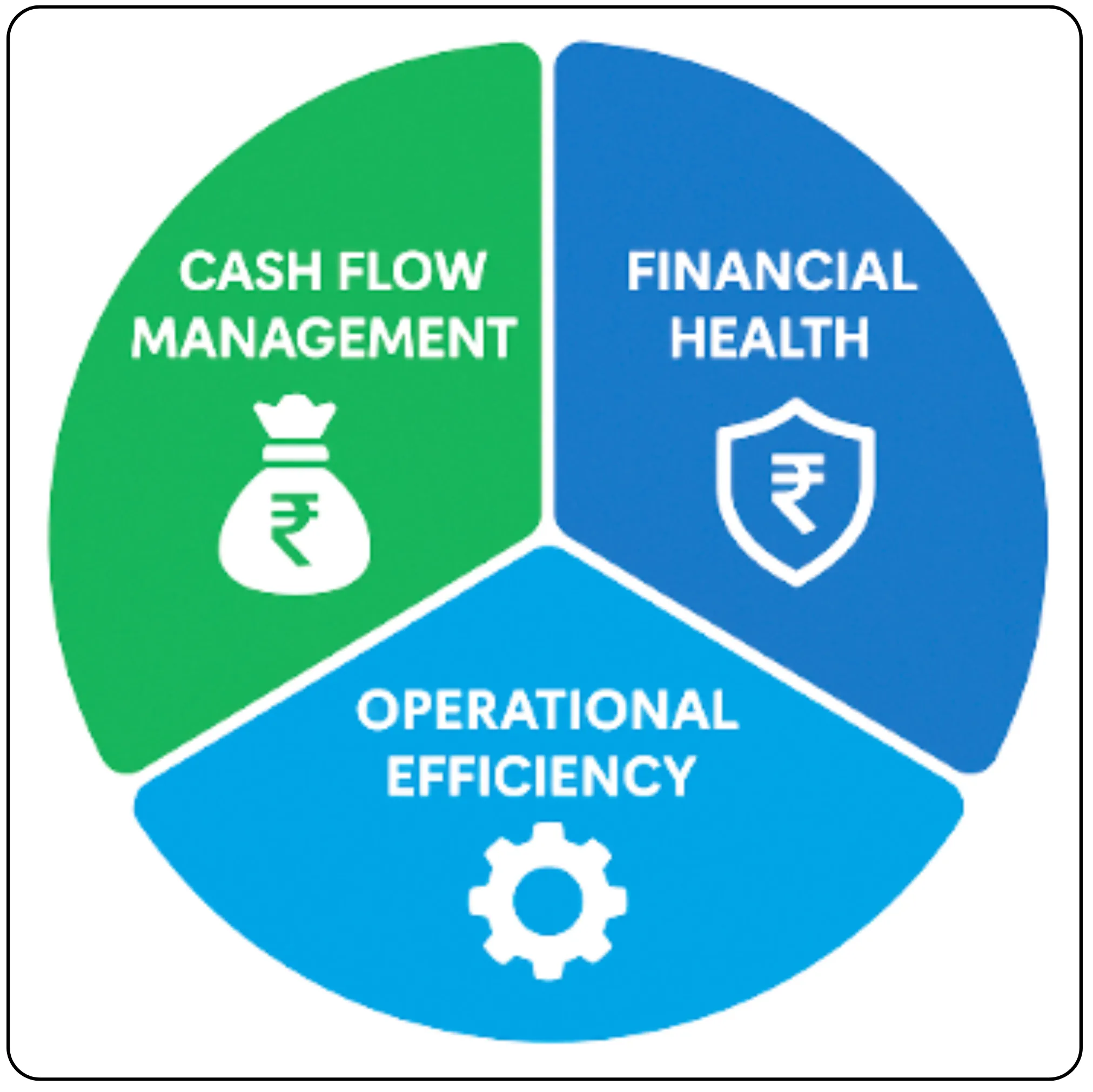
Cash Flow Management
Effective Cash Flow Management Debtor Days are critical as the faster a business collects its dues, the sooner it can pay suppliers, cover expenses, and reinvest in growth, directly impacting liquidity. In industries where cash moves quickly or where growth is rapid ,efficient collection becomes even more critical.
Financial Health Indicator
A low debtor days figure is a strong Financial Health Indicator Debtor Days, signifying tight credit control and robust financial discipline within the company. Analysts often track this to gauge a company’s creditworthiness and management quality. Businesses that consistently maintain low debtor days tend to attract lenders and partners more easily because they’re seen as reliable and stable.
Operational Efficiency
When collections happen on time, it reflects well on internal processes. Lower debtor days mean better cash management, fewer financial risks, and smoother operations. Investors often assign higher valuations to such companies, recognizing the strength of their execution and discipline.
Want to see how strong cash cycles and operational discipline power real-world growth? Read our detailed analysis: AJAX Engineering – A Strong Play on India’s Infrastructure Mechanisation
Industry Benchmarks and Context
Debtor days can’t be compared blindly across sectors—each industry runs on its own credit cycle and customer behavior.
Consider FMCG Debtor Days India: these companies move products fast and operate with short credit periods, resulting in remarkably low collection periods.
| Company | Debtor Days |
|---|---|
| Nestlé India | 4–6 days |
| Britannia Industries | 5–9 days |
| Hindustan Unilever | 13 days |
| ITC Limited | 11 days |
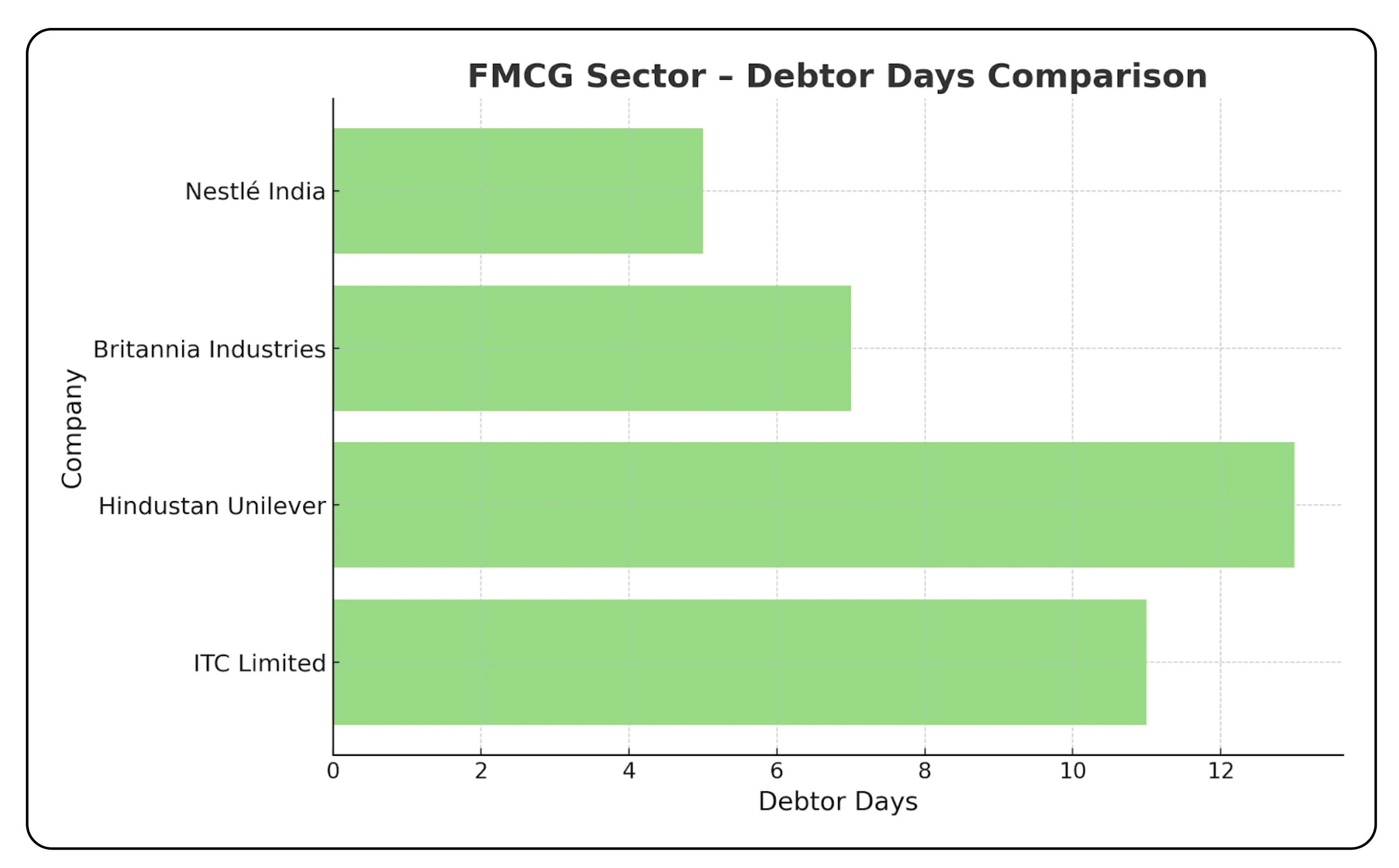
That kind of quick collection reflects both their strong distribution networks and bargaining power with retailers.
Across industries, a debtor days figure below 45 days is generally healthy. But the ideal number still depends on how the business operates—longer credit cycles are normal in sectors like infrastructure or capital goods, while consumer-facing businesses aim to keep it tight.
Top Indian companies with low debtor days
Some companies in India stand out for how efficiently they collect payments. Here’s how different sectors compare:
Banking and Financial Services
Banks operate on immediate settlements, so their debtor days are effectively zero.
For instance, HDFC Bank, ICICI Bank, State Bank of India, Kotak Mahindra Bank, Axis Bank, Life Insurance Corporation (LIC) have zero debtor days.
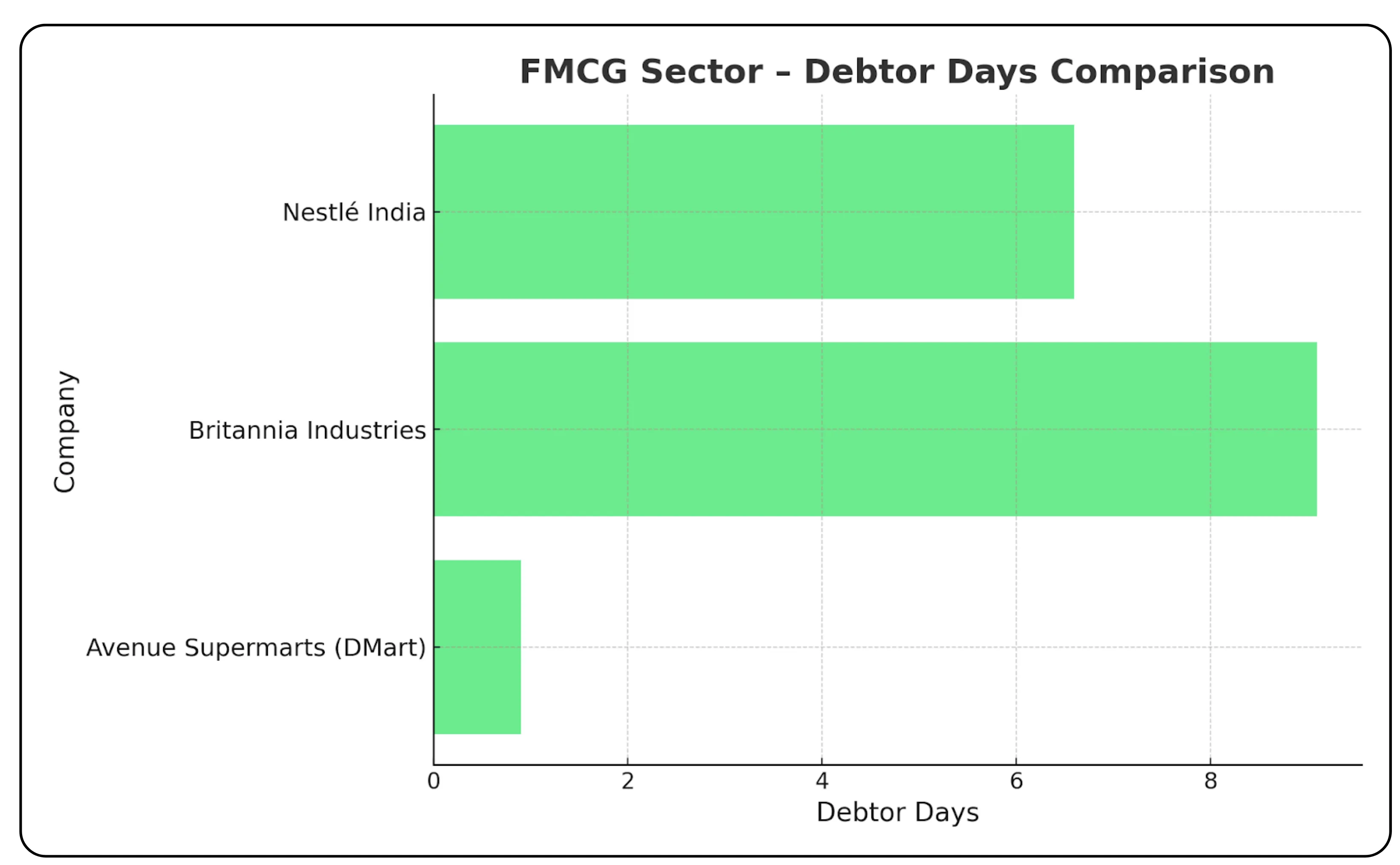
FMCG sector
Fast-moving consumer companies rely on quick inventory turnover and tight credit cycles.
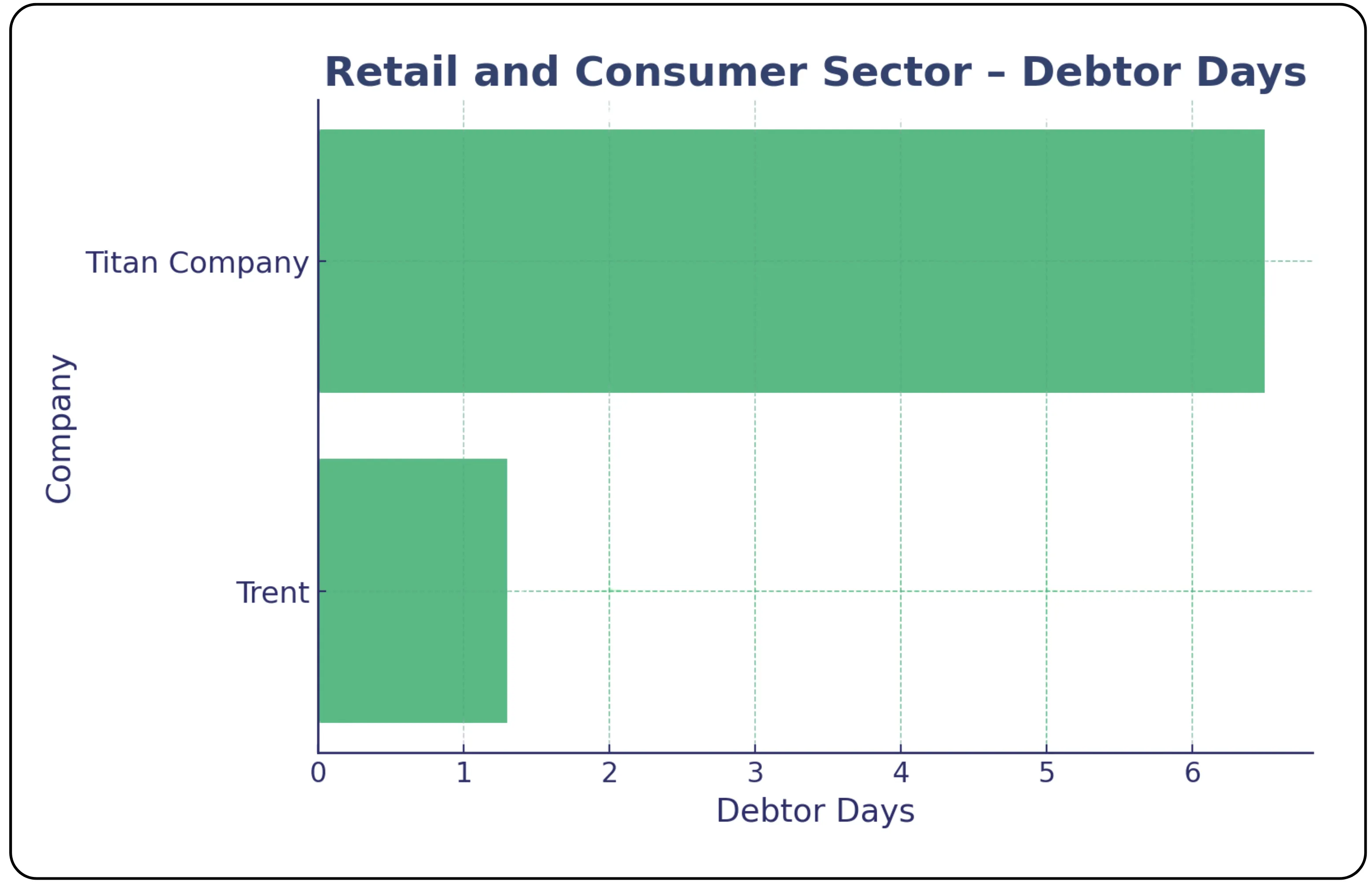
Retail and Consumer
Strong brand pull and upfront payments keep collections swift.
| Company | Debtor Days |
|---|---|
| Titan Company | 6.5 days |
| Trent | 1.3 days |
Oil and Gas
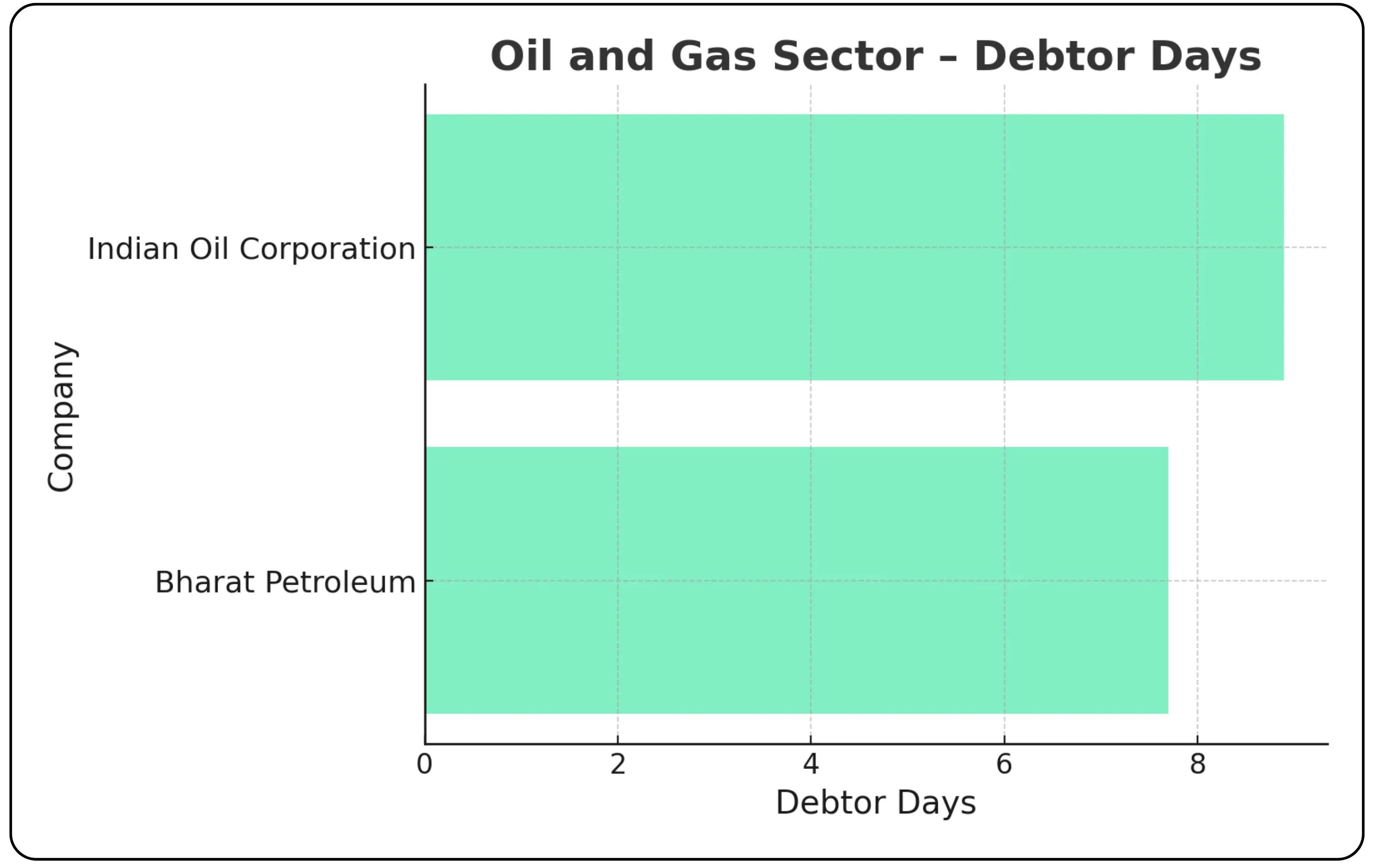
Efficient cash cycles supported by steady demand and government-linked payment structures.
| Company | Debtor Days |
|---|---|
| Indian Oil Corporation | 8.9 days |
| Bharat Petroleum | 7.7 days |
Manufacturing
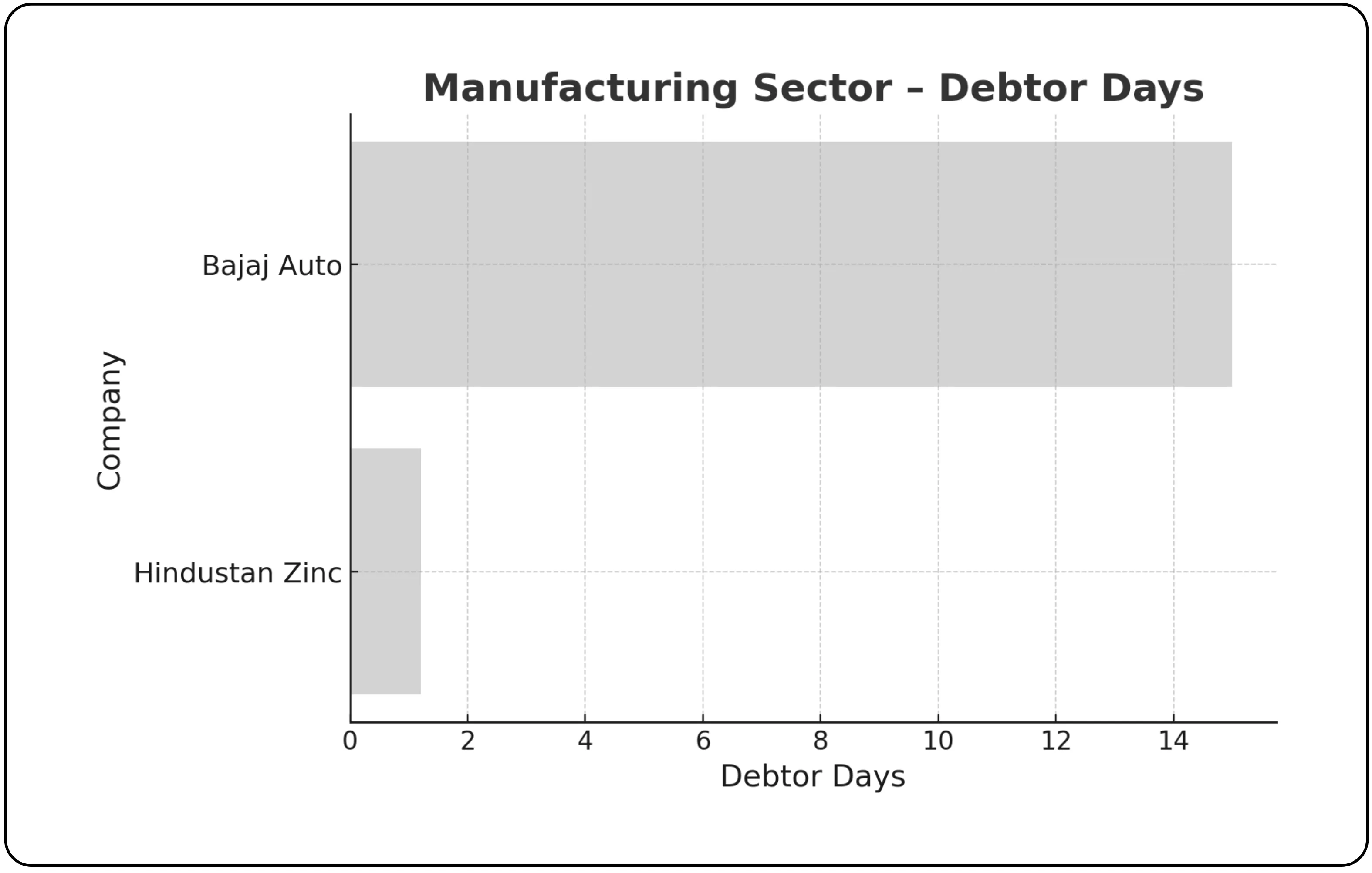
Industrial firms usually have longer payment cycles, but a few manage collections exceptionally well.
| Company | Debtor Days |
|---|---|
| Bajaj Auto | 15 days (FY25) |
| Hindustan Zinc | 1.2 days |
Information Technology
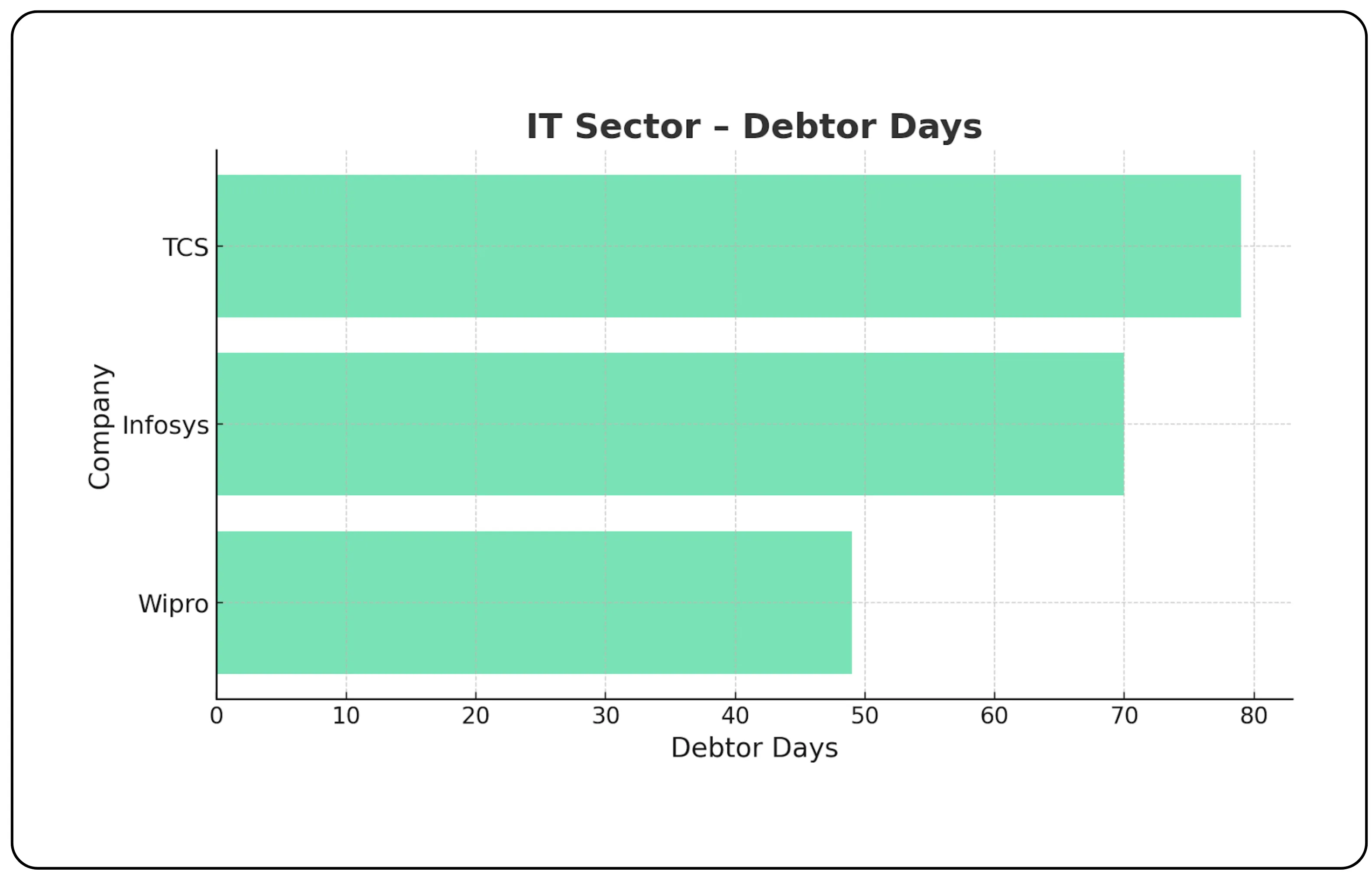
Due to longer billing and project timelines, the IT Sector Debtor Days are typically higher than consumer-facing businesses, reflecting its structural operational model.
| Company | Debtor Days |
|---|---|
| TCS | 74–84 days |
| Infosys | 62–78 days |
| Wipro | 48–50 days |
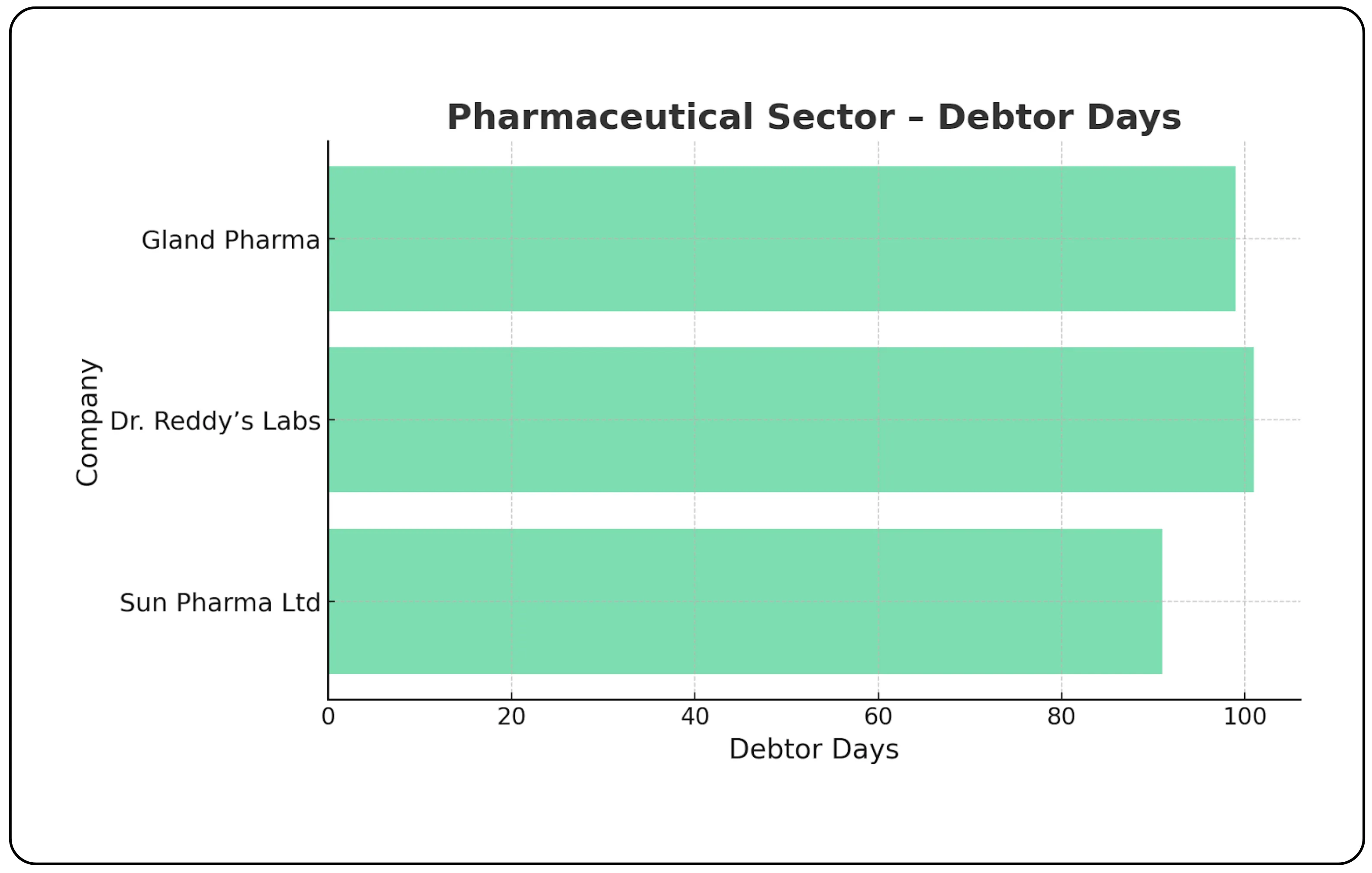
Pharmaceuticals
Credit cycles here are generally long due to global client exposure and regulatory layers.
| Company | Debtor Days |
|---|---|
| Gland Pharma | 99 days (FY25) |
| Dr. Reddy’s Labs | 101 days |
| Sun Pharma Ltd | 91 days |
Curious how Indian manufacturers are gearing up for their next big leap? Read our detailed analysis: Jyoti CNC – Poised for the Next Growth Phase
Sector-Wise Analysis
FMCG – Consistent efficiency
The FMCG sector stands out for its near-flawless cash cycle. Nestlé India, for instance, has kept debtor days in the 3–5 range for over a decade. That kind of consistency signals strong credit discipline and steady demand, which often translates into higher valuations and P/E expansion.
IT services – Structural challenges
The IT sector naturally operates with longer collection periods. Projects are billed in phases rather than all at once, large clients often negotiate extended payment terms, and many contracts are milestone-based or fixed-price, which delays cash inflows. Even well-managed companies like TCS and Infosys carry debtor days above 60, reflecting the industry’s billing model rather than inefficiency.
Automobile – Controlled and disciplined
Auto manufacturers have kept collections tight through dealer-driven models and advance payments. Bajaj Auto, for example, reported debtor days of just 15 in FY25—a notable improvement from earlier years. This discipline in managing receivables contributes directly to stronger cash flows and reduced financing costs.
Strategic implications for investors
Valuation impact
Companies that maintain low debtor days often trade at higher valuations. The reason is simple — faster collections mean lower financial risk, more predictable cash flows, and less money locked up in working capital. It also reflects strong management discipline, which investors tend to reward with valuation premiums.
Investment screening
Debtor days deserve a spot on every investor’s checklist. When comparing companies in the same sector, this metric can reveal who manages credit and collections more efficiently. It’s also a useful proxy for judging management quality, cash flow sustainability, and overall working capital discipline. Companies that keep debtor days consistently low often signal sharper execution and financial control.
Red flags
A steady rise in debtor days is something investors shouldn’t ignore. It can hint at slipping credit discipline, weaker customer profiles, or inefficient collection systems. In some cases, it may even signal looming cash flow problems if receivables start piling up faster than sales. Tracking this trend over multiple quarters often gives early warnings about operational stress.
Debtor Days summarised
Debtor days are one of those simple yet revealing metrics that tell you how well a company runs its operations and manages its cash. Across sectors, the differences are stark — FMCG players lead with rapid cash conversion, while banks naturally post zero debtor days because of instant settlements.
For investors, this metric is more than an accounting ratio. It’s a window into management discipline, customer quality, and the overall health of a company’s cash cycle. Businesses that consistently keep debtor days low tend to handle growth better, rely less on external funding, and generate stronger free cash flows, traits that often translate into long-term value creation.
In an environment where liquidity and working capital efficiency can make or break performance, debtor days remain one of the most practical ways to spot companies that truly run tight ships.
Turn research into action and explore smarter investing opportunities with CubePlus.
Disclaimer: The information provided in our blogs is for informational purposes only and should not be construed as financial, investment, or trading advice. Trading and investing in the securities market carries risk. Always conduct your own research and consult with a qualified financial advisor before making any investment decisions. Past performance is not indicative of future results. Copyrighted and original content for your trading and investing needs.
© 2025 — Tradejini. All Rights Reserved.
.webp%3Falt%3Dmedia%26token%3D0ead9799-20bc-4d1e-ae8f-d75ab18921b5&w=3840&q=75)