For investors, the quarterly results season is often described as an exciting time. Stock prices move sharply, volumes surge, and headlines dominate the financial pages. Yet beneath the noise, quarterly results are less about drama and more about discipline. The real challenge is not reacting to numbers, but interpreting what they actually say about a company’s financial health, expectations, and financial future.
Every financial year is divided into four quarters, and during earnings season, most publicly traded companies announce earnings, release quarterly reports, and provide management commentary. These earnings announcements can affect share prices dramatically. But market reactions are not always intuitive. A company may report strong sales growth and rising profit, yet see its stock fall. Another may post weak results and still attract buyers.
Understanding how to invest during quarterly results requires separating information from emotion, price action from performance, and short-term volatility from long-run value creation.
Earnings Season and Market Volatility
Earnings season refers to the period when companies report their quarterly earnings, typically occurring in January, April, July, and October. During this time, earnings reports become one of the largest catalysts for stock market movement. Elevated volatility, higher trading activity, and sharp price swings are common.
What makes earnings season unique is not just the release of numbers, but the collision between expectations and reality. Wall Street analysts and market participants build forecasts weeks in advance, forming consensus estimates for revenue, net income, and earnings per share. When companies report results, markets react less to the absolute numbers and more to how those numbers compare with expectations.
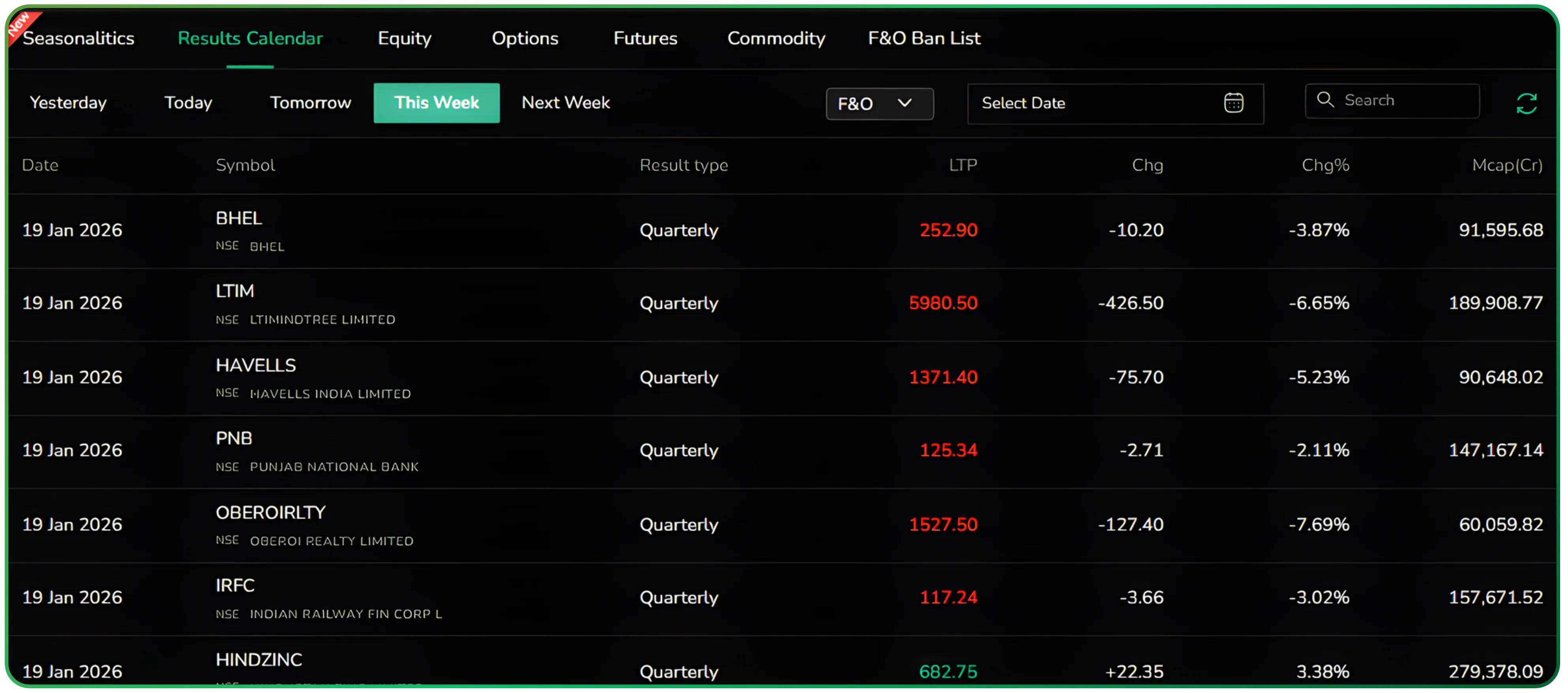
Results Calendar on CubePlus showing companies reporting quarterly results and immediate market reactions.
This is why earnings season often feels unpredictable. Stock prices respond to surprises, not facts. When a company improves sales but fails to meet consensus estimates, investors may rush to sell. Conversely, modest results that exceed pessimistic forecasts can push prices higher.
For investors, this period demands restraint. Earnings season is not about chasing momentum blindly, but about understanding what the market expected, what the company delivered, and what management signals about the next quarter.
Reading an Earnings Report
An earnings report is more than a summary of revenue and profit for the quarter. It is a structured financial document that reflects how a business performed, how efficiently it operated, and how prepared it is for future challenges.
Most earnings reports include:
- Revenue and sales growth
- Net income and profit margins
- Earnings per share
- Operating expenses and costs
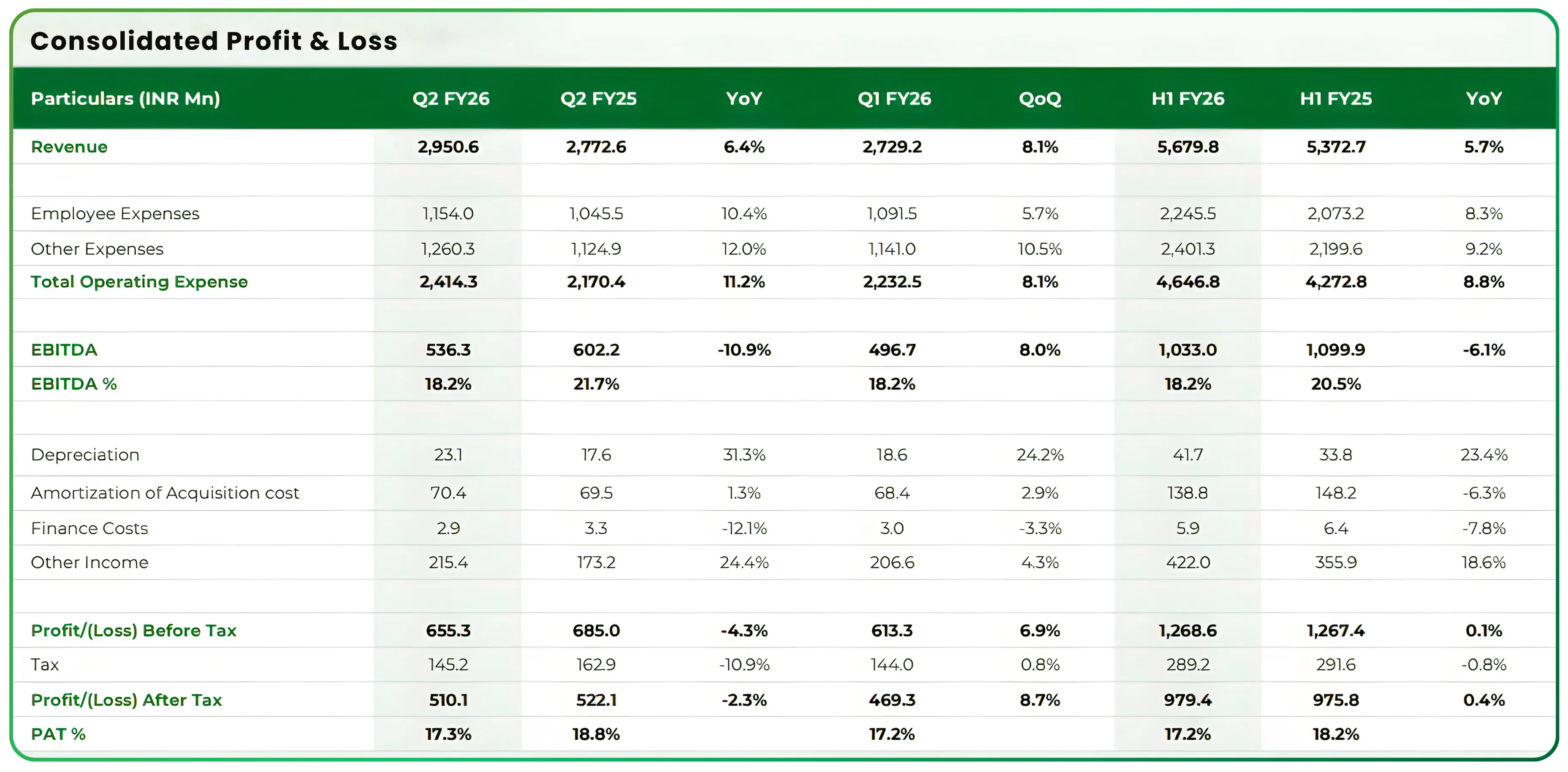
- Balance sheet highlights
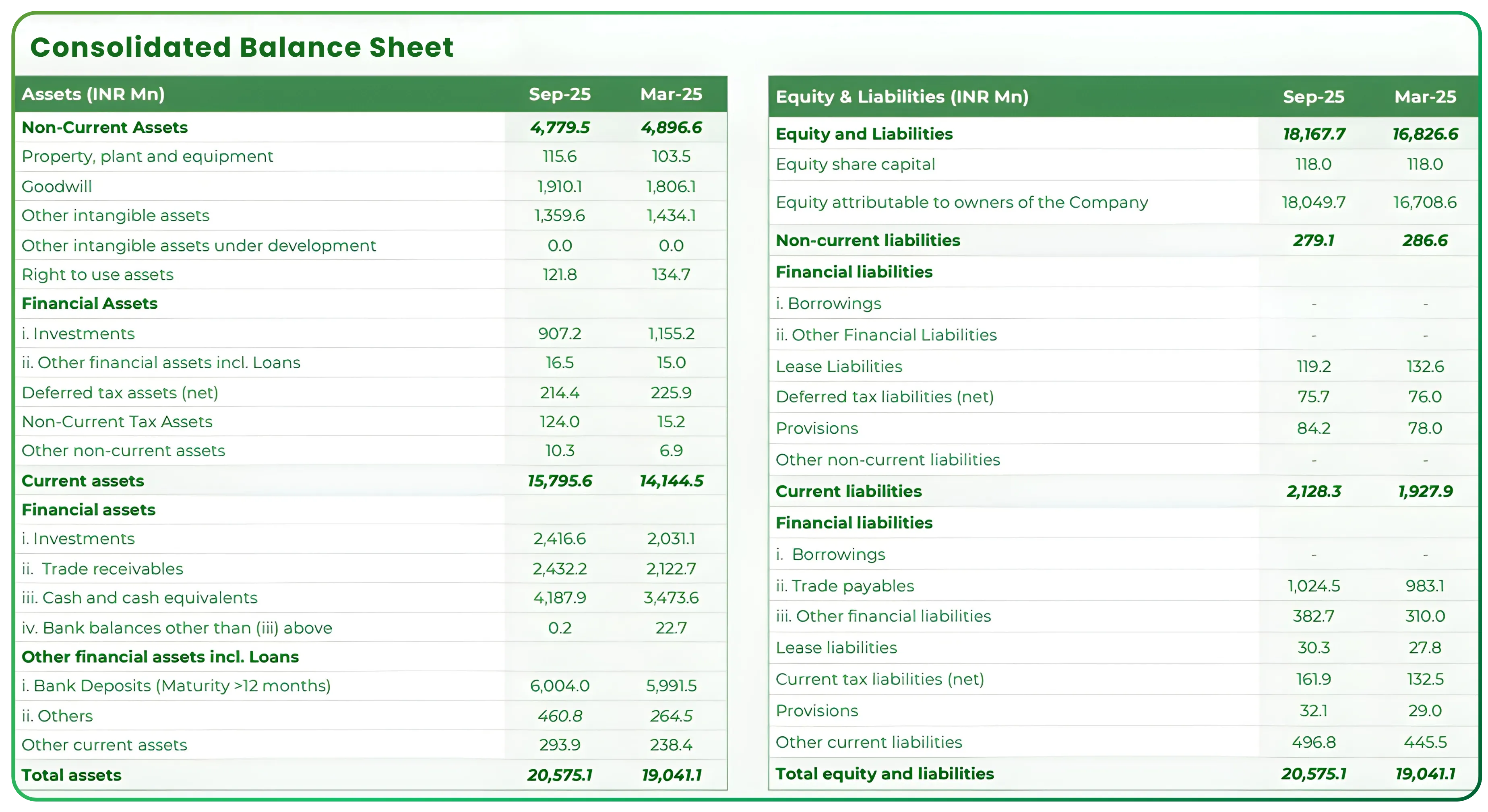
- Cash flow statement
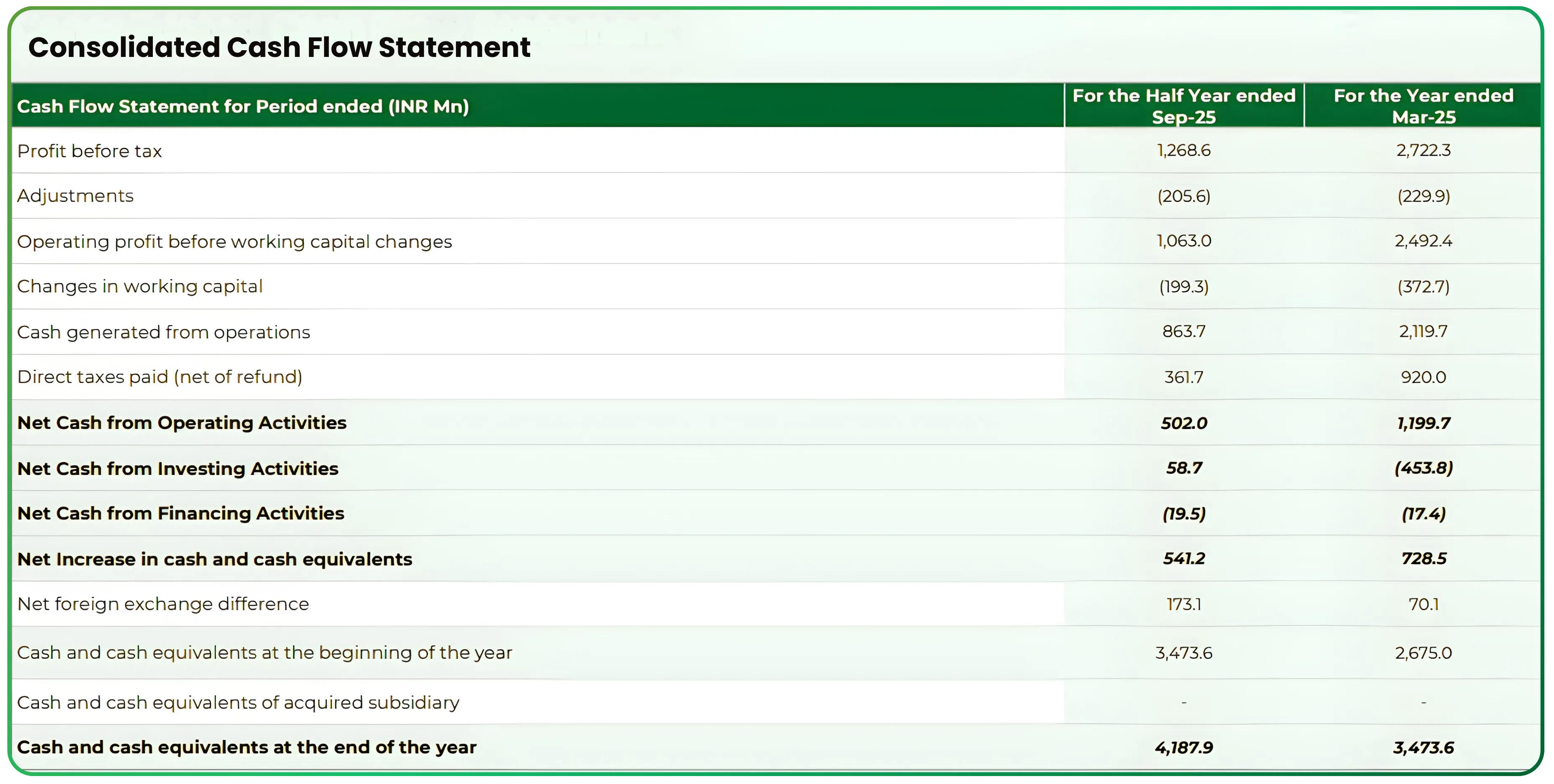
- Commentary on debt, legal proceedings, and outstanding lawsuits
- Management guidance for future quarters
Investors often focus on headline numbers, but experienced market participants know that deeper signals matter more. A company can report positive net income while showing weak cash flow from operating activities. In such cases, profits may not be translating into actual cash, raising concerns about sustainability.
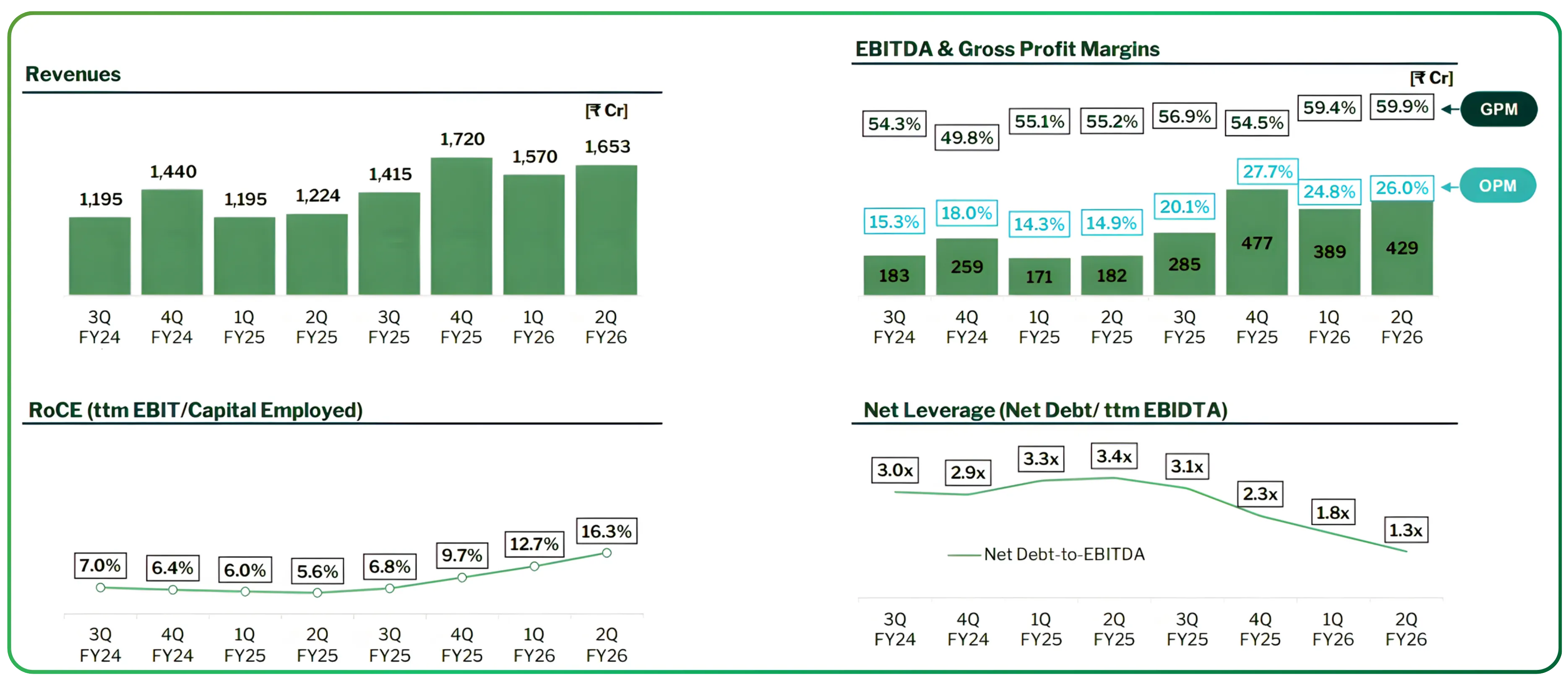
Similarly, improving gross and operating margins often indicate strong pricing power and effective cost control. These trends are often more important than a single quarter’s earnings.
For readers interested in fundamentals, see our analysis of Zuari Industries Limited, viewed through assets and capital returns.
Interpreting Quarterly Earnings
Quarterly earnings are snapshots, not verdicts. They reflect how a company performed in a specific quarter, influenced by seasonality, industry cycles, and short-term factors. Treating one quarter as definitive can lead to poor investment decisions.
Analysts use forecasting models, management guidance, and historical data to estimate earnings per share. These EPS estimates form the basis of consensus estimates. When companies hit or miss these estimates, stock prices react accordingly.
However, investors should look beyond consensus numbers. A company may miss earnings targets due to temporary costs, one-time expenses, or accounting adjustments. Conversely, a company may beat estimates while cutting future guidance, which can trigger a sharp fall in share price.
What matters most is whether the business is strengthening or weakening over time. Consistent revenue growth, stable margins, improving cash flows, and manageable debt levels often matter more than short-term earnings surprises.
What Quarterly Reports Reveal
Quarterly reports provide context that raw earnings numbers cannot. They help investors assess whether the company performed well relative to its own past performance and industry peers.
A careful reading of quarterly reports allows investors to:
- Track trends in revenue, income, and expenses
- Monitor changes in debt and balance sheet strength
- Identify rising costs or margin pressure
- Evaluate dividend sustainability
- Understand capital allocation decisions
Quarterly reports also highlight risks that are easy to overlook during earnings announcements. Legal proceedings, regulatory challenges, rising interest costs, or delayed payments can quietly affect long-term performance.
For long-term investing, quarterly reports are tools for research, not triggers for impulsive trading.
Impact of Earnings Announcements
Earnings announcements often lead to sharp movements in stock prices because they compress months of expectations into a single moment. Price action during these announcements reflects how investors reassess risk and reward.
Several patterns are common:
- Strong quarterly results can push stock prices higher, especially if guidance is raised.
- Weak results often lead to a fall in share price, particularly if expectations were high.
- Stocks can decline even when earnings meet targets, if future guidance disappoints.
- Volatility typically spikes just before earnings announcements and drops immediately afterward.
This drop in volatility, known as volatility crush, has important implications for traders using options. Implied volatility peaks before earnings and collapses once uncertainty is resolved, eroding the value of purchased options even if price moves are significant.
Understanding these dynamics helps investors avoid emotional decisions driven by short-term price fluctuations.
Investment Decisions During Earnings
Making sound investment decisions during earnings season requires clarity about one’s strategy. Long-term investors and short-term traders approach quarterly results very differently.
For investors focused on the long run, quarterly earnings should be used to reassess business quality. Questions to ask include:
- Is revenue growth steady or slowing?
- Are margins improving or under pressure?
- Is net income supported by cash flow?
- Is debt increasing or decreasing?
- Does management commentary inspire confidence?
For traders, earnings season offers opportunities driven by volatility. Advanced traders may use strategies such as long straddles, which involve buying both a call and a put option when expecting large price movement without certainty about direction. Others may hedge downside risk by purchasing put options on stocks they already own.
Regardless of approach, managing risk is critical. Concentrating too much money in a single stock around earnings increases exposure to unexpected outcomes.
Quarterly Results and Expectations
Quarterly results influence stock prices not because they reveal the past, but because they shape expectations for the future. Management outlook often matters more than the numbers themselves.
Weak guidance can cause stock prices to plummet even after a strong quarter. Conversely, confident commentary about the next quarter or financial year can support valuations despite temporary weakness.
Experienced investors often wait for the market’s initial reaction before acting. The “day-two” move after earnings allows price action to settle and provides confirmation of direction. This approach reduces the risk of reacting to emotional or exaggerated moves immediately after results.
A fundamentally strong company experiencing a temporary price dip due to an earnings miss may present a buying opportunity, provided long-term prospects remain intact.
For readers interested in asset-heavy businesses, see our analysis of Seamec Ltd’s offshore services operations.
Individual Stocks and Risk
Not all individual stocks behave the same way during earnings season. Large-cap companies often provide better risk-reward balance due to stable businesses, diversified revenue streams, and predictable cash flows. Smaller companies may experience sharper price swings due to limited analyst coverage and higher uncertainty.
Bellwether companies are particularly important during earnings season. Their performance is often seen as representative of broader industry or market health. Strong results from such companies can improve investor confidence, while weak results may dampen sentiment across sectors.
Reviewing how a stock reacted to previous earnings announcements can offer insight into market behavior. Some stocks consistently sell off after earnings due to high expectations, while others rally steadily as confidence builds over time.
Managing Expectations and Risk
Managing expectations is the most underappreciated skill during earnings season. High expectations create vulnerability. Even strong performance can disappoint when forecasts are aggressive.
Investors should:
- Avoid chasing stocks purely on earnings excitement
- Use stop-limit orders to manage downside risk
- Diversify across sectors and industries
- Focus on trends rather than single-quarter outcomes
Quarterly results are tools to measure progress, not verdicts on a company’s worth. Overreacting to one quarter often leads to buying at higher prices and selling at lower prices.
What Quarterly Results Do and Do Not Tell You
Quarterly results tell investors how a company performed in a specific period. They do not predict stock prices with certainty. Markets are forward-looking, and prices reflect expectations about future performance, not just current results.
Quarterly earnings do not capture:
- Long-term competitive advantages
- Industry structure changes
- Management quality over time
- Macroeconomic shifts
- Structural cost advantages
Used correctly, quarterly reports help investors track progress, identify risks early, and reassess assumptions. Used incorrectly, they become sources of noise and emotional decision-making.
The Long Run Perspective
In the long run, wealth creation in the stock market depends on business performance, not quarterly surprises. Companies that consistently grow revenue, manage costs, generate cash, and allocate capital wisely tend to reward patient investors.
Earnings season will always bring volatility. That volatility creates opportunity for those who understand it and danger for those who react without preparation.
Knowing how to invest during quarterly results is ultimately about discipline. It is about reading beyond the numbers, respecting risk, managing expectations, and staying focused on the business rather than the ticker.
Explore full company financials and trade with clarity on CubePlus.
Disclaimer: The information provided in our blogs is for informational purposes only and should not be construed as financial, investment, or trading advice. Trading and investing in the securities market carries risk. Always conduct your own research and consult with a qualified financial advisor before making any investment decisions. Past performance is not indicative of future results. Copyrighted and original content for your trading and investing needs.
© 2026 — Tradejini. All Rights Reserved.
.webp%3Falt%3Dmedia%26token%3D0ead9799-20bc-4d1e-ae8f-d75ab18921b5&w=3840&q=75)