Trading rarely punishes a bad idea as much as it punishes a bad exit. Most trades fail not because the entry was poor, but because the exit was never defined. A bracket order helps you solve that problem. Here’s how it works on CubePlus for both equities and options
What Is a Bracket Order in Trading?
A bracket order places three legs at once:
- Your main buy or sell order
- A target order to book profit
- A stop loss order to protect against loss Optionally, you can add a trailing stop loss, which shifts automatically as the price moves in your favour.
When you place a limit order in CubePlus and the order gets executed, the platform automatically sets both a stop loss and a Target order for you. If the target is reached, the stop loss is cancelled on its own. You don’t have to keep watching the screen or worry about managing the exits.
How a Bracket Order Works in Intraday Trading (Equity Example)
Here’s the thing: in equities, price movement is straightforward. You risk ₹x to make ₹y based on the chart. Let’s take Adani ports, which was trading at ₹1510.00.
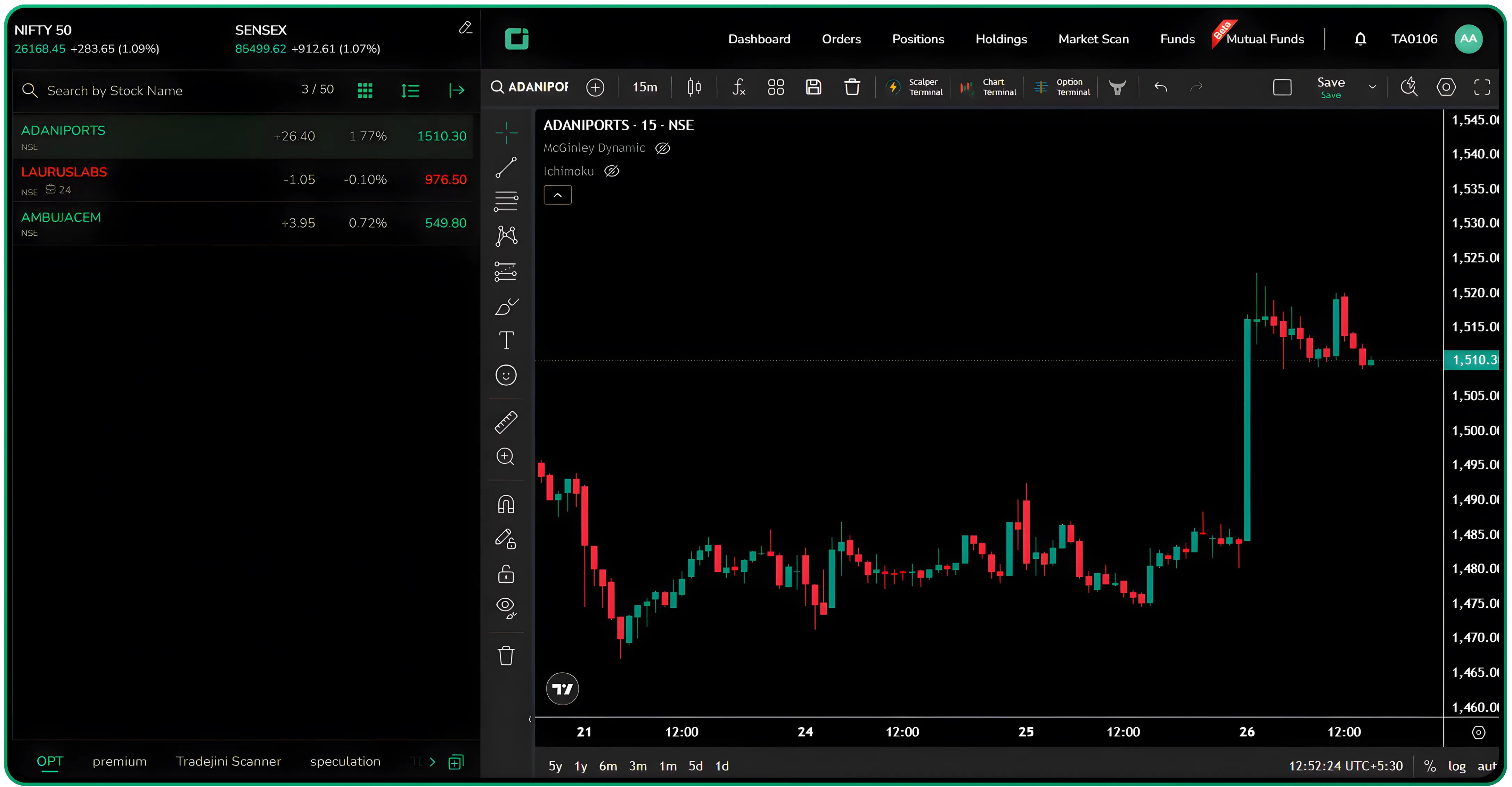
Say you want to buy at ₹1,510 and hold the position (Long). If you believe the price can move up to ₹1,525, that becomes your target. At the same time, you want to protect yourself if the trade goes wrong, so you fix your stop loss at ₹1,503. With these levels in mind, you simply place a Bracket Order, as shown in the image below.
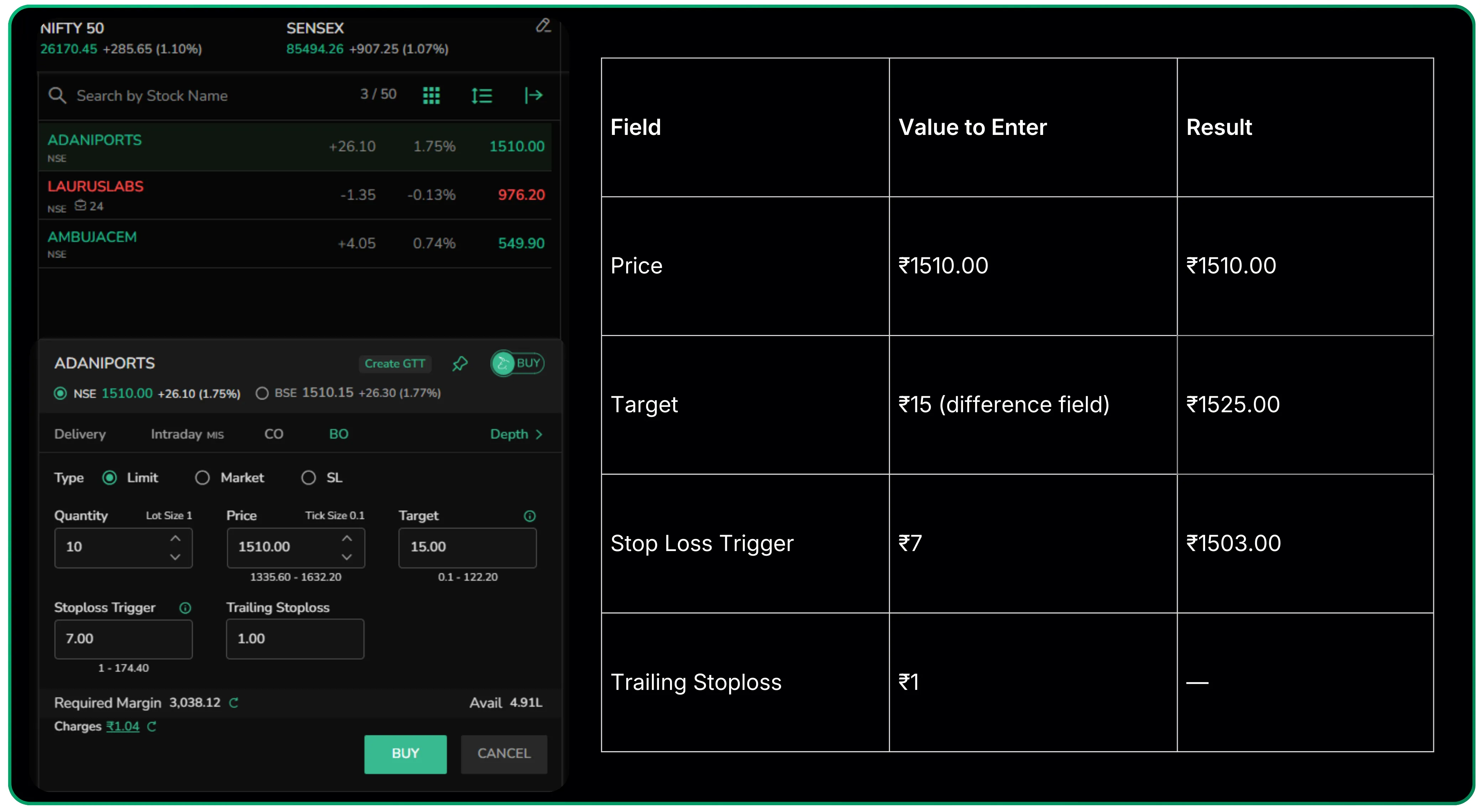
Bracket order in trading with stop loss and target order for intraday equity
In CubePlus, the target and stop-loss fields don’t ask for the final exit prices. Instead, you enter how far they are from your entry price. That’s why, instead of typing the actual exit prices, you simply enter 15 for the target and 7 for the stop loss. The platform calculates the rest automatically
| Field | Value to Enter | Result |
|---|---|---|
| Price | ₹1510.00 | ₹1510.00 |
| Target | ₹15 (difference field) | ₹1525.00 |
| Stop Loss Trigger | ₹7 | ₹1503.00 |
| Trailing Stoploss | ₹1 | – |
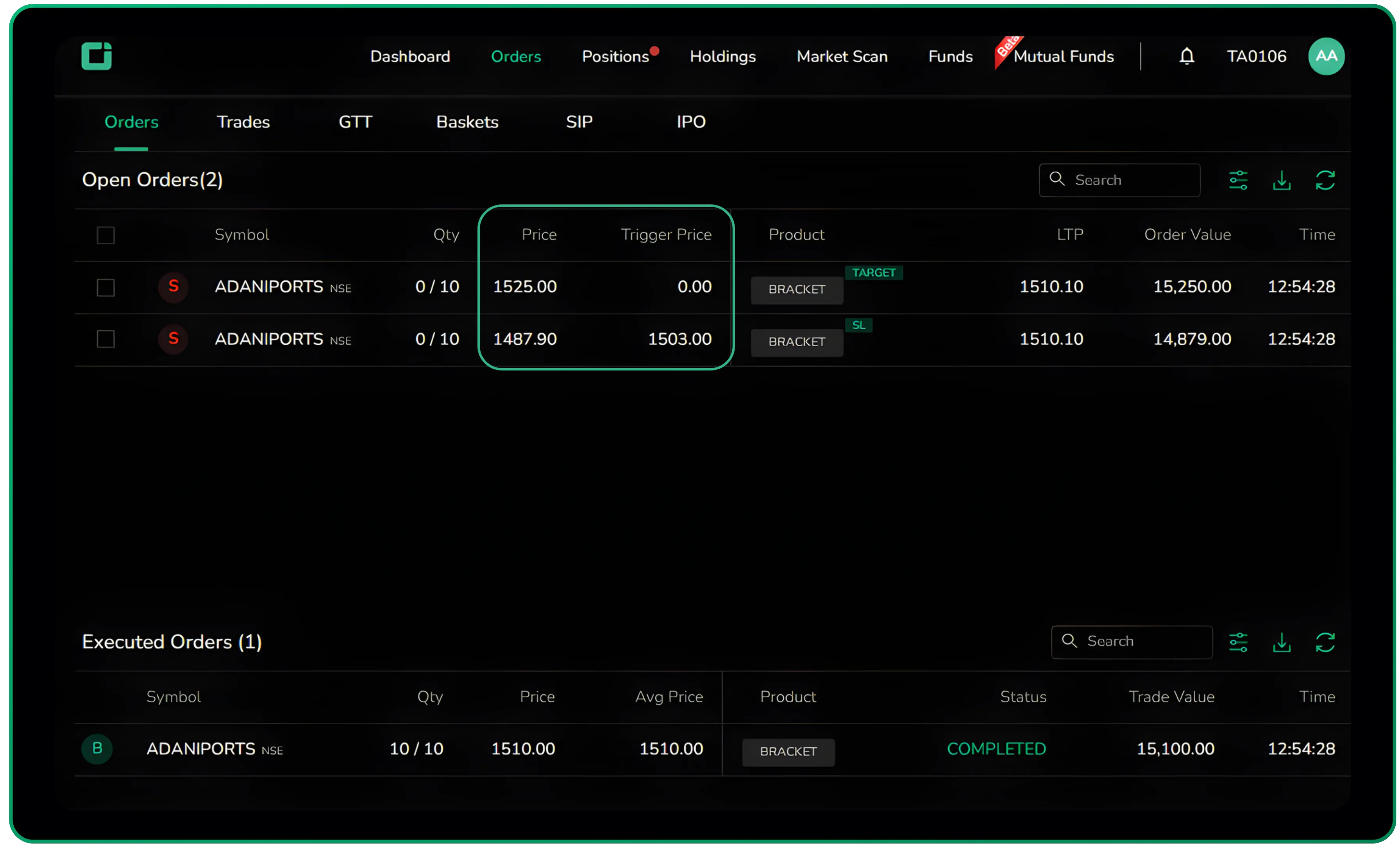
In a bracket order, the trailing stop loss is not mandatory. You can place a BO with only a stop loss and target, and it will work perfectly. But if you choose to add it, the trailing stop loss becomes a smart assistant that keeps adjusting the stop loss automatically as the price moves in your favour.
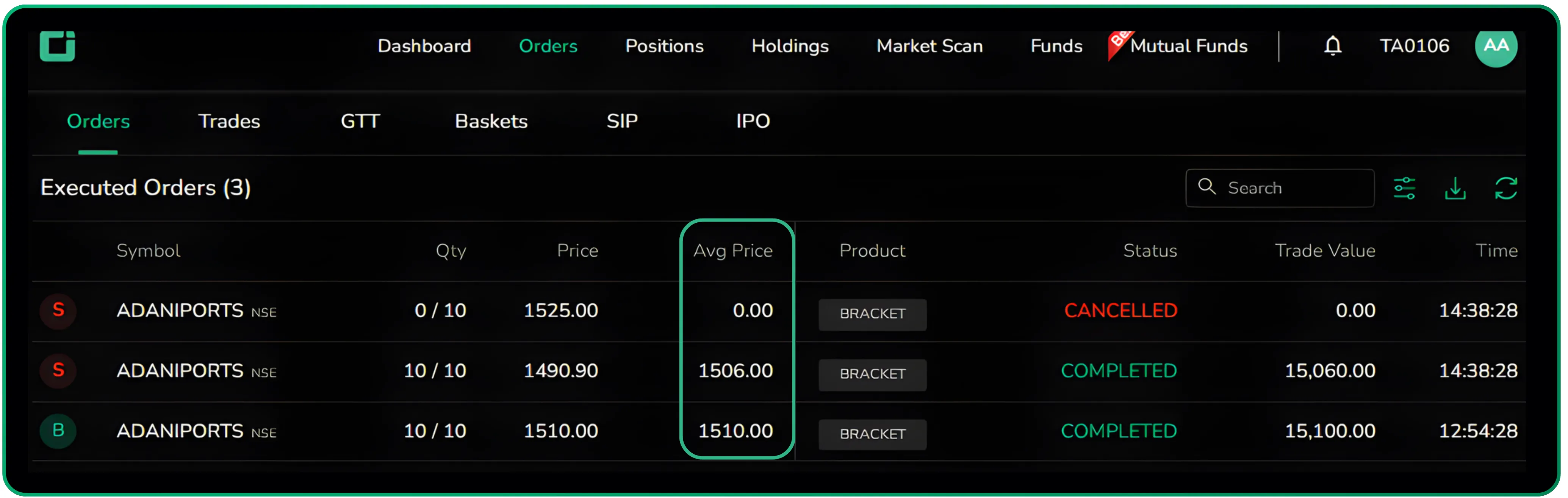
How the Trailing Stop Loss Automatically Moved Up in Adani Ports
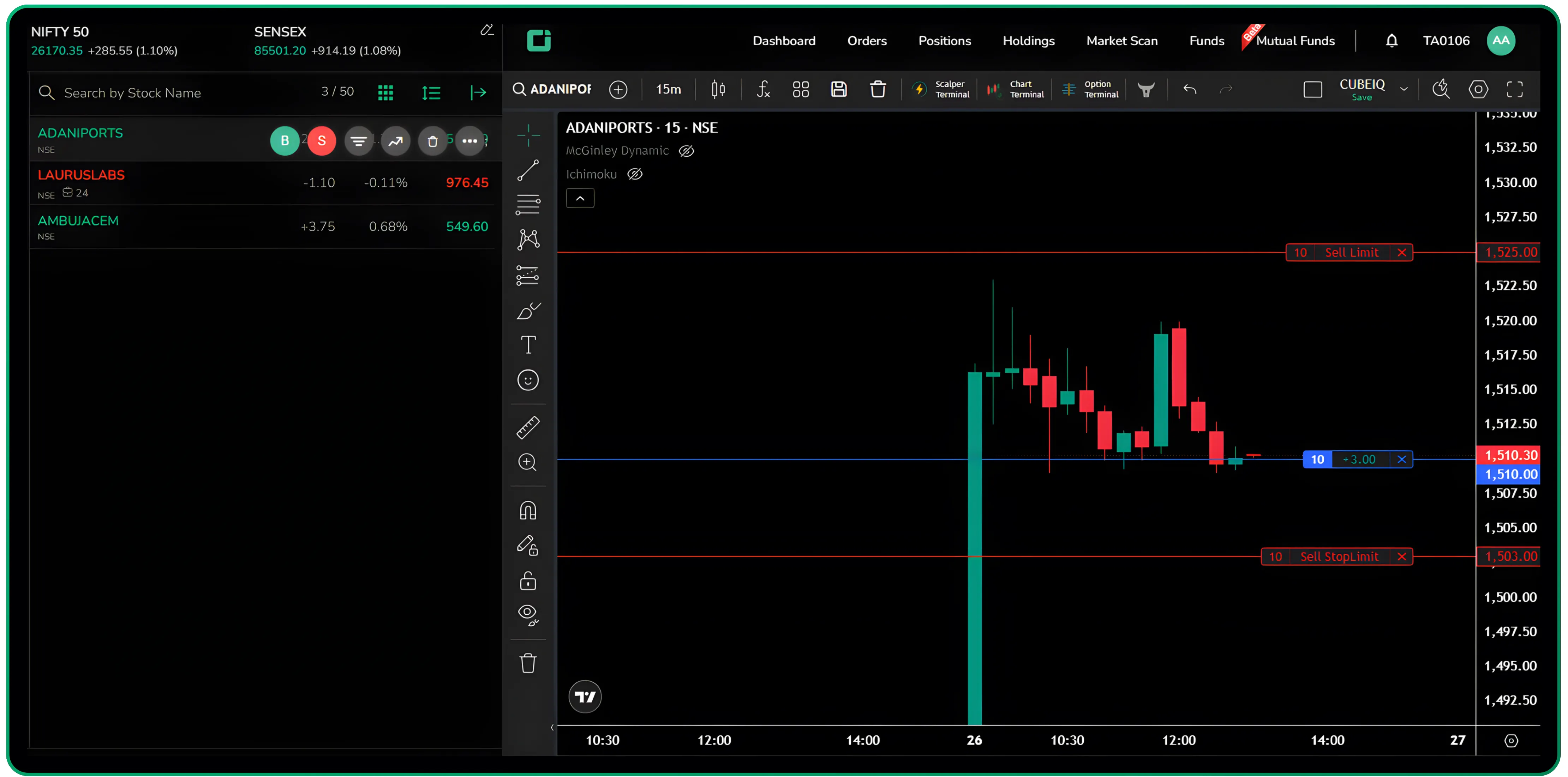
When the price of Adani Ports moved from ₹1510 to ₹1513, the trailing stop loss adjusted upward automatically. Since the trailing value was set to ₹1, the system raised the stop loss trigger from ₹1504 to ₹1505, and later ₹1506 without any manual action. This upward movement only happens when the stock moves in your favour, helping you reduce risk and lock in a part of the profit as the trade progresses.
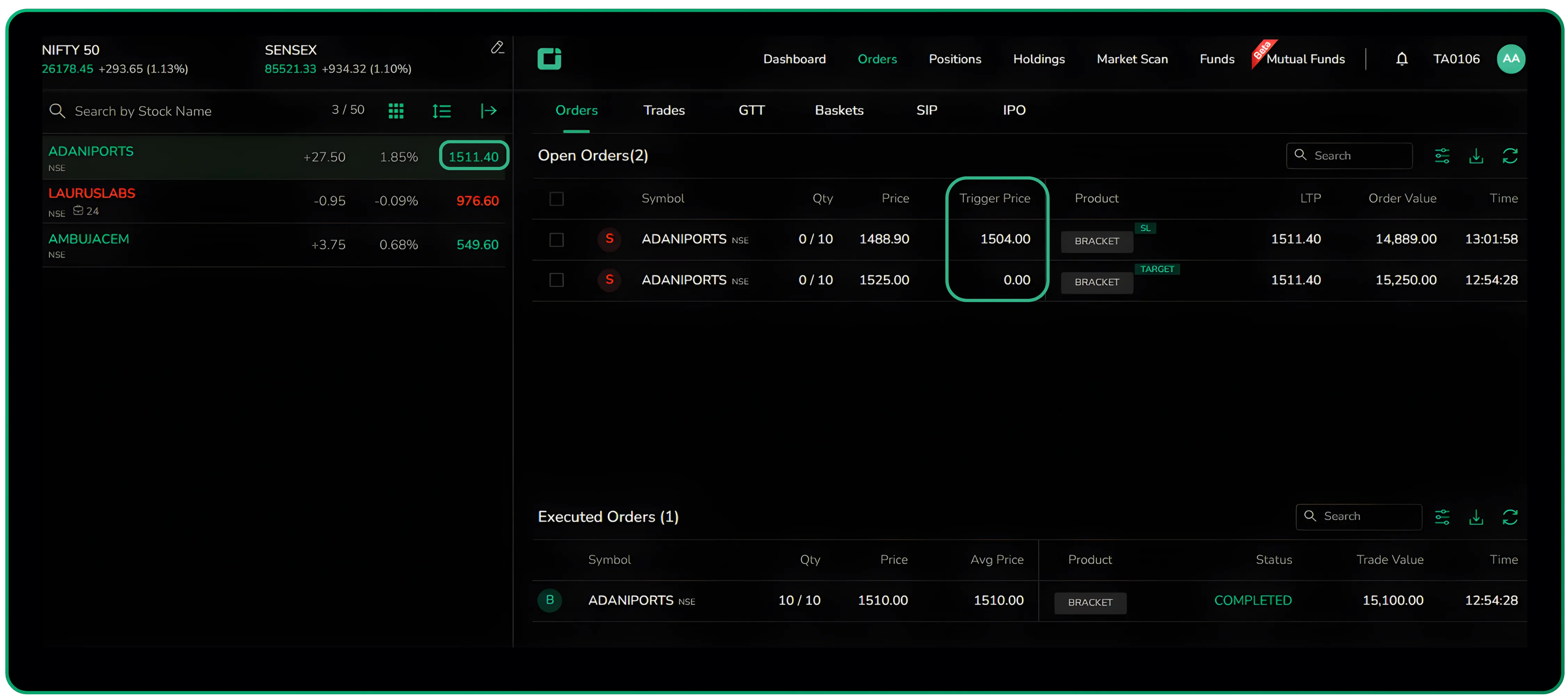
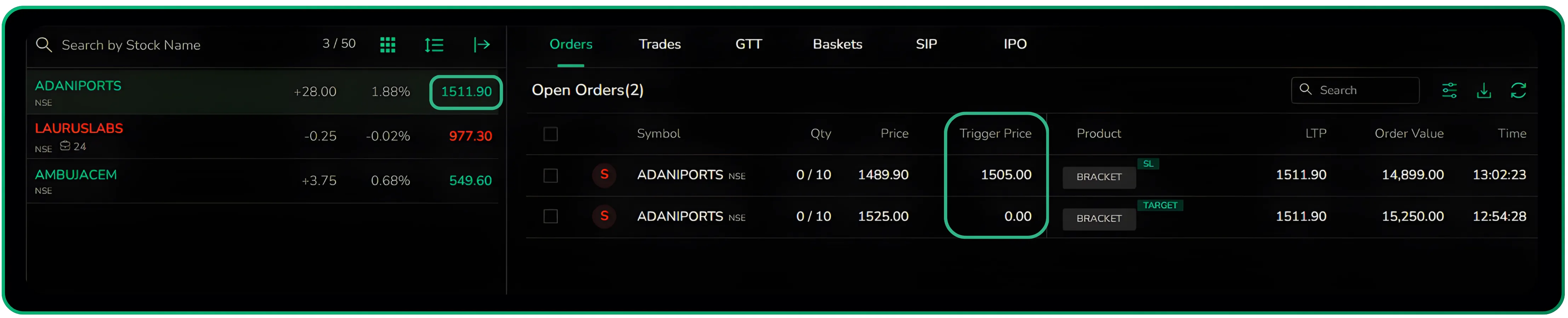
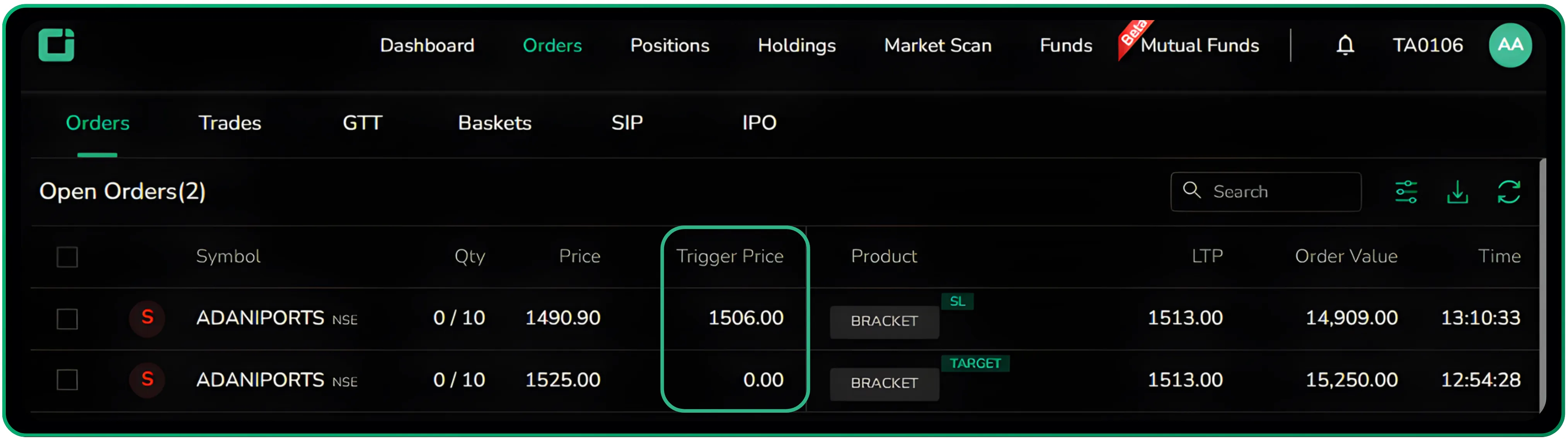
Even when the price dropped from ₹1513 back to ₹1510, the stop loss remained fixed at ₹1506. A trailing stop loss only moves upward when the market moves in your favour, and it never reduces if the price starts falling again. This ensures that whatever profit has been protected stays protected, because the system doesn’t undo the progress made when the stock was rising.
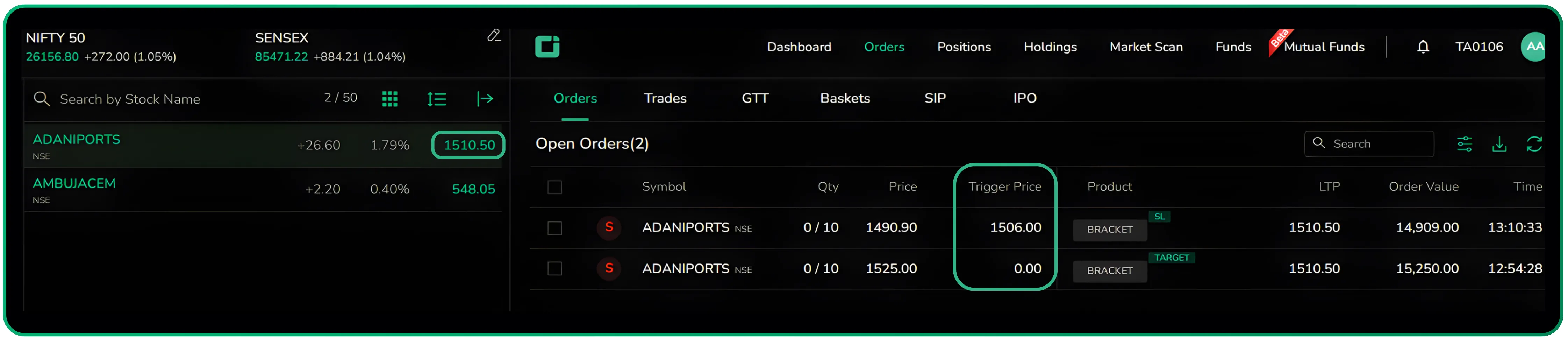
As the price continued to fall and finally reached the stop loss trigger, the system closed the position automatically at around ₹1506. At the same time, the target order was cancelled on its own, since only one exit can remain active in a bracket order. The profit on this trade was booked purely because the trailing stop loss had moved up earlier and protected the gains before the reversal happened.
Want to spot strong movers even before the price breaks out? Check how Active by Volume and Active by Value can make your entries smarter.
Bracket Order for Options with Stop Loss and Target Price
Imagine you’re tracking the NIFTY 17JUL 25700 CE on CubePlus and you like the setup. You decide to take the trade, set your exit levels in advance, and let the system manage the rest. Here’s how the order unfolds step by step:
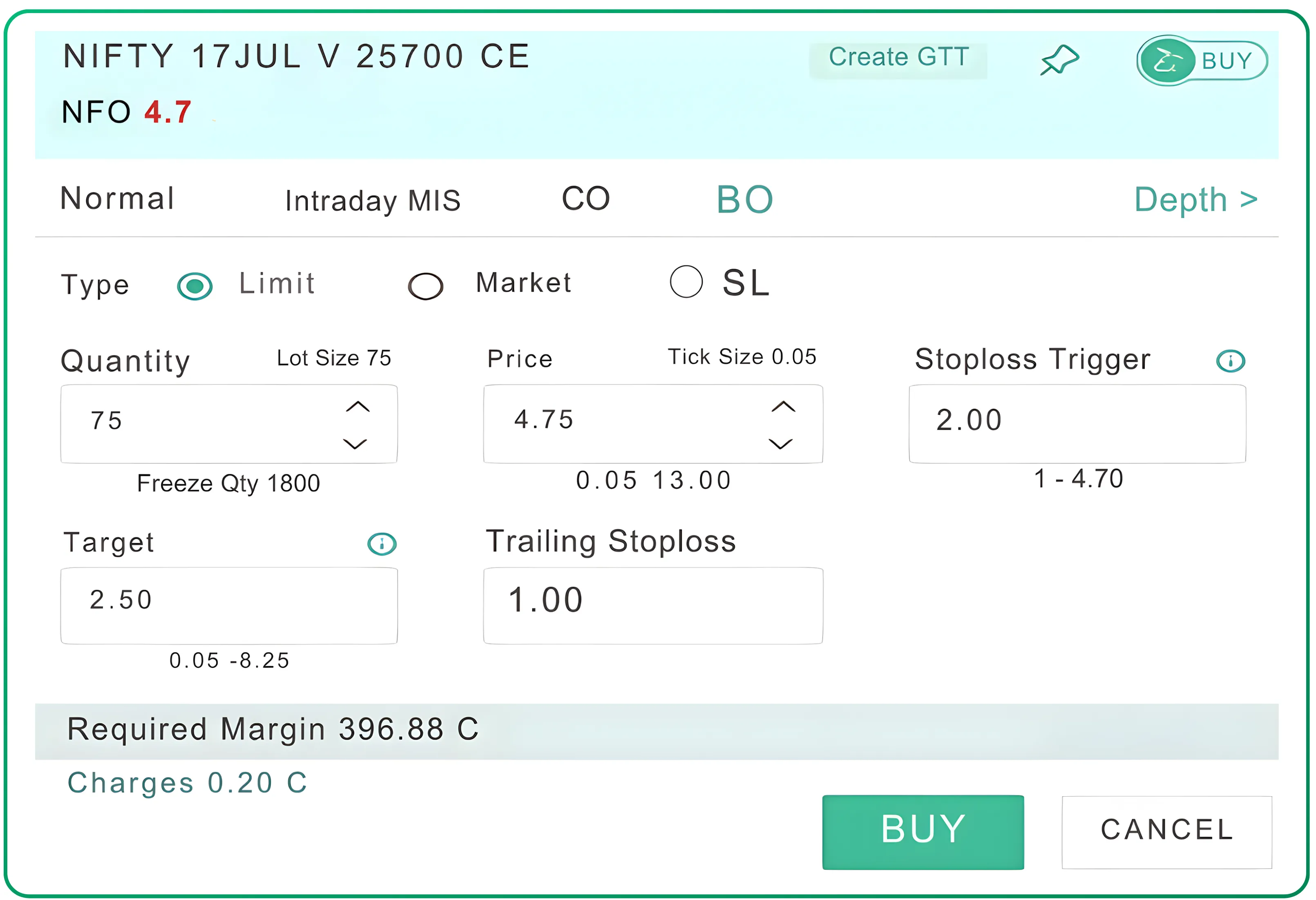
Bracket order combines profit booking and stop loss limit with trailing stop loss for options trading
| Field | Value to Enter | Result |
|---|---|---|
| Price | ₹4.75 | ₹4.75 |
| Target | ₹2.50 (difference field) | ₹7.25 |
| Stop Loss Trigger | ₹2 | ₹2.75 |
| Trailing Stoploss | ₹1 | – |
The moment your buy order is executed, CubePlus springs into action, creating two linked sell orders:
Target Order: Sell at ₹7.25 (aiming for a ₹2.50 profit per lot).
Stop-Loss Order: Sell at a stop-loss price of ₹2.75 (limiting the loss to a maximum of ₹2).
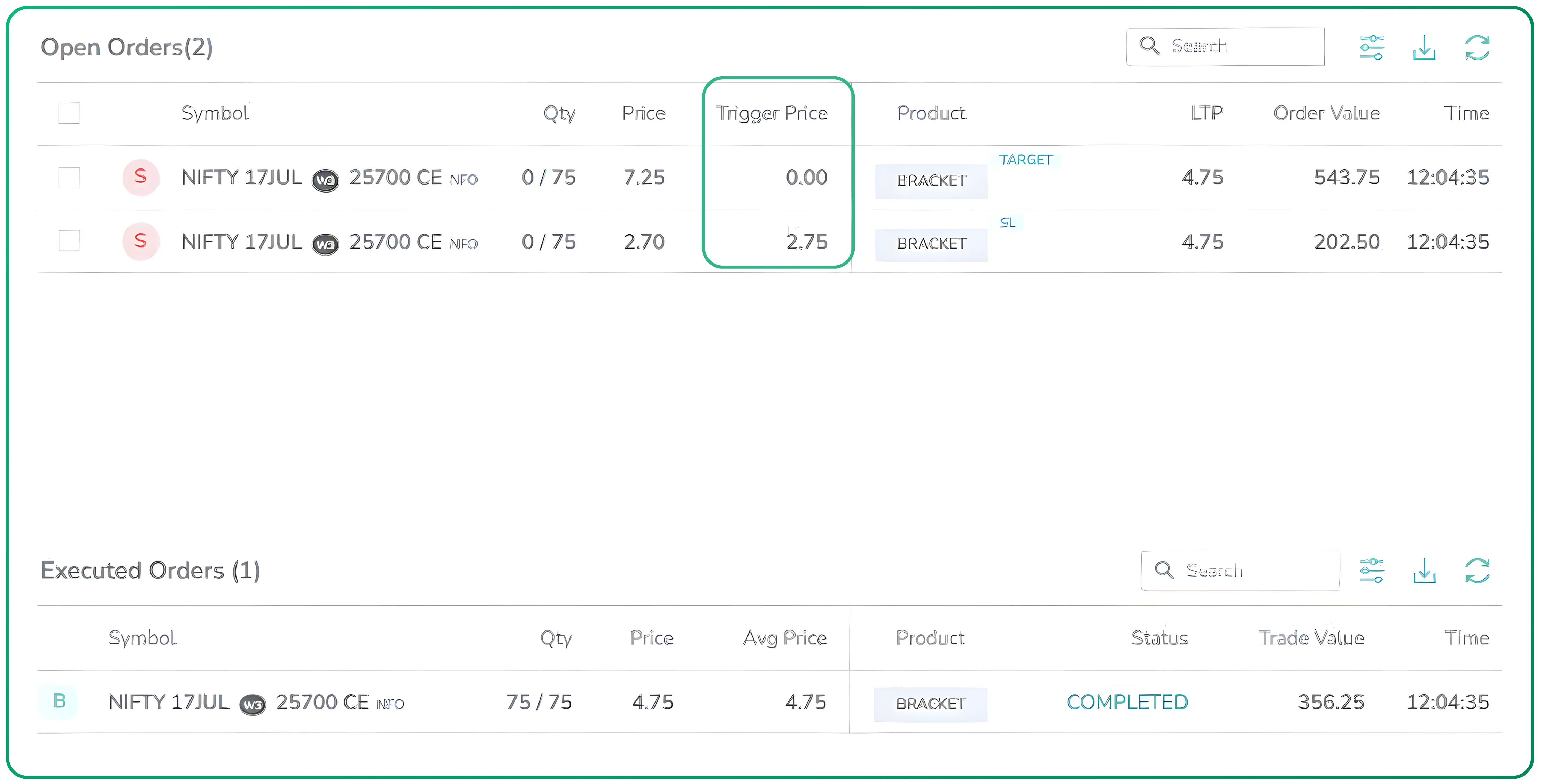
These orders are your trading guardrails. If the price rockets to ₹7.25, your target order executes, locking in your gains, and the stop-loss order vanishes. If the price dips to ₹2.75, the stop-loss kicks in, capping your loss, and the target order is cancelled. It’s a set-it-and-forget-it system that keeps your emotions in check and your strategy on track.
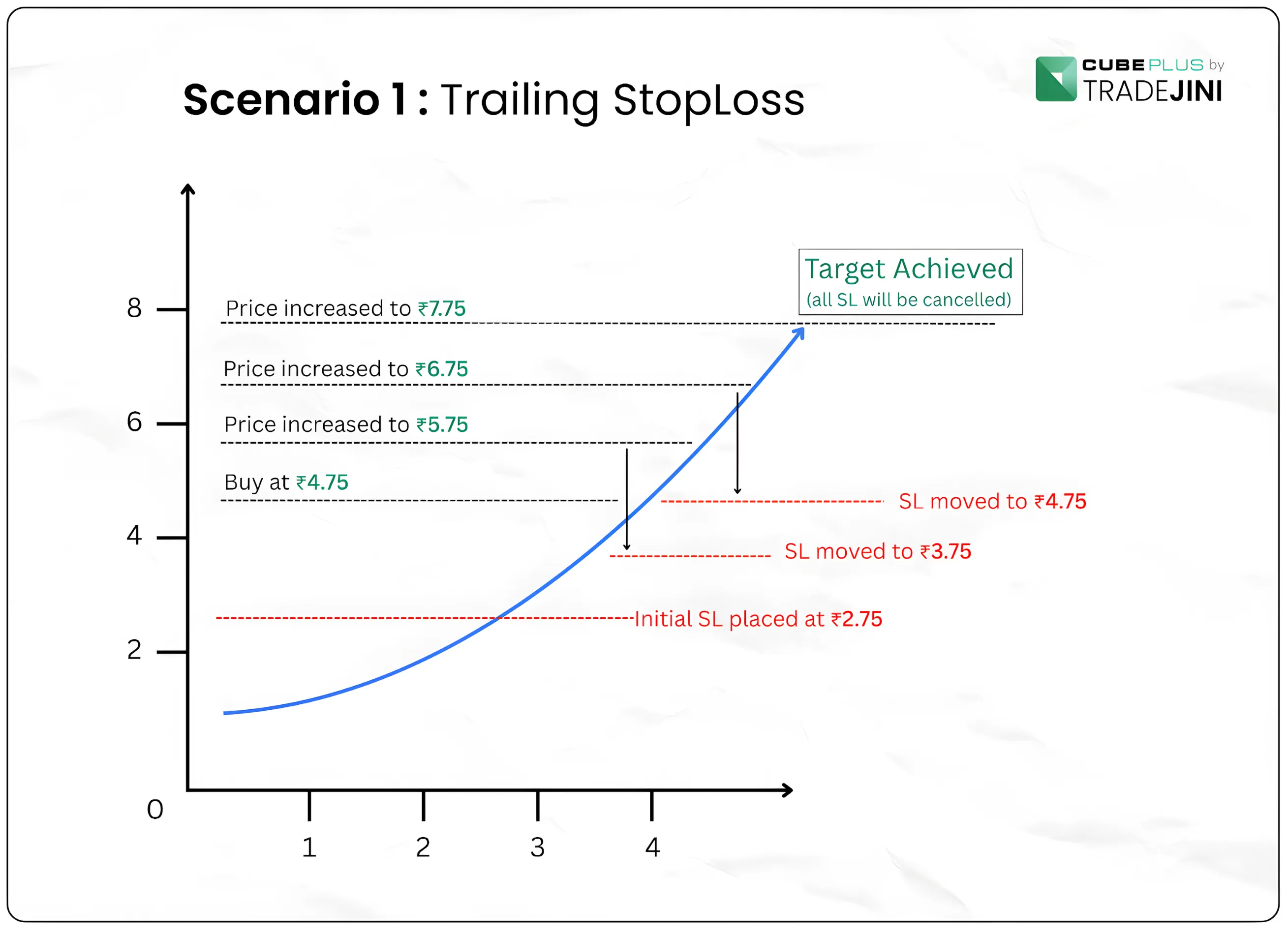
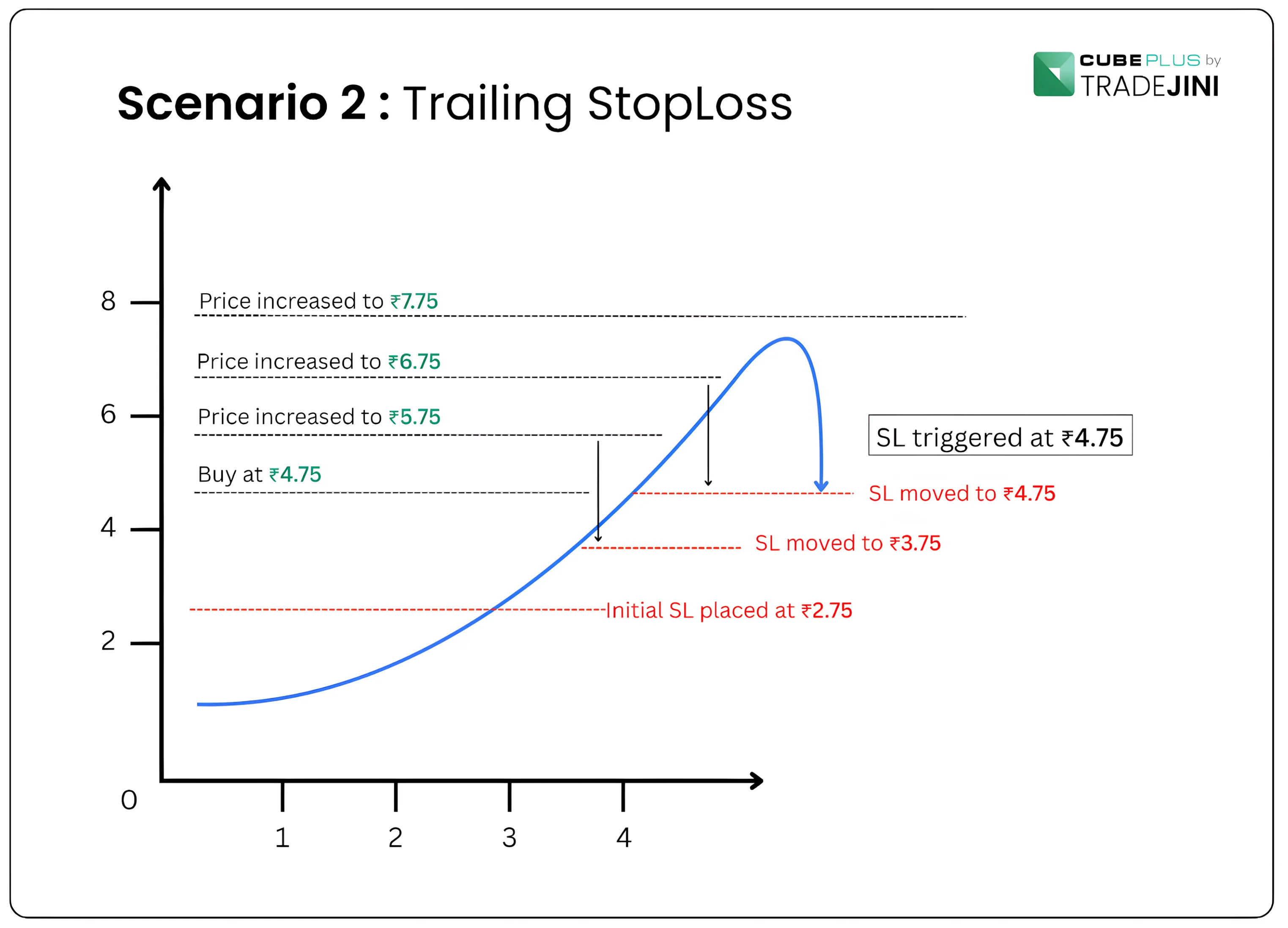
Now, let’s bring in the trailing stop-loss. Instead of staying fixed like a normal stop-loss, a trailing SL adjusts automatically as the market moves in your favour. It helps you protect profits without constantly watching the screen. In this NIFTY example, you choose a trail amount of ₹1.00, which means the stop-loss will move up every time the premium rises by ₹1. Here’s how that plays out:
You buy at ₹4.75, with an initial stop-loss trigger at ₹2.75.
If the price rises to ₹5.75, the trailing stop-loss automatically adjusts to ₹3.75 (₹2.75 + ₹1.00).
If the price climbs further to ₹6.75, the stop-loss moves to ₹4.75 (₹3.75 + ₹1.00), ensuring you break even if the market turns.
If the price keeps soaring, the trailing stop continues to adjust, locking in more profit while keeping your risk capped.
Let’s understand Trailing Stop-Loss in two scenarios:
Scenario 1: Trailing Stop-Loss Target Achieved
The price steadily rises, triggering trailing stop adjustments, but ultimately hits the profit target. The stop-loss order is cancelled once the target is achieved.
Scenario 2: Trailing StopLoss—SL Triggered
Price moves up and adjusts the trailing stop accordingly, but before hitting the target, it reverses and triggers the latest stop-loss level, locking in partial gains.
Why Bracket Orders Stand Out
Bracket Orders on CubePlus aren’t just a convenience feature. They help you trade with structure and discipline. Here’s what makes them especially useful for intraday traders:
One-shot setup: You define your entry, target, and stop-loss at the same time. No need to manage multiple orders later.
Risk handled automatically: With (One Cancels the Other) OCO logic, only one exit order gets executed. If your target hits, the stop-loss disappears, and vice-versa.
Use the trend to your advantage: A trailing stop-loss can lock profits as the market moves in your favour, without you doing anything.
Stay out of emotional traps: After placing the order, the system takes over. No panic exits, no impulsive averaging, no fear-of-missing-out trades.
Better use of capital: You know your risk and reward before the trade begins, so position sizing becomes far more efficient.
Take control of your exits. Begin your journey on CubePlus.
Disclaimer: The information provided in our blogs is for informational purposes only and should not be construed as financial, investment, or trading advice. Trading and investing in the securities market carries risk. Always conduct your own research and consult with a qualified financial advisor before making any investment decisions. Past performance is not indicative of future results. Copyrighted and original content for your trading and investing needs.
© 2025 — Tradejini. All Rights Reserved.

%252FCubePlus_Shield_Part%25203%2520Blog%2520Thumbnail.webp%3Falt%3Dmedia%26token%3Da5581624-5761-476f-8451-40c157b54840&w=3840&q=75)
%252FShield%2520on%2520Cubeplus%2520part2.webp%3Falt%3Dmedia%26token%3D252a5b48-a580-4e8d-b939-c82d4696eaef&w=3840&q=75)