

If you have ever booked a loss in stocks, house property, business or stock market and assumed it is completely wasted, there is some relief available in the Income Tax Act. The rules on set off and carry forward of losses income tax help you reduce your taxable income by adjusting eligible losses against current or future profits, as long as the correct filing process is followed.
This is especially useful for equity traders, F&O traders, rental property owners and small businesses. With proper planning, losses can provide tax relief instead of becoming a total burden.
1. What is Setting Off Losses?
In simple terms, setting off means adjusting your losses against your profits, either from the same year or from the following years.
For instance, say you made a short-term capital gain of ₹1.5 lakh on stock trading but incurred a short-term loss of ₹1 lakh on mutual funds. You can set off the ₹1 lakh loss against the gain and pay tax only on the remaining ₹50,000.
However, there are rules on which type of losses can be set off against which income. Let’s understand them.
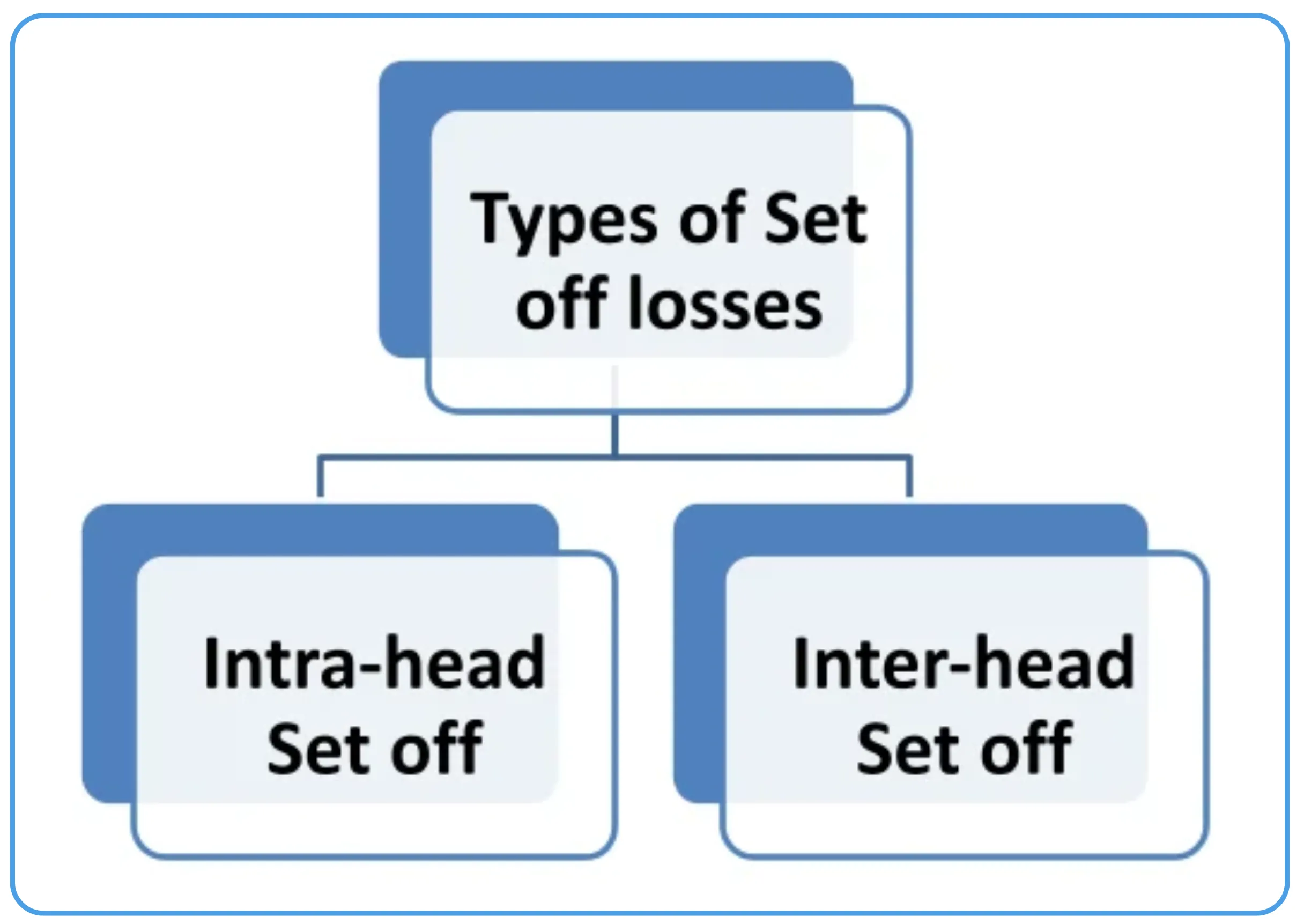
2. Intra-Head vs Inter-Head Set Off
(a) Intra-head set off:
You can adjust a loss under one source of income against income from another source under the same head.
For example, a loss from one capital asset can be adjusted against gains from another capital asset.
(b) Inter-head set off:
This means adjusting a loss from one head of income against another head. For instance, a loss from house property (up to ₹2 lakh under the old regime) can be adjusted against salary income or business income.
But not all types of losses qualify. For example, you cannot set off speculative losses against normal business income or losses from agricultural income against taxable income, since agricultural income is exempt from tax.
3. Carrying Forward Unused Losses
If you are unable to adjust all your losses in the same year, the unadjusted portion doesn’t vanish. You can carry it forward to future years, provided you have filed your Income Tax Return (ITR) before the due date.
Here’s how long you can carry them forward:
| Type of Loss | Set Off Allowed Against | Carry Forward Period |
|---|---|---|
| House property loss | Any head of income (within ₹2 lakh) | 8 years |
| Business loss (non-speculative) | Business income only | 8 years |
| Speculative business loss | Speculative income only | 4 years |
| Capital losses | Capital gains only | 8 years |
| Loss from owning/maintaining race horses | Same source | 4 years |
So, if you incurred a capital loss in FY 2024–25, you can adjust it until FY 2032–33.
4. Why This Matters for You
When you file your taxes smartly, losses aren’t the end of the story; they can actually help you pay less tax in future profitable years. This is especially relevant for traders, small business owners, and investors, where income often fluctuates year to year.
Example
Let’s say Ritu, a part-time trader, incurred a ₹1.2 lakh short-term capital loss in FY 2023–24. In FY 2024–25, she made a ₹2 lakh short-term capital gain. Since she filed her previous year’s ITR on time, she can carry forward and set off the ₹1.2 lakh loss, paying tax only on ₹80,000.
Set off and carry forward rules help ensure your losses can lower future taxes, if reported correctly and on time.
Start your smart investing on CubePlus and take control of your financial goals.
Disclaimer: The information provided in our blogs is for informational purposes only and should not be construed as financial, investment, or trading advice. Trading and investing in the securities market carries risk. Always conduct your own research and consult with a qualified financial advisor before making any investment decisions. Past performance is not indicative of future results. Copyrighted and original content for your trading and investing needs.
© 2025 — Tradejini. All Rights Reserved.
.webp%3Falt%3Dmedia%26token%3D0ead9799-20bc-4d1e-ae8f-d75ab18921b5&w=3840&q=75)


