Over the last decade, India has invested over ₹10 lakh crore into mega-transport infrastructure. The country built 55,000+ km of national highways, operationalized world-class Dedicated Freight Corridors (DFCs), and witnessed institutional real estate funds deploy billions of dollars into automated Grade-A warehousing parks.
Yet, when a heavy commercial truck reaches an average Indian warehouse, the loading and unloading process can feel like it belongs to another era. A crew of 6 to 8 laborers unload cartons and gunny bags and take 4 to 6 hours to turn around a single 16-tonne truck. In Western Europe, the US, and Japan, that exact turnaround takes 25 to 35 minutes using a single forklift operator and standardized pallets
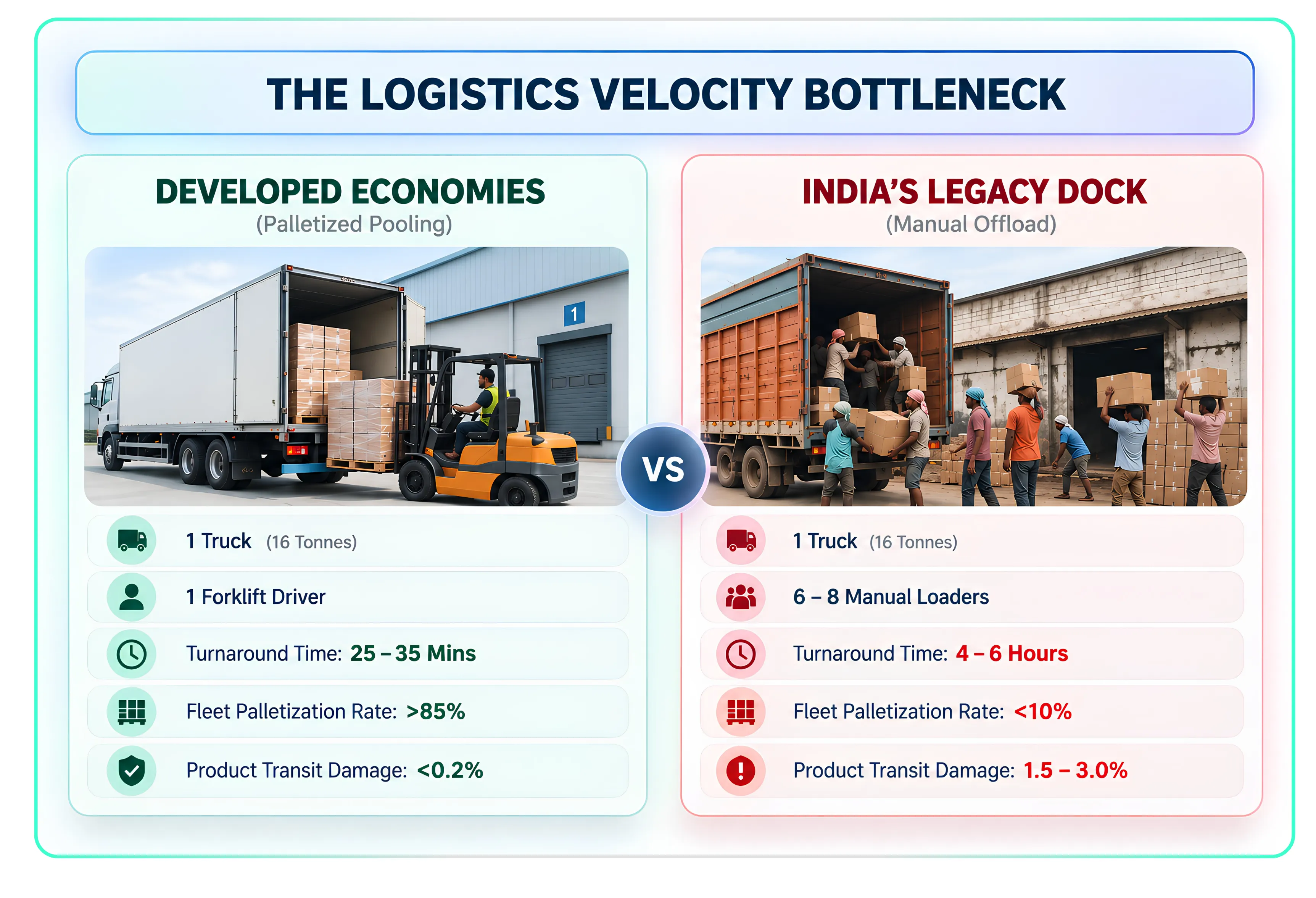
Despite India's ambition to slash national logistics costs from 13–14% of GDP to sub-8–9% under the National Logistics Policy (NLP), less than 10% of India's domestic freight moves on standardized pallets.
What is Pallets & FLC
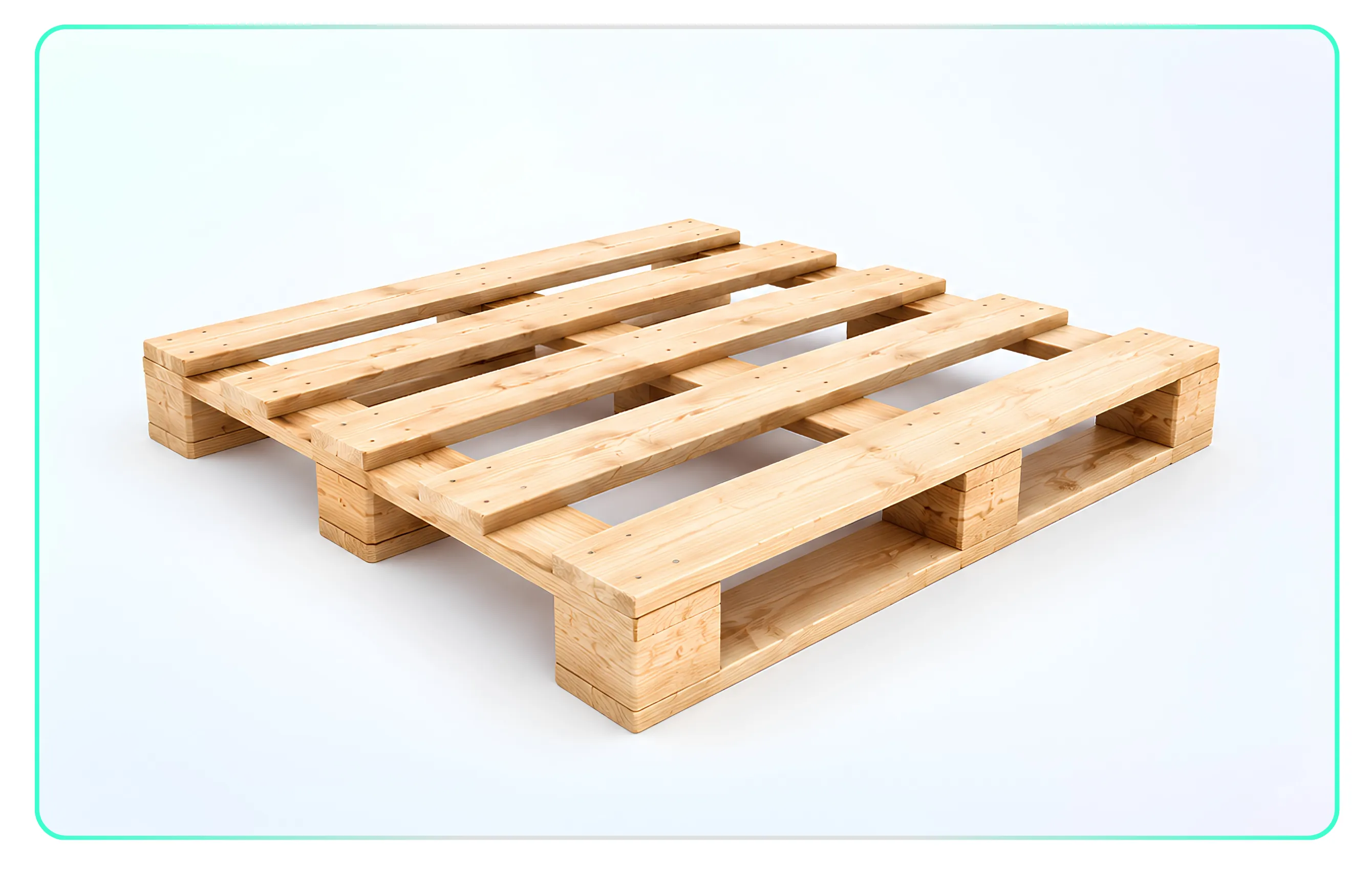
A pallet is basically a flat, sturdy platform (usually wood) that goods are stacked on before being moved or stored. Think of it as a "tray" for cargo; instead of a truck being loaded with hundreds of loose boxes one by one, the boxes are stacked onto a pallet first, and then the whole pallet is picked up and moved in one go using a forklift.
Foldable Large Containers (FLCs): sturdy plastic crates/bins, used mainly for auto parts and quick-commerce, that fold flat when empty (so sending them back for reuse is cheap)
Why has India lagged so heavily in basic unit-load automation? And how has LEAP India Limited built a high-margin, circular asset-pooling moat across 14.7 million managed assets and 10,000+ customer touchpoints?
Chapter 1: Why Logistics Fails at Ground Level
To understand LEAP India, one must first dismantle the illusion that logistics is solely about trucks, trains, and warehouses.
When an FMCG giant like Hindustan Unilever, Nestlé, or Tata Consumer manufactures soap or noodles, products are packed into primary boxes (SKUs), which are packed into secondary corrugated master cartons. If these master cartons are handled manually at every step (from factory floor to distributor warehouse to mother hub) three structural leakages occur:
1. Severe Product Damage: Manual handling causes transit pilferage and crushing losses ranging between 1.5% and 3.0% of cargo value.
2. Idle Capital (Asset Under-Utilization): A long-haul commercial vehicle in India spends almost 40% to 50% of its operating life stationary at loading/unloading bays rather than moving freight on highways.
3. Warehouse Cubic Inefficiency: Unpalletized warehouses can only stack goods 2 to 3 meters high due to the structural limits of cardboard boxes. Automated high-bay warehouses with pallet racking systems can stack vertically up to 12 to 14 meters, quadrupling storage density on the exact same land parcel.
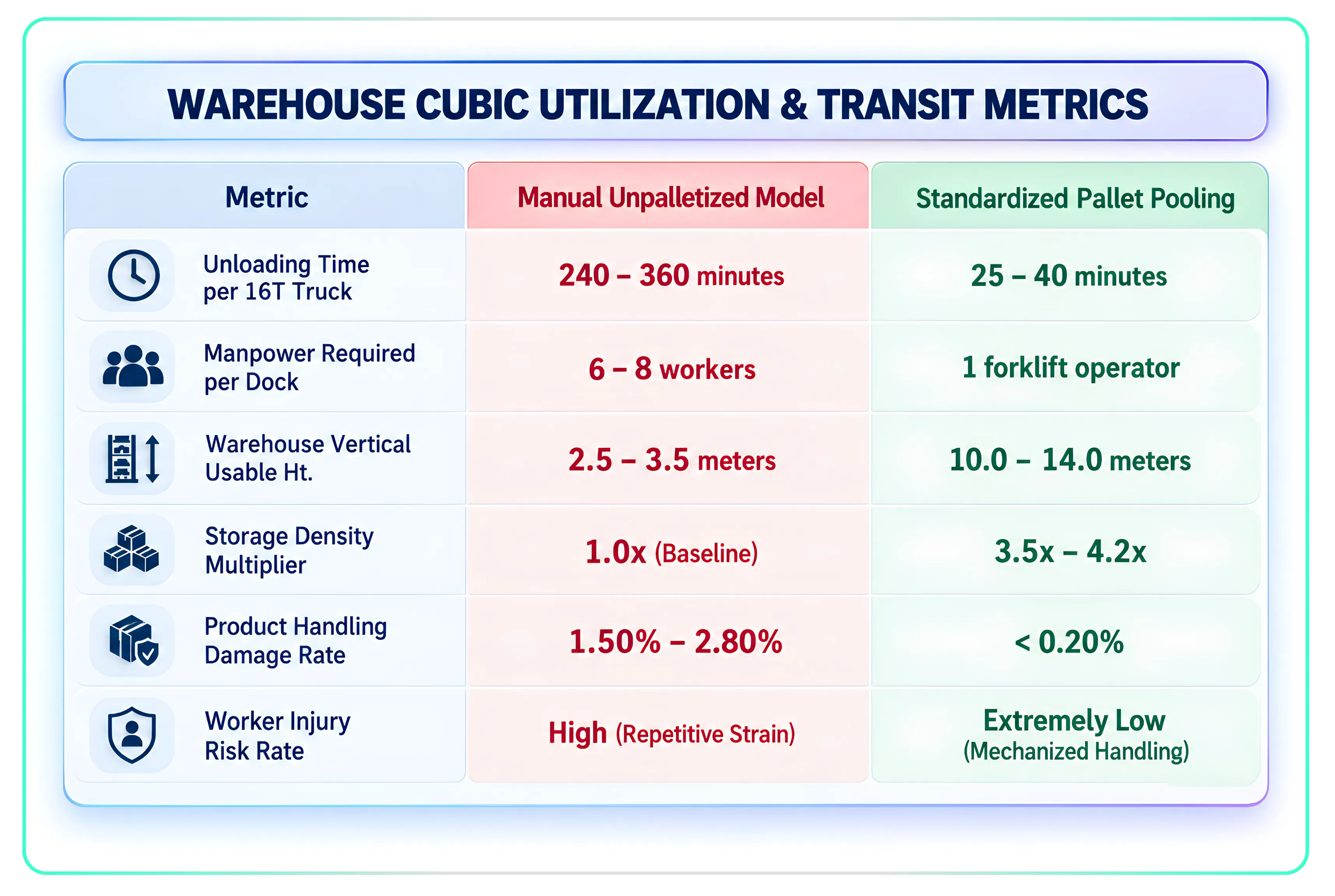
The pallet is the foundational hardware unit that converts chaotic manual cargo into standardized, machine-readable, and forklift-movable cubes.
Chapter 2: The “Buy & Trash” vs “Pool & Loop”
If palletization offers such stark operational leverage, why haven’t all Indian corporations simply purchased millions of wooden pallets? This brings us to the “White-Wood Trap”: the fundamental market failure that gave birth to the asset-pooling industry.
The Failure of the One-Way / Owned Pallet Model
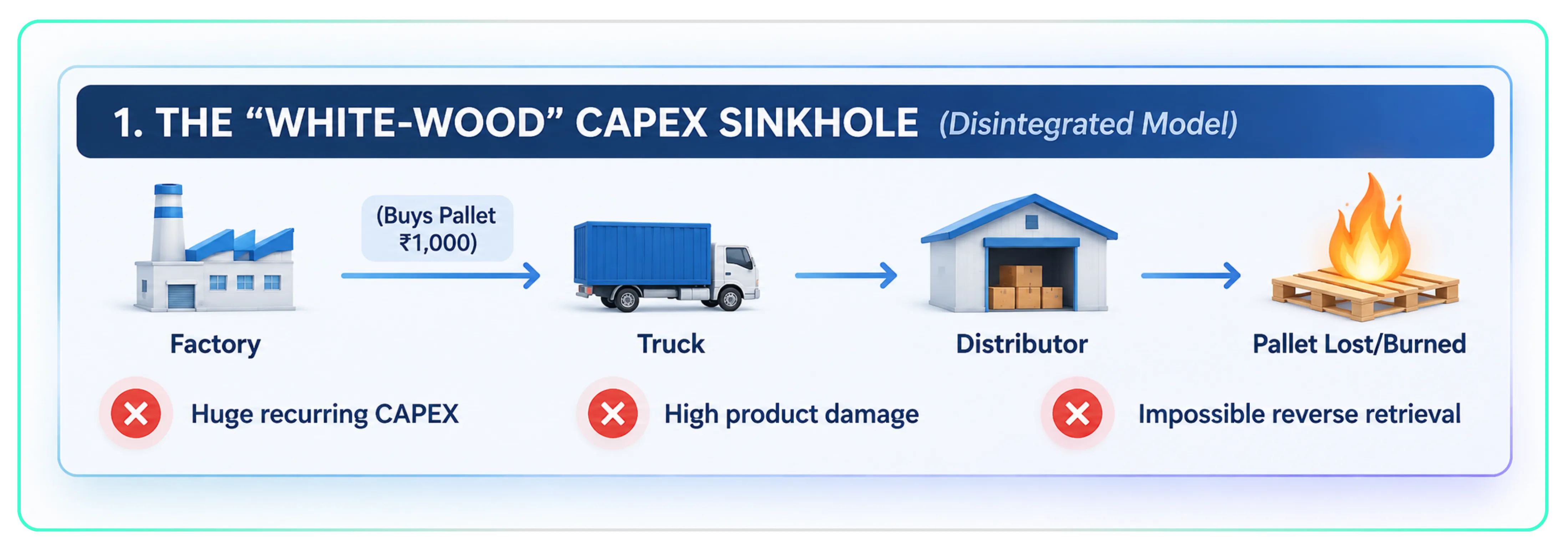
Historically, when an Indian manufacturer decided to palletize, it bought cheap, unstandardized wooden pallets (”white wood”) from fragmented sawmills.
• The manufacturer loaded goods onto the pallets and dispatched them to retail distributors or wholesalers.
• Once the truck reached the destination, the receiving party had zero incentive to safeguard or return the pallet.
• The pallet was either discarded, broken, sold as firewood, or sat idle in an open yard.
For the manufacturer, buying single-use pallets added an unbearable recurring operational expenditure of ₹800 to ₹1,200 per pallet per shipment. Alternatively, attempting to collect their own pallets back from 500 different distributor towns across India resulted in catastrophic reverse-logistics freight costs that wiped out any operating savings.
The Solution: The Circular Asset-Pooling Model
Instead of treating logistics packaging as a consumable expense, asset pooling converts physical equipment into a shared, on-demand utility network.
Under LEAP India’s model:
**1. Zero Customer CAPEX: **The client (e.g., PepsiCo, Asian Paints, Amazon) does not purchase pallets or containers. LEAP invests the capital expenditure to procure high-grade, kiln-dried, pine-wood or composite pallets and Foldable Large Containers (FLCs).
2. Pay-As-You-Use OpEx: The customer pays a predictable daily rental fee or a per-trip pooling charge (typically a fraction of the cost of one-way timber).
3. Network Recovery & Maintenance: When the goods reach the destination distributor or fulfillment center, the receiving party de-palletizes the goods. LEAP’s reverse logistics network collects the empty pallets, transports them to one of its 29 fulfillment centers, inspects and repairs them, and recirculates them to the nearest manufacturing cluster.
This is the exact playbook that created global multi-billion-dollar titans like Brambles Ltd (CHEP) in Australia/US/Europe. LEAP India has effectively adapted and localized this model to conquer India’s complex supply chain geography.
Chapter 3: Inside LEAP’s 14.7 Million Asset Moat
In asset pooling, scale is the single most insurmountable economic moat. A small startup with 50,000 pallets cannot operate an asset pool because the cost of sending a recovery truck to pick up 10 pallets in Patna or Coimbatore is prohibitively expensive.
Only when an operator achieves massive density does the Asset Velocity Flywheel ignite:
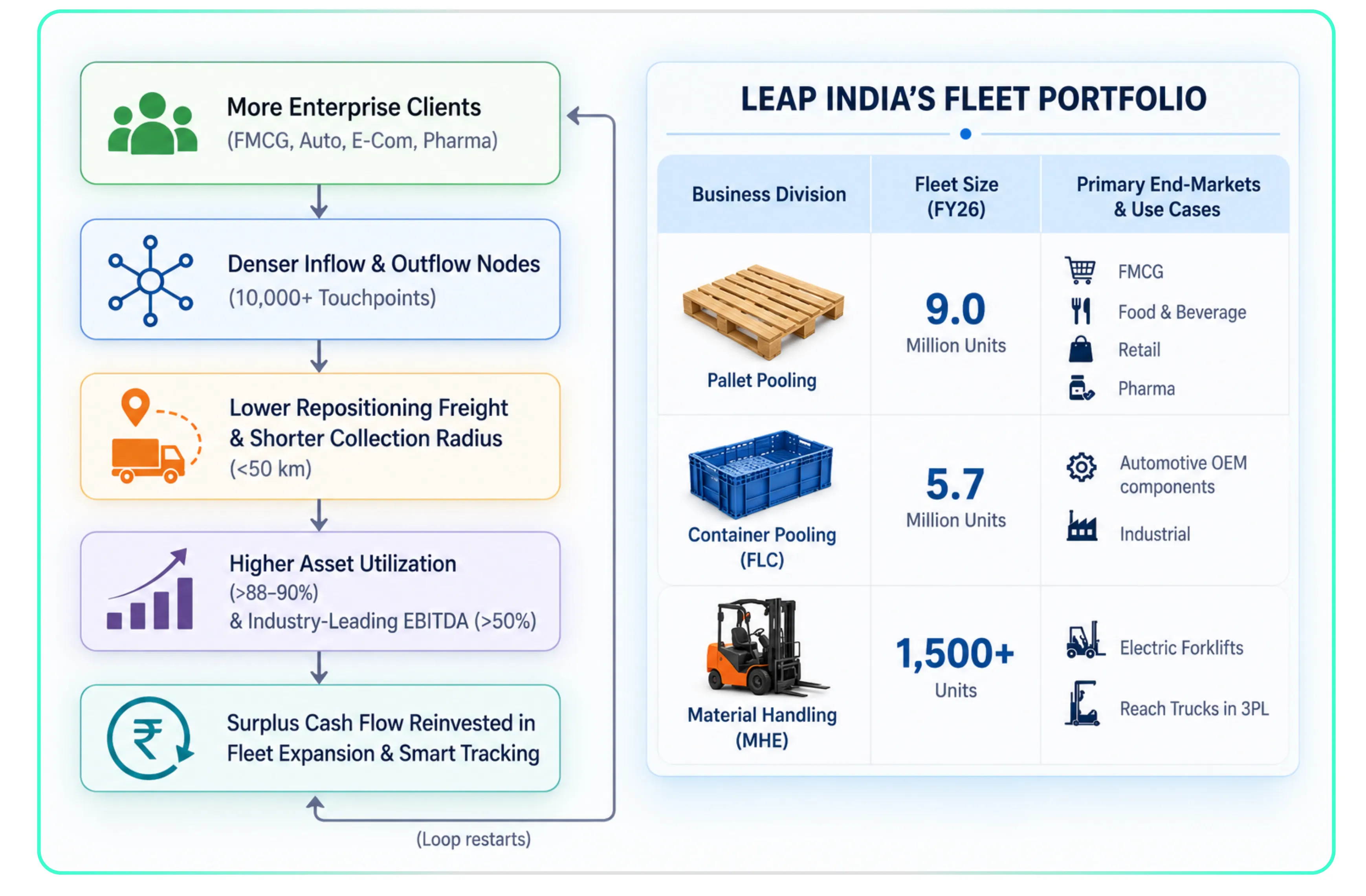
1. Wooden & Composite Pallets (~9.0M Units): Engineered to GS1 international standards (1200 x 1000 mm and 1200 x 800 mm). Built from certified sustainable pine wood, heat-treated (ISPM-15 compliant) for pest resistance, and designed for an operating lifespan of 7 to 10 years under active repair cycles.
**2. Foldable Large Containers (FLCs) & Smart Totes (~5.7M Units): **Heavy-duty collapsible plastic bins tailored for automotive Tier-1 suppliers (e.g., transporting engine parts to assembly lines without cardboard waste) and quick-commerce dark stores. When empty, FLCs fold down to one-third of their expanded volume, reducing reverse freight costs by 65%.
3. Material Handling Equipment (MHE): Long-term operating leases of battery-operated forklifts (BOPs), reach trucks, and pallet stackers, bundling equipment supply with on-site certified operators and maintenance SLAs.
Chapter 4: High EBITDA, Depreciation Dynamics & Deleveraging
To understand LEAP India , we must analyze how depreciation, operating leverage, and capital structure interact in an asset-heavy platform.
Let’s review the core financial trajectory across recent fiscal periods
1. The 50%+ EBITDA Profile
LEAP India does not operate as a thin-margin transport broker or freight forwarder. Given that LEAP owns the core asset pool and charges recurring rentals, its gross margins (68%) after maintenance are structurally high, enabling consistent EBITDA margins around 49%.
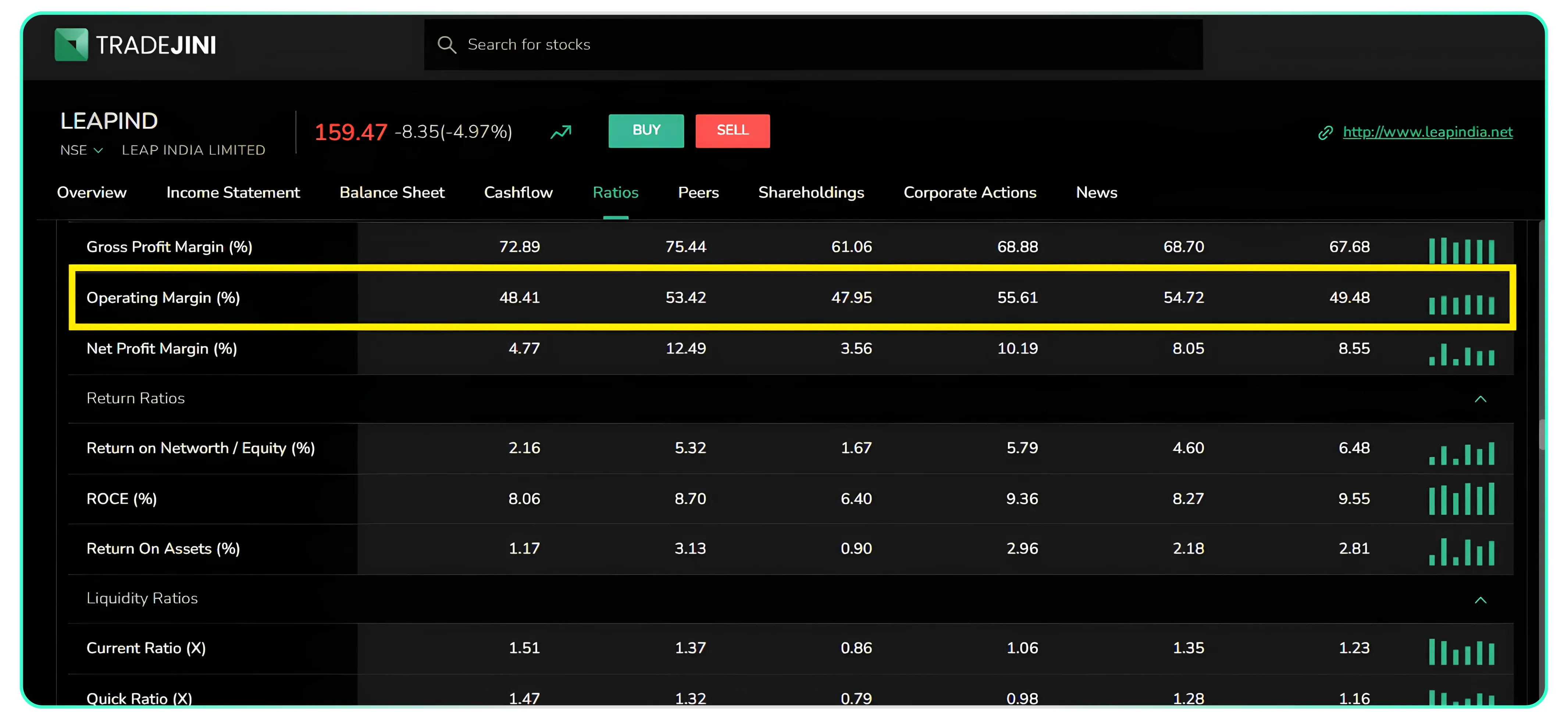
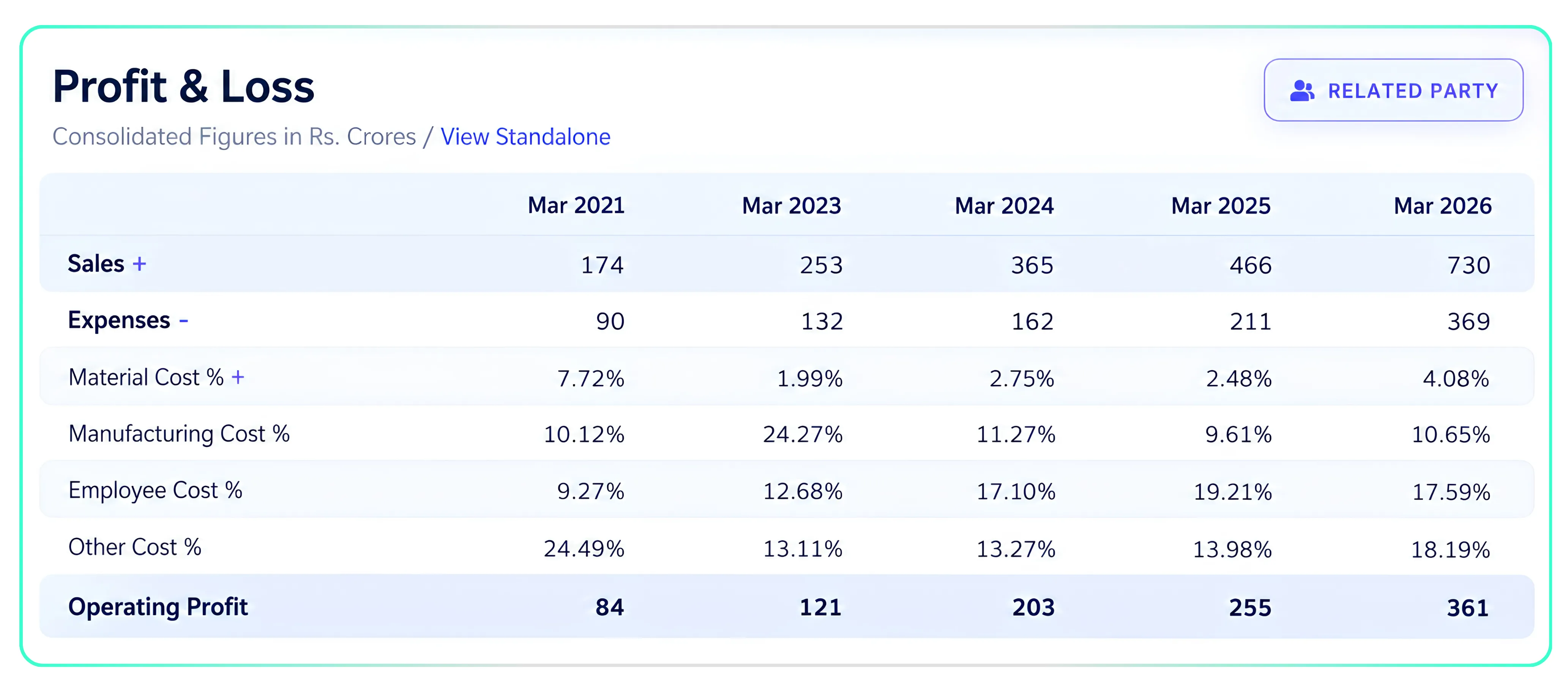
If we examine the P&L statement, the company generated sales of Rs. 730 crores and incurred expenses of Rs. 369 crores, resulting in an operating profit of Rs. 361 crores. In simple terms, for every Rs. 100 of sales, the company retains around Rs. 49 as operating profit.
The interesting part is that a major portion of this profit is adjusted against depreciation, especially in the initial years. This reduces the company's taxable profit and, consequently, its tax liability. Since depreciation is a non-cash expense, the cash remains with the company, which helps improve its cash flow.
2. The Accounting “Depreciation Mirage”
In asset-pooling accounting, pallets and containers are capitalized on the balance sheet and depreciated over 5 to 8 years. However, high-quality wooden pallets that undergo routine slat/block maintenance in LEAP's workshops can remain economically productive for 8 to 12 years. This creates a substantial divergence: accounting profits (PAT) are heavily depressed by non-cash depreciation in the early high-growth years, while underlying Operating Cash Flows (EBITDA minus maintenance capex) remain exceptionally robust.
3. The Debt Reduction
Prior to its August 2026 IPO, LEAP funded its hyper-expansion (growing from 8.2 million assets in FY24 to 14.7 million in FY26) primarily through external debt and institutional private equity backing from KKR (which retains a ~35% equity stake post-IPO). By directing ₹360 crore of fresh IPO proceeds toward retiring high-cost debt, LEAP's interest expense is set to decline sharply in FY27.
Chapter 5: Is leap a Timber Company or Digital Tech Platform?
To truly decode LEAP India’s long-term moat, one must debunk three prevailing market misconceptions:
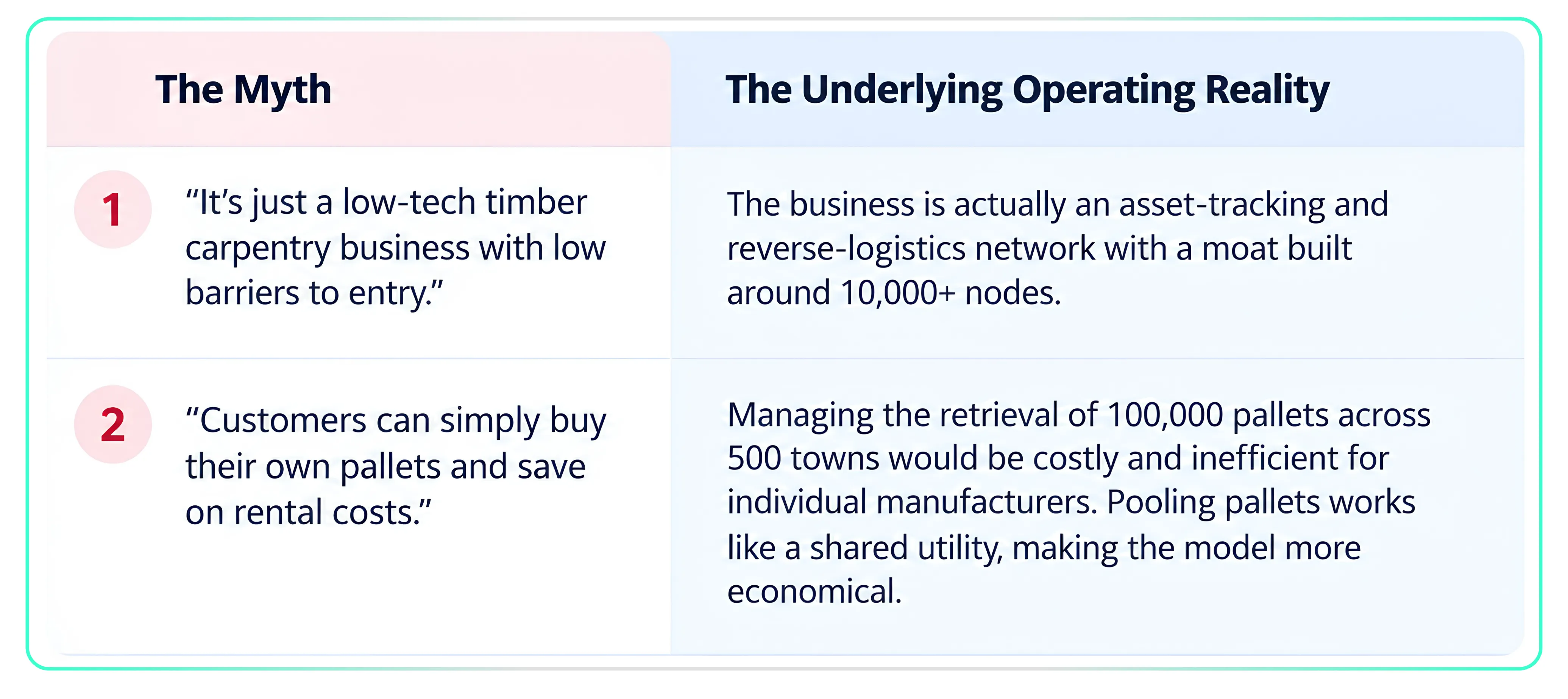
Myth 1: “Anyone with wood and nails can compete with LEAP.”
Reality: The barrier to entry in pallet pooling has almost nothing to do with manufacturing a wooden pallet. The barrier is Asset Retrieval and Reverse Density.
If a competitor enters the market with 100,000 pallets and leases them to an FMCG firm in Mumbai, those pallets will end up dispersed across 2,000 retail stockists in tier-2 and tier-3 towns. Without an existing pan-India reverse logistics fleet, physical repair hubs in every zone, and an automated tracking software stack (MyLEAP Platform), the competitor will suffer a 20% to 30% asset loss rate, rendering the business unviable. LEAP’s network of 29 fulfillment centers and proprietary tracking infrastructure keeps asset loss rates well below industry averages.
Myth 2: “If timber prices rise, margins will collapse.”
Reality: Pallet rental agreements often incorporate indexation clauses. More importantly, because LEAP maintains active reclamation and repair facilities, over 85% of damaged pallets are repaired using salvaged timber components, drastically insulating the operational fleet from raw material timber inflation.
Chapter 6: The Long Runway
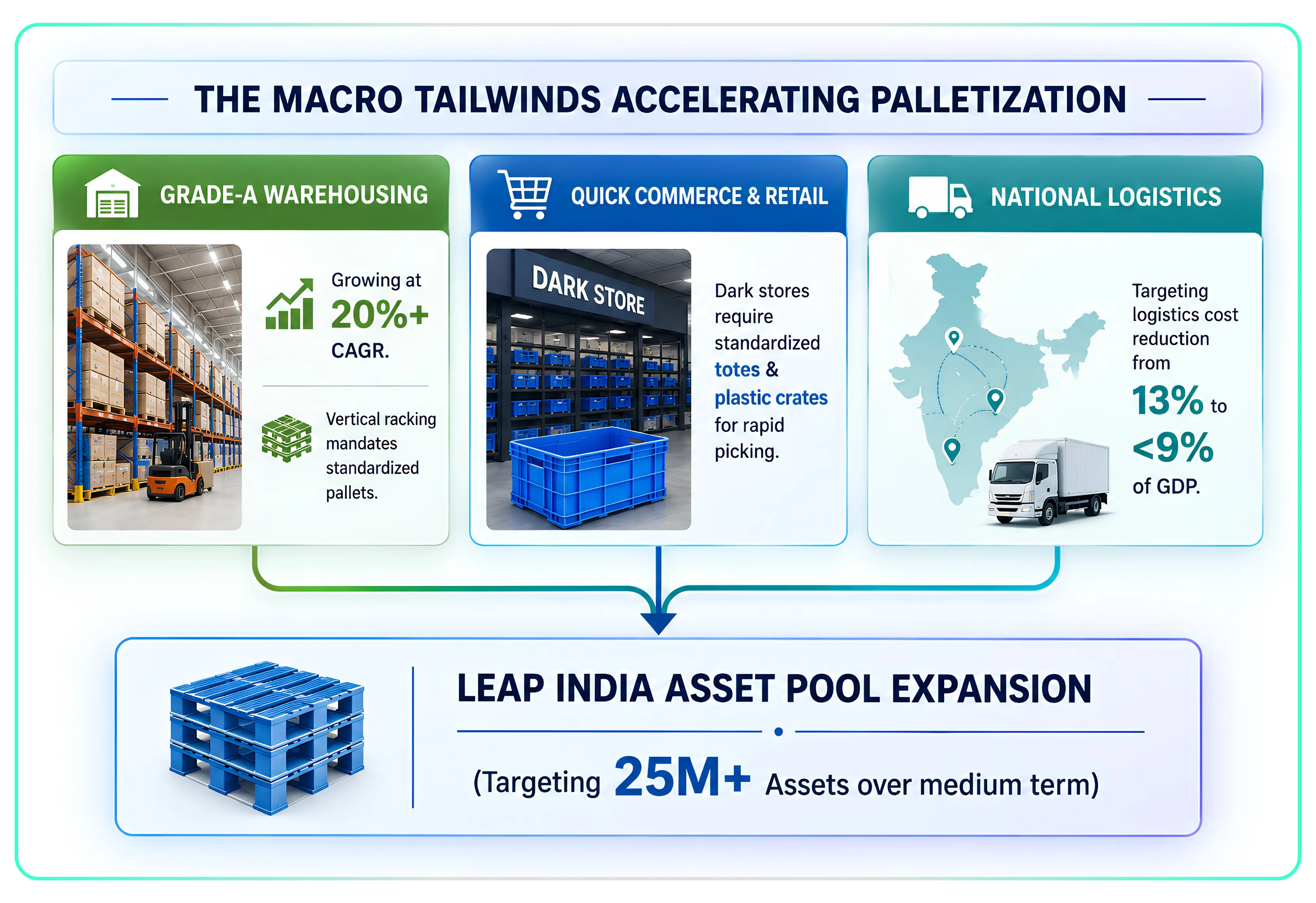
Where does LEAP India go from here? The structural growth vectors across India’s supply chain ecosystem are converging simultaneously:
1. The Grade-A Warehousing Transformation
India's modern Grade-A warehousing stock is expanding at >20% CAGR, driven by institutional developers like ESR, IndoSpace, and Welspun One. Modern Grade-A facilities are built with 12-meter clear heights and high-density racking. It is physically impossible to operate these warehouses without standardized, machine-compatible pallets. Every new square foot of Grade-A warehouse floor directly expands LEAP's addressable market.
2. The FMCG & E-Commerce Pallet Mandate
India’s organized retail and e-commerce leaders (Amazon, Flipkart, Reliance Retail, Blinkit, Zepto) are increasingly establishing dock-acceptance rules that penalize or reject unpalletized truck deliveries because manual offloading paralyzes their fulfillment throughput.When a retail giant mandates palletization at its intake docks, thousands of upstream FMCG suppliers are compelled to adopt LEAP’s pooled pallets to maintain dock clearance speeds.
3. ESG & Circular Economy Mandates
Corporates face intense pressure to eliminate single-use packaging and cut Scope 3 carbon emissions. A single LEAP wooden pallet that completes 40 to 50 trip cycles over its lifetime prevents the felling of trees for disposable crates and eliminates hundreds of metric tonnes of cardboard and wood waste.
Critical Risks to Monitor
- Capital intensity: Fleet expansion requires continuous CAPEX.
- Asset slippage / unaccounted pallet loss risk.
- Client concentration across top automotive and FMCG accounts.
- Raw material timber & virgin polymer cost fluctuations for new asset additions.
Disclaimer: The information provided in our blogs is for informational purposes only and should not be construed as financial, investment, or trading advice. Trading and investing in the securities market carries risk. Always conduct your own research and consult with a qualified financial advisor before making any investment decisions. Past performance is not indicative of future results. Copyrighted and original content for your trading and investing needs.
© 2026 — Tradejini. All Rights Reserved.