Mahindra & Mahindra Ltd (Mahindra & Mahindra India Ltd.) is one of the most diversified automobile companies in India, with a presence across 3-wheelers, 4-wheelers, passenger vehicles (PVs), commercial vehicles (CVs) including light commercial vehicles, small commercial vehicles, and heavyweight commercial vehicles tractors, and earthmovers, and is recognised as the world's largest tractor manufacturer by volume, a position held since becoming India's largest selling tractor brand in 1983.
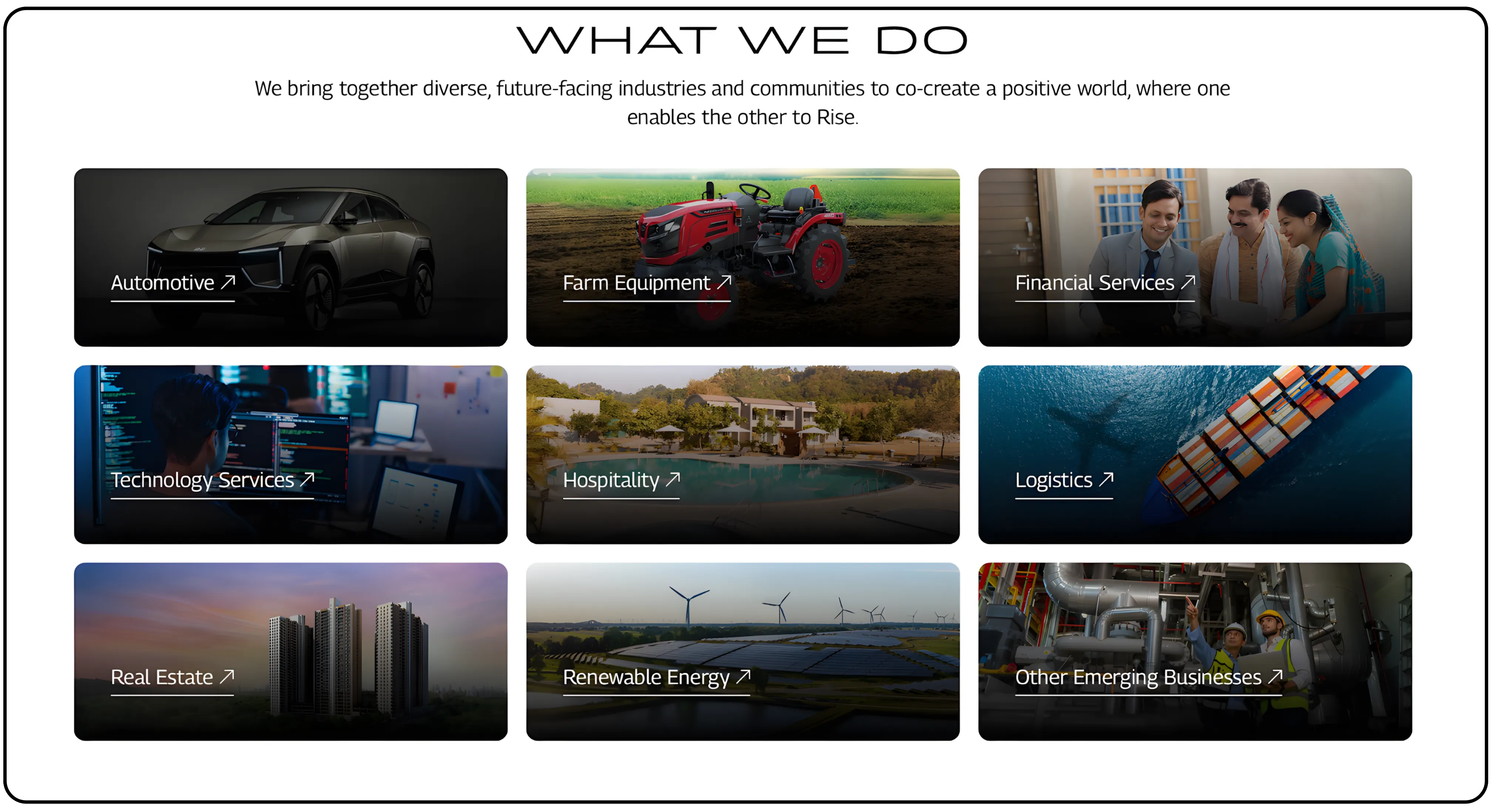
Incorporated in 1945 by Ghulam Mohammad, Kailash Chandra Mahindra (KC Mahindra), and Jagdish Chandra Mahindra (JC Mahindra) as a steel trading company and later renamed Mahindra & Mahindra in 1948, the group today spans 22 industries and 100+ countries through 150+ entities organised across six strategic business units Automotive, Farm Equipment, Financial Services, IT, Infrastructure Development Services, and Steel Trading with subsidiaries covering hospitality (Mahindra Holidays & Resorts India Ltd.), real estate (Mahindra Lifespace Developers Ltd.), irrigation (Mahindra EPC Irrigation Ltd.), steel manufacturing (Mahindra Ugine Steel), power generation (Mahindra Powerol), and logistics (Mahindra Logistics Ltd.), while its farm equipment division serves approximately 1.45 million customers through 1,000+ dealers, further strengthened by the 1977 merger of the International Tractor Company of India and a 1961 partnership with International Harvester.
Timeline of the Mahindra Company
Early Beginnings of Mahindra Automotive
1945: J.C. Mahindra, K.C. Mahindra, and Ghulam Mohammad founded Mahindra & Mohammed in Mumbai as a steel trading firm.
1947: After Partition, Ghulam Mohammad leaves for Pakistan. The company is renamed Mahindra & Mahindra.
1948: M&M gets a licence to assemble Willys Jeeps, kickstarting its journey in automobiles.
1949: The company shifts focus to manufacturing, building its identity around rugged, practical vehicles.
Growth and Diversification
1956: M&M lists on the Bombay Stock Exchange, opening up to public investment.
1962: Mahindra Steel Service Centre is set up, strengthening the group's manufacturing backbone.
1979: The tractor division is launched. Mahindra would go on to become the world's largest tractor brand by volume.
1982: The Mahindra Commander is introduced, becoming a staple in rural and semi-urban India.
1983: Mahindra became India’s largest tractor manufacturer in 1983. (It later emerged as the world’s largest tractor manufacturer by volume in 2010, a position it has retained for over a decade).
Anand Mahindra & the Liberalisation Era
1991: India opens its economy. M&M uses the opportunity to accelerate product development and forge new partnerships.
1996: Mahindra Finance was established, bringing formal credit to rural India.
1998: Anand Mahindra becomes Managing Director. A new chapter of global ambition begins.
Global Ambitions & Automotive Excellence
2007: The Scorpio starts exporting to 20+ countries, putting Indian automotive engineering on the map.
2010: M&M acquires South Korea’s SsangYong Motor, gaining premium SUV technology and global reach.
2010: Mahindra acquires a stake in SML Isuzu to strengthen its commercial vehicle segment.
2010: Mahindra USA expands its operations and presence in the United States, establishing manufacturing plants and launching products for the US auto and tractor markets.
2010: Mahindra acquires Reva Electric Car, establishing Mahindra REVA Electric Vehicles and Mahindra Electric Mobility Ltd. as global subsidiaries.
2011: Tech Mahindra acquires Satyam Computers, vaulting into the top tier of global IT services.
2011: Mahindra forms partnerships with global companies like Volkswagen Group to enhance its electric vehicle offerings.
2011: The "Rise" philosophy is adopted to drive positive change and empower stakeholders.
2011: Tech Mahindra Ltd. emerges as a major player in the IT services and consulting industry, offering innovative solutions worldwide.
2011: Mahindra makes significant strides in renewable energy, including the acquisition of Emergent Solren Private Limited, a solar power generator subsidiary.
Electric Vehicles: Mahindra India Ltd's Future-Ready Strategy
2019: M&M enters EVs with the eKUV100 and eVerito, among the most affordable electric cars in India.
2022: The BE and XEV series are unveiled purpose-built EVs on a dedicated electric platform.
2022: Mahindra's XUV300 is found to be the safest vehicle made in India, earning a 5-star adult safety rating from GNCAP.
2023: Global investors pour ₹1,925 crore into Mahindra’s EV subsidiary, validating the strategy. Mahindra launched several innovative models such as the Mahindra Thar (2020) and XUV700 (2021), which received strong market response.
2024: The XEV 9e and BE 6e launch to record bookings, marking M&M’s arrival as a serious EV player.
2024: Mahindra demonstrates a strong commitment to sustainability and is recognized for its efforts in this area.
Automotive Excellence in India’s Automotive Sector
“Live Young and Live Free”, Heard this before right? This line revolutionized people’s perception of Mahindra.
For years, Mahindra & Mahindra was seen as a utilitarian brand of tractors, Mahindra Jeeps, and workhorses for rural India. That perception changed as Indian consumers began choosing SUVs over sedans. Mahindra was already well positioned, with the Mahindra Scorpio and Bolero having built a loyal base that competitors scrambled to match.
The XUV700's launch in 2021 was the turning point. Priced aggressively and packed with advanced technologies,it sold out within minutes of bookings opening. Waiting periods stretched beyond six months. Mahindra was no longer just a value brand it had become a desirable one.The Mahindra TUV series and compact models ensured the brand had an answer at every price point.
The momentum carried into 2022 and 2023, with record revenues and market share climbing to over 20% in the SUV segment. The Thar, XUV300, and Scorpio-N ensured Mahindra produces vehicles that appeal across the automotive industry. Its seven automotive plants running at high capacity are a testament to its scale.
The XEV 9e and BE 6e launches in 2024 marked the next phase applying the same SUV-first thinking to electric vehicles. Record bookings on day one suggested the formula still works. Mahindra won widespread praise from industry observers and investors alike for the quality and ambition of its EV lineup.
Also read: A Comprehensive Analysis of India's Logistics and Supply Chain Sector Part 1/2
Mahindra's Costliest Bet
In 2010, Mahindra acquired a 70% stake in South Korea's SsangYong Motor for ₹3,200 crore. The company planned a full turnaround, deploying significant financial resources and engineering support from Mahindra Research Valley. There was a brief moment of hope when the Tivoli launched in 2015 SsangYong posted its first profit in years and sales hit a 14-year high in 2017. But losses returned sharply by 2019.
When COVID hit in 2020, Mahindra which had planned yet another ₹2,800 crore investment cut funding entirely. SsangYong filed for bankruptcy in December 2020, was sold off in 2022, and was renamed KG Mobility in 2023. Back in India, the Alturas G4 and Rexton quietly flopped. After a decade and thousands of crores, the SsangYong episode exposed M&M's struggle in international markets and remains the most expensive lesson in M&M's history.
Factors Contributing to M&M's Success
Strong Rural Market Leadership Dominance in tractors and rural utility vehicles helped the company capture India’s large agricultural market.
Durable & Value-for-Money Products Providing tough, reliable, and affordable vehicles built strong customer trust and loyalty.
Powerful Brand Positioning A strong image of rugged and dependable “made-for-India” products created a strong market identity.
Diversification with Innovation Focus Expansion into multiple industries along with continuous innovation, especially in electric vehicles and technology, ensured long-term growth.
Electric Vehicles and Sustainability
The Mahindra electric mobility portfolio features innovative models such as the Mahindra e2o, e-Verito, and e-Supro, designed for eco-conscious drivers seeking reliable and affordable electric vehicles. The company’s ambition extends to the luxury segment as well, with the launch of the Pininfarina Battista, a high-performance electric supercar that showcases Mahindra Ltd’s prowess in advanced electric vehicle technology and design.
Beyond vehicles, Mahindra’s sustainability initiatives are comprehensive. The group has invested heavily in renewable energy, particularly solar and wind power, as part of its broader goal to become carbon neutral by 2040. These efforts are supported by ongoing projects to reduce greenhouse gas emissions, conserve water, and minimize waste across all Mahindra automotive and manufacturing operations. The Mahindra Rise philosophy is evident in these initiatives, driving positive change not just within the company but across the communities it serves.
Mahindra’s electric vehicle strategy is closely aligned with the Indian government’s push for electric mobility and reduced dependence on fossil fuels. The company collaborates with government agencies, industry partners, and consumers to build a robust ecosystem for electric vehicles in India. This includes investments in battery technology, electric motor development, and charging infrastructure, much of which is spearheaded at Mahindra Research Valley, its state-of-the-art innovation hub.
The company’s sustainability efforts have not gone unnoticed. Mahindra has been consistently ranked among the top 10 most sustainable companies in India, earning accolades from industry experts and analysts for its environmentally responsible practices. These include significant reductions in energy consumption, water usage, and waste generation, making Mahindra Ltd a benchmark for operational efficiency and corporate governance in the automotive industry.
Mahindra’s commitment to sustainability is also creating new opportunities for collaboration with technology startups, global automakers, and investments in emerging technologies. This forward-thinking approach is expected to attract top talent and generate new job opportunities within the electric vehicle and clean energy sectors, reinforcing Mahindra’s role as a leader in India’s transition to a greener future.
By integrating sustainability into every aspect of its business from Mahindra Financial Services to Mahindra Logistics and beyond, the Mahindra Group continues to set new standards for responsible growth, innovation, and environmental stewardship in the automotive sector and beyond.
SWOT Analysis
| Category | Details |
|---|---|
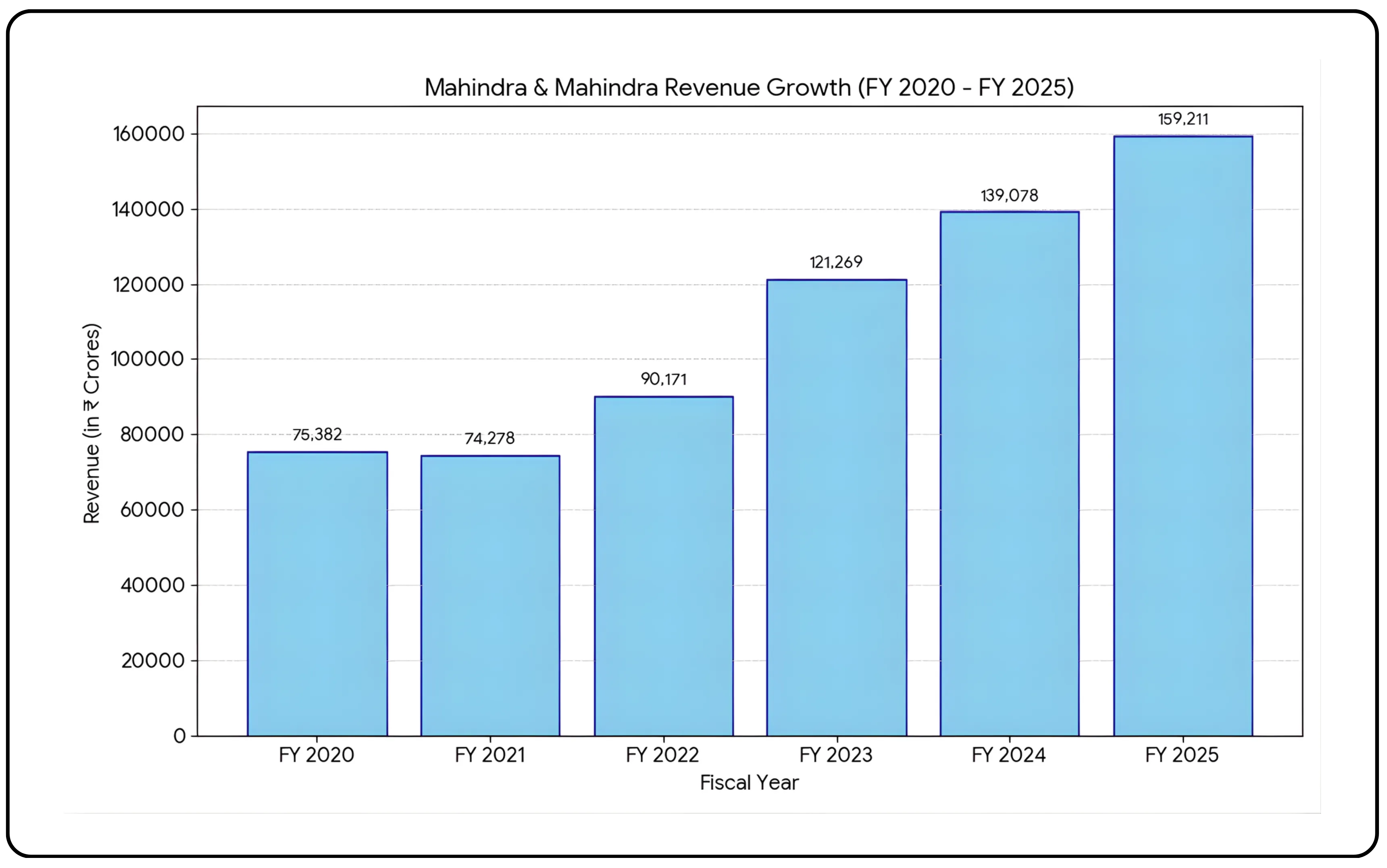
| Strengths | For FY25, Mahindra reported consolidated revenue of approximately ₹1.59 lakh crore, reflecting double-digit year-on-year growth, while profit after tax rose around 20% YoY. (Figures based on reported results; investors should refer to official filings for exact numbers.) Diversification across auto, IT, and financial services keeps the business resilient. |
| Weaknesses | No presence outside SUVs in passenger cars — no sedan, no hatchback. The SsangYong write-off exposed its struggle in international markets. Long waiting periods repeatedly frustrate buyers. Promoter holding is at 18.43%. |
| Opportunities | Mahindra has emerged as one of the early leaders in India’s electric SUV space, particularly after announcing its BE and XEV platforms. The BE 6e and XEV 9e are drawing significant attention in the automotive industry. Rural income growth continues to feed tractor sales and farm equipment demand. Export markets in Africa and Southeast Asia remain largely untapped. Infrastructure development services and the energy sector offer further diversification avenues. Mahindra Logistics Ltd is well positioned to benefit from India's booming e-commerce and supply chain sector. |
| Threats | Tata Motors, Hyundai, Kia, and MG are pricing aggressively in the SUV space. A poor monsoon hits both tractor and vehicle sales at once — a unique dual vulnerability given the group's rural exposure. Rising lithium and steel costs pressure EV margins. Increasing competition in the North American market could challenge Mahindra USA's growth plans. |
Also read: Understanding Eureka Forbes Limited’s Business Model
Reinventing Itself for 80 Years
Mahindra & Mahindra's journey is one of Indian business's most compelling stories. Starting with 75 Willys Jeeps assembled from the USA in 1947, the company went public in 1956 and steadily grew under Keshub Mahindra and later Anand Mahindra, who took the helm in 1997. It weathered liberalisation, survived costly missteps, and emerged stronger each time.
The SUV boom transformed M&M from a utilitarian brand into one of India's most aspirational names. Today it spans an extraordinary range the world's leading tractor manufacturer by volume, an ambitious EV portfolio through Mahindra Electric Mobility, IT services via Tech Mahindra, financial solutions through Mahindra Financial Services, sustainable farming technology through Mahindra EPC Irrigation, and a stake in precision agriculture firm Gamaya all operating across 100+ countries.
The Mahindra Rise vision of challenging conventional thinking to drive positive change has clearly found expression across its seven automotive plants, its Mahindra Research Valley, and the 150+ entities that make up this remarkable group.
Disclaimer: The information provided in our blogs is for informational purposes only and should not be construed as financial, investment, or trading advice. Trading and investing in the securities market carries risk. Always conduct your own research and consult with a qualified financial advisor before making any investment decisions. Past performance is not indicative of future results. Copyrighted and original content for your trading and investing needs.
© 2026 — Tradejini. All Rights Reserved.