Imagine a fast-growing manufacturing company based in Coimbatore. It supplies components to listed auto majors, runs on steady profits, and carries little to no debt. Within the company, there is speculation about an IPO, but no definitive timeline has been set.
The shares of this company already exist. They are held by promoters, early investors, and employees through ESOPs. You just won’t find the company on NSE or BSE.
These are unlisted shares.
What are Unlisted Shares?
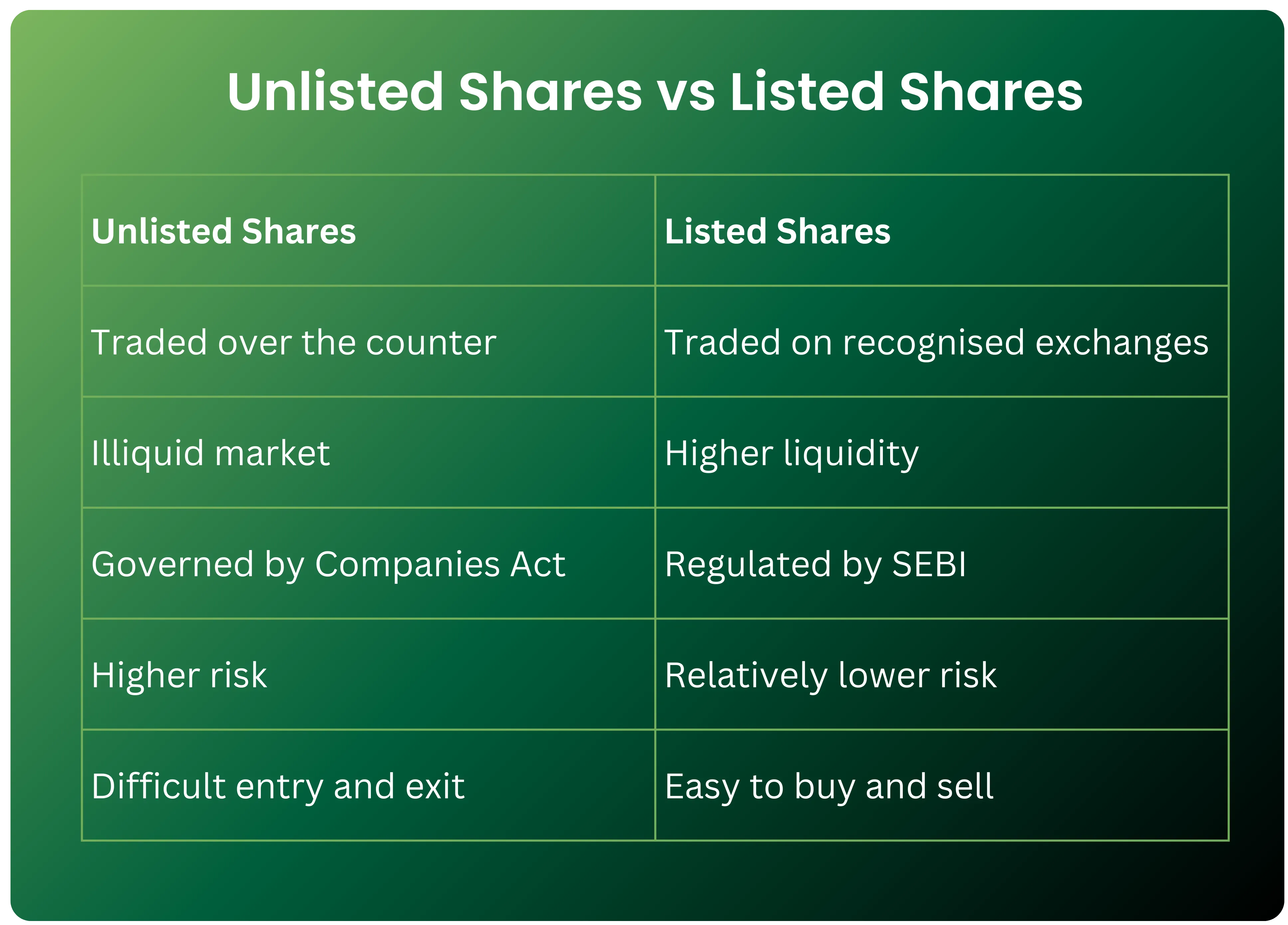
Unlisted shares are shares of a company that are not traded on recognised stock exchanges like NSE or BSE. Since there is no exchange platform, these shares are bought and sold over-the-counter (OTC), either directly between two parties or through brokers who specialize in unlisted securities. Even though they are not listed, unlisted shares are held in dematerialized form and credited to the investor’s demat account, just like listed shares. (There is no additional demat account for unlisted shares).
Types of Unlisted Shares India
Unlisted shares in India broadly fall into these categories:
1.Pre-IPO Shares
Shares are offered by companies that are planning to launch an IPO in the future.
2.Delisted Shares
Shares of companies that were once listed but later got delisted, either voluntarily or compulsorily.
3.Private Placement Shares
Shares issued to select investors without a public issue.
4.ESOP Shares
Shares issued to employees under Employee Stock Option Plans.
5.Group Shareholder Holdings
Shares held by promoters or group entities of private companies.
How Unlisted Share Trade Happens
Tradejini does not facilitate the buying or selling of unlisted shares. However, investors can hold unlisted shares in a Tradejini demat account. If you purchase unlisted shares through an unlisted share broker or dealer, you can share your Tradejini demat account details for the shares to be credited directly to that account. There are no restrictions on using a Tradejini demat account to hold unlisted shares. And so, Tradejini’s trading account cannot be used for trading in unlisted shares, as Tradejini is a SEBI-registered broker authorised to facilitate transactions only through recognised stock exchanges.
How Can You Buy Unlisted Shares?
- Brokers or dealers specialising in unlisted securities
- Direct sellers, such as employees, selling ESOP shares
- Promoters or early investors
- PMS and AIF schemes that invest in unlisted companies
Pre-IPO risks
| Advantages of Unlisted Shares | Disadvantages of Unlisted Shares |
|---|---|
| Early entry into growing companies | Not backed by stock exchanges |
| No IPO allotment uncertainty | Slow settlement process |
| Potential for higher long-term returns | Low liquidity |
| Portfolio diversification | Higher minimum investment |
| Pre-listing exposure to businesses | Limited buyers and sellers |
Lock-in period after IPO
There is no lock-in period for most unlisted shares.
The exception is Pre-IPO shares.
If a company announces an IPO and gets listed:
- Pre-IPO shareholders face a six-month lock-in period from the date of listing
- Shares cannot be sold during this period
Also Read: https://www.tradejini.com/blogs/dabba-trading-in-india
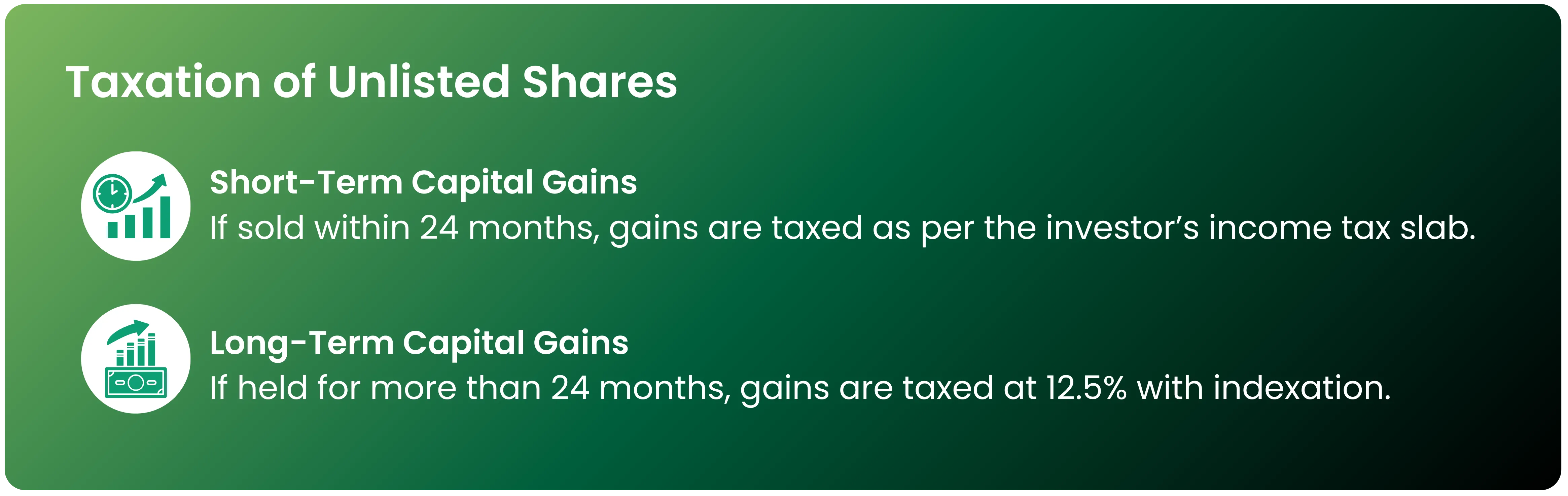
Taxation of unlisted shares 2026
SME IPO and Unlisted Shares
Before an SME company goes public, its shares remain unlisted and are typically held by promoters, early investors, or employees. Only select pre-IPO SME shares are available for trading through brokers. Not all SME shares are accessible before listing.
Key points to note:
- Entry valuation may be lower
- Liquidity is limited
- Trading happens in specified lot sizes
- Risk and valuation fluctuations are higher
Thus,
Unlisted shares sit in a grey zone between private ownership and public markets. They offer early access but demand patience, capital, and risk awareness.
For investors who understand the structure and are comfortable with limited liquidity, unlisted shares can be a meaningful long-term allocation.
Begin disciplined investing in listed shares through CubePlus and stay in control of your financial goals.
Disclaimer: The information provided in our blogs is for informational purposes only and should not be construed as financial, investment, or trading advice. Trading and investing in the securities market carries risk. Always conduct your own research and consult with a qualified financial advisor before making any investment decisions. Past performance is not indicative of future results. Copyrighted and original content for your trading and investing needs.
© 2026 — Tradejini. All Rights Reserved.
.webp%3Falt%3Dmedia%26token%3D0ead9799-20bc-4d1e-ae8f-d75ab18921b5&w=3840&q=75)