

Every trader has faced this moment…..
You open your trading app, see a stock rallying sharply, headlines are positive, social media is buzzing, and you feel the urge to jump in. The price keeps climbing. But a simple question matters here:
‘Are you buying value stocks, or are you buying hype?’
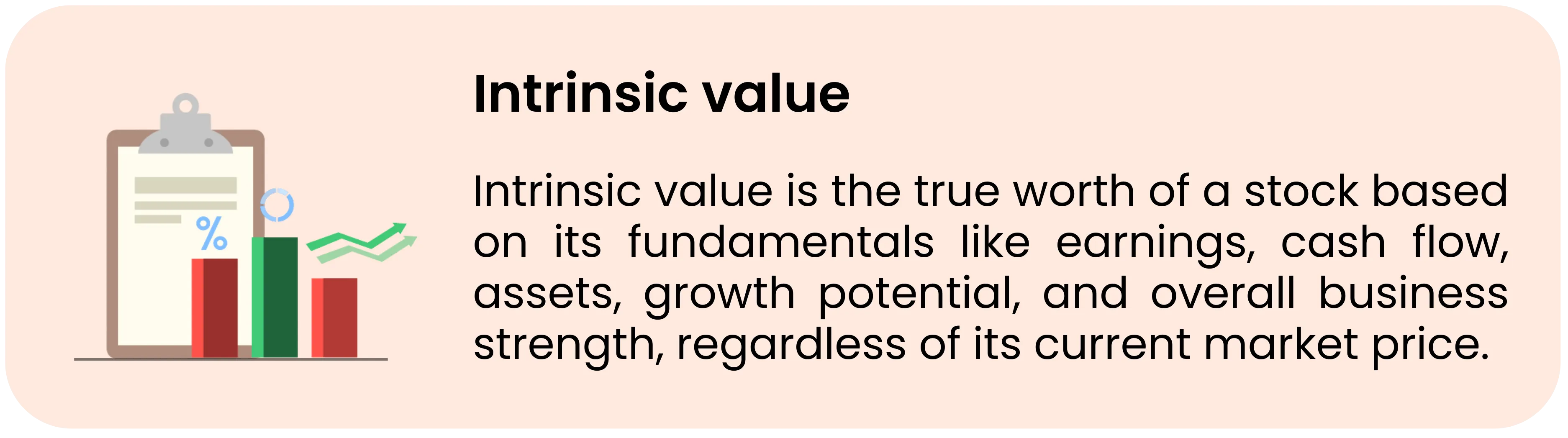
That is where intrinsic value comes in…… Intrinsic value is what a stock is actually worth based on its fundamentals. Not what the market is quoting today. Not what the news channels are discussing. Not what your friend says in a WhatsApp group. It is the business value underneath the price tag. Understanding this difference can protect you from expensive mistakes.
Price vs Value…. They Are Not the Same
The concept of intrinsic value vs market price is simple but powerful. The market price is what buyers and sellers agree on at a given moment. It moves every second. It reacts to earnings, global news, interest rates, elections, and sometimes just emotions.
Intrinsic value is different. It is calculated by looking at:
- Company earnings
- Future growth potential
- Cash flows
- Debt levels
- Industry position
- Management quality
If the market price is lower than the intrinsic value, the stock may be undervalued. If it is higher, you could be overpaying. This forms the base of fundamental analysis India investors rely on.
Why Do Stocks Trade Above or Below Their Value?
Markets are driven by expectations. If investors believe a company will grow rapidly, they may push the price far above current earnings. This is common in high-growth sectors like technology or emerging industries.
On the other hand, fear can push good companies below their true worth. During market corrections, even fundamentally strong companies become undervalued stocks India investors actively look for.
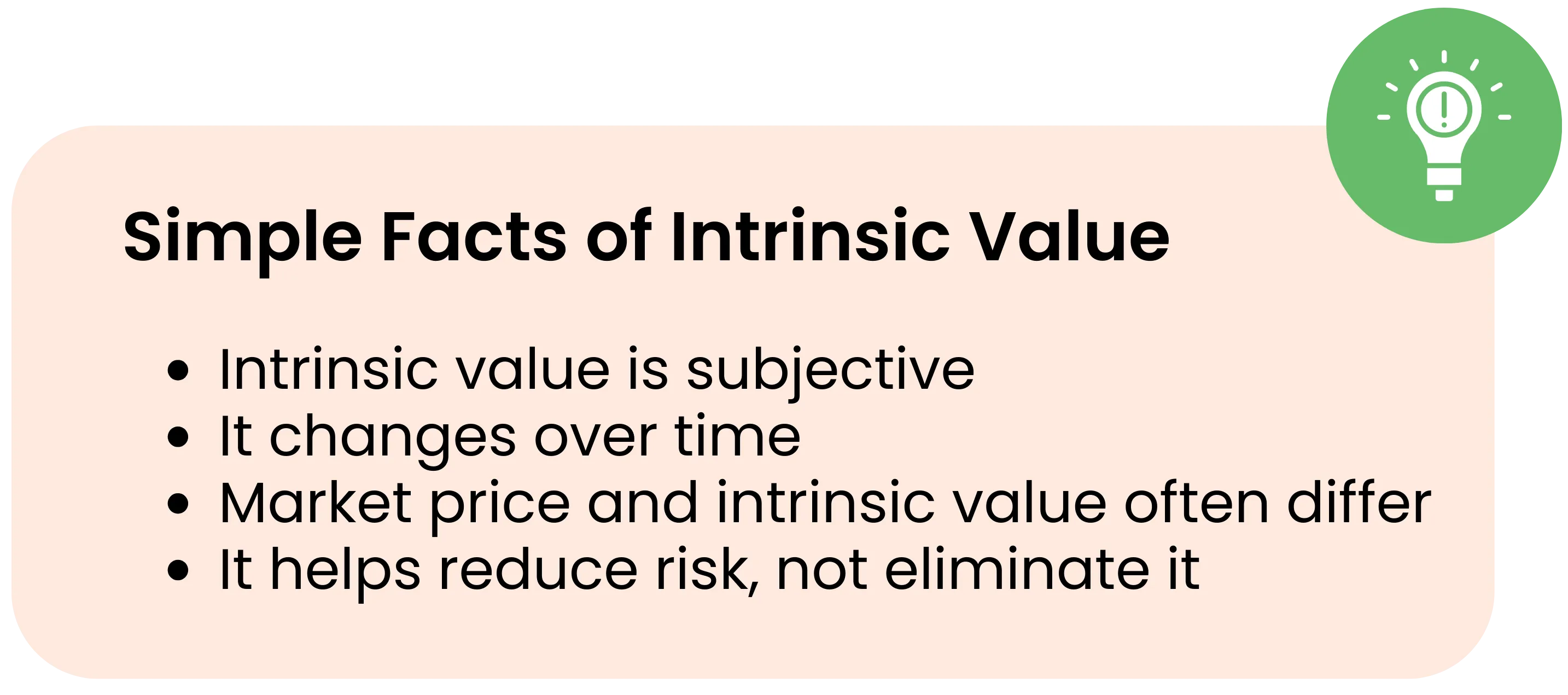
So the price fluctuates. Value changes slowly. Smart participants try to estimate the value and then compare it with the price.
How Do You Estimate Intrinsic Value?
1. Discounted Cash Flow Method
The discounted cash flow method India investors use estimates how much future cash flows are worth today. Since money received in the future is less valuable than money today, those earnings are discounted back.
If the calculated value is higher than the current market price, it may indicate a margin of safety.
2. Price to Earnings Ratio
The PE ratio compares the stock price with its earnings per share. If a company’s PE is significantly higher than that of its industry peers, investors are paying a premium. That premium may be justified if growth is strong. If not, the stock could be overpriced.
3. Price to Book Value
The price to book value ratio is useful for banks and asset-heavy businesses. It helps assess whether the company is trading at a reasonable valuation compared to its assets.
4. Relative Comparison
Sometimes, comparing similar companies in the same sector gives clarity. If one company is trading at much higher valuation multiples without strong reasons, caution is needed.
The Concept of Margin of Safety
The idea of margin of safety investing is critical. Even experienced analysts cannot calculate intrinsic value perfectly. There are assumptions involved about growth, interest rates, and industry cycles.
That is why the idea of margin of safety matters. If you estimate a stock’s intrinsic value at ₹500, buying it at ₹480 offers little cushion. Buying it at ₹350 gives you a safety buffer. This cushion protects you from errors in estimation and unexpected business slowdowns.
For active traders, margin of safety may translate into better risk reward planning. Even in positional trades, understanding value helps avoid entering at extreme highs.
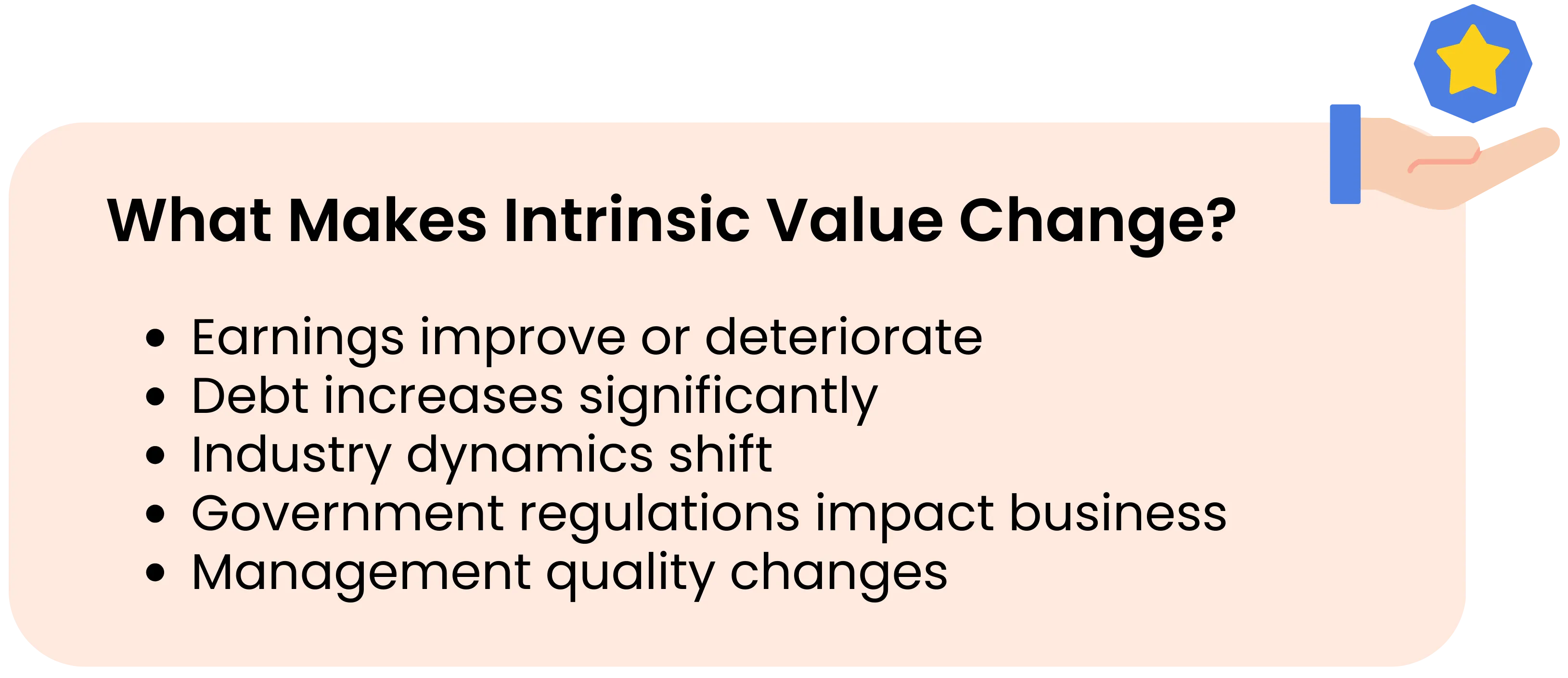
For example, if a company suddenly reports strong and sustainable profit growth, its intrinsic value rises. If debt spirals out of control, value drops. This is why continuous tracking of fundamentals is important.
Common Mistakes Investors
Many retail participants focus only on price movement. A stock moving up feels attractive. A stock falling feels dangerous. But price momentum alone does not tell you whether the stock is expensive or cheap.
Another common mistake is blindly trusting high growth projections. Just because earnings may grow in the future does not mean any price is justified today.
Paying too much for growth reduces future returns. The stock may continue rising for some time, but long-term returns depend heavily on the price you pay.
| Intrinsic Value for Traders | Intrinsic Value for Long-Term Investors |
|---|---|
| Do not rely heavily on intrinsic value for decision-making | Strongly rely on intrinsic value to identify undervalued stocks |
| Use valuation mainly to avoid bubbles or weak trades | Aim to buy quality businesses below true worth |
| Focus on short-term price movements and volatility | Focus on long-term growth and value realization |
| Higher risk due to price-value gaps and volatility | Lower risk with patience and value-based investing |
Don’t Let Hype Decide Your Entry
Markets will always fluctuate, news will create excitement, and prices often move faster than fundamentals. That is why intrinsic value matters. It acts as an anchor, reminding you that behind every candlestick chart there is a real business generating real cash flow. Before placing your next order, pause and ask yourself whether you are paying a fair price or simply following the trend. That one question can help protect your capital, strengthen your confidence, and build long term consistency in your trading journey with Tradejini.
Using Tradejini’s tools to track financial ratios, earnings history and price trends can support a more structured approach. Open your CubePlus account now!
Disclaimer: The information provided in our blogs is for informational purposes only and should not be construed as financial, investment, or trading advice. Trading and investing in the securities market carries risk. Always conduct your own research and consult with a qualified financial advisor before making any investment decisions. Past performance is not indicative of future results. Copyrighted and original content for your trading and investing needs.
© 2026 — Tradejini. All Rights Reserved.
.webp%3Falt%3Dmedia%26token%3D0ead9799-20bc-4d1e-ae8f-d75ab18921b5&w=3840&q=75)