

A few years ago, an investor bought shares of a well-known company and decided to do the sensible thing, i.e., hold on patiently. Every year, he checked the price, expecting steady progress. But each time, the number looked familiar. The business was still around, the headlines were calm, and nothing seemed broken. Yet after several years, the investment was still at roughly the same level. Nothing had gone wrong, but nothing had really worked either. Without noticing it, his money had quietly stopped growing.
This phase is known as time correction.
What Is Time Correction?
Time correction refers to a period when an investment remains flat for a long time. The price does not fall sharply, but it also does not move meaningfully higher. Instead, it stays trapped within a narrow range, sometimes for several years.
Because there is no sudden fall, time correction does not feel stressful. However, it slowly eats into returns and tests an investor’s patience more than a sharp correction ever would.
How Time Correction Hurts Your Returns
The real damage from time correction comes from opportunity cost in investing. Money that remains stuck in a non-performing asset misses the chance to earn returns elsewhere.
Over time, inflation reduces purchasing power. When returns fail to beat inflation, investors suffer from poor real returns vs inflation India, even if the investment value looks unchanged on paper.
Understanding Time Correction With an Example
There have been long phases where Indian stocks and indices delivered flat returns. Periods of Nifty 50 sideways market analysis show that even broad indices can remain rangebound for extended durations. Investors who stayed invested did not see meaningful capital appreciation, while broader markets and even simple fixed-income options performed better during the same period.
The stock did not collapse, but compared to other available choices, the investor ended up worse off. This difference is the true cost of time correction. (Time correction in stock market India 2026 have become more relevant as markets digest past rallies and valuations).
Infosys share price offers a clear example of a market correction…
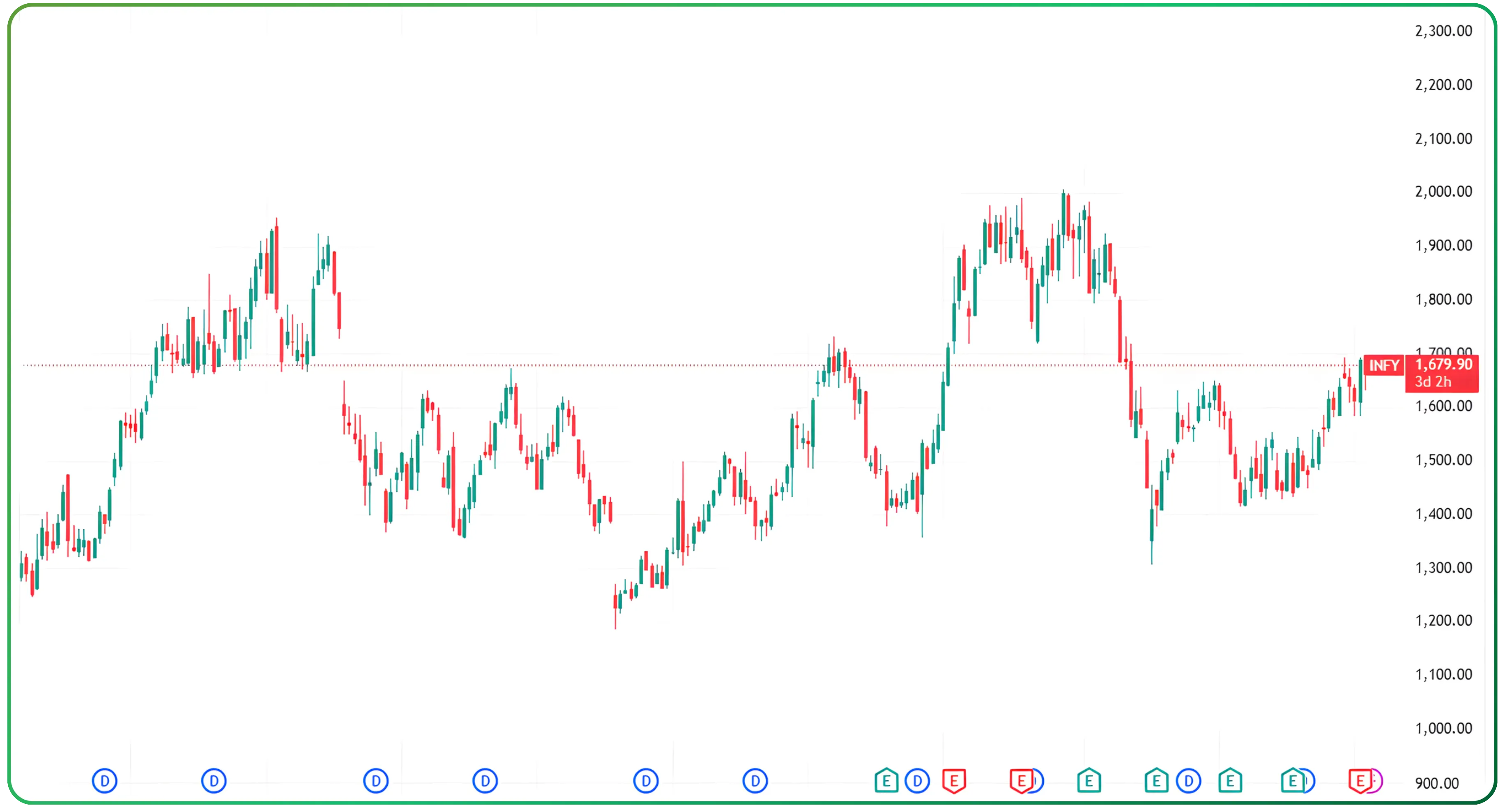
After rising sharply and trading close to the ₹1,950–2,000 zone, the stock entered a phase where selling pressure increased. Over the following weeks, the price corrected to the ₹1,450–1,500 range. This decline happened over a relatively short period and was driven by concerns around IT sector growth, global demand slowdown, and valuation pressures.
This fall of around 20–25 percent is a classic market (price) correction. The price adjusted quickly, fear was visible in the market, and short-term losses were clearly felt by investors. However, once the correction played out and expectations reset, the stock gradually stabilised.
Time Correction vs Price Correction
A price correction happens quickly and is easy to spot. Prices fall sharply, fear takes over, and investors react emotionally. Time correction works differently. Prices move sideways, boredom sets in, and doubts begin to creep in. The loss is not immediate or visible, but it accumulates slowly over time.
While price corrections often create opportunities, time corrections demand discipline and thoughtful decision-making.
Also Read: Thinking Like a Turtle | How Traders & Investors See Market Differently
Does Time Correction Affect Only Equity?
No. Time correction can occur across asset classes. Gold and silver can remain rangebound when supply comfortably meets demand. Real estate prices can stagnate for years during periods of weak demand or high interest rates. Even fixed-income investments may struggle to beat inflation, leading to negligible real returns.
Why Do Markets Enter Time Correction?
Time correction usually occurs when valuations run ahead of fundamentals or when earnings growth slows. At times, investors rotate money across sectors, keeping the overall market flat. In uncertain economic environments, investors may also prefer to wait, leading to prolonged sideways movement.
In most cases, the market is simply digesting past growth and waiting for clarity.
How Should Investors Handle Time Correction?
Time correction cannot be eliminated, but its impact can be reduced. The key is not blind patience, but periodic review and rebalancing. Instead of sticking to a fixed allocation forever, investors can gradually shift money toward areas that offer better value and stronger growth potential.
Investing works best when you stay informed and disciplined. CubePlus helps you do both.
👉 Start your investing journey with CubePlus
Disclaimer: The information provided in our blogs is for informational purposes only and should not be construed as financial, investment, or trading advice. Trading and investing in the securities market carries risk. Always conduct your own research and consult with a qualified financial advisor before making any investment decisions. Past performance is not indicative of future results. Copyrighted and original content for your trading and investing needs.
© 2026 — Tradejini. All Rights Reserved.
.webp%3Falt%3Dmedia%26token%3D0ead9799-20bc-4d1e-ae8f-d75ab18921b5&w=3840&q=75)