First, the big news! Edelweiss Reopens One Fund, Cancels Paused SIPs in Six Others
Edelweiss Mutual Fund will resume fresh subscriptions in its MSCI India Domestic & World Healthcare 45 Index Fund from October 26, 2026. Paused SIPs and STPs in the fund will restart on November 20, subject to applicable overseas investment limits.
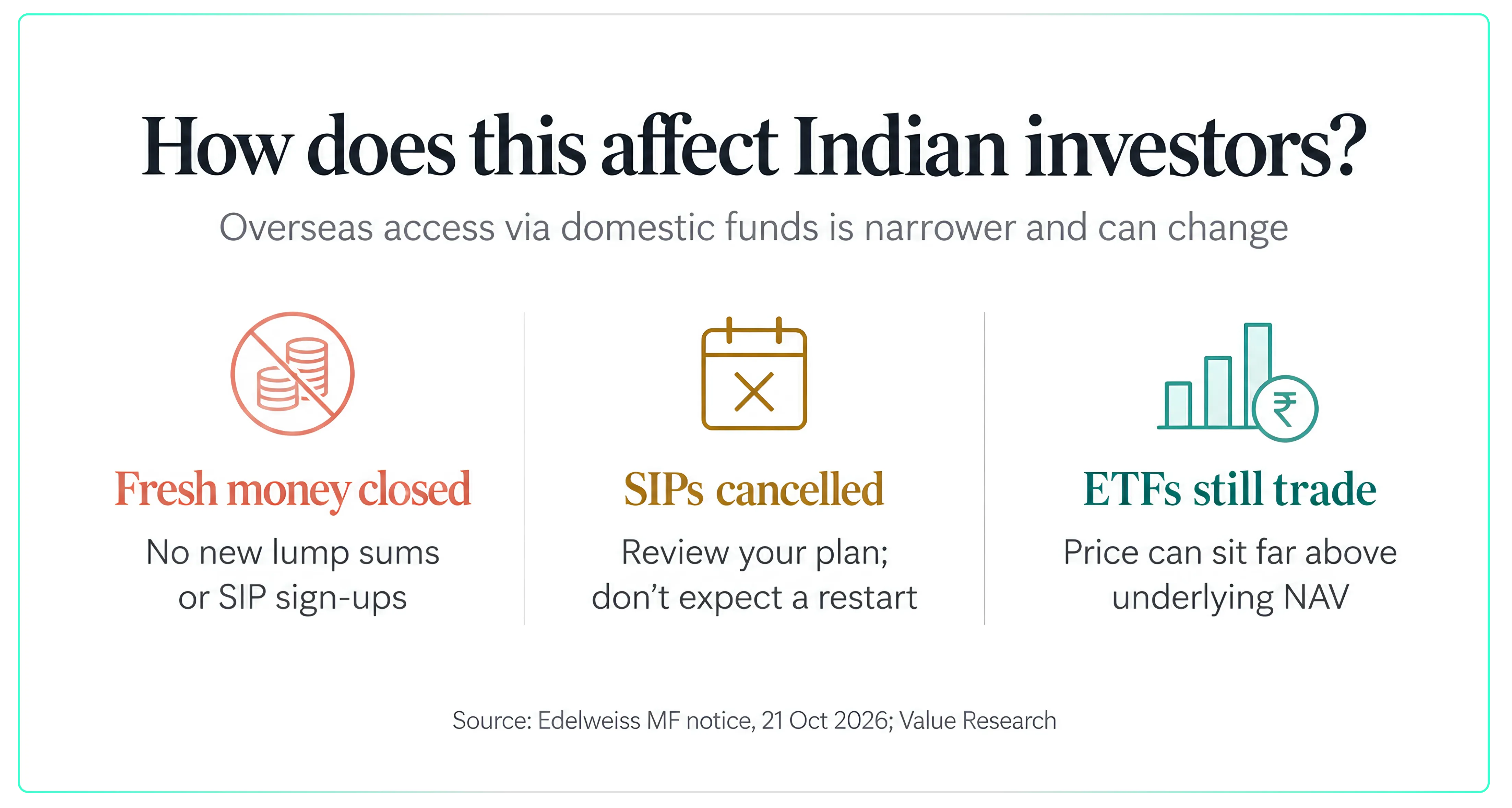
However, the fund house has decided not to reactivate paused SIPs and STPs in six international funds: ASEAN, Greater China, US Technology, Emerging Markets Opportunities, Europe Dynamic, and US Value. These systematic transactions had been suspended since August 2026.
The decisions highlight a continuing challenge for Indian investors looking to invest in overseas markets through domestic mutual funds.
What Is Overseas Investing?
Overseas investing means putting money into financial assets outside your home country. For Indian investors, this could mean investing in US technology companies, European businesses, Chinese stocks or global healthcare companies.
Instead of opening an overseas brokerage account and buying foreign shares directly, investors can access international markets through mutual funds in India. These include international funds and fund of funds (FoFs), which invest in overseas mutual funds or other permitted global investment vehicles.
For example, a fund focused on US technology companies can give Indian investors exposure to that sector without requiring them to buy individual US-listed stocks themselves.
Why Are Indian Mutual Funds Restricting Overseas Investments?
The Reserve Bank of India (RBI) and the Securities and Exchange Board of India (SEBI) have frameworks governing overseas investments by mutual funds.
The overall industry limit for mutual funds investing overseas is $7 billion, while the limit for overseas investments in ETFs is $1 billion. Individual fund houses must also operate within the applicable limits and their available investment headroom.
The limits became a constraint in February 2022, when the industry approached the permitted overseas investment ceiling. Fund houses subsequently restricted fresh investments in several international schemes to avoid breaching the limits.
As a result, some funds stopped accepting lump-sum investments, others suspended new SIP registrations, and some later paused existing systematic transactions as well.
Why Can Overseas ETFs Trade at a Premium?
An ETF's net asset value (NAV) represents the value of its underlying holdings per unit. Its market price, however, is determined by demand and supply on the exchange.
When investors want to buy an overseas ETF but the supply of available units is limited, its market price can rise above its NAV. This is known as a premium.
For example, if an ETF has an NAV of ₹100 but trades at ₹150, it is trading at a 50% premium. If that premium later narrows, the market price can fall even if the underlying investments do not decline in value.
This makes checking the premium or discount particularly important when investing in overseas ETFs.
What Should Investors Keep in Mind?
Overseas investments can help diversify a portfolio across countries, currencies, and industries. However, they also carry risks, including currency movements, global market volatility, and restrictions on fresh investments.
Before investing, check whether a mutual fund is accepting new money, understand the markets and sectors it invests in, and review its costs and risks. If considering an overseas ETF, compare its market price with its latest available NAV rather than relying on its price alone.
The key takeaway is that overseas investing remains an option for Indian investors, but the route used to access global markets matters just as much as the investment itself.
Your Quick Guide to Investing in Mutual Funds on Tradejini
Disclaimer: The information provided in our blogs is for informational purposes only and should not be construed as financial, investment, or trading advice. Trading and investing in the securities market carries risk. Always conduct your own research and consult with a qualified financial advisor before making any investment decisions. Past performance is not indicative of future results. Copyrighted and original content for your trading and investing needs.
© 2026 — Tradejini. All Rights Reserved.