

 Concalls
 Annual reports
CFF Fluid Control Ltd., founded in 2012, is an emerging leader in India’s defense manufacturing ecosystem. From its roots as a small marine component manufacturer, the company has grown into a full-cycle provider of critical systems for naval and submarine platforms. Its evolution is marked by key collaborations with international defense majors like Naval Group and Atlas Elektronik, and deep integration with Indian defense PSUs like MDL and GRSE.
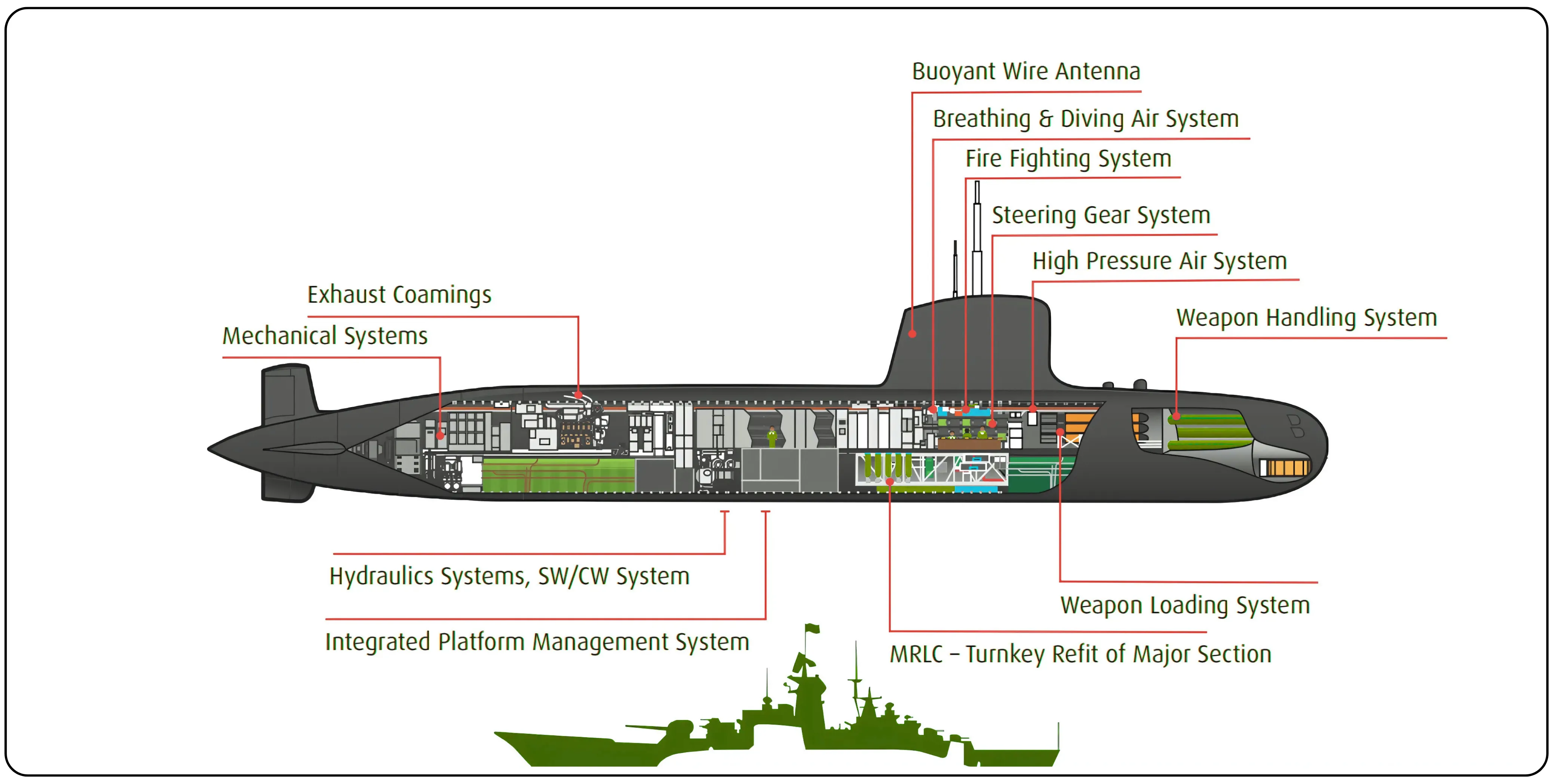
CFF has expanded its capabilities across sonar systems, platform management systems, torpedo launch assemblies, high-pressure air systems, buoyant wire antennas, and turnkey refit services.
CFF’s business model
At its core, CFF Fluid Control operates a project-based B2B model, serving government defense units, naval shipyards, and select global defense technology providers. Its business model has the following layers:
Component & system manufacturing:
The company designs and manufactures mission-critical systems such as sonar housing, torpedo launch systems, HVAC systems, platform management software-integrated systems, and exhaust coamings. These are sold to shipyards or defense PSUs as part of shipbuilding or submarine projects.
Turnkey project execution:
CFF goes beyond components; it offers turnkey lifecycle services including retrofitting, integration of new systems in existing vessels, and major system upgrades. This offers higher margins and recurring revenue from aging naval assets.
Technology transfer & indigenization:
Through agreements with Naval Group and Atlas Elektronik, CFF receives technical designs and manufacturing rights for specific systems. These are localized under India's Make in India policy, allowing CFF to reduce costs, increase margins, and offer full lifecycle support domestically.
Lifecycle support & refit services:
Once a system is delivered, CFF often remains the sole authorized vendor for service, spare parts, and technical upgrades. This sustainment role ensures CFF provides ongoing maintenance and support for naval platforms throughout their operational life. This forms a recurring revenue stream throughout the ship or submarine’s 20–30 year lifespan.
Custom R&D & prototyping:
For upcoming defense programs, CFF participates in prototype development under Make-I/Make-II projects, which, once approved, lead to multi-year production orders. This R&D-led approach helps build a moat and prevents commoditization.
Domestic defence-centric focus:
Nearly all its current business is centered around Indian naval programs. However, with the foundation built, CFF can gradually tap allied defense exports in the future.
This hybrid of one-time project revenue, recurring support income, and innovation-led indigenization positions CFF as a high-margin niche defense play with scalability.
Also read: Port-led Development in India A Sectoral Outlook
CFF’s financial trend
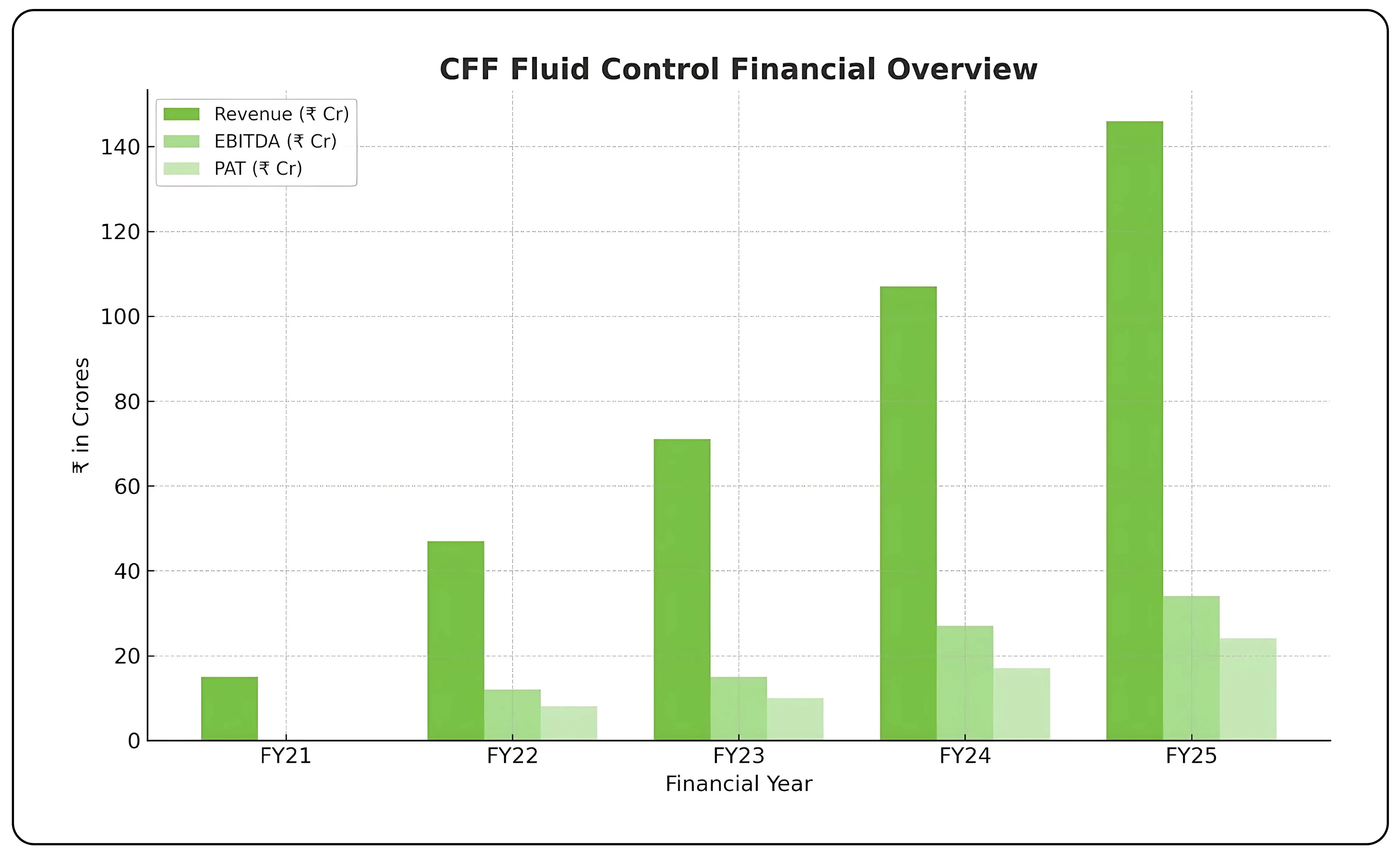
CFF has delivered consistent, high-quality growth over the past five years. The topline and profitability have grown at a solid clip, driven by operating leverage, cost-efficient execution, and a shift to higher-value projects.
| Financial Year | Revenue (₹ Cr) |
EBITDA (₹ Cr)* |
PAT (₹ Cr) |
|---|---|---|---|
| FY21 | 15 | 0 | 0 |
| FY22 | 47 | 12 | 8 |
| FY23 | 71 | 15 | 10 |
| FY24 | 107 | 27 | 17 |
| FY25 | 146 | 34 | 24 |
Margins have expanded consistently, and return ratios have improved, reflecting high capital efficiency and stronger business quality as the company has advanced up the value chain.
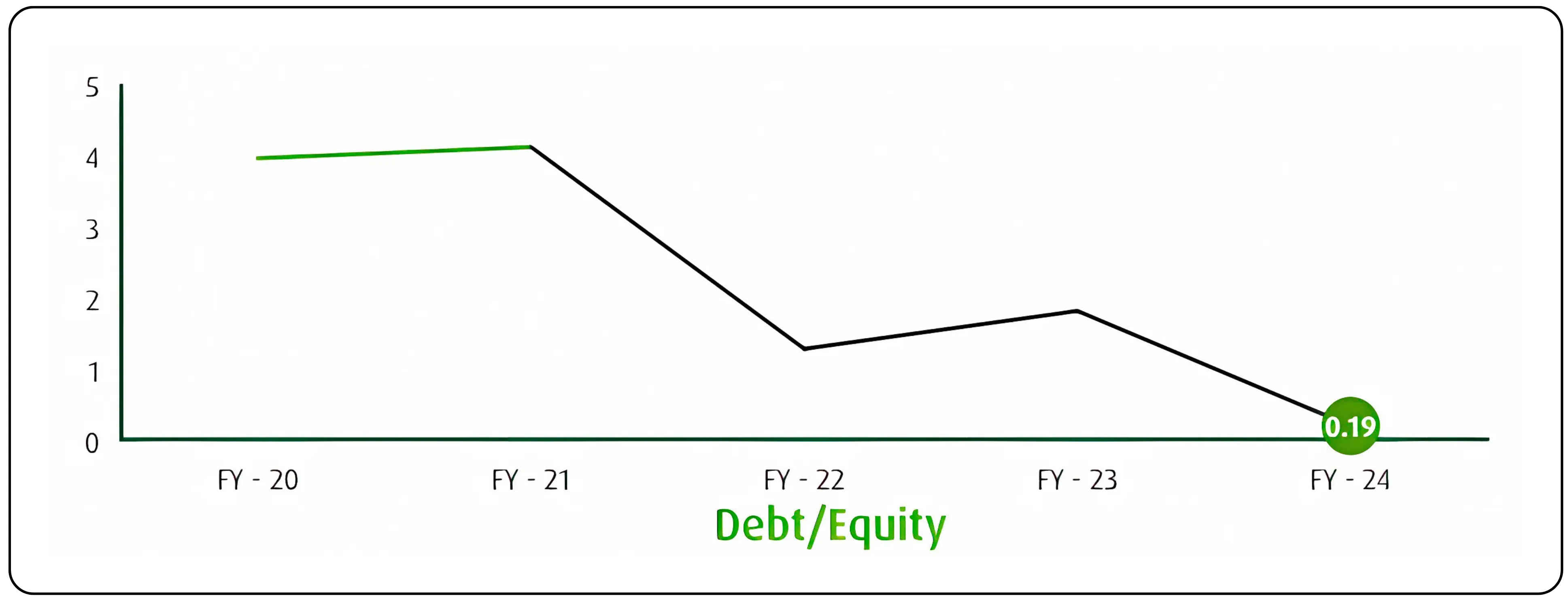
CFF Fluid Control Ltd. maintains a strong and conservative financial position, with a low debt-to-equity ratio of 0.19 indicating minimal leverage. Its current ratio of 4.24 reflects ample liquidity and effective working capital management, reinforcing the company’s financial resilience and ability to meet short-term obligations comfortably.
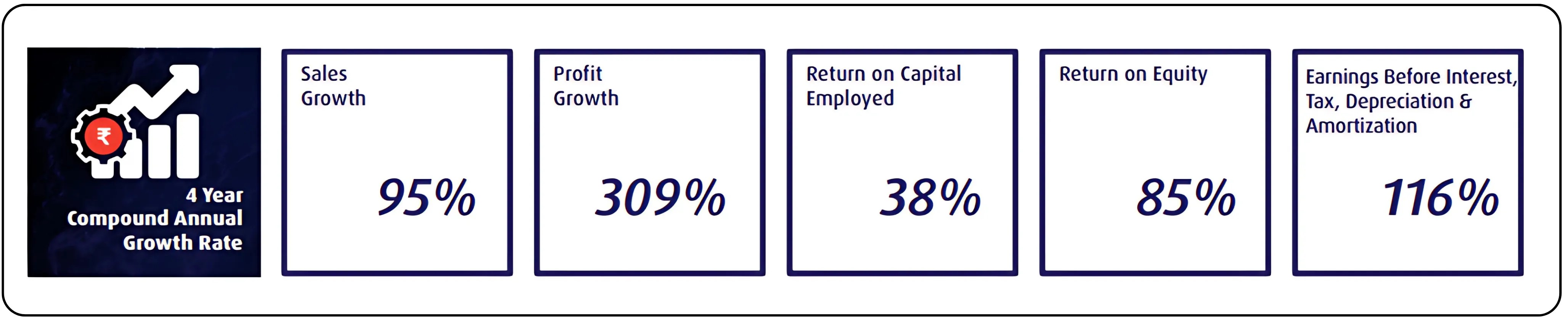
Over the last four years, CFF Fluid Control Ltd. has delivered good financial performance, underscored by a 95% CAGRin sales and 309% profit growth. The company’s operating efficiency is equally good, with a Return on Capital Employed (ROCE) of 38% and Return on Equity (ROE) of 85%, reflecting prudent capital deployment and rising profitability. An EBITDA growth of 116% over the same period further highlights the company’s ability to scale while maintaining healthy margins. These figures reinforce CFF’s position as a high-growth, capital-efficient defense engineering firm.
Growth drivers
Several key themes are powering CFF’s growth trajectory:
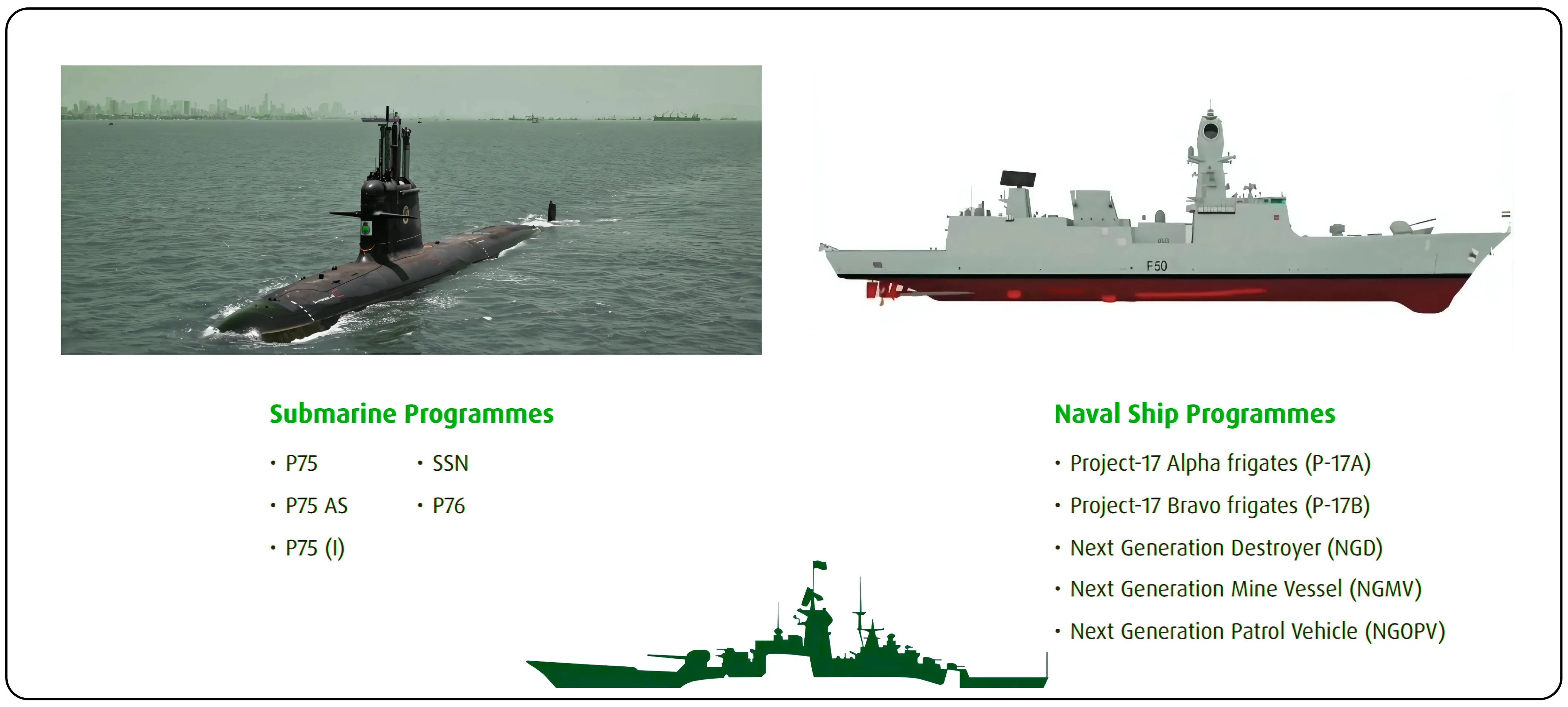
Alignment with India's defencecapex
Projects like P75 (Scorpène-class submarines), P75I, SSN, and P17 frigates offer long-term visibility for system suppliers like CFF.
Entry into critical system domains:
The company’s entry into sonar, buoyant wire antennas, and weapon handling systems places it in high-technology zones with limited competition.
Technology partnerships:
Collaborations with Atlas and Naval Group bring global tech and validation while keeping control of manufacturing and IP domestically.
Agile and lean execution:
With fewer than 250 employees and around 100 skilled or engineering staff, CFF remains asset-light yet innovation-focused.
Expanding order book:
The company’s current order book exceeds ₹600 crore, providing 3–4 years of revenue coverage and strong forward guidance.
Industry outlook and room for growth
India’s defense capital expenditure is on a sustained growth path. The naval segment, in particular, is seeing rising investments in next-gen submarines, mine countermeasure vessels, and destroyers. The country aims to be self-reliant in defense production, and players like CFF with proven track records are set to benefit.
Given that Indian Navy platforms have lifespans of 30+ years, CFF is poised to generate ongoing service and upgrade revenue even after initial deliveries. There is also potential to tap defense exports to friendly nations in areas like refit services, torpedo systems, and platform management units.
Adjacent areas like underwater drones, AI-based control systems, and indigenous sensors also offer long-term upside if CFF expands its R&D investments.
Also read: Mahindra Logistics Positioned for Transformational Revenue Growth
Risks and considerations
Despite strong fundamentals, a few business risks exist:
High client concentration: A large portion of revenue comes from a handful of government clients. Delays or deferments in Navy budgets could impact growth.
Project execution delays: Defense projects often involve complex compliance, coordination with multiple stakeholders, and prolonged testing cycles. These can delay revenue recognition.
Technology partner risk: A portion of CFF’s systems rely on ongoing collaboration with foreign tech firms. Any breakdown in these alliances or geopolitical shifts could affect product pipelines.
Limited export footprint: While its domestic positioning is strong, lack of presence in export markets makes it vulnerable to Indian defense procurement cycles.
Competitive tendering: Defense contracts are awarded through competitive bidding. Rising private sector participation may put pressure on margins over time.
Valuation
At a market capitalization of ₹1,213 crore, CFF Fluid Control Ltd. is trading at a P/E multiple of 50.9, which is below the broader defense industry average P/E of 74. This suggests the stock is relatively undervalued compared to its peers, despite delivering strong growth and profitability metrics. On an EV/EBITDA basis, CFF is valued at 29.8, also lower than the industry average of 38.05. These valuation multiples indicate that while the market is pricing in CFF’s growth potential and capital efficiency, it has not yet fully priced in the premium typically afforded to high-growth, high-margin defense companies. The discount to industry averages could offer upside if the company continues to scale its order book and improve earnings visibility.
Future outlook
CFF Fluid Control Ltd. is well-positioned to capitalize on India's long-term defense modernisation plans. With over ₹600 crore in the order book and alignment with major naval programs such as P75(I), SSN, and next-generation surface vessels, the company has strong revenue visibility over the next three to five years.
The increasing focus on indigenization under the ‘Make in India’ initiative creates continued demand for CFF’s capabilities in sonar systems, torpedo launch mechanisms, integrated platform systems, and high-pressure air solutions. Ongoing collaborations with global technology partners like Naval Group and Atlas Elektronik are expected to expand the company’s technological edge, enabling it to participate in newer categories such as autonomous systems and advanced communication modules.
The company also has headroom to diversify into allied areas such as underwater drones, AI-driven naval systems, and defense exports to other nations, segments that align with both national policy and global defense trends.
Also read: Watertech Leader Transforming Dirty Water into Liquid Gold
Disclaimer: The information provided in our blogs is for informational purposes only and should not be construed as financial, investment, or trading advice. Trading and investing in the securities market carries risk. Always conduct your own research and consult with a qualified financial advisor before making any investment decisions. Past performance is not indicative of future results. Copyrighted and original content for your trading and investing needs.
© 2025 — Tradejini. All Rights Reserved.


