

In early April 2025, President Trump unleashed sweeping ‘Liberation Day’ tariffs spanning from a 10% baseline to sharply higher rates targeting countries like China and Europe, which triggered a dramatic market sell-off. The S&P 500 plunged more than 10% in just two days, marking one of its steepest declines since the COVID-19 downturn and wiping out trillions in market value. This episode illustrates how trade dynamics, especially abrupt tariff implementations, can stir volatility, impacting both investor sentiment and the broader economic outlook.
That is why international trade and the stock market are closely intertwined — policy shifts like tariffs can funnel shockwaves through global markets in the blink of an eye.
Also read:
India Faces Tariff Pressures With Steady Market Response
International Trade
In today’s interconnected world, no country produces everything it needs. Instead, nations trade goods and services, leveraging their strengths while importing what they can’t produce efficiently. This process, known as international trade, has shaped global economies for centuries. But like any economic activity, trade comes with both benefits and costs.
Why Countries Trade
The simplest explanation for trade lies in comparative advantage, the idea that countries should produce goods where they are most efficient and trade for the rest. For instance, India may have an advantage in producing textiles due to its large labour force, while Japan might excel in manufacturing high-tech electronics because of its advanced technology. By trading, both countries get more of what they want at lower costs.
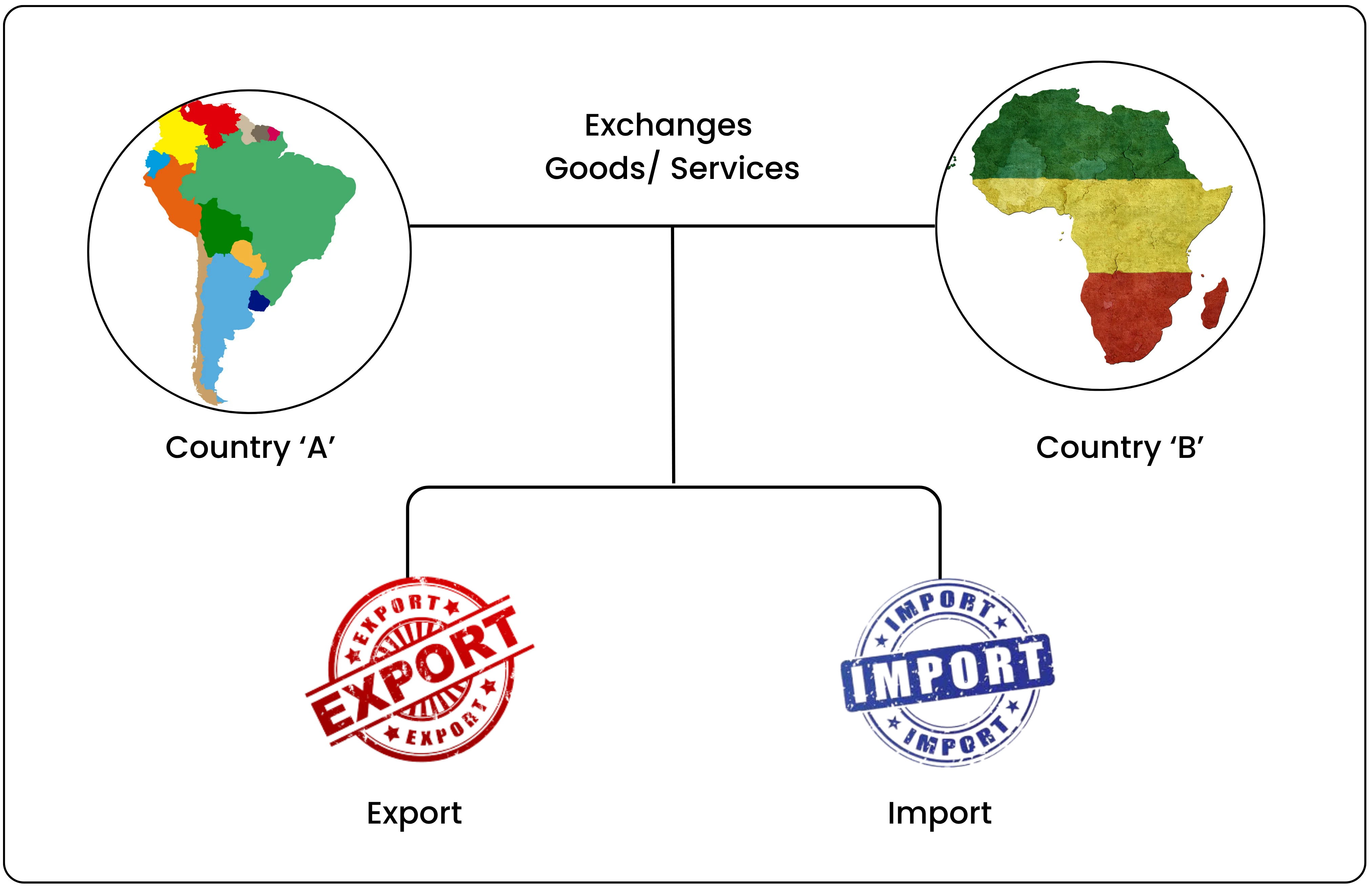
Economic models show key benefits of trade:
- Efficiency & Specialization: Countries focus on producing goods where they’re most efficient, leading to higher productivity.
- Economies of Scale: Producing for global markets allows companies to produce in larger quantities, lowering per-unit costs.
- Consumer Benefits: Trade increases product variety and lowers prices, giving consumers more choices.
Example: Imagine India importing smartphones from South Korea while exporting pharmaceutical products. Consumers in India get access to high-quality phones at competitive prices, while South Korea benefits from affordable medicines.
The Costs of Trade
While trade boosts overall economic welfare, it doesn’t benefit everyone equally.
Some common drawbacks include:
- Job Losses in Certain Industries – Domestic industries that can’t compete with imports may shrink, leading to layoffs. For example, if India imports cheap steel, local steelworkers might lose jobs.
- Increased Competition for Domestic Producers – Companies producing similar goods may face pressure to cut prices or shut down.
- Economic Inequality – Benefits of trade often go to highly skilled workers and competitive industries, while less competitive sectors may suffer.
Also read:
2024 US Elections: Impact on Indian Stock Market
Example: Consider a country with a strong steel industry. If cheaper imported steel floods the market, local prices drop. Consumers of steel products (like car manufacturers) benefit, but steelworkers and producers lose out.

Governments justify these measures for several reasons:
One common rationale is infant industry protection, where emerging sectors are shielded from foreign competition until they become competitive. National security concerns also play a role, with governments safeguarding industries vital to defense and strategic interests. Another reason is job protection, aimed at reducing the impact of foreign competition on domestic employment. In some cases, political pressure from industries with strong lobbying power can influence policymakers to impose such measures.
Economic Impact of Restrictions
Trade restrictions have measurable effects on both producers and consumers:
- Tariffs make imported goods costlier, benefiting domestic producers but hurting consumers through higher prices and reduced variety.
- Quotas limit supply, raising prices and often leading to inefficiency.
- Export subsidies can help domestic exporters but may lead to overproduction.
Example: If India places a quota on foreign cars, domestic carmakers might sell more, but consumers could end up paying higher prices for fewer choices.
International Trade and the Stock Market
International trade plays a vital role in shaping stock market trends, as changes in trade policies, tariffs, and global demand can directly impact company earnings and sector performance. Export-oriented firms benefit from open markets and favourable trade agreements, while industries facing import competition or trade restrictions may see profits squeezed. Investors often track trade data, currency movements, and geopolitical developments to anticipate market shifts, making trade dynamics a key driver of both short-term volatility and long-term investment opportunities.
Also read:
How Global Economic Environment is Rapidly Changing
Balancing the Equation
In theory, free trade maximizes global welfare by allowing countries to specialize and exchange goods without barriers. However, in practice, trade policies must strike a balance between economic efficiency and protecting vulnerable sectors.
For investors, understanding trade dynamics is crucial. Global trade shifts can impact industries, commodity prices, and even stock markets. A sudden tariff on steel, for example, might boost domestic steel stocks but hurt automobile manufacturers who rely on cheap steel imports.
Disclaimer: The information provided in our blogs is for informational purposes only and should not be construed as financial, investment, or trading advice. Trading and investing in the securities market carries risk. Always conduct your own research and consult with a qualified financial advisor before making any investment decisions. Past performance is not indicative of future results. Copyrighted and original content for your trading and investing needs.
© 2025 — Tradejini. All Rights Reserved.
.webp%3Falt%3Dmedia%26token%3D0ead9799-20bc-4d1e-ae8f-d75ab18921b5&w=3840&q=75)


