Most retail traders approach options with a directional mindset. Calls are bought when prices are expected to rise and puts are bought when weakness is expected. The Cash Secured Put, often referred to as a CSP, works differently. It is an options selling strategy designed for traders who are willing to own a stock at a lower price while collecting premium income during the waiting period.
The structure is straightforward. A trader sells a put option on a stock they are comfortable owning and keeps enough capital available to purchase the shares if assignment takes place at expiry.
For Indian markets, this approach is particularly relevant in large-cap stocks with liquid option chains such as HDFC Bank, ICICI Bank, and Reliance Industries.
Understanding the Setup
The first step is identifying a liquid stock with sufficient option activity. Monthly expiries are generally preferred because they provide a better balance between premium collection and time decay.
The option chain in NxtOption allows traders to evaluate strikes, implied volatility, open interest, and premium values directly from a single screen.
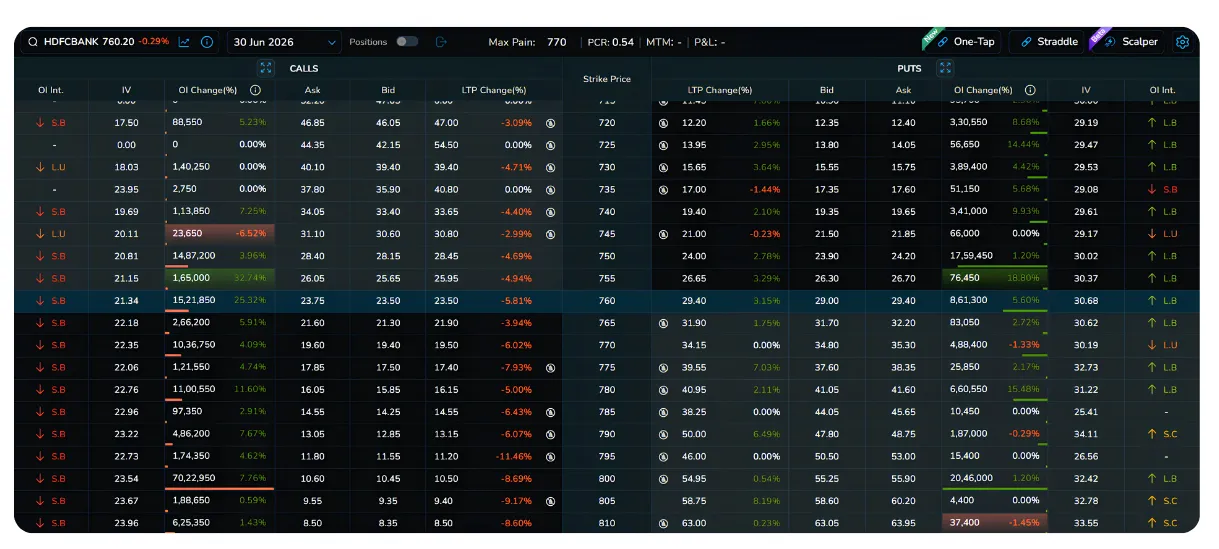
In this example, the trader selects an out-of-the-money put strike below the current market price. Many CSP traders prefer strikes with a higher probability of expiring worthless rather than aggressively choosing strikes closer to the current market price simply to maximise premium collection.
The objective is not aggressive speculation. The objective is to collect premium while keeping a comfortable entry level if assignment occurs.
Building the Position
Once the strike is selected, the short put position can be created directly through the order window.
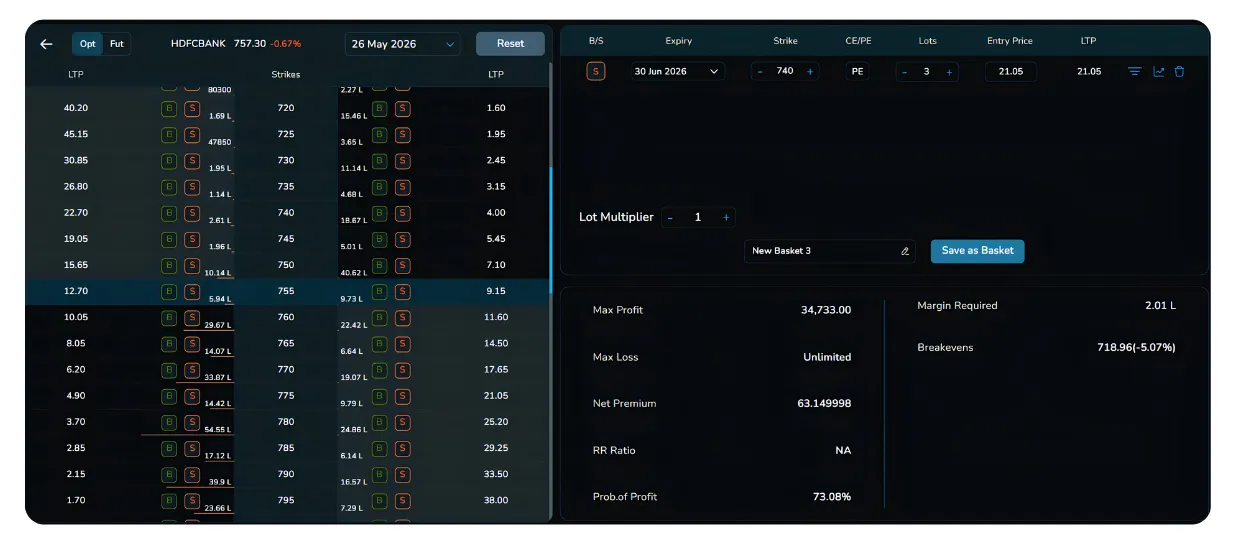
The premium received is credited immediately after execution. Since this is a cash secured structure, the trader must maintain sufficient capital to take delivery of shares if the option expires in the money.
This distinction matters. A CSP is not a leveraged naked option position. The trade is backed by cash reserved for potential delivery.
Evaluating Risk and Reward
Before entering the trade, the payoff structure should be reviewed carefully.
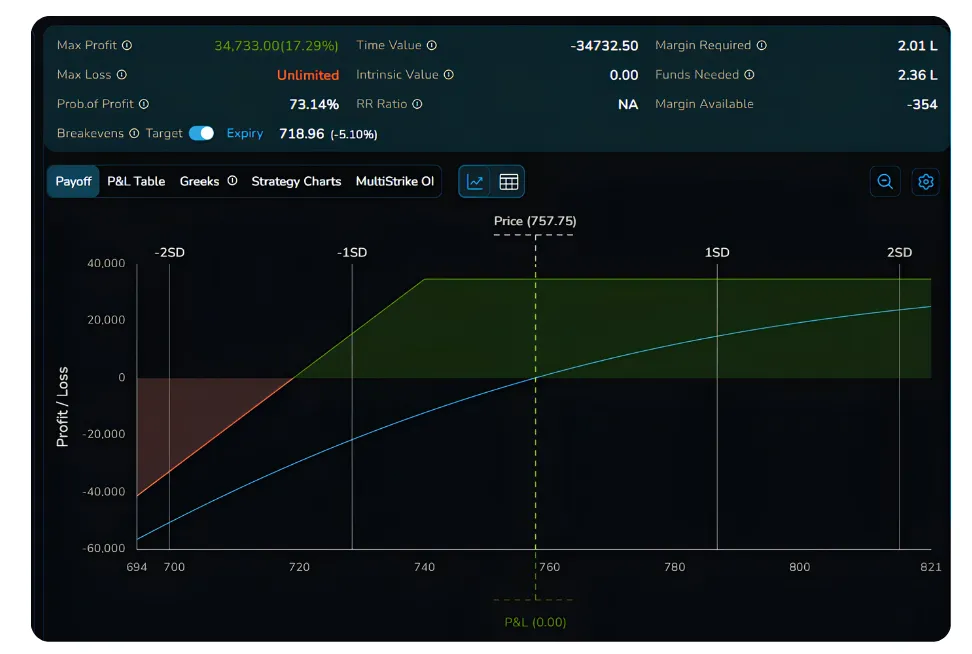
A Cash Secured Put has three broad outcomes:
If the stock stays above the strike price, the option expires worthless and the premium is retained.
If the stock closes slightly below the strike price, assignment occurs and shares are purchased at an adjusted cost basis after accounting for the premium collected.
If the stock declines sharply, the trader still receives assignment and carries unrealised losses on the stock position.
The maximum profit is limited to the premium received. The downside risk remains substantial if the underlying stock falls aggressively, which is why stock selection remains the most important part of the strategy.
Also Read: How to Read OI Profile on NxtOption
Reading the Payoff Structure
The payoff graph in NxtOption provides a cleaner way to visualise the trade.
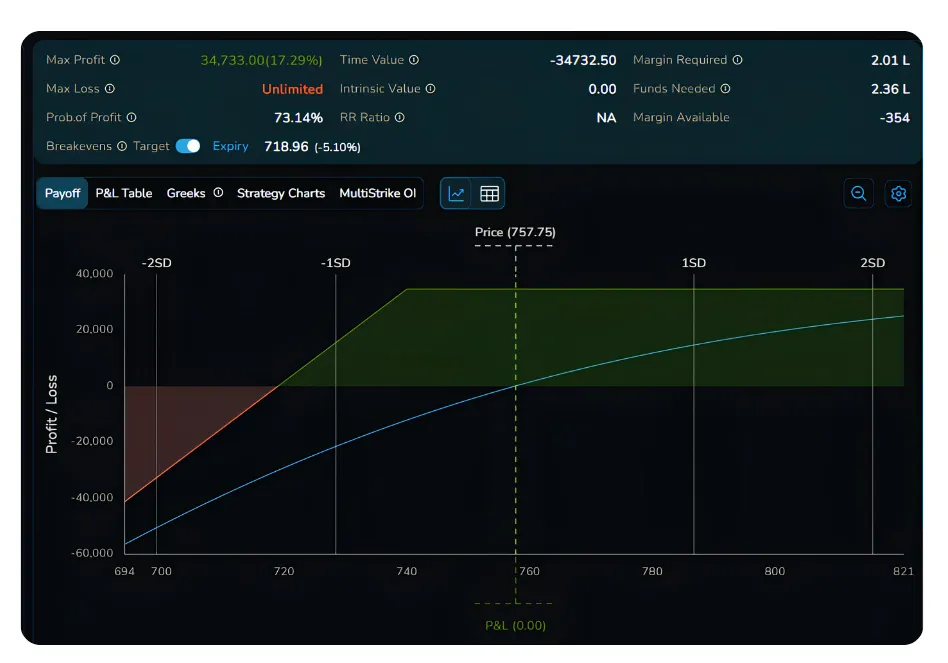
The breakeven point is lower than the strike price because the premium collected offsets part of the purchase cost. This creates a margin of safety compared to buying the stock directly at market price.
The strategy benefits from time decay, also known as theta decay, which refers to the gradual reduction in option premium as expiry approaches.
Selecting the Right Strike
Strike selection should not be random. The preferred approach is to sell puts below visible support zones where buying interest has historically emerged.
The daily chart helps identify these levels.
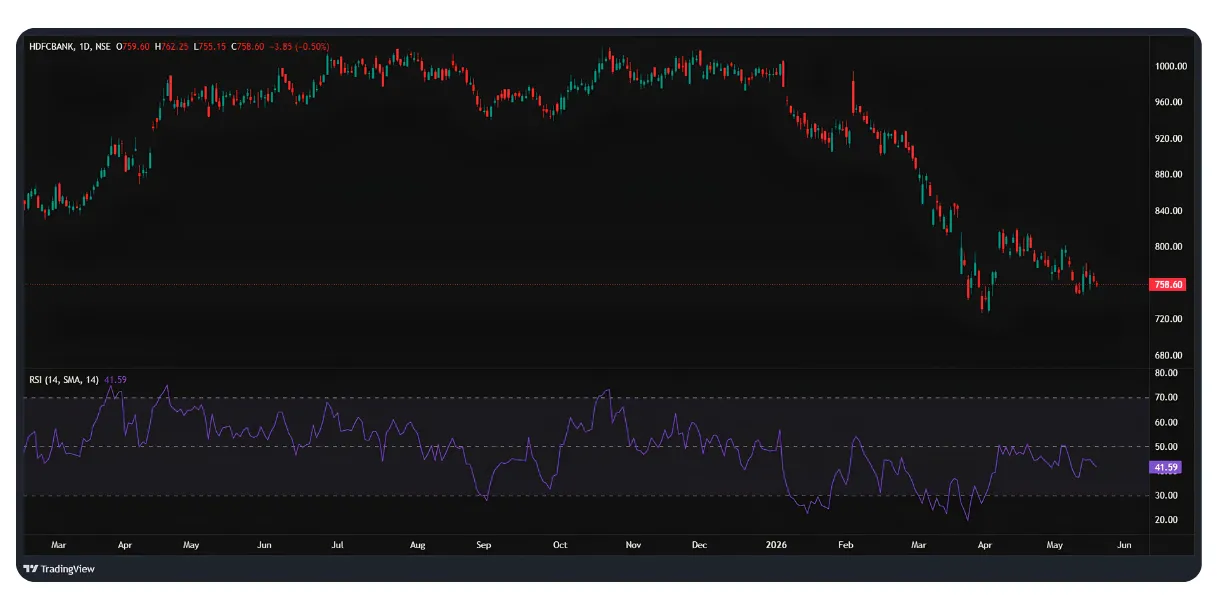
In practical terms, traders generally prefer:
- stocks in temporary pullbacks rather than strong downtrends,
- elevated implied volatility,
- and strikes placed below major support areas.
This improves both premium quality and probability of profit.
The Five-Step Deployment Framework
1. Stock First
Cash Secured Puts should only be deployed on stocks the trader is comfortable owning at the selected strike price. This naturally favours liquid large-cap names where liquidity, spreads, and execution quality remain stable across expiries.
2. Wait for the Pullback
Many traders avoid initiating CSPs during strong upward momentum. Pullbacks accompanied by elevated volatility often provide better premium collection opportunities and more favourable entry levels.
3. Choose a Strike Below Support
Strike placement is critical. Support zones identified on the daily chart can help traders position strikes where historical buying interest has previously emerged.
4. Focus on the 21–45 DTE Window
DTE, or Days to Expiry, refers to the number of days remaining before the option contract expires. Many CSP traders prefer the 21–45 DTE range because it balances time decay with manageable exposure duration.
5. Validate the Premium Return
Premium should justify the capital being reserved for the trade. Low premium environments may not provide an attractive risk-reward structure relative to the downside exposure.
Also Read: Trading Volatility Across Time with Calendar Spreads Part 1/2
Ideal Entry Conditions for CSP Trades
Several market conditions can improve the overall structure of a CSP trade.
| Condition | What to Look For | Signal Quality |
|---|---|---|
| Market Direction | Stock in a controlled pullback rather than a sharp breakdown | Strong |
| Implied Volatility | Elevated implied volatility relative to recent history | Strong |
| Strike Placement | Strike positioned below a visible support zone | Strong |
| Momentum Indicators | RSI or stochastic indicators approaching oversold conditions | Supportive |
| Days to Expiry | Contracts within the 21–45 DTE range | Strong |
| Earnings Events | No major earnings announcement within the expiry cycle | Important |
| Premium Quality | Premium sufficient relative to capital blocked and downside risk | Filter |
Using Volatility to Improve Entries
Implied volatility reflects the market’s expectation of future price movement. Higher implied volatility generally results in richer option premiums.
The analytics section in NxtOption allows traders to evaluate implied volatility along with Greeks such as delta and theta.

For CSP traders, elevated implied volatility can improve the reward profile of the trade because the premium collected increases while the breakeven level moves lower.
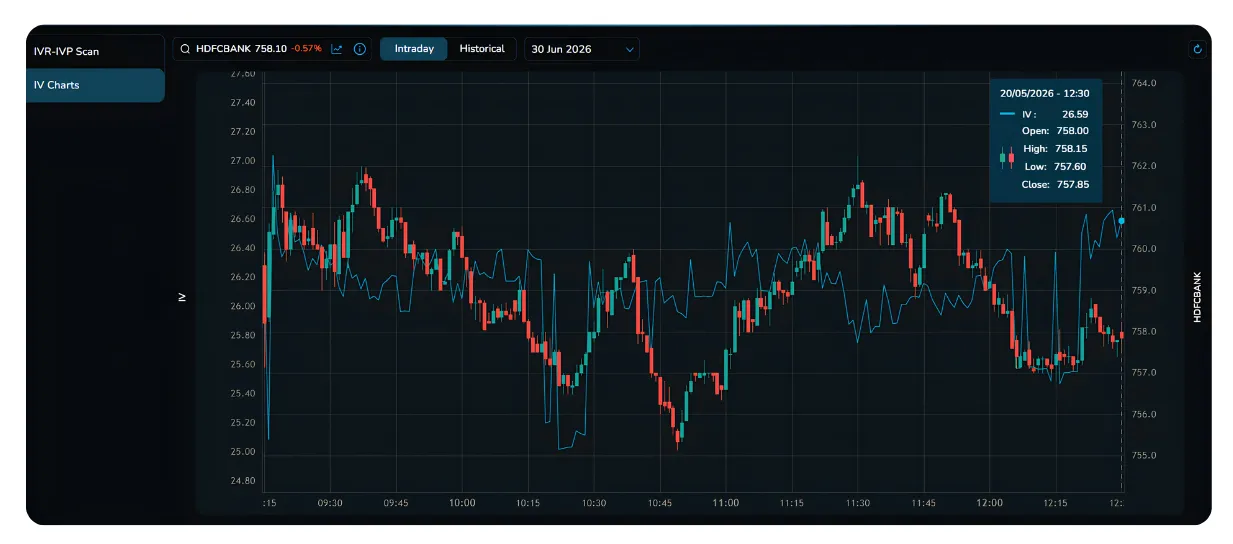
That does not eliminate risk. It improves the structure of the entry.
Practical Considerations for Indian Markets
Lot sizes in Indian stock options can require significant capital commitment even for a single lot position. Position sizing should therefore remain conservative, particularly during volatile market conditions.
Earnings announcements also require caution because implied volatility often expands sharply before results and contracts immediately afterward. Large overnight gaps can overwhelm the premium collected from the trade.
The strategy is generally better suited for liquid large-cap stocks where spreads, liquidity, and execution quality remain stable across expiries.
Final Observation
The Cash Secured Put is less about prediction and more about disciplined positioning. It allows traders to define a preferred entry price, collect premium while waiting, and participate in ownership only if the market reaches that level.
Used selectively on liquid large-cap stocks, the strategy can function as a structured method of accumulating quality businesses rather than as a high-frequency speculative trade.
What to Expect in Part 2
Part 2 will focus on managing Cash Secured Put positions after entry. Topics will include rolling positions, assignment handling, covered call writing, the Wheel strategy, profit-taking approaches, and practical considerations for managing CSP trades across different market conditions.
Disclaimer: The information provided in our blogs is for informational purposes only and should not be construed as financial, investment, or trading advice. Trading and investing in the securities market carries risk. Always conduct your own research and consult with a qualified financial advisor before making any investment decisions. Past performance is not indicative of future results. Copyrighted and original content for your trading and investing needs.
© 2026 — Tradejini. All Rights Reserved.